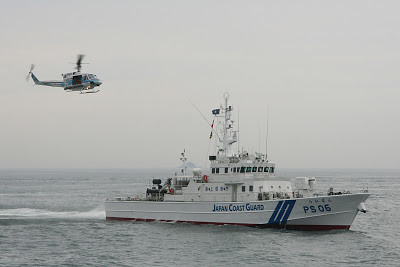
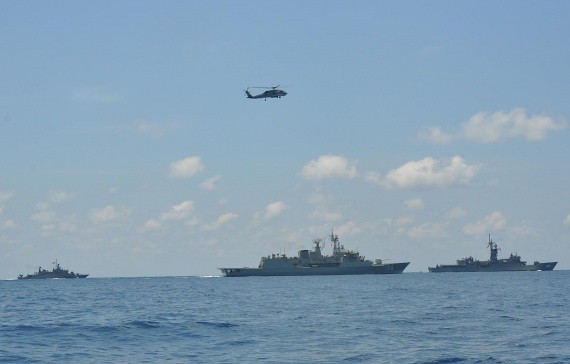
MANILA — The Philippines said Thursday it was looking to give the United States and Japan greater access to its military bases as it seeks to counter what it perceives as a rising security threat from China.
The government is initially drafting a plan that would allow US forces to spend more time on Filipino bases, something that could be offered to Japan’s military later, Defence Secretary Voltaire Gazmin said.
“If and when there is agreement on the access, then there will be equipment coming in from the (United) States,” Gazmin told a joint news conference in Manila after meeting with visiting Japan Defense Minister Itsunori Onodera.
“Now as far as Japan is concerned, we do welcome other countries — particularly Japan since Japan is a strategic partner — in accordance with our existing protocols.”
President Benigno Aquino had already stated that the Philippines would welcome an increased US military presence, amid tense disputes with China over competing claims to parts of the South China Sea.
However, Gazmin’s comments indicated the Philippines was hoping to expand on the standard military exercises that the two nations’ armed forces regularly engage in.
“Modalities for the increased rotational presence are right now being examined. One modality is the conduct of high-value, high-impact exercise,” Gazmin said, without elaborating.
However, Gazmin emphasised the plan would not see any new bases or a permanent US presence in the Philippines.
The United States had tens of thousands of troops stationed in the Philippines, at the Clark Air Base and Subic Naval Base north of Manila, until the early 1990s.
The United States, a former colonial ruler of the Philippines, was forced to abandon the bases amid anti-US sentiment and a row over rent. The constitution now bans any permanent foreign bases in the Philippines.
However, the Clark and Subic facilities, now partly converted to business use, still host and service US military aircraft and warships on short-term exercises.
One of those began Thursday in waters between the Philippines’ main island of Luzon and a disputed shoal now occupied by China.
Several hundred US special operations troops have been rotating through the southern Philippines since early 2002 to train Filipino soldiers who are fighting Islamic militants.
Defense News
Hiển thị các bài đăng có nhãn Southeast Asia. Hiển thị tất cả bài đăng
Thứ Năm, 27 tháng 6, 2013
Thứ Ba, 25 tháng 6, 2013
BTR-3RK for Thailand Successfully Shot Out
June 20 Goncharovskiy landfill has passed the next phase of testing fire BTR-3RK.
This modification of the BTR-3 is a mobile anti-tank complex, armed with four launchers ATGM "Barrier" with Ammunition stock rockets and 12.7 mm machine gun NSVT.
When checking out the APC trial was "attacked" with inattentive driver behind the wheel - in Armor fresh paint scratched. During the tests carried launches two missiles.
Target at a distance of 3600 m impressed with the deviation of the point of impact within 0.5 m from the center of the target. Normally worked queues and machine gun NSVT.
This machine along with the BTR-3E is prepared for delivery to Thailand.
Kotobood
This modification of the BTR-3 is a mobile anti-tank complex, armed with four launchers ATGM "Barrier" with Ammunition stock rockets and 12.7 mm machine gun NSVT.
When checking out the APC trial was "attacked" with inattentive driver behind the wheel - in Armor fresh paint scratched. During the tests carried launches two missiles.
Target at a distance of 3600 m impressed with the deviation of the point of impact within 0.5 m from the center of the target. Normally worked queues and machine gun NSVT.
This machine along with the BTR-3E is prepared for delivery to Thailand.
Kotobood
Thứ Tư, 12 tháng 6, 2013
Indonesia to build infrastructure for submarine production
Defense Minister Purnomo Yusgiantoro said the country is expected to have the infrastructure ready in the next two to three years.
Jakarta (ANTARA News) - Defense Minister Purnomo Yusgiantoro said Indonesia will soon build infrastructure for the production of submarines.
The infrastructure will be built by state shipbuilding company PT PAL in Surabaya, Purnomo said after a session of the Committee for the Defense Industry Policy here on Tuesday.
He said the country is expected to have the infrastructure ready in the next two to three years.
The session of the Committee, which is chaired by Purnomo, also discusses a plan to produce jet fighter planes in the country.
Purnomo said legal umbrella would be needed before any step taken to build the war plane and submarine infrastructure.
"Support from the House of Representatives would be needed to provide a legal basis for the project," he said.
Indonesia as the world`s largest archipelago, would need strong navy and air force to protect its thousands of islands.
Indonesia has agreed with South Korea to cooperate in building the infrastructure for the production of submarines. The cooperation will include in license, engineering manufacturing and production of prototype.
Cooperation is already implemented in design technology and in the next two years cooperation is expected to be implemented in engineering manufacturing and prototype.
Indonesia and South Korea also agreed on transfer of technology in the construction of submarines.
Earlier, the government said development of modern factory to produce submarine would be implemented in 2016-2017.
The first submarine to be produced under the cooperation agreement in Korea will be completed in 2014.
Construction of the second submarine will involve Indonesian technicians and production of the third unit will be in Indonesia by PT PAL.
The submarine bases will be built in the Palu bay, Central Sulawesi to be commissioned by the end of this year. All units of Indonesian submarine will be stationed in the Palu bay including the new one produced in Korea.(*)
Xem Bản đồ cỡ lớn hơn
Editor: Heru
COPYRIGHT © 2013
Antara
Jakarta (ANTARA News) - Defense Minister Purnomo Yusgiantoro said Indonesia will soon build infrastructure for the production of submarines.
The infrastructure will be built by state shipbuilding company PT PAL in Surabaya, Purnomo said after a session of the Committee for the Defense Industry Policy here on Tuesday.
He said the country is expected to have the infrastructure ready in the next two to three years.
The session of the Committee, which is chaired by Purnomo, also discusses a plan to produce jet fighter planes in the country.
Purnomo said legal umbrella would be needed before any step taken to build the war plane and submarine infrastructure.
"Support from the House of Representatives would be needed to provide a legal basis for the project," he said.
Indonesia as the world`s largest archipelago, would need strong navy and air force to protect its thousands of islands.
Indonesia has agreed with South Korea to cooperate in building the infrastructure for the production of submarines. The cooperation will include in license, engineering manufacturing and production of prototype.
Cooperation is already implemented in design technology and in the next two years cooperation is expected to be implemented in engineering manufacturing and prototype.
Indonesia and South Korea also agreed on transfer of technology in the construction of submarines.
Earlier, the government said development of modern factory to produce submarine would be implemented in 2016-2017.
The first submarine to be produced under the cooperation agreement in Korea will be completed in 2014.
Construction of the second submarine will involve Indonesian technicians and production of the third unit will be in Indonesia by PT PAL.
The submarine bases will be built in the Palu bay, Central Sulawesi to be commissioned by the end of this year. All units of Indonesian submarine will be stationed in the Palu bay including the new one produced in Korea.(*)
Xem Bản đồ cỡ lớn hơn
Editor: Heru
COPYRIGHT © 2013
Antara
Thứ Hai, 3 tháng 6, 2013
Japan 'will help S-E Asia build up defence capacity'
Japan will work with South-east Asian nations to build up their defence capabilities even as it sets up a military industrial complex at home. That's the message from its Defence Minister.
-->Japan supports Phl's legal move on South China Sea dispute
What started as economic cooperation with South-east Asia has been expanding into defence areas, Mr Itsunori Onodera, 53, said in an interview with The Sunday Times, noting that many countries had expressed interest in Japan's military technology.
"It is natural that cooperation will begin," he said. "As we are in the process of consulting various countries, I will not say more at this point."
Kyodo News (Japan) reported the same day, at the Japanese-French bilateral meeting, Minister Itsunori Onodera and his French counterpart Jean-Yves Le Drian agreed to promote co-produced weapons, strengthen maritime security cooperation, coordination of N. Korea sanctions.
Defense Minister Itsunori Onodera suggested that French do not sell equipment to China to help stabilize the helicopter landed easily on Chinese naval vessel in bad weather because China may increase flights to the Senkaku Islands. Defense Minister Jean-Yves Le Drian says that France will not sell helicopter stabilization device for military purposes.
On June 3rd, the Jakarta Post reported that Japanese Defense Minister Itsunori Onodera said Japan is strengthening its economy and military to play a responsible international role, seeking to defuse suspicion of neighbors scarred by attacks and occupations in the last century.
Japan, a US ally in dispute with China over maritime territory and within range of North Korean missiles, “caused tremendous damage and suffering” in the past but wants to look to the future by promoting cooperation, Onodera said here on Saturday.
“A strong Japan will play a responsible role in the area of regional security and exercise strong leadership as expected by the international community,” Onodera said, as quoted by Reuters.
In June 1st, the Shangri-La Dialogue, Admiral Samuel Locklear, commander of U.S. Pacific Command, confirmed the Chinese navy ships have begun operating in the exclusive economic zone (EEZ) of the United States but not reveal specific areas.
According to the Financial Times (UK), U.S. Admiral Samuel Locklear said US encourages this move because of the exclusive economic zone accounts for one third of the ocean, if the ban warships passing through the area, the military operation will be obstacles. In contrast, China has long often criticized U.S. naval vessel monitoring activities in the exclusive economic zone of China.
Phapluattp.vn
-->Japan supports Phl's legal move on South China Sea dispute
What started as economic cooperation with South-east Asia has been expanding into defence areas, Mr Itsunori Onodera, 53, said in an interview with The Sunday Times, noting that many countries had expressed interest in Japan's military technology.
"It is natural that cooperation will begin," he said. "As we are in the process of consulting various countries, I will not say more at this point."
Kyodo News (Japan) reported the same day, at the Japanese-French bilateral meeting, Minister Itsunori Onodera and his French counterpart Jean-Yves Le Drian agreed to promote co-produced weapons, strengthen maritime security cooperation, coordination of N. Korea sanctions.
Defense Minister Itsunori Onodera suggested that French do not sell equipment to China to help stabilize the helicopter landed easily on Chinese naval vessel in bad weather because China may increase flights to the Senkaku Islands. Defense Minister Jean-Yves Le Drian says that France will not sell helicopter stabilization device for military purposes.
On June 3rd, the Jakarta Post reported that Japanese Defense Minister Itsunori Onodera said Japan is strengthening its economy and military to play a responsible international role, seeking to defuse suspicion of neighbors scarred by attacks and occupations in the last century.
Japan, a US ally in dispute with China over maritime territory and within range of North Korean missiles, “caused tremendous damage and suffering” in the past but wants to look to the future by promoting cooperation, Onodera said here on Saturday.
“A strong Japan will play a responsible role in the area of regional security and exercise strong leadership as expected by the international community,” Onodera said, as quoted by Reuters.
In June 1st, the Shangri-La Dialogue, Admiral Samuel Locklear, commander of U.S. Pacific Command, confirmed the Chinese navy ships have begun operating in the exclusive economic zone (EEZ) of the United States but not reveal specific areas.
According to the Financial Times (UK), U.S. Admiral Samuel Locklear said US encourages this move because of the exclusive economic zone accounts for one third of the ocean, if the ban warships passing through the area, the military operation will be obstacles. In contrast, China has long often criticized U.S. naval vessel monitoring activities in the exclusive economic zone of China.
Phapluattp.vn
Thứ Hai, 27 tháng 5, 2013
Vietnam, Indonesia to boost defense ties, discuss about CN-259
HANOI: Vietnam and Indonesia should establish a strategic dialogue on national defense policy to realise a memorandum of understanding on cooperation signed in 2010, said Vietnamese Defense Minister General Phung Quang Thanh.
Thanh made the proposal at a reception for Sjafrie Sjamsoeddin, Deputy Minister of National Defense of Indonesia, in Vietnam's capital Hanoi on Monday, Xinhua news agency quoted local media reports as saying.
Sjamsoeddin on his part said Indonesia has established a training centre for its peacekeeping force and is willing to share its experience with Vietnam.
Both sides also agreed on the need to enhance the exchange of officers at all levels and cooperation in the defense industry.
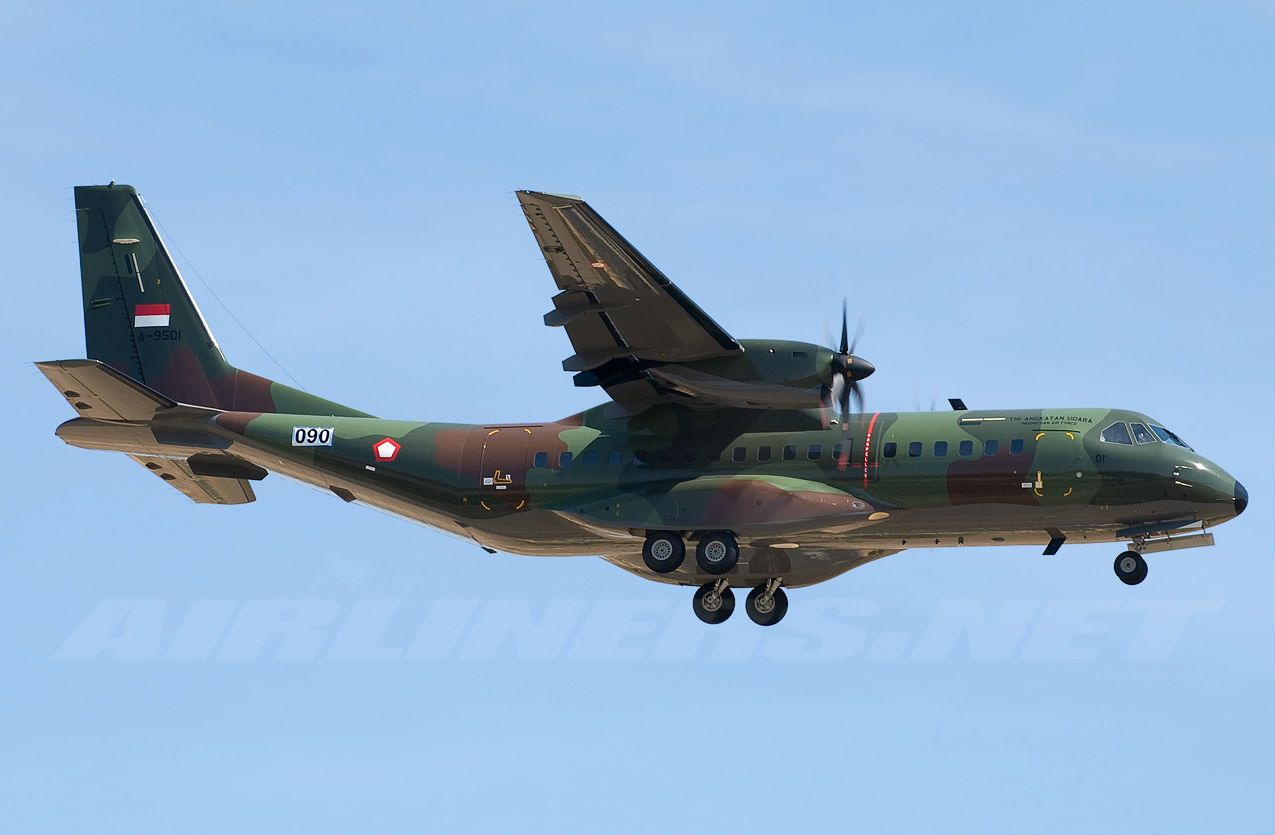
On the occasion, Sjamsoeddin introduced to Thanh the CN-295 military aircraft, a transportation plane that uses Airbus components and assembled by Indonesia's PT Dirgantara Group.
Vietnam 'praised' Indonesia's CN-295 aircraft
General Phung Quang Thanh and Major General Nguyen Kim Cach has the positive assessment of transport aircraft CN-295 which Indonesia introduced to Vietnam.
Vietnam Defense Minister, General Phung Quang Thanh said, according to the current demand, Vietnam was very interested in the plane, "the same" as that of Indonesia's CN-295 production, after studying the complexity of aircraft manufactured by PT Dirgantara Indonesia (PTDI) and Airbus Military company co-production.
Indonesian Media quoted press release from Indonesian Embassy in Hanoi on Monday (27/5), said Vietnam Defense Minister also mentioned plans to send a delegation of Vietnam's Air Force to Indonesia to study the Indonesian aviation industry and require more information about the CN-295 aircraft when the Deputy Minister of Defense Sjafrie Sjamsuddien Indonesia to visit Vietnam.
At a private meeting in Vietnam, Deputy Political Commissar of the Vietnam's Air Defense - Air Force, Major General Nguyen Kim Cach, said Vietnam has been exploring an aircraft similar CN-295 when he visited to Spain.
The Minister also said that the CN-295 aircraft assembled in Indonesia will be very good for Vietnam by the after-sales service plane can be done in Indonesia - which is not far from Vietnam.
Soha News
Thanh made the proposal at a reception for Sjafrie Sjamsoeddin, Deputy Minister of National Defense of Indonesia, in Vietnam's capital Hanoi on Monday, Xinhua news agency quoted local media reports as saying.
Sjamsoeddin on his part said Indonesia has established a training centre for its peacekeeping force and is willing to share its experience with Vietnam.
Both sides also agreed on the need to enhance the exchange of officers at all levels and cooperation in the defense industry.
On the occasion, Sjamsoeddin introduced to Thanh the CN-295 military aircraft, a transportation plane that uses Airbus components and assembled by Indonesia's PT Dirgantara Group.
Vietnam 'praised' Indonesia's CN-295 aircraft
General Phung Quang Thanh and Major General Nguyen Kim Cach has the positive assessment of transport aircraft CN-295 which Indonesia introduced to Vietnam.
Vietnam Defense Minister, General Phung Quang Thanh said, according to the current demand, Vietnam was very interested in the plane, "the same" as that of Indonesia's CN-295 production, after studying the complexity of aircraft manufactured by PT Dirgantara Indonesia (PTDI) and Airbus Military company co-production.
Indonesian Media quoted press release from Indonesian Embassy in Hanoi on Monday (27/5), said Vietnam Defense Minister also mentioned plans to send a delegation of Vietnam's Air Force to Indonesia to study the Indonesian aviation industry and require more information about the CN-295 aircraft when the Deputy Minister of Defense Sjafrie Sjamsuddien Indonesia to visit Vietnam.
At a private meeting in Vietnam, Deputy Political Commissar of the Vietnam's Air Defense - Air Force, Major General Nguyen Kim Cach, said Vietnam has been exploring an aircraft similar CN-295 when he visited to Spain.
The Minister also said that the CN-295 aircraft assembled in Indonesia will be very good for Vietnam by the after-sales service plane can be done in Indonesia - which is not far from Vietnam.
Soha News
Chủ Nhật, 26 tháng 5, 2013
Indian warships makes port calls in South-East Asian nations
KUALA LUMPUR: Four Indian front line warships on an operational deployment to the South China Sea and the Western Pacific has made port calls in Malaysia, Vietnam, Philippines, seeking to strengthen bilateral maritime ties.
+Shivalik+class+frigates+or+Project+17+class+frigates+are+multi-role+frigates+with+stealth+features+being+built+for+the+Indian+Navy+(2).jpg)
Indian INS Satpura (F48) is a Shivalik Class 17A Stealth Frigates (Project 17 class)multi-role frigates of the Indian Navy
The vessels including India's newly inducted stealth frigate INS Satpura, along with Rajput class destroyer INS Ranvijay, corvette INS Kirch and replenishment vessel INS Shakti, collectively carrying more than 800 crew members, are led by Rear Admiral Ajit Kumar.
The battleships will be on a five-day visit to Malaysia. Kumar said that he was looking forward to enhancing ties with the Malaysian armed forces.
He said a passage exercise (PASSEX) has been planned with the Malaysian Navy and added it would contribute towards furthering peace and maritime security in the region.
"The spectrum of this exercise encompasses both conventional war time drills and cooperative military action against unconventional threats in the maritime domain," he told reporters at Port Klang.
However, he said the most important exercise during the visit was to foster closer ties and friendship between Malaysia and India.
"There might be times when both countries may have to work together, hence such port calls would strengthen this purpose," he added.
The vessels will head to Vietnam next and then make a final port call to the Philippines.
Earlier, a deal signed by the Oil and Natural Gas Corp (ONGC) and Vietnam in October last year to explore the oil and gas block in the disputed waters was a cause of tiff between India and China, with Beijing protesting as it lays claim over entire South China Sea.
The Economy Times
+Shivalik+class+frigates+or+Project+17+class+frigates+are+multi-role+frigates+with+stealth+features+being+built+for+the+Indian+Navy+(2).jpg)
Indian INS Satpura (F48) is a Shivalik Class 17A Stealth Frigates (Project 17 class)multi-role frigates of the Indian Navy
The vessels including India's newly inducted stealth frigate INS Satpura, along with Rajput class destroyer INS Ranvijay, corvette INS Kirch and replenishment vessel INS Shakti, collectively carrying more than 800 crew members, are led by Rear Admiral Ajit Kumar.
The battleships will be on a five-day visit to Malaysia. Kumar said that he was looking forward to enhancing ties with the Malaysian armed forces.
He said a passage exercise (PASSEX) has been planned with the Malaysian Navy and added it would contribute towards furthering peace and maritime security in the region.
"The spectrum of this exercise encompasses both conventional war time drills and cooperative military action against unconventional threats in the maritime domain," he told reporters at Port Klang.
However, he said the most important exercise during the visit was to foster closer ties and friendship between Malaysia and India.
"There might be times when both countries may have to work together, hence such port calls would strengthen this purpose," he added.
The vessels will head to Vietnam next and then make a final port call to the Philippines.
Earlier, a deal signed by the Oil and Natural Gas Corp (ONGC) and Vietnam in October last year to explore the oil and gas block in the disputed waters was a cause of tiff between India and China, with Beijing protesting as it lays claim over entire South China Sea.
The Economy Times
Thứ Bảy, 25 tháng 5, 2013
Royal Thai navy takes delivery of 3 patrol boats
The Royal Thai Navy took delivery of three new patrol boats to guard the coastline and provide security for the royal family.
Navy commander Adm. Surasak Runroengrom accepted the vessels from shipbuilder Marsun Co. May 16 at the Sattahip Naval Base’s Laem Thien Pier. The boats then were handed over to Coast Guard Squadron commander Rear Adm. Surapol Khuptaphan.
The patrol boats replace three older vessels operating in the Gulf of Thailand and Andaman Sea, guarding against drug traders, smugglers and illegal fishing fleets. They are also tasked with providing security for the royal family.
Marsun spent 26 months building the three boats, which measure 21.4 meters long and 5.6 meters wide. They have a top speed of 30 knots, range of 350 nautical miles and can operate continuously 24 hours.
The nine-person crew has three weapons at their disposal: a 20mm gun on the bow, half-inch machine gun on the stern and an 81mm grenade launcher.
Pattaya Mail
Navy commander Adm. Surasak Runroengrom accepted the vessels from shipbuilder Marsun Co. May 16 at the Sattahip Naval Base’s Laem Thien Pier. The boats then were handed over to Coast Guard Squadron commander Rear Adm. Surapol Khuptaphan.
The patrol boats replace three older vessels operating in the Gulf of Thailand and Andaman Sea, guarding against drug traders, smugglers and illegal fishing fleets. They are also tasked with providing security for the royal family.
Marsun spent 26 months building the three boats, which measure 21.4 meters long and 5.6 meters wide. They have a top speed of 30 knots, range of 350 nautical miles and can operate continuously 24 hours.
The nine-person crew has three weapons at their disposal: a 20mm gun on the bow, half-inch machine gun on the stern and an 81mm grenade launcher.
Pattaya Mail
Thứ Ba, 21 tháng 5, 2013
Royal Thai Navy Needs B13bn for New Frigate
The Royal Thai Navy will ask the cabinet to approve a budget of 13 billion baht for a new frigate to be built by a South Korean shipyard.
Navy chief Adm Surasak Rounroengrom said the Royal Thai Armed Forces Headquarters is scrutinising the budget proposal and later will forward it to the Ministry of Defence. Once approved, it will be submitted to the cabinet for consideration, he said.
A navy source said the navy had set up several sub-committees to coordinate with the Korea-based shipbuilding and offshore contractor.
A navy selection committee last month chose Daewoo Shipbuilding and Marine Engineering to build the new frigate, a navy source said.
The company was one of two South Korean firms in the final round of bidding, organised by the navy panel.
Three other three foreign firms were eliminated in the previous rounds - from Spain, Italy and China.
The source said the high-capability frigate to be built by Daewoo would be based on the company’s type DX II frigate, which has a displacement of 5,000 tonnes, with modifications to meet the Thai navy’s special requirements.
The new navy ship will have a displacement of between 3,000 and 4,000 tonnes.
Navy chief of staff Chakchai Phucharoenyot, who chaired the selection committee, earlier told the media the navy also asked the company to install a Combat Management System (CMS) which can be allied to the systems already installed in the frigates HTMS Naresuan and HTMS Taksin.
The new frigate, which would be the first South Korean-built naval vessel in the Thai fleet, is expected to be ready for commissioning in two years, Adm Chakchai said.
Bangkok Post
Navy chief Adm Surasak Rounroengrom said the Royal Thai Armed Forces Headquarters is scrutinising the budget proposal and later will forward it to the Ministry of Defence. Once approved, it will be submitted to the cabinet for consideration, he said.
A navy source said the navy had set up several sub-committees to coordinate with the Korea-based shipbuilding and offshore contractor.
A navy selection committee last month chose Daewoo Shipbuilding and Marine Engineering to build the new frigate, a navy source said.
The company was one of two South Korean firms in the final round of bidding, organised by the navy panel.
Three other three foreign firms were eliminated in the previous rounds - from Spain, Italy and China.
The source said the high-capability frigate to be built by Daewoo would be based on the company’s type DX II frigate, which has a displacement of 5,000 tonnes, with modifications to meet the Thai navy’s special requirements.
The new navy ship will have a displacement of between 3,000 and 4,000 tonnes.
Navy chief of staff Chakchai Phucharoenyot, who chaired the selection committee, earlier told the media the navy also asked the company to install a Combat Management System (CMS) which can be allied to the systems already installed in the frigates HTMS Naresuan and HTMS Taksin.
The new frigate, which would be the first South Korean-built naval vessel in the Thai fleet, is expected to be ready for commissioning in two years, Adm Chakchai said.
Bangkok Post
Thứ Tư, 15 tháng 5, 2013
Sagem GFCS Fire-Control System Wins Major Contract from Singapore Navy
The upcoming Littoral Mission Vessel class program for Singapore comprises eight 1,200-tonne vessels. This program, being led by ST Marine as prime contractor, will replace the country’s current Fearless-class patrol vessels. (photo : militarynuts)
Sagem (Safran) has signed a contract with the Defence Science and Technology Agency (DSTA) of Singapore to develop and produce a new Gun Fire-Control System (GFCS) for eight Littoral Mission Vessels ordered by the Republic of Singapore Navy.
Sagem’s new GFCS is a centralized system located at the ship’s operations center that integrates several functions: main and secondary guns, radar, optronics and navigation systems. Capable of operating from several multifunction consoles concurrently, Sagem’s GFCS will also be interfaced with the combat management system. It’s open architecture not only allows for easy integration but also ensures flexibility and scalability for future upgrades and enhancement.
A long-standing partner to the Singapore Navy, Sagem has also supplied the GFCS for the six Formidable class frigates, and four Endurance class LSTs.
The new GFCS will be developed by Sagem at its Massy R&D center near Paris. Through this program Sagem provides further proof of its capabilities as systems integrator for combat systems, sensors and decentralized information on military platforms.
(Safran Sagem)
Thứ Ba, 23 tháng 4, 2013
PH nears deal on purchase of Korean fighter jets
MANILA - The Department of National Defense (DND) is in the last stages of procuring 12 fighter jets from South Korea worth P18 billion.
Some of the hitches that authorities saw in the transaction can be ironed out by May.
DND spokesman Peter Paul Galvez said the terms of reference could be finished by next month. The terms of reference contains provisions on the delivery, technical specifications, payment scheme, among others.
“It’s in the final stages of crafting, in preparation for the procurement of the jets…After that (crafting of TOR), the contract follows, the negotiations for the contract (starts)," he said.
DND undersecretary for finance, munitions, installations and materiel Fernando Manalo said issues will need to be clarified before a contract is pursued.
"Within the month of May, the issues may be resolved…(We're hoping) that the issues will be settled within the month of May," said Manalo.
Asked when the contract will finally be signed, he said: "We are following a process.”
The purchase of the fighter jets is part of the military's modernization program.
It is also a signal that the country will finally have a "credible external defense."
The Air Force decommissioned its F-5s in 2005, leaving the country without a legitimate fighter aircraft to address external threats, such as in the West Philippine Sea.
ABS CBN News
Some of the hitches that authorities saw in the transaction can be ironed out by May.
DND spokesman Peter Paul Galvez said the terms of reference could be finished by next month. The terms of reference contains provisions on the delivery, technical specifications, payment scheme, among others.
“It’s in the final stages of crafting, in preparation for the procurement of the jets…After that (crafting of TOR), the contract follows, the negotiations for the contract (starts)," he said.
DND undersecretary for finance, munitions, installations and materiel Fernando Manalo said issues will need to be clarified before a contract is pursued.
"Within the month of May, the issues may be resolved…(We're hoping) that the issues will be settled within the month of May," said Manalo.
Asked when the contract will finally be signed, he said: "We are following a process.”
The purchase of the fighter jets is part of the military's modernization program.
It is also a signal that the country will finally have a "credible external defense."
The Air Force decommissioned its F-5s in 2005, leaving the country without a legitimate fighter aircraft to address external threats, such as in the West Philippine Sea.
ABS CBN News
Thứ Bảy, 20 tháng 4, 2013
Indonesian Navy Selects NAUTIS Class A FMB Simulators for SIGMA Class Corvette Bridge Training
For training of its Sigma Class Corvette bridge personnel, the Indonesian Navy and Ministry of Defence selected VSTEP to supply two Class A NAUTIS Full Mission Bridge (FMB) Simulators for its Kobangdikal marine training facility in Surabaya.
The Indonesian Navy is currently modernizing its fleet to more effectively combat maritime crime and piracy. Beginning 2012, the Indonesian Navy added several Sigma Class Corvettes to its active fleet. To allow realistic training of the Sigma Class bridge personnel, the Navy ordered two NAUTIS Full Mission Bridge Simulators, each with a 270 degree field of view projected on a cylindrical screen. The simulator bridges match the actual SIGMA Class Corvette bridge, allowing efficient and true-to-life bridge operations and navigation training. The Indonesian Navy also ordered five custom built ports, and customised navigation screens. VSTEP cooperated with local development and implementation partners, to increase the local content.
The NAUTIS FMB simulators have been delivered by maritime simulator developer VSTEP in cooperation with its Indonesian partner Terravision. The Kobangdikal Marine Facility in Surabaya counts as one of the most important development, training and education facilities of the Indonesian Navy. In addition to the two Class A NAUTIS FMB Simulators, two NAUTIS Instructor Stations and two NAUTIS Desktop Training Simulators have also been installed at the premises.
About NAUTIS
NAUTIS is a new generation of advanced DNV certified maritime training simulators for the civilian & military maritime industry. The NAUTIS range of maritime training simulators is developed by VSTEP and offers an affordable alternative for training maritime officers and crews. With a full range of simulators, from desktop trainer to full mission bridge simulator, VSTEP delivers high quality cost-effective simulator solutions fulfilling the training requirements of nautical colleges, naval academies, maritime training centres and individual ship owners in compliance to the latest STCW requirements. www.nautissim.com
About TerraVision
Terravision is a system integrator company which focuses in system implementation and integration and technical support of various system technology to Indonesian market which utilizes satellite network and data, high performance database with user friendly application.
www.terravision-indonesia.com
About VSTEP
VSTEP is a leading International developer of simulators and virtual training software. VSTEP creates 3D virtual training applications and simulators that allow people to build their skills in a practical and cost effective way. VSTEP has several core product lines, focusing on virtual incident training for first responders (RescueSim), maritime training solutions for the civilian & military maritime industry (NAUTIS) and training simulators to prepare camera operators to identify suspect human behavior before a crime or terrorist attack takes place (EyeObserve). www.vstepsimulation.com
(Nautis)
The Indonesian Navy is currently modernizing its fleet to more effectively combat maritime crime and piracy. Beginning 2012, the Indonesian Navy added several Sigma Class Corvettes to its active fleet. To allow realistic training of the Sigma Class bridge personnel, the Navy ordered two NAUTIS Full Mission Bridge Simulators, each with a 270 degree field of view projected on a cylindrical screen. The simulator bridges match the actual SIGMA Class Corvette bridge, allowing efficient and true-to-life bridge operations and navigation training. The Indonesian Navy also ordered five custom built ports, and customised navigation screens. VSTEP cooperated with local development and implementation partners, to increase the local content.
The NAUTIS FMB simulators have been delivered by maritime simulator developer VSTEP in cooperation with its Indonesian partner Terravision. The Kobangdikal Marine Facility in Surabaya counts as one of the most important development, training and education facilities of the Indonesian Navy. In addition to the two Class A NAUTIS FMB Simulators, two NAUTIS Instructor Stations and two NAUTIS Desktop Training Simulators have also been installed at the premises.
About NAUTIS
NAUTIS is a new generation of advanced DNV certified maritime training simulators for the civilian & military maritime industry. The NAUTIS range of maritime training simulators is developed by VSTEP and offers an affordable alternative for training maritime officers and crews. With a full range of simulators, from desktop trainer to full mission bridge simulator, VSTEP delivers high quality cost-effective simulator solutions fulfilling the training requirements of nautical colleges, naval academies, maritime training centres and individual ship owners in compliance to the latest STCW requirements. www.nautissim.com
About TerraVision
Terravision is a system integrator company which focuses in system implementation and integration and technical support of various system technology to Indonesian market which utilizes satellite network and data, high performance database with user friendly application.
www.terravision-indonesia.com
About VSTEP
VSTEP is a leading International developer of simulators and virtual training software. VSTEP creates 3D virtual training applications and simulators that allow people to build their skills in a practical and cost effective way. VSTEP has several core product lines, focusing on virtual incident training for first responders (RescueSim), maritime training solutions for the civilian & military maritime industry (NAUTIS) and training simulators to prepare camera operators to identify suspect human behavior before a crime or terrorist attack takes place (EyeObserve). www.vstepsimulation.com
(Nautis)
South Korea has been Chosen to Build Thai Navy Frigate
The Royal Thai Navy has chosen a South Korean naval ship manufacturer to build a new frigate that will cost about 13 billion baht.

DSME DW-3000H frigates - length : 114m, width 13.8m, displacement 3.000 ton, top speed of 28 knots, main gun 76 mm, 8 tubes ESSM anti-air missiles in vertical launch version, 20mm CIWS, 30mm cannon (MSI DS30), torpedo tubes, stealth mast will be at Thales I-Mast 400/I-Mast 500 (all photos : Defense Studies)
An RTN selection committee announced on Friday it had chosen Daewoo Shipbuilding and Marine Engineering to manufacture the frigate, a navy source said.
The company was one of the last two South Korean firms to enter the final round of the bid organised by the RTN panel.
The other three foreign firms ousted from the previous rounds were from Spain, Italy and China.
RTN chief of staff Chakchai Phucharoenyot, who chaired the panel, said Daewoo Shipbuilding and Marine Engineering was selected because it had proposed specifications for the frigate that were in line with the navy's demands.
The navy also asked the company to manufacture a Combat Management System (CMS) which can be allied to the systems installed in the frigates HTMS Naresuan and HTMS Taksin, he said.
The frigate, which will be the first South Korean-manufactured navy ship in Thailand, is expected to be commissioned in two years' time, Adm Chakchai said.
The new frigate will have a displacement of between 3,000 and 4,000 tonnes.
The cabinet earlier approved the RTN's procurement of two frigates with a budget of 30 billion baht. The frigates will be considered for manufacturing one by one.
According to the navy source, the RTN preferred European frigates but they were too expensive.
Meanwhile, a Defence Ministry source revealed that Defence Minister Sukumpol Suwanatat will lead military top brass on a visit to Russia between Tuesday and next Monday to bolster military ties.
Thai delegates will inspect the armaments industry in Russia, the source said.
Bangkok Post
DSME DW-3000H frigates - length : 114m, width 13.8m, displacement 3.000 ton, top speed of 28 knots, main gun 76 mm, 8 tubes ESSM anti-air missiles in vertical launch version, 20mm CIWS, 30mm cannon (MSI DS30), torpedo tubes, stealth mast will be at Thales I-Mast 400/I-Mast 500 (all photos : Defense Studies)
An RTN selection committee announced on Friday it had chosen Daewoo Shipbuilding and Marine Engineering to manufacture the frigate, a navy source said.
The company was one of the last two South Korean firms to enter the final round of the bid organised by the RTN panel.
The other three foreign firms ousted from the previous rounds were from Spain, Italy and China.
RTN chief of staff Chakchai Phucharoenyot, who chaired the panel, said Daewoo Shipbuilding and Marine Engineering was selected because it had proposed specifications for the frigate that were in line with the navy's demands.
The navy also asked the company to manufacture a Combat Management System (CMS) which can be allied to the systems installed in the frigates HTMS Naresuan and HTMS Taksin, he said.
The frigate, which will be the first South Korean-manufactured navy ship in Thailand, is expected to be commissioned in two years' time, Adm Chakchai said.
The new frigate will have a displacement of between 3,000 and 4,000 tonnes.
The cabinet earlier approved the RTN's procurement of two frigates with a budget of 30 billion baht. The frigates will be considered for manufacturing one by one.
According to the navy source, the RTN preferred European frigates but they were too expensive.
Meanwhile, a Defence Ministry source revealed that Defence Minister Sukumpol Suwanatat will lead military top brass on a visit to Russia between Tuesday and next Monday to bolster military ties.
Thai delegates will inspect the armaments industry in Russia, the source said.
Bangkok Post
Thứ Năm, 18 tháng 4, 2013
US warship arrives in S'pore for Southeast Asian deployment
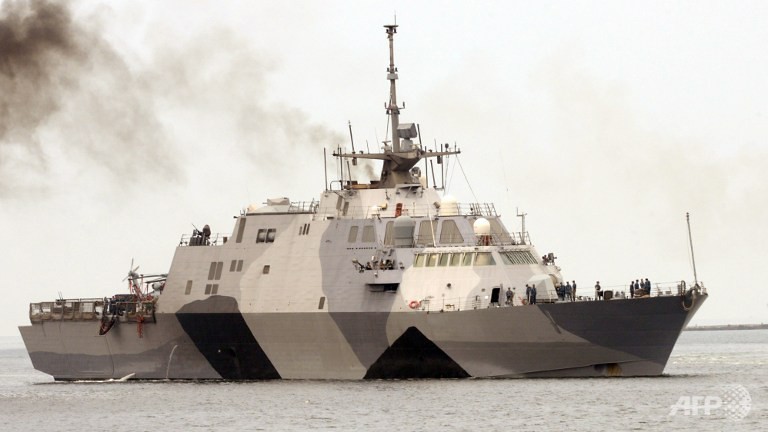
A US warship designed to fight in coastal areas arrived Thursday in Singapore for its Southeast Asian deployment, underlining President Barack Obama's new strategic focus on Asia.
SINGAPORE: A US warship designed to fight in coastal areas arrived Thursday in Singapore for its Southeast Asian deployment, underlining President Barack Obama's new strategic focus on Asia.
The deployment of the USS Freedom comes at a time of heightened tensions on the Korean Peninsula and as China publicly flexes its naval muscle in the South China Sea, where it has competing territorial claims with some Southeast Asian states.
US Navy officials said the Freedom, a new class of vessel called the littoral combat ship (LCS), sailed into Changi Naval Base at around 11:00 am (0300 GMT) in Singapore, a long-standing US ally that assists in logistics and exercises for forces in Southeast Asia.
The ship, the US Navy's first LCS which is designed to fight close to the shore, will be deployed for the next eight months in the region, where it will participate in naval exercises and visit other ports.
Regional security expert Ian Storey said the Freedom's deployment signals Washington's commitment to ensuring freedom of navigation in the region, which hosts some of the world's busiest shipping lanes.
"The forward deployment of these ships is part the US pivot, rebalancing away from Iraq and Afghanistan and towards Asia," said Storey, a senior fellow at the Institute of Southeast Asian Studies in Singapore.
"It demonstrates to US allies and friends that it is committed to maintaining a strong presence in the region to ensure stability. In naval terms, it also underpins the US' commitment to ensuring freedom of navigation," he told AFP.
US Defence Secretary Leon Panetta announced last year that Washington will shift the bulk of its naval fleet to the Pacific by 2020 as part of a new strategic focus on Asia, where China is an emerging power.
China is embroiled in a maritime dispute with four Southeast Asian countries -- Brunei, Malaysia, the Philippines and Vietnam -- over territorial claims in the South China Sea.
Beijing claims nearly the entire sea, including areas much nearer to the other claimants. Manila and Hanoi have been the most vocal in criticising China over alleged heavy-handedness in enforcing its claims.
While not a claimant, Washington has said it has an interest in the area to ensure freedom of navigation.
"We plan on spending most of our time here in Southeast Asia. This will be Freedom's neighbourhood for the next eight months," said US Navy Commander Timothy Wilke, the ship's commanding officer.
"We are eager to get out and about, work with other regional navies and share best practices during exercises, port visits and maritime security operations."
Singapore has agreed to the rotational deployment of up to four LCS. This means the vessels will not be permanently based in the country and crews will live aboard during ship visits.
Euan Graham, a maritime security expert at the S Rajaratnam School of International Studies in Singapore, said Beijing "is obviously cautious about any enhancement of the US military presence around the South China Sea".
But he added that China also understands that Freedom's presence is "not a major step-change in the naval balance in the region".
China however would be keen to learn about the performance of the ship, a versatile vessel that can be used for surface warfare as well as to hunt for mines and submarines and is suitable to maritime regions like Southeast Asia, Graham said.
He said the timing of Freedom's deployment also counters perceptions that US budget cuts would "undermine the sustainability of the US forward presence" in Asia.
- AFP/xq
SINGAPORE: A US warship designed to fight in coastal areas arrived Thursday in Singapore for its Southeast Asian deployment, underlining President Barack Obama's new strategic focus on Asia.
The deployment of the USS Freedom comes at a time of heightened tensions on the Korean Peninsula and as China publicly flexes its naval muscle in the South China Sea, where it has competing territorial claims with some Southeast Asian states.
US Navy officials said the Freedom, a new class of vessel called the littoral combat ship (LCS), sailed into Changi Naval Base at around 11:00 am (0300 GMT) in Singapore, a long-standing US ally that assists in logistics and exercises for forces in Southeast Asia.
The ship, the US Navy's first LCS which is designed to fight close to the shore, will be deployed for the next eight months in the region, where it will participate in naval exercises and visit other ports.
Regional security expert Ian Storey said the Freedom's deployment signals Washington's commitment to ensuring freedom of navigation in the region, which hosts some of the world's busiest shipping lanes.
"The forward deployment of these ships is part the US pivot, rebalancing away from Iraq and Afghanistan and towards Asia," said Storey, a senior fellow at the Institute of Southeast Asian Studies in Singapore.
"It demonstrates to US allies and friends that it is committed to maintaining a strong presence in the region to ensure stability. In naval terms, it also underpins the US' commitment to ensuring freedom of navigation," he told AFP.
US Defence Secretary Leon Panetta announced last year that Washington will shift the bulk of its naval fleet to the Pacific by 2020 as part of a new strategic focus on Asia, where China is an emerging power.
China is embroiled in a maritime dispute with four Southeast Asian countries -- Brunei, Malaysia, the Philippines and Vietnam -- over territorial claims in the South China Sea.
Beijing claims nearly the entire sea, including areas much nearer to the other claimants. Manila and Hanoi have been the most vocal in criticising China over alleged heavy-handedness in enforcing its claims.
While not a claimant, Washington has said it has an interest in the area to ensure freedom of navigation.
"We plan on spending most of our time here in Southeast Asia. This will be Freedom's neighbourhood for the next eight months," said US Navy Commander Timothy Wilke, the ship's commanding officer.
"We are eager to get out and about, work with other regional navies and share best practices during exercises, port visits and maritime security operations."
Singapore has agreed to the rotational deployment of up to four LCS. This means the vessels will not be permanently based in the country and crews will live aboard during ship visits.
Euan Graham, a maritime security expert at the S Rajaratnam School of International Studies in Singapore, said Beijing "is obviously cautious about any enhancement of the US military presence around the South China Sea".
But he added that China also understands that Freedom's presence is "not a major step-change in the naval balance in the region".
China however would be keen to learn about the performance of the ship, a versatile vessel that can be used for surface warfare as well as to hunt for mines and submarines and is suitable to maritime regions like Southeast Asia, Graham said.
He said the timing of Freedom's deployment also counters perceptions that US budget cuts would "undermine the sustainability of the US forward presence" in Asia.
- AFP/xq
Thứ Hai, 15 tháng 4, 2013
The Indonesian Navy Task Force of PKR starts its mission in the Netherlands
The Indonesian Navy Task Force for the Project Procurement of Guard Missile Destroyer (GMD) ship or known as the Satgas PKR, has arrived in the Netherlands on April 8, 2013. Consisting of 12 (twelve) Indonesian Navy officers,-led by First Admiral Mulyadi-, this task force will conduct its mission in Netherlands for the period of 24 months.
The task force team had paid a courtesy call to the Ambassador of the Republic of Indonesia in The Hague,- H.E. Mrs. Retno L.P. Marsudi, accompanied by the Embassy’s Defence Attache, Col. Edy Sulistyadi, on Friday, 12 April 2013. During the meeting, the team explained road map of their work in the Netherlands.
As part of a signed deal between the Indonesian Ministry of Defence and the Damen Schelde Shipyard ship in Naval Shipbuilding (DSNs) Vlissingen to build 2 (two) Indonesian GMD ships, this task force will conduct its mission in assisting and supervising the construction process of the ships. The first ship will be handed over to the Government of Indonesia in January 2017, while the second one will be in October 2017. This cooperation will further strengthen bilateral relations between Indonesia and the Netherlands.
The task force team had paid a courtesy call to the Ambassador of the Republic of Indonesia in The Hague,- H.E. Mrs. Retno L.P. Marsudi, accompanied by the Embassy’s Defence Attache, Col. Edy Sulistyadi, on Friday, 12 April 2013. During the meeting, the team explained road map of their work in the Netherlands.
As part of a signed deal between the Indonesian Ministry of Defence and the Damen Schelde Shipyard ship in Naval Shipbuilding (DSNs) Vlissingen to build 2 (two) Indonesian GMD ships, this task force will conduct its mission in assisting and supervising the construction process of the ships. The first ship will be handed over to the Government of Indonesia in January 2017, while the second one will be in October 2017. This cooperation will further strengthen bilateral relations between Indonesia and the Netherlands.
Thứ Bảy, 6 tháng 4, 2013
Singapore Orders AIM 9X-2 Sidewinder Missiles
The Defense Security Cooperation Agency notified Congress April 3 of a possible Foreign Military Sale to the Government of the Republic of Singapore for 20 AIM 9X-2 SIDEWINDER Block II All Up Round Missiles and associated equipment, parts, training and logistical support for an estimated cost of $36 million.
The Government of the Republic of Singapore has requested a possible sale of 20 AIM 9X-2 SIDEWINDER Block II All Up Round Missiles, 8 CATM-9X-2 Captive Air Training Missiles, 5 CATM-9X-2 Block II Missile Guidance units, 2 AIM-9X-2 Block II Tactical Guidance units, containers, spare and repair parts, support and test equipment, publications and technical documentation, personnel training and training equipment, U.S. Government and contractor engineering, technical and logistics support services, and other related elements of logistical and program support. The estimated cost is $36 million.
This proposed sale will contribute to the foreign policy and national security of the United States by increasing the ability of the Republic of Singapore to contribute to regional security. Its contributions to counter-piracy and counterterrorism efforts continue to stabilize a critical chokepoint where much of the world’s goods and services transit en route to and from the Asia Pacific region. The proposed sale will improve the security of a strategic partner which has been, and continues to be, an important force for political stability and economic progress in the Asia Pacific region. Specifically, this proposed sale will improve the Republic of Singapore Air Force’s (RSAF) air to air capability and ability to defend its nation and cooperate with allied air forces.
The Republic of Singapore requires these missiles to meet current and future threats of enemy aircraft. The proposed sale will enhance RSAF’s ability to operate with coalition forces in bilateral and multilateral exercises and potential air defense operations. Singapore will use these capabilities as a deterrent to regional threats and to strengthen its homeland defense. Singapore will have no difficulty absorbing the AIM-9X-2 into its armed forces.
The proposed sale of this equipment and support will not alter the basic military balance in the region.
The prime contractor will be Raytheon Missile Systems in Tucson, Arizona. There are no known offset agreements proposed in connection with this potential sale.
Implementation of this proposed sale will not require the assignment of any additional U.S. Government or contractor representatives to the Republic of Singapore.
There will be no adverse impact on U.S. defense readiness as a result of this proposed sale. This notice of a potential sale is required by law and does not mean the sale has been concluded.
The Government of the Republic of Singapore has requested a possible sale of 20 AIM 9X-2 SIDEWINDER Block II All Up Round Missiles, 8 CATM-9X-2 Captive Air Training Missiles, 5 CATM-9X-2 Block II Missile Guidance units, 2 AIM-9X-2 Block II Tactical Guidance units, containers, spare and repair parts, support and test equipment, publications and technical documentation, personnel training and training equipment, U.S. Government and contractor engineering, technical and logistics support services, and other related elements of logistical and program support. The estimated cost is $36 million.
This proposed sale will contribute to the foreign policy and national security of the United States by increasing the ability of the Republic of Singapore to contribute to regional security. Its contributions to counter-piracy and counterterrorism efforts continue to stabilize a critical chokepoint where much of the world’s goods and services transit en route to and from the Asia Pacific region. The proposed sale will improve the security of a strategic partner which has been, and continues to be, an important force for political stability and economic progress in the Asia Pacific region. Specifically, this proposed sale will improve the Republic of Singapore Air Force’s (RSAF) air to air capability and ability to defend its nation and cooperate with allied air forces.
The Republic of Singapore requires these missiles to meet current and future threats of enemy aircraft. The proposed sale will enhance RSAF’s ability to operate with coalition forces in bilateral and multilateral exercises and potential air defense operations. Singapore will use these capabilities as a deterrent to regional threats and to strengthen its homeland defense. Singapore will have no difficulty absorbing the AIM-9X-2 into its armed forces.
The proposed sale of this equipment and support will not alter the basic military balance in the region.
The prime contractor will be Raytheon Missile Systems in Tucson, Arizona. There are no known offset agreements proposed in connection with this potential sale.
Implementation of this proposed sale will not require the assignment of any additional U.S. Government or contractor representatives to the Republic of Singapore.
There will be no adverse impact on U.S. defense readiness as a result of this proposed sale. This notice of a potential sale is required by law and does not mean the sale has been concluded.
Thứ Ba, 2 tháng 4, 2013
DSME Completes of the Indonesian Submarine’s Basic Design
Indonesia Submarine, Off To a Good Start
A ceremony to commemorate the completion of the Indonesian submarine’s basic design was held on 18th March. It is Korea’s first submarine export so DSME received a great deal of media attention when signing the contract.

DSME had 50 basic design drawings approved by the Indonesian Navy and began the structure and production design (photo : DSME)
DSME had 50 basic design drawings approved by the Indonesian Navy and began the structure and production design. The Indonesian submarines will be constructed entirely by DSME instead of depending on German technology. DSME will also carry out the design and material supply autonomously.
During the ceremony, an Indonesian representative said, “DSME and the Indonesian Navy have a good relationship through the submarine depot maintenance. We deeply trust DSME’s technology.”
DSME
A ceremony to commemorate the completion of the Indonesian submarine’s basic design was held on 18th March. It is Korea’s first submarine export so DSME received a great deal of media attention when signing the contract.

DSME had 50 basic design drawings approved by the Indonesian Navy and began the structure and production design (photo : DSME)
DSME had 50 basic design drawings approved by the Indonesian Navy and began the structure and production design. The Indonesian submarines will be constructed entirely by DSME instead of depending on German technology. DSME will also carry out the design and material supply autonomously.
During the ceremony, an Indonesian representative said, “DSME and the Indonesian Navy have a good relationship through the submarine depot maintenance. We deeply trust DSME’s technology.”
DSME
Thứ Hai, 1 tháng 4, 2013
Indochina falling under Russia's influence again
Russia is returning to Indochina not as a seller of weapons, but by means of investment in these countries by increasing tourism, developing small and medium business and buying real estate. Growing wealth of the Russians, warm climate, and the decline of interest in the dangerous Middle East sector has led to a reorientation of their interest towards Thailand, Vietnam and Laos.
Thai newspaper Bangkok Post wrote that "the Russians are coming" not with weapons but with pockets full of dollars. According to the paper, it is tourism, and not large business that plays a crucial role in the struggle for geopolitical influence in Indochina today. Indeed, in Vietnam, for example, the income of the entire tourism industry in the past year amounted to $35 billion, and the construction of the first nuclear plant in the country with the help of Russian investments is estimated at $10 billion.
Last year, 175,000 tourists from Russia visited Vietnam, which is 1.7 times more than in 2011. 1.3 million Russians traveled to Thailand, which is 25 percent more than in 2011. In this country the share of Russians is the largest among tourists from Europe. Laos has demonstrated a 30 percent increase - up to 7,000 in 2011, compared with the previous year, Bangkok Post quoted the data from local departments and ministries of Tourism.
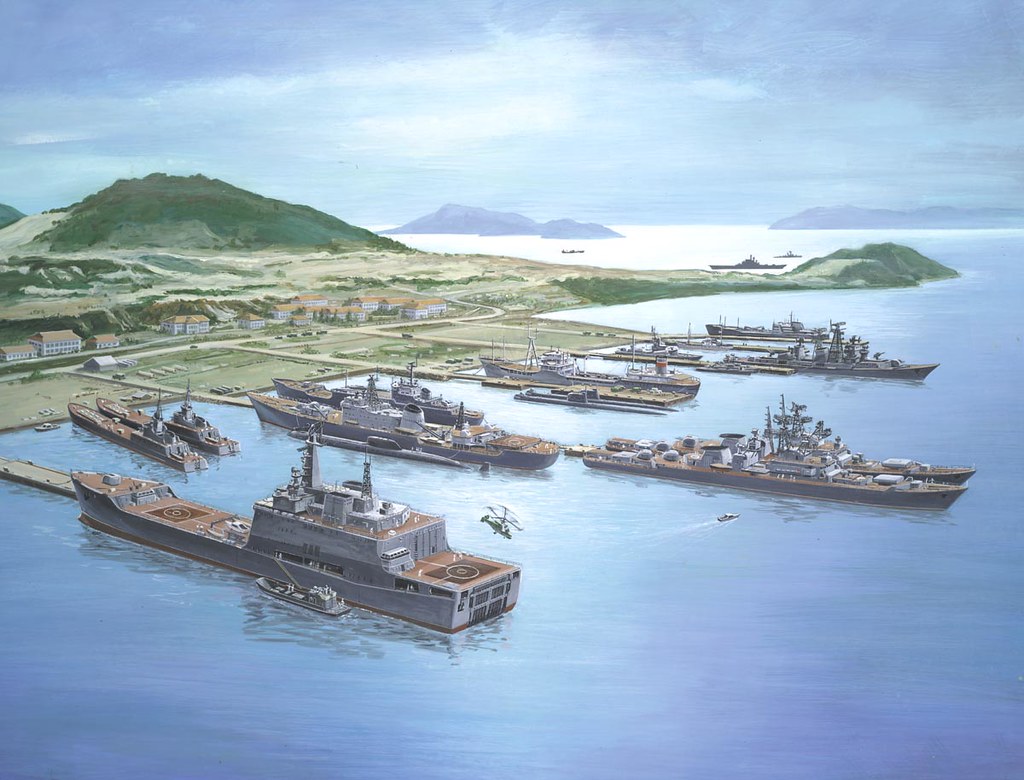
Particularly impressive is the development of the Vietnamese direction, especially given that the number of European travelers has been steadily decreasing, for example, last year there were 69 percent fewer tourists from Germany. An important role here was played by a dramatic improvement in the relations between Russia and Vietnam, including in the military-technical aspect of cooperation. The recent visit of Defense Minister Sergei Shoigu began with a visit to the city of Cam Ranh, a former Soviet military base that Vietnam is ready to provide for maintenance of the Russian ships.
Cam Ranh today is a major tourist center. In particular, a new passenger terminal was built in the military airport, which secured it the status of an international airport. This gave an impetus to the socio-economic development of the region, and helped to increase the flow of foreign tourists visiting popular beach resorts of central Vietnam. "Vietnam Airlines" announced that in order to attract a larger number of tourists from Russia, they will start a weekly direct flight to Moscow from Cam Ranh on April 5th. The country is preparing to accept 3.5 million Russian tourists annually by 2020, that is, it is going to surpass the volume of tourists in Thailand.
Given that the average Russian tourist spends about $1,400 in 10 days in Indochina, the income from Russian tourism in Vietnam in 2020 will amount to approximately $5 billion a year. Vietnam is not the only country that can count money. This year, for the first time Laos took part in the International Travel Fair in Moscow to promote its tourist destination and fully involve the Russians. The country has opened a representative tourism office in Moscow and the Russian Federation signed a "Joint Action Program for 2012-2014 in the field of tourism" with the country.
Thailand is preparing for targeted hosting of tourists from Russia. "The flow of tourists from Russia, India and China is growing rapidly, and this is a long-term trend," Krailuck Asawachatroj, chief financial officer of the hotel chain Erawan, told Bangkok Post. "Economic growth in these countries has increased the purchasing power of their citizens, and to spend the money they began travelling abroad," said the director. It should be noted that all of these countries abolished visas for Russian tourists.
Tourists often turn into business people and buy real estate. The growth of living standards in China makes Indochina countries attractive to business because labor costs are lower. In early 2011, according to the American Association of Foreign Investors in Real Estate (AFIRE), Vietnam has become the best country in the world for real estate investment. The country allows enterprises with 100 percent foreign capital. The service industry and production of consumer goods are entirely in private hands. According to a study of the international auditing company Grant Thornton, hotel business is one of the most profitable in Vietnam. Russians are treated well in Vietnam, and Russian investors are well loved. Moreover, Vietnamese complain that there are not enough of them.
In Thailand, according to real estate agency Knight Frank, Russian and Chinese "are buying Phuket", primarily housing of medium and luxury class. According to local experts, each year Thailand receives over $1 billion in Russian private investment, the Russians are a strong competition to local firms in the tourism industry, although it is not welcomed by the local entrepreneurs. Russian immigrants, including those who have expired visas, are accused of taking jobs from local residents. The service sector workers, including guides, masseurs and taxi drivers, are not pleased with the Russians. However, it shows the breadth of the movement called "the Russians are coming," and that business is much more effective in promoting Russia than weapons.
Lyuba Lulko
Pravda.Ru
Thai newspaper Bangkok Post wrote that "the Russians are coming" not with weapons but with pockets full of dollars. According to the paper, it is tourism, and not large business that plays a crucial role in the struggle for geopolitical influence in Indochina today. Indeed, in Vietnam, for example, the income of the entire tourism industry in the past year amounted to $35 billion, and the construction of the first nuclear plant in the country with the help of Russian investments is estimated at $10 billion.
Last year, 175,000 tourists from Russia visited Vietnam, which is 1.7 times more than in 2011. 1.3 million Russians traveled to Thailand, which is 25 percent more than in 2011. In this country the share of Russians is the largest among tourists from Europe. Laos has demonstrated a 30 percent increase - up to 7,000 in 2011, compared with the previous year, Bangkok Post quoted the data from local departments and ministries of Tourism.
Particularly impressive is the development of the Vietnamese direction, especially given that the number of European travelers has been steadily decreasing, for example, last year there were 69 percent fewer tourists from Germany. An important role here was played by a dramatic improvement in the relations between Russia and Vietnam, including in the military-technical aspect of cooperation. The recent visit of Defense Minister Sergei Shoigu began with a visit to the city of Cam Ranh, a former Soviet military base that Vietnam is ready to provide for maintenance of the Russian ships.
Cam Ranh today is a major tourist center. In particular, a new passenger terminal was built in the military airport, which secured it the status of an international airport. This gave an impetus to the socio-economic development of the region, and helped to increase the flow of foreign tourists visiting popular beach resorts of central Vietnam. "Vietnam Airlines" announced that in order to attract a larger number of tourists from Russia, they will start a weekly direct flight to Moscow from Cam Ranh on April 5th. The country is preparing to accept 3.5 million Russian tourists annually by 2020, that is, it is going to surpass the volume of tourists in Thailand.
Given that the average Russian tourist spends about $1,400 in 10 days in Indochina, the income from Russian tourism in Vietnam in 2020 will amount to approximately $5 billion a year. Vietnam is not the only country that can count money. This year, for the first time Laos took part in the International Travel Fair in Moscow to promote its tourist destination and fully involve the Russians. The country has opened a representative tourism office in Moscow and the Russian Federation signed a "Joint Action Program for 2012-2014 in the field of tourism" with the country.
Thailand is preparing for targeted hosting of tourists from Russia. "The flow of tourists from Russia, India and China is growing rapidly, and this is a long-term trend," Krailuck Asawachatroj, chief financial officer of the hotel chain Erawan, told Bangkok Post. "Economic growth in these countries has increased the purchasing power of their citizens, and to spend the money they began travelling abroad," said the director. It should be noted that all of these countries abolished visas for Russian tourists.
Tourists often turn into business people and buy real estate. The growth of living standards in China makes Indochina countries attractive to business because labor costs are lower. In early 2011, according to the American Association of Foreign Investors in Real Estate (AFIRE), Vietnam has become the best country in the world for real estate investment. The country allows enterprises with 100 percent foreign capital. The service industry and production of consumer goods are entirely in private hands. According to a study of the international auditing company Grant Thornton, hotel business is one of the most profitable in Vietnam. Russians are treated well in Vietnam, and Russian investors are well loved. Moreover, Vietnamese complain that there are not enough of them.
In Thailand, according to real estate agency Knight Frank, Russian and Chinese "are buying Phuket", primarily housing of medium and luxury class. According to local experts, each year Thailand receives over $1 billion in Russian private investment, the Russians are a strong competition to local firms in the tourism industry, although it is not welcomed by the local entrepreneurs. Russian immigrants, including those who have expired visas, are accused of taking jobs from local residents. The service sector workers, including guides, masseurs and taxi drivers, are not pleased with the Russians. However, it shows the breadth of the movement called "the Russians are coming," and that business is much more effective in promoting Russia than weapons.
Lyuba Lulko
Pravda.Ru
Thứ Năm, 28 tháng 3, 2013
France says Malaysia can build jets if it buys Rafale
France dangled Tuesday the possibility of manufacturing its Rafale fighter plane in Malaysia if the nation selected the aircraft as its new combat jet.
"We are considering an assembly line in Malaysia," said Eric Trappier, chief executive of the Rafale's builder Dassault Aviation, in a telephone interview from the Langkawi air show in northern Malaysia.
Malaysia is looking to buy 18 combat fighters to replace its ageing Russian Mig-29s, with the Eurofighter, Boeing's F-18 and Saab's Gripen also in the running.
The multi-role Rafale, which entered service in the French military in 2001, can carry out air-ground or air-sea attacks, reconnaissance, aerial interception or nuclear strike missions.
France is keen to make its first foreign sale of the Rafale, which has struggled to find buyers, to support a project that has cost tens of billions of euros.
India has selected the Rafale, with most of the 126 fighter jets they plan to buy expected to be built there if the final contract is signed this year as hoped.
Malaysia is keen for its local companies to be involved in the manufacturing, and Trappier said that Dassault has spent considerable effort in lining up local suppliers should the Rafale be selected.
Dassault has already signed deals with Malaysian companies CTRM, Zetro Aerospace and Sapura, he noted.
Two Rafales were at the Langkawi air show to provide demonstration flights.
Expatica
"We are considering an assembly line in Malaysia," said Eric Trappier, chief executive of the Rafale's builder Dassault Aviation, in a telephone interview from the Langkawi air show in northern Malaysia.
Malaysia is looking to buy 18 combat fighters to replace its ageing Russian Mig-29s, with the Eurofighter, Boeing's F-18 and Saab's Gripen also in the running.
The multi-role Rafale, which entered service in the French military in 2001, can carry out air-ground or air-sea attacks, reconnaissance, aerial interception or nuclear strike missions.
France is keen to make its first foreign sale of the Rafale, which has struggled to find buyers, to support a project that has cost tens of billions of euros.
India has selected the Rafale, with most of the 126 fighter jets they plan to buy expected to be built there if the final contract is signed this year as hoped.
Malaysia is keen for its local companies to be involved in the manufacturing, and Trappier said that Dassault has spent considerable effort in lining up local suppliers should the Rafale be selected.
Dassault has already signed deals with Malaysian companies CTRM, Zetro Aerospace and Sapura, he noted.
Two Rafales were at the Langkawi air show to provide demonstration flights.
Expatica
Thứ Hai, 25 tháng 3, 2013
Royal Australian Navy and Royal Thai Navy exercise joint war-fighting skills
The Royal Australian Navy, supported by the Royal Australian Air Force, has conducted a highly successful maritime exercise with the Royal Thai Navy; demonstrating yet again how well the two nations can operate effectively together.
The Australian Anzac Class Frigate HMAS Parramatta travelled to Thailand in March to conduct Exercise AUSTHAI 2013 with the Royal Thai Navy’s HTM Ships Rattanakosin and Phutthayotfa Chulalok.

HTMS Rattanakosin, HMAS Parramatta and HTMS Phutthayotfa Chulalok being overflown by a Thai S70B in the Gulf of Thailand during the photex serial of AUSTHAI 2013.
The three ships were joined by two maritime patrol aircraft: an AP3-C Orion from the Royal Australian Air Force, and a Royal Thai Navy Dornier‑228. The primary aim of the exercise, held in the Gulf of Thailand, was to practice maritime warfare skills and to strengthen naval interoperability, including through the application of maritime patrol aircraft.
During the exercise, Parramatta and her Thai counterparts practiced gunnery exercises collectively known as ‘maritime interdiction’; and the Australian crew also demonstrated the Royal Australian Navy’s fire fighting and damage control techniques.

HTMS Rattanakosin being overflown by a Thai JAS 39D Griffen in the Gulf of Thailand during
an Air Defence Exercise of AUSTHAI 2013. (photo : Aus DoD)
The exercise had a heavy focus on the conduct of maritime boarding operations, allowing participants to hone boarding skills and discuss mutual lessons learned from deployments to the Middle East.
Parramatta’s Commanding Officer, Commander Simon Cannell, said the success of the exercise should give both nations great confidence in their maritime security capabilities.
“Exercises like this are extremely important because it’s essential to our mission of maintaining maritime security in this region that we have the ability to work together with all of our South East Asian neighbours.”
“Considering the ever-present threat of piracy, boarding skills are particularly important, and I was impressed by how effectively our two nations worked together when we practiced these all-important skills,” said Commander Cannell.
The exercise also allowed personnel from both navies to conduct at-sea exchanges between vessels. AUSTHAI 13 was the seventh iteration of the biennial exercise.
Imagery from Exercise AUSTHAI 2013 is available on the Royal Australian Navy Media Library at http://images.navy.gov.au/12133167.
The Australian Anzac Class Frigate HMAS Parramatta travelled to Thailand in March to conduct Exercise AUSTHAI 2013 with the Royal Thai Navy’s HTM Ships Rattanakosin and Phutthayotfa Chulalok.
HTMS Rattanakosin, HMAS Parramatta and HTMS Phutthayotfa Chulalok being overflown by a Thai S70B in the Gulf of Thailand during the photex serial of AUSTHAI 2013.
The three ships were joined by two maritime patrol aircraft: an AP3-C Orion from the Royal Australian Air Force, and a Royal Thai Navy Dornier‑228. The primary aim of the exercise, held in the Gulf of Thailand, was to practice maritime warfare skills and to strengthen naval interoperability, including through the application of maritime patrol aircraft.
During the exercise, Parramatta and her Thai counterparts practiced gunnery exercises collectively known as ‘maritime interdiction’; and the Australian crew also demonstrated the Royal Australian Navy’s fire fighting and damage control techniques.

HTMS Rattanakosin being overflown by a Thai JAS 39D Griffen in the Gulf of Thailand during
an Air Defence Exercise of AUSTHAI 2013. (photo : Aus DoD)
The exercise had a heavy focus on the conduct of maritime boarding operations, allowing participants to hone boarding skills and discuss mutual lessons learned from deployments to the Middle East.
Parramatta’s Commanding Officer, Commander Simon Cannell, said the success of the exercise should give both nations great confidence in their maritime security capabilities.
“Exercises like this are extremely important because it’s essential to our mission of maintaining maritime security in this region that we have the ability to work together with all of our South East Asian neighbours.”
“Considering the ever-present threat of piracy, boarding skills are particularly important, and I was impressed by how effectively our two nations worked together when we practiced these all-important skills,” said Commander Cannell.
The exercise also allowed personnel from both navies to conduct at-sea exchanges between vessels. AUSTHAI 13 was the seventh iteration of the biennial exercise.
Imagery from Exercise AUSTHAI 2013 is available on the Royal Australian Navy Media Library at http://images.navy.gov.au/12133167.
Thứ Năm, 21 tháng 3, 2013
Indonesia to Buy More Russian Jet Fighters, Patrol Ships
Indonesia plans to buy more than a dozen Russian Sukhoi fighter jets and domestically made, missile-equipped patrol ships as part of a $15 billion five-year campaign to modernize its military, defense officials said on Wednesday.
Southeast Asia’s largest economy has sharply increased its defense budget since 2010 as the military looks to bolster its capacity to protect shipping lanes, ports and maritime boundaries.
Indonesia is also wary of being left behind as China, Singapore, Vietnam, Thailand and other Asian nations ramp up defense spending.
Defense Minister Purnomo Yusgiantoro said Indonesia wanted to buy a full squadron of the Sukhoi fighter jets and the patrol boats.
He also warned delegates at a military conference that rapidly increasing military spending and stronger defense capabilities in the region could sow distrust and fuel rivalry.
“If this is not accompanied by enhanced transparency that improves trust and confidence, it could run the risk of an arms race that adversely impacts on peace and stability,” he said.
Another Indonesian military official said the plan was to buy as many as 16 more Russian Sukhoi fighter jets, 17 patrol vessels, three light frigates and an undisclosed number of tanks and missiles.
Indonesia also planned to upgrade a squadron of US-made F-16s. Indonesia already has more than 10 Sukhoi jets.
Last October, the Defense Ministry said it was set to buy 130 Leopard 2 tanks from Rheinmetall AG of Germany worth a total of $280 million.
Indonesia, a vast nation of islands with key sea lanes and 54,700 km of coast, has also ordered three submarines from South Korea to expand its fleet to five.
Defense spending in 2012 stood at Rp 72.5 trillion ($7.54 billion), up 30 percent from 2011. It is expected to rise to Rp 77.7 trillion in 2013.
Reuters
Southeast Asia’s largest economy has sharply increased its defense budget since 2010 as the military looks to bolster its capacity to protect shipping lanes, ports and maritime boundaries.
Indonesia is also wary of being left behind as China, Singapore, Vietnam, Thailand and other Asian nations ramp up defense spending.
| Hundreds of Indonesian Military (TNI) soldiers gesture as they arrive at Tanjung Emas Port in Semarang on Feb. 28 after six months of border duty near Papua New Guinea. Indonesian defense officials on Wednesday said Indonesia planned to buy more than a dozen Russian Sukhoi fighter jets and domestically made, missile-equipped patrol ships. (JG Photo/ Dhana Kencana) |
He also warned delegates at a military conference that rapidly increasing military spending and stronger defense capabilities in the region could sow distrust and fuel rivalry.
“If this is not accompanied by enhanced transparency that improves trust and confidence, it could run the risk of an arms race that adversely impacts on peace and stability,” he said.
Another Indonesian military official said the plan was to buy as many as 16 more Russian Sukhoi fighter jets, 17 patrol vessels, three light frigates and an undisclosed number of tanks and missiles.
Last October, the Defense Ministry said it was set to buy 130 Leopard 2 tanks from Rheinmetall AG of Germany worth a total of $280 million.
Indonesia, a vast nation of islands with key sea lanes and 54,700 km of coast, has also ordered three submarines from South Korea to expand its fleet to five.
Defense spending in 2012 stood at Rp 72.5 trillion ($7.54 billion), up 30 percent from 2011. It is expected to rise to Rp 77.7 trillion in 2013.
Reuters
Đăng ký:
Bài đăng (Atom)


.jpg)