Hiển thị các bài đăng có nhãn Asia arms race. Hiển thị tất cả bài đăng

Chủ Nhật, 25 tháng 11, 2018

Austal - Philippines Navy Offshore Patrol Vessel (OPV) Simulation


Austal’s OPV design for the Philippine Navy is based on a proven platform that has demonstrated success operating in tropical environments and conducting border patrol and maritime operations.

Principal Particulars

Length Overall: 81.7 metres
Beam (moulded): 13.3 metres
Hull draft (maximum): 4 metres

-->More details

* Video source: https://www.youtube.com/watch?v=cc934osX438

Thứ Hai, 9 tháng 4, 2018

How China is quietly increasing its ability to wage war at sea

More intensive naval training is steadily improving the navy’s combat readiness, writes Collin Koh


The People’s Liberation Army Navy has been on a roll over the past month, staging successive air, naval and marine amphibious assault exercises across the Western Pacific.

Most notably, a large naval deployment was observed on satellite imagery in late March – about 40 vessels including what appeared to be the aircraft carrier Liaoning.

It was followed not far astern by a slightly smaller combat support ship, plus other vessels including submarines and two distinct three-aircraft aerial formations.

Clearly, there should be no dispute among naval observers that the formation in which the fleet sailed amounted to what can be termed a photo and PR exercise.

Some dismissed the manoeuvres as a propaganda exercise designed to flaunt the navy’s muscle, but others cautioned this could imply the PLA Navy has intensified its peacetime combat readiness and training.

Neither side is wrong, for both schools of thought encapsulate the meaning of gunboat diplomacy – the limited threat or use of naval force for the attainment of limited political objectives.

Usually some form of photo opportunity is obligatory on major naval exercises and examples are bountiful. Examples include Exercise Malabar in July last year, with all three carriers of the US, Indian and Japanese navies sailing in formation with fighter jets blazing above, plus the Thailand-hosted Asean Multinational Naval Exercise late last year, to name just a few.

The latest huge naval turnout in the South China Sea appears no different. But would it make sense for China to burn expensive fuel, taking so many warships and their crews away from other tasks, only to stage a photo op?

Focusing on the apparent propaganda value of the manoeuvres solely based on the satellite pictures diverts one’s attention away from a more pertinent phenomenon. That is, while much focus has been on the Chinese coastguard and fabled maritime militia in the South China Sea and in other East Asian maritime flashpoints involving China, the PLA Navy has been gradually improving its ability to fight in a high-intensity war. There is nothing radically new about this. The navy has been steadily building new ships over the years. Just over the past two years alone, over 40 new vessels were commissioned or launched.

But combat capability does not just emanate from inducting new hardware. Clearly the navy understands the value of honing its combat readiness through intense training. While one could question the various other factors that contribute to combat readiness – for example, command and control protocols – the fact of the matter is that in recent years, corresponding with the rate of naval shipbuilding efforts, there has also been an upswing in the navy’s training and exercise regimen.

New hardware allows the fleet to maintain a higher level of readiness compared to using older ships simply because of reduced maintenance requirements. Suffice to say, for now the navy has the luxury of utilising its new-built fleet of vessels to intensify training – more sea time for its crews, which translates into more familiarity with operating their vessels under varying conditions and getting acquainted with the strengths and weaknesses of their combat systems.

Until laggard maintenance schedules catch up eventually, which nobody can be certain of, one should assume that the navy will remain fixated with building a more proficient fleet capable of undertaking large-scale operations.

Also noteworthy is the growing amount of inter-fleet coordination. This is also nothing new – the PLA Navy South Sea, East Sea and North Sea fleets have mobilised assets to train with each other in the past. What is different this time around and will be in the future is that such inter-fleet exchanges will take place on a larger scale thanks to new ships and equipment available. To add to that, the navy has also been honing its interoperability with both the coastguard and maritime militia.

If one takes seriously the incessant exhortations from Beijing’s political elites to “train as you fight”, large-scale naval manoeuvres similar to the one observed in late March would plausibly not be a one-off event, but represent a new normal, made possible only as the navy gains new capabilities and its personnel acquire new-found confidence.

That could mean two things for peace and stability for the South China Sea and Southeast Asia.

On the one hand, a more capable PLA Navy might contribute towards the promotion of defence diplomacy. On the other, a more capable and overconfident PLA Navy may serve more as a tool of coercion. A navy is such a flexible instrument for foreign policy that it can well perform either of these tasks. It depends on how the navy’s political masters choose to utilise this capability.

The increasing power of China’s navy and its enhanced combat readiness should not be kept off everyone’s radar. It remains a force with an increasingly large shadow, ready to weigh in at any point of confrontation at sea with Beijing’s rivals. While not overexaggerating this threat, we should ignore this growing Chinese naval challenge at our peril.

Koh Swee Lean Collin is a research fellow at the maritime security programme at the S Rajaratnam School of International Studies, Nanyang Technological University, Singapore

Chủ Nhật, 16 tháng 2, 2014

China plans to build 4 carriers, including nuclear: report


China plans to build four aircraft carriers in total to boost its naval power and exert its maritime claims, according to a Russian media report.

Official reports in January said that the PLA plans to have at least two aircraft carriers by 2015 or 2016 and said the country's second aircraft carrier is indeed under construction as previous unofficial reports had claimed. The country plans to build four aircraft carriers in total, the state newswire Xinhua citing a Russian weekly newspaper as reporting.

China commissioned the Liaoning, a refitted Soviet-era carrier purchased from Ukraine, in 2012. Future carriers are expected to be built domestically and take the Liaoning as their blueprint, at least initially.

The report further said construction appears to be behind schedule, but Beijing has mapped out a clear plan for its development. China's aircraft carrier program is set to be implemented in two phases, the report said, the aim being to build two carriers to establish carrier battle fleets to operate while two more advanced carriers are developed.

The report said the first two planned conventionally powered aircraft carriers may have a displacement of between 50,000 to 55,000 tonnes. The second phase may see the construction of two nuclear-powered carriers with an electromagnetic catapult system and displacement of 65,000 tonnes. These could possibly enter service by the late 2020s.

In order to carry out the second phase, the government approved a plan in February to build vessels that use nuclear power, the report said.

However, the Ministry of National Defense denied claims that it has plans to build more aircraft carriers at present.

The Communist Party secretary of Liaoning province, Wang Min, had said in January that an aircraft carrier was being built in Dalian, the port city where the Liaoning carrier was refitted. But reports related to Wang's remarks were promptly deleted from the internet for unknown reasons.

Want China Times

Chủ Nhật, 7 tháng 7, 2013

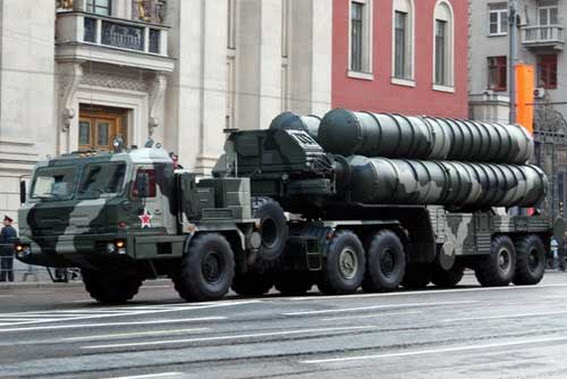
Russia sells China S-400 surface-to-air missiles

Huanqiu.com says in its report titled Russia has decided to sell S-400 to China: “According to the July issue of Canadian “Kanwa Defence Review” an authoritative source of the Russian military industry says that Russia has decided to export S-400 anti-aircraft missiles to China.

This is one more concession that Russia has made in its arms sale to China following the exports of Su-35 fighter jets, and the Chinese version of the Lada class submarines.

“Kanwa says: China hopes to get the S-400s and has been making request for it for quite a few years at the annual meetings between the two governments. However, due to fears that China might copy it and other reasons, the Russian government did not clearly agree to sell he S-400s to China until 2012.

At the end of 2012, Russia for the first time directly told Beijing that it agreed to sell the S-400s. No formal agreement has so far been entered into, but negotiation about that has already been included in the agenda.

“Russia decided that it might sell China the radar and command and control systems of the S-400. What kind of missile system will be exported will be the key issue in the negotiations. One thing is clear: the versions allowed to be sold include the interception missiles with a range of 380 kilometres.

However, no final decision has been made as to whether sale will go ahead of the full set system of the S-400 interception missiles, also having a range of 380 kilometres.”

Kanwa’s article believes that China wants to get Russian technology to improve its Hongqi-9 surface-to-air missiles, which has only a range of 125 kilometres. In order to lengthen its range, it needs a new generation of engine, and improvement of its filling technology.

The 380 kilometre range of the S-400 is longer than most similar US missiles, and is therefore extremely attractive to China.

Moreover, due the modular structure of the S-400s, they can be used in combination with the S-300 missiles China has imported from Russia.

As for the reasons why Russia has decided the export: Kanwa believes that besides mutual political needs, the major reason is further US-Japanese cooperation in developing their ballistic missile defence system with the final target of obtaining an interception missile flying at the speed of 6.5 km/second.

As a result, China and Russia have intensified their discussions and cooperation in developing their ballistic missile defence systems.


Source: huanqiu.com “Russia has decided to export S-400 to China” (excerpts and summary translated from Chinese by Chan Kai Yee)

Thứ Tư, 3 tháng 7, 2013

Philippines To Buy 2 Maestrale Frigates From Italy

MANILA — The Philippines is set to buy two Maestrale-class frigates from Italy, a defense official said Wednesday, as the Asian nation races to upgrade its military amid mounting territorial disputes with China.

A Maestrale-class frigate (photo grabbed from Marina Militare [Italian Navy]
A Maestrale-class frigate (photo grabbed from Marina Militare [Italian Navy] (Click on Image to Enlarge)

The frigates, along with 12 FA-50 fighter aircraft, are the most significant items on the government’s 75 billion peso (US $1.7 billion) military modernization budget over the next five years, Defense Undersecretary Fernando Manalo said.

“We are modernizing not because we want to go to war with China,” he told a news conference.

He said the government had a sworn obligation to defend the “West Philippine Sea,” using the government’s preferred term for Philippine-claimed areas in the South China Sea.

“We are not saying that this is part of our preparations to assert our sovereignty in the West Philippine Sea. What we are saying is that we cannot just give them up.”

The frigates would add to two refurbished Hamilton-class cutters formerly used by the US Coast Guard that the Philippines acquired from its US ally to upgrade its aging navy fleet, which includes some vessels that first saw action in World War II.

Manalo said the navy had already decided to acquire two new Maestrale-class frigates instead of buying used ones from the Italian navy, and had budgeted 18 billion pesos for them.

The Philippines could be ready to tender by the end of the year, he added.

Meanwhile, the government had alloted 18.9 billion pesos to acquire the fighter aircraft, which are built by South Korea, he added.

The modernization budget also provides for building or improving facilities to berth and provide maintenance to the vessels on the military’s shopping list, Manalo said.

President Benigno Aquino vowed Monday to rebuild the air force by 2016.

The Philippines, which has one of the weakest military forces in the region, retired the last of its US-designed F-5 fighters in 2005.

Defense News

Taiwan Air Force forms an Anti-Submarine Air Group

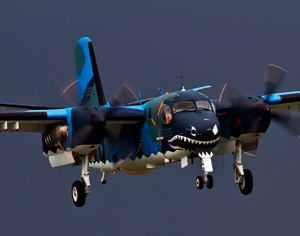
S2T Super Tracker of the Republic of China (ROC) Naval Aviation group.

Taiwan’s Ministry of National Defense announced the establishment of an Air Force anti-submarine group, maintained by eleven S-2T Turbo Tracker anti-submarine planes transferred from the Navy. The announcement was made by Chief of the General Staff Gen. Yen Ming during a commissioning ceremony at an air force base in Pingtung County, southern Taiwan. The main missions of the anti-submarine group will include countering the threat of submarine attack by opposing forces. The Turbo Trackers were originally built by the Grumman company (now Northrop Grumman).

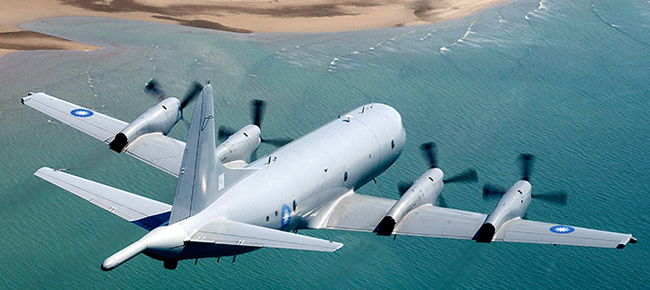
The commissioning of the new group was made in advance of the delivery of 12 P-2C Orions, the first is expected to be delivered from US Navy surplus by the end of 2013 and the entire delivery is expected to complete in 2014. The delivery of the P-3C was approved by the U.S. government in 2007, under a US$1.96 billion foreign military sale program.

Upgrades to the aircraft involved installation of new mission system avionics and service life extension kits to extend the operational life for 15,000 additional flight hours. Lockheed will also install complimentary navigation message ECP to update RINU-G and control display unit software for a message set. The Harpoon Block 2 missile requires the new message set for precision targeting. Other elements of the package include upgrades to the ALR-97/electronic support measures and ALR-95 system, as well as an upgrading of Mode 4 software to Mode-T.


Taiwan is about to receive 12 refurbished P-3C from the US, under a US$1.96 billion foreign military sale program signed in 2007. Photo: Lockheed Martin

Defense Update

Indian Carrier Vikramaditya Sails From Russia for Final Sea Trials ( MiG-29Ks )

A Russian-built aircraft carrier refitted for the Indian navy has set sail for final sea trials prior to handover, a senior Russian defense industry official said Wednesday - five years after it was originally due to be delivered, and more than twice over budget.


The Vikramaditya (formerly Admiral Gorshkov), which has been refitted at the Sevmash shipyard in northern Russia, is due to he handed over in fall 2013. A mixed Russian-Indian crew is on board the warship, while the Indian sailors learn how to operate the vessel.

“The warship departed for sea trials early on Wednesday in line with the schedule,” said Igor Sevastyanov, deputy head of Russia’s state arms exporter Rosoboronexport.

“Everything is alright. The ship will be delivered [to India] this fall, we cannot afford any more delays,” Sevastyanov said on the sidelines of the International Maritime Defense Show (IDMS-2013) in St. Petersburg.

The refit of the ship has lurched from one crisis to another since India and Russia signed a $947 million dollar deal in 2005 for its purchase and refit. Delivery has already been delayed three times, pushing up the cost of refurbishing the vessel to $2.3 billion, amid acrimony between Moscow and New Delhi over the contract.

The Vikramaditya was supposed to have been handed over on December 4, 2012, after earlier delays, but sea trials last September revealed the ship's boilers were not fully functional.

The source of the problem, which reduced the ship's maximum speed, was due to use of low-grade Chinese-made firebricks in the boiler insulation instead of asbestos, according to Russian shipbuilders.

The Vikramaditya was originally built as the Soviet Project 1143.4 class aircraft carrier Admiral Gorshkov. The ship was laid down in 1978 at the Nikolayev South shipyard in Ukraine, launched in 1982, and commissioned with the Soviet Navy in 1987.

Renamed after the collapse of the Soviet Union in 1991, Admiral Gorshkov sat in dock for a year for repairs after a boiler room explosion in 1994. In 1995, it briefly returned to service but was was finally withdrawn and put up for sale in 1996.

The ship has a displacement of 45,000 tons, a maximum speed of 32 knots and an endurance of 13,500 nautical miles (25,000 km) at a cruising speed of 18 knots.

India has already started taking delivery of MiG-29K naval fighter aircraft for the Vikramaditya, which were ready before the refit was completed. The MiG-29Ks will operate in STOBAR (short take-off but assisted recovery via arresting wires) mode.

RIA Novosti (July 03)

Two new-type frigates of PLA Hong Kong Garrison commissioned

HONG KONG, July 2 (ChinaMil) -- The Hong Kong Garrison of the Chinese People's Liberation Army (PLA) held the commissioning, naming and flag-granting ceremony for the Huizhou frigate and the Qinzhou frigate at 10:00 on the morning of July 1, 2013 at the Stonecutters Island naval port in Hong Kong, marking that the two new-type frigates are formally commissioned.


The newly-commissioned Huizhou frigate and the Qinzhou frigate with the hull numbers of 596 and 597 respectively are China's independently designed, developed and produced new-generation light guided-missile frigate integrated with many types of weapons and equipment, possessing good stealth performance and strong electromagnetic compatibility, according to the briefing.

The two frigates will be mainly responsible for tasks including patrolling, defense, naval escort and operation against sea targets after their commissioning. In addition, they will gradually replace the guided-missile escort boats now in service, becoming the main combat equipment of the PLA Hong Kong Garrison for maritime defense.

After the ceremony, the two frigates were open to the Hong Kong residents for the first time and a total of 13,000 Hong Kong residents boarded the frigates for visit.

People Daily

Philippine AF eyes Gripen as Next Generation of Fighter Planes for its Modernization

MANILA, (PNA) -– The Swedish-made supersonic Gripen plane is emerging as the next generation of jet fighter aircraft being considered by the Philippine Air Force (PAF) for its long-overdue modernization program.

JAS-39 Gripen
JAS-39 Gripen (photo : SaabGroup)

A random interview conducted by Philippines News Agency on Tuesday indicated that PAF pilots prefer the Gripen jet-fighters to other types (of fighter planes) because of its lower cost, yet armed with sophisticated latest stand-off long-range anti-ship weapons and air-to-air missiles.

These are highly accurate weapons that can be unleashed even if the target is 80 kilometers away.

The air-to-air missiles can be fired beyond visual range of the pilot.

Gripen has a top speed of 1,552 miles per hour.

Gripen jet-fighter plane in flight the PAF is eyeing to acquire for its modernization. (Photo courtesy of SAAB)

Representatives from Gripen were in Manila last month to participate in the annual PAF symposium held at the Mall of Asia in suburban Pasay City. They said they would be happy to sell to the Philippines the multi-role Gripen fighter jets.

Gripen is manufactured by SAAB.

In its brochure distributed to the press, SAAB says that Gripen is cost-effective, new generation multi-role aircraft in the market.

The multi-role Gripen fighter aircraft costs US$ 60 million apiece while other similar planes cost as much as US$ 80 each or more.

Thailand has already purchased 12 Gripen jet-fighters while Malaysia is planning to buy the aircraft.

Aside from Sweden Air Force which bought over 200 Gripens, other countries that have Gripen in their arsenals are South Africa 26, Hungary 14, Czech Republic 14.

The United Kingdom also bought some Gripen planes but there was no mention as to the number of units it acquired from Sweden.

Gripen can take-off and land in short runways, cost-effective, tailor-made and top-of-the-line aircraft comparable to the world’s best.

“Gripen represents the ultimate in operational efficiency capable of fulfilling a range of roles, either alone or as part of a wider defense network,” SAAB said.

It also says that Gripen is “the world’s most agile fighter for close combat.

SAAB has incorporated a state-of-the art weapon system as Gripen has look-down/shoot-down capability in air combat in engaging aircraft, missiles, and even the smallest, low-flying targets.

Gripen is also difficult to match in any air combat situation.

The government is also considering the acquisition of the Korean-made jet-trainer plane that can also be used as an interim fighter aircraft.

It may be recalled that shortly after World War II up to the ‘70s, PAF was second to none in Southeast Asia in terms of air power.

But PAF has degenerated into weakling Air Force after it had phased out its fighter aircraft such as the F-86 Sabre jets, F-8 Crusaders and the F-5 “Freedom Fighters” without any replacement to date, exposing Philippine airspace unguarded since 2005 when the last of the F-5 jets were retired for good without replacement.

As a consequence intruding foreign aircraft enter Philippine airspace without being intercepted.

Lt. Gen. Lauro Catalino dela Cruz, PAF commanding general, has been calling for the modernization of the Air Force to meet the security needs of the country.

Seeing the predicament of the Air Force, President Benigno S. Aquino III on Monday vowed to provide the PAF with jet fighters, radars and other modern equipment before he steps down from office in 2016.

“I assure you that before I step down from office, our skies will be guarded by modern air assets,” the President said in a speech during the 66th PAF anniversary at Clark in Pampanga.

The President said the amount of P75 billion has been appropriated for the implementation of the New Modernization Act of the Armed Forces of the Philippines (AFP) for the next five years.

PNA

Thứ Hai, 1 tháng 7, 2013

India inducts new power-packed stealth frigate INS Trikand

NEW DELHI: In tune with its operational drive to turn "stealthy" because surprise and deception are crucial in modern-day warfare, the Navy inducted its latest guided-missile stealth frigate INS Trikand on Saturday.

Guided-missile stealth frigate INS Trikand

INS Trikand is the last of the six stealth frigates ordered from Russia. The Navy had earlier inducted three 4,000-tonne Talwar-class stealth frigates ( Talwar, Trishul and Tabar) from Russia in 2003-2004.

Then, impressed by the punch the frigates packed, India ordered another three (Teg, Tarkash and Trikand) under a $1.15 billion contract inked in 2006.

On Saturday, Navy vice chief Vice admiral R K Dhowan commissioned INS Trikand at a ceremony at Kaliningrad in Russia, which was also attended by the Indian ambassador Ajai Malhotra and other top Indian and Russian officials.

"Her sister ships INS Teg and INS Tarkash were commissioned last year and are now undertaking operations as part of the Western Fleet," said an officer. INS Trikand carries a state-of-the-art combat suite, which includes the supersonic 290-km BrahMos missile system, Shtil advanced surface-to-air missiles, an upgraded A-190 medium range gun, an electro-optical 30-mm close-in weapon system, anti-submarine weapons such as torpedoes and rockets and an advanced electronic warfare system.

"The weapons and sensors are integrated through a combat management system 'Trebovanie-M', which enables the ship to simultaneously neutralise multiple surface, sub-surface and air threats," said the officer.

The ship also incorporates "innovative" features to reduce its radar, magnetic and acoustic "signatures" to ensure it is relatively difficult to detect by enemy radars. Powered by four gas turbines, the frigate is capable of speeds in excess of 30 knots. "The ship, commanded by Captain Ajay Kochhar with a crew of 300 officers and sailors, can also carry an integrated Kamov-31 helicopter suited for airborne early warning roles," he said.

India, of course, is also building its own stealth frigates. Three Shivalik-class frigates, built at Mazagon Docks (MDL), have already been inducted by the Navy. Then, there is an over Rs 50,000 crore plan on the anvil to construct seven advanced stealth frigates, with all weapon and missile systems under the hull for a lower radar "signature", in a programme called Project-17A.

The project will be shared between MDL at Mumbai and Garden Reach Shipbuilders and Engineers (GRSE) at Kolkata.

The Times Of India

Jinan MAC in Live-Ammunition Firing Drill

A brigade of the air force under the Jinan Military Area Command (MAC) of the Chinese People's Liberation Army (PLA) organized its troops to conduct live-ammunition firing drill in an unfamiliar field, in a bid to further enhance troops' combat capability in harsh conditions and complex environment.


Thứ Bảy, 29 tháng 6, 2013

Japan expected to take PAC-3 missiles off alert in Tokyo as North Korea fears subside

TOKYO - Japan is expected to pull missile units deployed around its capital off of alert status because it believes the threat of a launch from North Korea has subsided.

Media reports said the units were to be taken off alert status as early as Friday, but officials refused to comment.

Japan, South Korea and U.S. troops have been taking special measures to counter North Korean threats that it might launch a long-range missile or some kind of a retaliatory strike if provoked. The tensions reached their peak in April, as the United States and South Korea held large-scale joint military manoeuvrs, but have since calmed down.

Japan deployed PAC-3 anti-missile defence units at three locations in and around Tokyo, which is within range of North Korea's ballistic missiles, in early April.

Winsorstar

Agni-V to be tested twice this year, could be inducted by 2015


NEW DELHI: India's most formidable strategic missile, the over 5,000-km Agni-V, will be tested twice before this year ends to ensure it is ready for full-scale induction in the armed forces towards end-2015.

Interestingly, the latter of the two tests will see the 50-tonne Agni-V being fired from a hermetically-sealed canister mounted on a launcher truck. A canister-launch system will give the forces the requisite operational flexibility to swiftly transport the ballistic missile and launch it from a place of their choosing. Consequently, the highly road-mobile Agni-V will be able to hit even the northernmost part of China if fired from close to the Line of Actual Control.

"We are getting ready for two more tests of the three-stage Agni-V this year, which will include the canister-launch trial. Our aim is to make the missile ready for induction in two years," said new DRDO chief Avinash Chander, talking exclusively to TOI.

Similar plans are underway to make the two-stage Agni-IV, with a 3,500-km strike range, ready for induction by end-2014. The armed forces have already inducted the Pakistan-specific Agni-I (700-km) and Agni-II (over 2,000-km) as well as the 3,000-km Agni-III.

The Agni-IV and Agni-V missiles, however, are in a different class with "much higher accuracy and kill efficiencies" to give teeth to the minimum credible deterrence posture against China. With a massive nuclear arsenal and missiles like the 11,200-km Dong Feng-31A capable of hitting any Indian city, Beijing is leagues ahead of New Delhi.

DRDO, however, remains unfazed. Work is in progress to make the solid-fuelled Agni-IV and Agni-V, the latter virtually an intercontinental ballistic missile, even more lethal.

"After these two missiles are inducted, the two major focus areas will be maneuvering warheads or re-entry vehicles to defeat enemy ballistic missile defence systems and MIRVs (multiple independently targetable re-entry vehicles)," Chander said.

An MIRV payload implies a single missile carrying several nuclear warheads, each programmed to hit different targets. "But there is no Agni-VI programme as of now. We are working on enabling technologies and capabilities... we will come to the Agni-VI programme, if required, later," he said.

But is DRDO being too optimistic about the Agni-IV and Agni-V induction schedules, given that both have been tested only once till now? "No, we require just six to seven trials. We are no longer in the age when a large number of trials are required," said Chander, a missile scientist who was the overall head of the expansive Agni programme earlier.

"These surface-to-surface missiles have well-defined (parabolic) trajectories, unlike say air-to-air missiles. We conduct thousands of tests through modeling and simulation in our labs under different conditions. The actual flight trials are to validate what is predicted in simulation tests, match the algorithms," he added.

Times of India

SKorea extends $7.3 billion fighter jet bidding

SEOUL, South Korea (AP) -- South Korea has extended its window for accepting bids from aircraft makers to supply 60 fighter jets at an estimated cost of $7.3 billion (8.3 trillion won).

Arms procurement official Baek Youn-hyeong says bidding will resume Tuesday after an 11-day round ended Friday with no winner.

Republic of Korean Air Force F-5E Tiger II

The 60 new fighters would replace South Korea's aging fleet of F-4s and F-5s. Boeing's F-15 Silent Eagle, EADS' Eurofighter Typhoon and Lockheed Martin's F-35 Joint Strike Fighter are competing.

Yonhap news agency says no bidders proposed prices lower than the estimated cost. It didn't cite sources. Baek declined to confirm the report.

South Korea faces rival North Korea over a heavily armed border after the 1950-53 Korean War ended in a truce.

© 2013 The Associated Press. All rights reserved.

Thứ Sáu, 28 tháng 6, 2013

Myanmar Air Force Uses Chinese made UAV

Myanmar Air Force is reported to have acquired 11 Sky-02A from Beijing Micropilot company of China as part of the Air Force effort to venture into unmanned aerial system (UAS) technology. It has also been reported that ever since the procurement, local copies have been made on the UAV in which 24 are currently in service.

SKY_02_small_Att_UAV

The Myanmar Air Force connection with China is not limited with UAV. It also operates more than 20 Chengdu F-7M/FT-7S Airguard fighters and similar numbers of Nanchang A-5C Fantan attack aircraft. It also procured Shenyang J-6 fighters and Hongdu K-8 Karakoram.

A-5C Fantan

A-5C Fantan

K-8 Karakoram

K-8 Karakoram

12 of these advanced jet trainers were procured with planned local production for 50 of such is in the pipeline.

The Chinese connection with Air Force is also visible in its transport fleet which include Shaanxi Y-8, Xian MA-60 and Harbin Y-12 Panda transport aircraft.

Y-8

Y-8

Y-12

Y-12


Malaysia Flying Herald

Malyshev Plant Presented the First Tank Made for Thailand


T-84 Oplot Main Battle Tank (all photos : LBEconomics)

Today, the state enterprise "Malyshev Plant" presented the first production tank "Oplot", made under a contract with the army of Thailand.


The first production "Oplot" delegation visited the Royal Thai Army, led by the commander of the armored troops Bunsantinom Sansavatom, reports correspondent LB.ua.

General Director of "Ukroboronprom" Sergey Gromov said that "this tank demonstrates that" Ukroboronprom "fulfill its obligations to Thailand in the agreed time frame."


According to him, the contract will be fully implemented by the end of 2014.

Gromov also noted that the Ukrainian-Thai agreement is of fundamental importance for the country and for the GC "Ukroboronprom" because "it loads the production capacity of Ukrainian enterprises and allows Ukraine to develop as a world leading manufacturer and exporter of military equipment."


"I am confident that the Ukrainian tank will increase the combat readiness of the Royal Thai Army. Battle tank "Oplot" meets all international achievement in the military sphere, "- said in turn commander of armored troops of the Royal Thai Army, Major General Bunsantin Sansavat.

In September 2011 between the GC "Ukrspecexport" and the Royal Thai Army signed a contract for the supply of 49 units in Thailand main battle tank "Oplot." The total value of the contract - about $ 200 million.

(LBEconomics)/ Photos: Defense Studies

Thứ Năm, 27 tháng 6, 2013

Indian Air Force Wants Light Utility Helicopter Purchase Sped Up

NEW DELHI — The Indian Air Force (IAF) has asked the Ministry of Defense (MOD) to speed up procurement of light utility helicopters. The request comes in the wake of a deadly crash of a newly acquired Russian-made Mi-17 during a June 25 rescue mission in a region of the Himalayas that has been devastated by floods.

The request for accelerating the procurement of light utility helicopters (LUH) has been conveyed to the MOD, said sources in the IAF.

The IAF has been demanding replacement of its aging Cheetah and Chetak helicopters, which are mostly used for logistics in the upper reaches of northern India.

The $900 million LUH tender issued in 2009 — in which Kamov of Russia and Eurocopter of France are competing — remains undecided by MOD, which has given no reasons for the delay.

The LUH field trials have been completed.

An Indian Army official said the replacement of the Cheetah and Chetak helicopters, which ferry troops and rations to higher reaches of the Himalayas, is already delayed by over seven years.

A total of 384 helicopters are being procured for both the Indian Air Force and the Indian Army. Of these the current tender is for the purchase of 197 helicopters off the shelf while the remaining 187 would be manufactured in India, by state-owned Hindustan Aeronautics Ltd. (HAL) under joint partnership.

The helicopters will carry out multiple mission roles including reconnaissance and surveillance, direction of artillery fire, carrying small bodies of troops, nuclear, biological and chemical (NBC) monitoring, casualty evacuation, and airborne forward air control missions.

Defense News

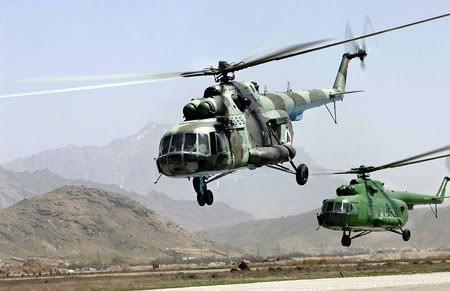
Screen captures of a video displaying Mil Mi-17 transport helicopter of the of the People's Liberation Army (PLA) armed with the HJ-10 (K/AKD10 / KD-10)anti-tank guided missile (ATGM). It is Chinese equivalent of the American AGM-114 Hellfire anti-tank guided missile (ATGM) used on the United States Army's AH-64 Apache attack helicopter.
CHINESE MI-17 HELICOPTERS ARMED WITH HJ-10 (AKD10) ANTI-TANK GUIDED MISSILE

Thứ Tư, 26 tháng 6, 2013

Asian military budgets to eclipse US by decade's end

Military budgets in North America will be eclipsed by the end of the decade because of a surge of defence spending in China and its Asian neighbours, a new report says.


Next year, Israel will sell twice as many drones as the US Photo: EPA

Military budgets in North America will be eclipsed by the end of the decade because of a surge of defence spending in China and its Asian neighbours, a new report says.

Defence budgets in the Asian Pacific region will leap 35 per cent to £325 billion by 2021 even as US spending is slashed by a quarter to £306 billion.

The global arms trade is growing strongly despite the economic woes of the past five years, but the shift in spending threatens the dominance of American, British and European defence firms, the research by IHS Jane's found.

Guy Anderson, senior principal analyst at the defence consultancy, said "The global arms market is about to get very turbulent. We may already have reached 'peak defence' with the US dominance of the global defence market under threat. The big Western defence companies have no option – export or shrink – but this could be sowing the seed of their own demise."

The report found American arms manufacturers were already being overtaken in some key high tech areas.

Next year, Israel will sell twice as many drones as the US and will become the biggest exporter of the unmanned aircraft by the end of this year.

China's defence spending is predicted to jump from £81.7 billion last year to £134 billion by 2021, the study called The Balance of Trade, says.

Spending in India and Indonesia is also expected to climb sharply. By contrast, defence spending growth in the UK, France, Germany and Italy will be negligible over the next eight years.

Paul Burton, senior manager on IHS Jane's DS Forecast, said: "Two things are happening: budgets are shifting East and global arms trade is increasing competition.

"This is the biggest explosion in trade the world has ever seen. At this rate, defence trade between countries will have more than doubled by 2020."

Telegraph

Russia sells China 100 Su-35 fighter jets

(China Daily Mail)- According to a report by Voice of Russia, China and Russia have concluded an export agreement for 100 Su-35 fighter jets during the Paris Air Show.


At the 50th Paris Air Show at Le Bourget Airport, Russia had it’s most intensive participation over the past few years. All the 46 well-known Russian weapon manufacturers and companies, including Sokhoi, Mikoyan and Ilyushin, had presence there. In the exhibition hall, open-air site and flying shows, the audience has witnessed the Russian aviation industry’s newest achievements.

At that exhibition, there was the first flying show of the Su-35 abroad. The Su-35 is the most intrepid fourth-generation fighter jet in the world today. It is equipped with a 30mm machine gun, a radar with a search range of 400 km, and a flight range of 3,500 km without refuelling.

It’s powerful engine enables it to perform various super difficult movements such as horizontal rolling, plane screw spin, Pugachev Cobra and other stunt manoeuvres. It has its unique super “pancake” manoeuvre – a horizontal 360 degree turnaround without reduction of speed. Western media exclaimed in admiration, “It’s not an airplane, it’s a UFO.”

Mikhail Pogosyan, general manager of United Aircraft Corporation, was tremendously satisfied with the Su-35’s performance this time. He said: “The Su-35 is better than all other types of fourth-generation aircraft. Its performance not only embodies excellent pneumatic technology, but also the ability of the unique equipment it carries and its attack capability.

“It is not yet our newest achievement because we are at the same time developing a fifth-generation fighter jet. The two types of aircraft may supplement each other in the future to enhance the combat efficiency of the air forces of Russia and the countries that use Russian-made weapons.”

Source: huanqiu.com “Russia: China and Russia Have Concluded Export Agreement for 100 Su-35s” (translated from Chinese by Chan Kai Yee)

China Daily Mail

Chinese Air Force Gets More H-6K Strategic Bombers


The Chinese People’s Liberation Army Air Force (PLAAF) recently received 15 Xian H-6K bombers with nuclear capabilities, according to Jane’s Defence Weekly.

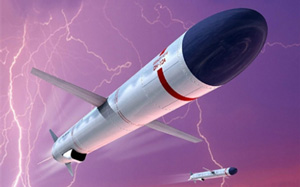
Variants of the CJ-10 anti-ship/land attack cruise missile can be launched from different platforms. Six are carried by Xian H-6K strategic bomber, The missile is also carried on board the Type 095 and 052D destroyers and on land-based mobile launchers.
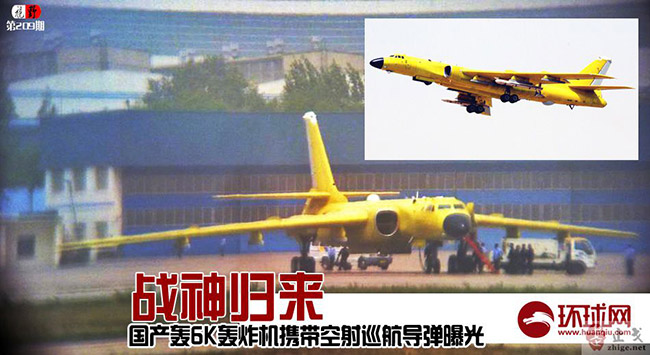
The H-6K, an updated version of the H-6 bomber (originally, a locally built version of the 1960s vintage Russian Tupolev Tu-16 bomber), is a medium-sized craft designed for long-range attacks, stand-off attacks and large-area air patrol. Unlike its predecessor, the H-6K can carry cruise missiles under its wings. The H6-K also

maneuvers more deftly than the H-6 and requires a smaller crew to operate. H-6K reportedly has a combat radius of 3,500 km. It can carry weapons in the internal weapon bay and on four underwing pylons. The nuclear-capable Changjian-10 (long sword) CJ-10A cruise missiles it carries have a range of 1,500-2,000 km, effectively extending the bomber’s combat range to 4,000-5,000 km – long enough to reach Okinawa, Guam and even Hawaii from China’s mainland.

Analysts stipulated that PLAAF missiles be able to reach Taiwan, southwestern Japan and Guam, a range of control that requires a 3,000 km combat radius and powerful attack capability. Only the combined combat radius of the H6-K and Changjian-10 strike range currently satisfy the length requirement for those missions.


Latest Chinesse media photo of the H6K Bomber

Defense-Update