Hiển thị các bài đăng có nhãn Russia Military. Hiển thị tất cả bài đăng
Thứ Bảy, 29 tháng 6, 2013
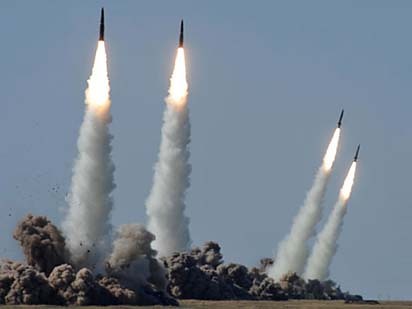
All Russian Missile Brigades to Get Iskander Systems by 2018
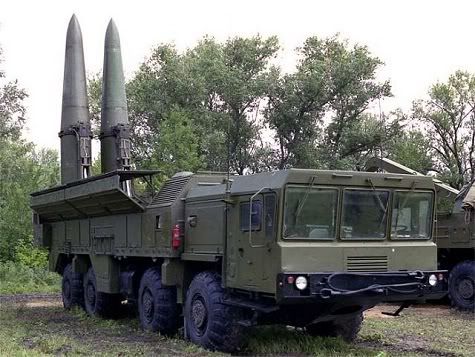
Iskander-M ballistic missile systems, which can effectively engage two targets within a minute at a range of up to 280 kilometers, will be provided to all Russian Ground Forces missile brigades by 2018, the country’s defense minister said Friday.
The missiles have a non-ballistic flight path that is difficult for the enemy to predict and are guided throughout their flight.
On Friday, a missile brigade in southern Russia’s Astrakhan Region received an advanced Iskander-M missile complex, which “has no match in the world for its tactical specifications,” Defense Minister Sergei Shoigu said on a visit to the facility, Russian media reported.
The complex was delivered in a complete set, rather than “piecemeal” as previously done, the minister said. He stressed the importance of ensuring high personnel-training standards and the construction of new infrastructure for the system to be operated effectively.
In 2011, then-President Dmitry Medvedev announced plans to deploy Iskander missiles in Russia’s westernmost Kaliningrad Region, to counter the threat posed by US plans to deploy missile defense elements in Europe. NATO and the United States have insisted that the shield would defend NATO members against missiles from North Korea and Iran and would not be directed at Russia.
Russia proposed a joint missile defense system, an idea that many experts both at home and abroad dismiss as unviable and unrealistic. Then it demanded “legally binding guarantees” that US/NATO missiles would not be aimed at Russia.
Since Moscow’s proposal received a lukewarm response in the West, Russia has been warning of unspecified low-cost “asymmetric measures” to counter the future Western missile defense system.
ROA Novosti
Thứ Năm, 27 tháng 6, 2013
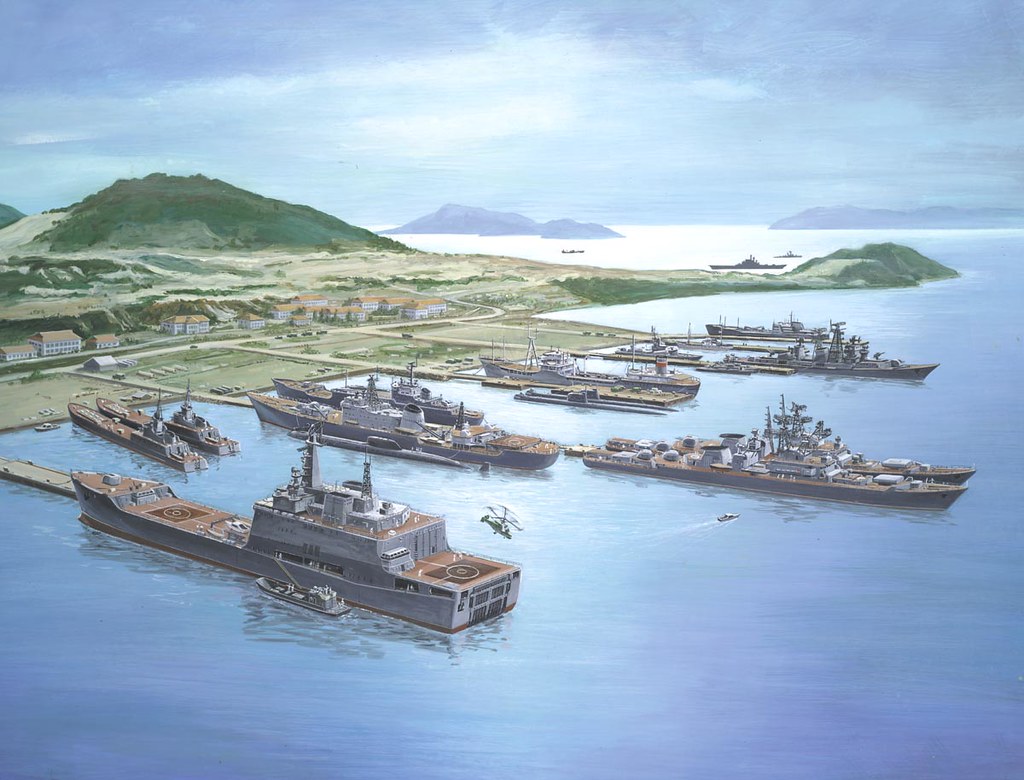
Russian Navy Pulls Personnel Out of Syria Base
(RIA Novosti)- Russia currently has no military personnel at its resupply facility in the Syrian port of Tartus, a senior diplomat said, though an expert affiliated with the Ministry of Defense downplayed it as a possible temporary measure.
“Currently, there is no one in Syria from the Russian Defense Ministry,” Deputy Foreign Minister Mikhail Bogdanov told the Al-Hayat international pan-Arabic newspaper.
“We never, at any time, had a real military base in Tartus… That center has no military or strategic significance. It never did and it doesn't now,” Bogdanov added, speaking in an interview that was first published last Friday in Arabic.
The naval maintenance center in Tartus, established in Soviet times, remains Russia’s last military foothold outside the former Soviet Union. The facility, used for the maintenance and resupply of Russian warships in the Mediterranean, had a staff of “several dozen,” Russian Foreign Minister Sergei Lavrov said in February.
The Russian Defense Ministry did not comment on Bogdanov’s statement. Spokespeople for the ministry and the Russian Navy could not be reached for comment Thursday.
An unnamed military official confirmed the story to Vedomosti business daily on Wednesday, saying that the Russian leadership was worried about the safety of the facility’s personnel, given the ongoing civil war in Syria. More than 90,000 people have been killed in the country since fighting broke out between government forces and rebels in March 2011, according to the latest UN figures.
Any incident involving Russian servicemen in Syria could also have unwanted political repercussions, the source said. Moscow has been providing diplomatic backing to embattled Syrian President Bashar Assad against pressure from Western powers and Gulf kingdoms.
The Russian Navy currently has a flotilla of 16 warships and auxiliary ships in the Mediterranean, but no Russian ships have called at Tartus in recent months, according to Russia’s General Staff.
The facility in Tartus only sees use on rare occasions when Russian warships call there, said Igor Korotchenko, editor-in-chief of the National Defense monthly Russian-language magazine and head of the Defense Ministry’s public council.
“I cannot confirm the pullout, but it probably means that there are simply no current plans to use the base in Tartus,” he told RIA Novosti on Thursday.
“They’ll likely redeploy when it’s needed. It’s just a technicality,” Korotchenko said.
RIA Novosti
Thứ Ba, 28 tháng 5, 2013
Russia developing counter-measures for European anti-missile shield
Moscow is taking counter-measures that would negate a U.S. anti-missile shield's ability to affect its nuclear deterrent, a Russian defense official says.
VLADIVOSTOK, Russia, May 28 (UPI) -- Moscow is taking countermeasures that would negate a U.S. anti-missile shield's ability to affect its nuclear deterrent, a Russian defense official says.
Russian Deputy Defense Minister Anatoly Antonov said in an interview Saturday that should NATO and the United States unilaterally proceed with a European anti-ballistic missile shield without Russia as an equal partner, Moscow is readying "military-technical measures" that would hamper its ability to function.
Russian officials have repeatedly voiced vehement opposition to a unilateral U.S.-NATO missile defense shield as a threat to its own security and a major obstacle to bilateral relations, saying it could easily be re targeted from countering threats from Iran and the Middle East toward Russia's own nuclear deterrent.
Moscow is insisting on long-term legally binding guarantees that any such system wouldn't be used against it and is seeking de facto joint control through the sharing of technical criteria -- a possibility the U.S. Senate has rejected.
It is also pushing for a new security treaty covering all of Europe, including Russia, to replace NATO's role.
The United States in March effectively suspended the fourth and final phase of its unilateral European missile defense system -- part of a plan to instead deploy additional ABM interceptors to counter North Korea, The New York Times reported.
Antonov, fresh from last week's Moscow Conference on European Security, told the Russia 1 television channel in an interview from Vladivostok the Kremlin is preparing unnamed contingency plans to ensure its nuclear deterrent force would remain viable if NATO and the United States go ahead with their anti-missile plans.
"On the possibility of taking military-technical measures, we've talked all the time about it," he said. "This was first stated by (Russian President Vladimir Putin) in November of last year.
"If and when the U.S. missile defense system is created and is aimed at undermining the nuclear deterrent, the Department of Defense will take steps that will not allow the Americans to achieve any result," Antonov said.
Asked if that meant that a future U.S.-NATO anti-missile shield would be "neutralized" if a nation such as Iran launched a nuclear missile at Europe, Antonov said it would be difficult to speculate on such a scenario.
"Well, first, the Iranians do not have such missiles and when they will have them nobody will know," he said. "And by the way, the last-minute decision by the Americans to suspend the implementation of the fourth stage suggests Washington recognizes that the Iranians in the short term have no such missiles and will not have such missiles."
The Russian official asserted that by "electing Iran" as the enemy of Europe, "the Americans are trying to realize their missile defense plans, which, in fact, won't defend Europe and create a problem for the Russian-American and Russian-NATO relations."
At last week's Moscow conference, NATO Assistant Secretary-General for Political Affairs and Security Policy Dirk Brengelmann said political assurances that a European missile defense wouldn't target Russia were already made at last year's NATO summit in Chicago.
Instead, NATO is offering two joint NATO-Russia missile defense centers and "reciprocal transparency measures to address concerns and avoid misperceptions."
Antonov, however, told RIA Novosti last week, "'Transparency' is a good word but transparency will never solve all the concerns that exist in our country.
"Today we warn our American friends: We do not want confrontation, we want cooperation. Please do not create a system that leads us into an arms race. All we want is to agree under certain conditions."
UPI
VLADIVOSTOK, Russia, May 28 (UPI) -- Moscow is taking countermeasures that would negate a U.S. anti-missile shield's ability to affect its nuclear deterrent, a Russian defense official says.
Russian Deputy Defense Minister Anatoly Antonov said in an interview Saturday that should NATO and the United States unilaterally proceed with a European anti-ballistic missile shield without Russia as an equal partner, Moscow is readying "military-technical measures" that would hamper its ability to function.
Russian officials have repeatedly voiced vehement opposition to a unilateral U.S.-NATO missile defense shield as a threat to its own security and a major obstacle to bilateral relations, saying it could easily be re targeted from countering threats from Iran and the Middle East toward Russia's own nuclear deterrent.
Moscow is insisting on long-term legally binding guarantees that any such system wouldn't be used against it and is seeking de facto joint control through the sharing of technical criteria -- a possibility the U.S. Senate has rejected.
It is also pushing for a new security treaty covering all of Europe, including Russia, to replace NATO's role.
The United States in March effectively suspended the fourth and final phase of its unilateral European missile defense system -- part of a plan to instead deploy additional ABM interceptors to counter North Korea, The New York Times reported.
Antonov, fresh from last week's Moscow Conference on European Security, told the Russia 1 television channel in an interview from Vladivostok the Kremlin is preparing unnamed contingency plans to ensure its nuclear deterrent force would remain viable if NATO and the United States go ahead with their anti-missile plans.
"On the possibility of taking military-technical measures, we've talked all the time about it," he said. "This was first stated by (Russian President Vladimir Putin) in November of last year.
"If and when the U.S. missile defense system is created and is aimed at undermining the nuclear deterrent, the Department of Defense will take steps that will not allow the Americans to achieve any result," Antonov said.
Asked if that meant that a future U.S.-NATO anti-missile shield would be "neutralized" if a nation such as Iran launched a nuclear missile at Europe, Antonov said it would be difficult to speculate on such a scenario.
"Well, first, the Iranians do not have such missiles and when they will have them nobody will know," he said. "And by the way, the last-minute decision by the Americans to suspend the implementation of the fourth stage suggests Washington recognizes that the Iranians in the short term have no such missiles and will not have such missiles."
The Russian official asserted that by "electing Iran" as the enemy of Europe, "the Americans are trying to realize their missile defense plans, which, in fact, won't defend Europe and create a problem for the Russian-American and Russian-NATO relations."
At last week's Moscow conference, NATO Assistant Secretary-General for Political Affairs and Security Policy Dirk Brengelmann said political assurances that a European missile defense wouldn't target Russia were already made at last year's NATO summit in Chicago.
Instead, NATO is offering two joint NATO-Russia missile defense centers and "reciprocal transparency measures to address concerns and avoid misperceptions."
Antonov, however, told RIA Novosti last week, "'Transparency' is a good word but transparency will never solve all the concerns that exist in our country.
"Today we warn our American friends: We do not want confrontation, we want cooperation. Please do not create a system that leads us into an arms race. All we want is to agree under certain conditions."
UPI
Thứ Ba, 21 tháng 5, 2013
Russia ‘ready’ for joint air-defense systems
Russia is ready to develop jointly with Turkey a long-range air defense complex based on S-300 surface-to-air missile systems, state arms seller Rosoboronexport head Sergei Ladygin said May 19.
Turkey launched a tender for the purchase of long-range air defense systems long ago but no winner has been announced. Competitors include U.S. partners Raytheon and Lockheed Martin with their Patriot-based system; Eurosam with its SAMP/T Aster 30, Russia’s Rosoboronexport, which markets the country’s S-300 and S-400 systems; and China’s CPMIEC (China Precision Machinery Import and Export Corporation), offering its HQ-9.
“Russia is ready to offer as part of the tender a joint Russian-Turkish product based on the Antey-2500 system [the export version of the S-300 system]. For example, to mount the air defense system on the Turkish chassis,” Ladygin was quoted as saying by Russian news agency Ria Novosti.
Rosoboronexport has also proposed that Russia and Turkey join efforts to promote this air defense system in the markets of third countries, he said. The advanced version of the S-300 missile system, called S-300PMU1, has a range of over 150 kilometers and can intercept ballistic missiles and aircraft at low and high altitudes.
Hurriyetdailynews
Turkey launched a tender for the purchase of long-range air defense systems long ago but no winner has been announced. Competitors include U.S. partners Raytheon and Lockheed Martin with their Patriot-based system; Eurosam with its SAMP/T Aster 30, Russia’s Rosoboronexport, which markets the country’s S-300 and S-400 systems; and China’s CPMIEC (China Precision Machinery Import and Export Corporation), offering its HQ-9.
“Russia is ready to offer as part of the tender a joint Russian-Turkish product based on the Antey-2500 system [the export version of the S-300 system]. For example, to mount the air defense system on the Turkish chassis,” Ladygin was quoted as saying by Russian news agency Ria Novosti.
Rosoboronexport has also proposed that Russia and Turkey join efforts to promote this air defense system in the markets of third countries, he said. The advanced version of the S-300 missile system, called S-300PMU1, has a range of over 150 kilometers and can intercept ballistic missiles and aircraft at low and high altitudes.
Hurriyetdailynews
Thứ Bảy, 18 tháng 5, 2013
Russia Developing ‘Terrorist-Killer Robots’
MOSCOW, May 17 (RIA Novosti) - Russian experts are developing robots designed to minimize casualties in terrorist attacks and neutralize terrorists, Deputy Prime Minister Dmitry Rogozin said on Friday.
Robots could also help evacuate injured servicemen and civilians from the scene of a terrorist attack, said Rogozin, who oversees the defense industry.
Other antiterror equipment Russia is developing includes systems that can see terrorists through obstacles and effectively engage them in a standoff mode at a long distance without injuring their hostages, he said.
Rogozin did not say when the equipment might be deployed by Russia’s security and intelligence services.
Human Rights Watch has criticized fully autonomous weapons, known as "killer robots," which would be able to select and engage targets without human intervention and called for the preemptive prohibition on such weapons.
“Fully autonomous weapons do not exist yet, but they are being developed by several countries and precursors to fully autonomous weapons have already been deployed by high-tech militaries,” HRW said in a statement on its website. “Some experts predict that fully autonomous weapons could be operational in 20 to 30 years.”
“These weapons would be incapable of meeting international humanitarian law standards, including the rules of distinction, proportionality, and military necessity. The weapons would not be constrained by the capacity for compassion, which can provide a key check on the killing of civilians,” the human rights watchdog said. “Fully autonomous weapons also raise serious questions of accountability because it is unclear who should be held responsible for any unlawful actions they commit.”
RIA Novosti
Robots could also help evacuate injured servicemen and civilians from the scene of a terrorist attack, said Rogozin, who oversees the defense industry.
Other antiterror equipment Russia is developing includes systems that can see terrorists through obstacles and effectively engage them in a standoff mode at a long distance without injuring their hostages, he said.
Rogozin did not say when the equipment might be deployed by Russia’s security and intelligence services.
Human Rights Watch has criticized fully autonomous weapons, known as "killer robots," which would be able to select and engage targets without human intervention and called for the preemptive prohibition on such weapons.
“Fully autonomous weapons do not exist yet, but they are being developed by several countries and precursors to fully autonomous weapons have already been deployed by high-tech militaries,” HRW said in a statement on its website. “Some experts predict that fully autonomous weapons could be operational in 20 to 30 years.”
“These weapons would be incapable of meeting international humanitarian law standards, including the rules of distinction, proportionality, and military necessity. The weapons would not be constrained by the capacity for compassion, which can provide a key check on the killing of civilians,” the human rights watchdog said. “Fully autonomous weapons also raise serious questions of accountability because it is unclear who should be held responsible for any unlawful actions they commit.”
RIA Novosti
Thứ Năm, 9 tháng 5, 2013
Video: Grand parade marks 68th anniversary of WWII victory on May 9th at Red Square
(GDVN) - The annual military parade to celebrate the 68th anniversary of Victory Day over Fascism begin at 10 am on May 9th according to local time at the Red Square in Moscow.
The Parade held with the participation of more than 11,000 military personnel, 101 military vehicles and 68 combat aircraft.
Many major weapons modernization of the Russian army will be in the public eye as mobile air defense systems Buk-2 M2 medium-range, air defense systems S-400 Triumf.
Msta-152mm self-propelled guns capable of firing S chemical and tactical nuclear weapons, tactical missile systems Iskander-M mobile, Su-25SM, Su-27, MiG-29 ...
The 45 minutes parade was with the presence of numerous veterans, the Russian people and people over the world.
http://giaoduc.net.vn/Anh/Video-Toan-canh-le-dieu-binh-hoanh-trang-ngay-95-o-Quang-Truong-Do/295780.gd
The Parade held with the participation of more than 11,000 military personnel, 101 military vehicles and 68 combat aircraft.
Many major weapons modernization of the Russian army will be in the public eye as mobile air defense systems Buk-2 M2 medium-range, air defense systems S-400 Triumf.
Msta-152mm self-propelled guns capable of firing S chemical and tactical nuclear weapons, tactical missile systems Iskander-M mobile, Su-25SM, Su-27, MiG-29 ...
The 45 minutes parade was with the presence of numerous veterans, the Russian people and people over the world.
http://giaoduc.net.vn/Anh/Video-Toan-canh-le-dieu-binh-hoanh-trang-ngay-95-o-Quang-Truong-Do/295780.gd
Thứ Tư, 8 tháng 5, 2013
Russian missile systems can overcome any defense
According to Izvestia, Russia has stepped into the new enhancements to the missile system Iskander M campaign strategy allows to overcome missile defense system at the most current , including the system of American Patriot and Aegis and missile defense system of the Israeli Arrow.
The electronic warfare system new role as a means of effective camouflage for Iskander missile complexes in M as our last flight phase. That is the sensor and the positive interference for passive radar reconnaissance and fire control system of air defense and anti- missile defense opponents by creating the noise .
A senior representative from the Russian Defense Ministry told Izvestia that the details of Iskander M improvements have been transferred to the military missile brigade in the Western and Southern Military District ( Russian Federation).
"I can not speak specifically about the number and feature of the missiles, but Russia does not plan to completely replace the present Iskander-M missile brigades with the new and improved missile combination", Representatives of the Russian Defense Ministry explained.
With this new feature, Iskander M missile complexes will solidify as an effective deterrent capability and putting pressure on any U.S. decision to deploy missile defense system in Europe. It should be stressed that the missile defense system the United States not only acts as a safety symbol for Europe, but in economic terms it is the weapon system is expensive, are considered weapons of giauTo missile Iskander tactical campaign was developed in the Soviet Union late 1980s to replace the complex Tochka and Tochka U. Iskander was first recognized in 2006 equipped /.
dangcongsan.vn
----------
The electronic warfare system new role as a means of effective camouflage for Iskander missile complexes in M as our last flight phase. That is the sensor and the positive interference for passive radar reconnaissance and fire control system of air defense and anti- missile defense opponents by creating the noise .
A senior representative from the Russian Defense Ministry told Izvestia that the details of Iskander M improvements have been transferred to the military missile brigade in the Western and Southern Military District ( Russian Federation).
With this new feature, Iskander M missile complexes will solidify as an effective deterrent capability and putting pressure on any U.S. decision to deploy missile defense system in Europe. It should be stressed that the missile defense system the United States not only acts as a safety symbol for Europe, but in economic terms it is the weapon system is expensive, are considered weapons of giauTo missile Iskander tactical campaign was developed in the Soviet Union late 1980s to replace the complex Tochka and Tochka U. Iskander was first recognized in 2006 equipped /.
dangcongsan.vn
----------
Thứ Năm, 2 tháng 5, 2013
In a First, a Russian Warship Docks in Israel
Russia’s large landing ship Azov entered the Israeli port of Haifa on Wednesday, marking the first time a Russian warship calls at an Israeli port.
Azov will stay in Haifa until Friday to resupply and allow the crew to rest, a spokesman for the Russian Navy said.
City residents will also be allowed on board for a guided tour and treated to performances by the Black Sea Fleet orchestra reinforced by marines.
Azov is part of Russia’s task force in the Mediterranean, which is due to perform exercises off the coast of war-torn Syria, Captain Alexei Komarov, who heads the landing ship unit of the Black Sea Fleet, told journalists in Haifa.
He did not give a date for the exercises, but said the task force is prepared to evacuate Russian citizens from Syria, though no such order was given so far.
Russia currently has six ships in the Mediterranean, including the Azov, which made frequent trips to the region before, calling at the Russian resupply base in the Syrian city of Tartus.
Another six ships of the Pacific Fleet are on the way to the Mediterranean and expected to join the task force later this month.
Various expert estimates put the Russian diaspora in Syria at anywhere between 5,000 and 100,000, the majority of them women who married into Syrian families. Russia evacuated 77 of its citizens by bus in January.
RIA Novosti
Thứ Ba, 23 tháng 4, 2013
Russian jets practised attacks on Sweden
Russian fighter planes carried out training missions just outside the Swedish border over Easter; Sweden's military, however, was too slow to react and had to rely on help from Nato, the Svenska Dagbladet newspaper (SvD) revealed on Monday.
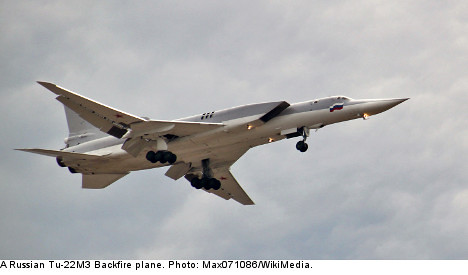
The aircraft included two heavy bombers Tu-22M3 (referred to as Backfires by Nato) which were flanked by four jet fighter escorts.
The planes flew from Saint Petersburg after midnight on March 29th, and headed past the eastern edge of Stockholm's archipelago. Usually, Russian jets continue such exercises by heading south towards Kaliningrad, a Russian exclave between Lithuania and Poland
However, in the early hours of Good Friday this year, the jets headed towards Sweden and flew over Gotska Sandön, an uninhabited Swedish island in the Baltic Sea. The planes were training for military attacks, information which had been kept secret from the public until Monday's report by SvD.
According to SvD's military sources, the planes were simulating attacks against Stockholm and somewhere in the south of Sweden.
No Swedish planes were prepared to meet the Russians and ward them off; however, jets from Nato in Lithuania and from Denmark were quick to respond, with two Lithuanian aircraft sent to shadow the Russian planes at a distance.
The Swedish Air Force did not deny the incident.
"I can confirm that there were two bombers - Tu-22 with Su-27 fighter escorts. They remained in international airspace at Gotska Sandön and carried out some form of exercise. Then they turned back the way they had come," Lieutenant-General Anders Silwer of the Armed Forces mission command told SvD.
In terms of Sweden's response, he added that the air force was "normally well prepared."
The incident occurred just two months after Defence Minister Karin Enström discussed Sweden's state of readiness policy in a speech.
"Safety, crisis preparations, and defence policy aim to be ready for the unpredictable all the time, around the clock," she said at the time.
The Local
The aircraft included two heavy bombers Tu-22M3 (referred to as Backfires by Nato) which were flanked by four jet fighter escorts.
The planes flew from Saint Petersburg after midnight on March 29th, and headed past the eastern edge of Stockholm's archipelago. Usually, Russian jets continue such exercises by heading south towards Kaliningrad, a Russian exclave between Lithuania and Poland
However, in the early hours of Good Friday this year, the jets headed towards Sweden and flew over Gotska Sandön, an uninhabited Swedish island in the Baltic Sea. The planes were training for military attacks, information which had been kept secret from the public until Monday's report by SvD.
According to SvD's military sources, the planes were simulating attacks against Stockholm and somewhere in the south of Sweden.
No Swedish planes were prepared to meet the Russians and ward them off; however, jets from Nato in Lithuania and from Denmark were quick to respond, with two Lithuanian aircraft sent to shadow the Russian planes at a distance.
The Swedish Air Force did not deny the incident.
"I can confirm that there were two bombers - Tu-22 with Su-27 fighter escorts. They remained in international airspace at Gotska Sandön and carried out some form of exercise. Then they turned back the way they had come," Lieutenant-General Anders Silwer of the Armed Forces mission command told SvD.
In terms of Sweden's response, he added that the air force was "normally well prepared."
The incident occurred just two months after Defence Minister Karin Enström discussed Sweden's state of readiness policy in a speech.
"Safety, crisis preparations, and defence policy aim to be ready for the unpredictable all the time, around the clock," she said at the time.
The Local
Thứ Bảy, 20 tháng 4, 2013
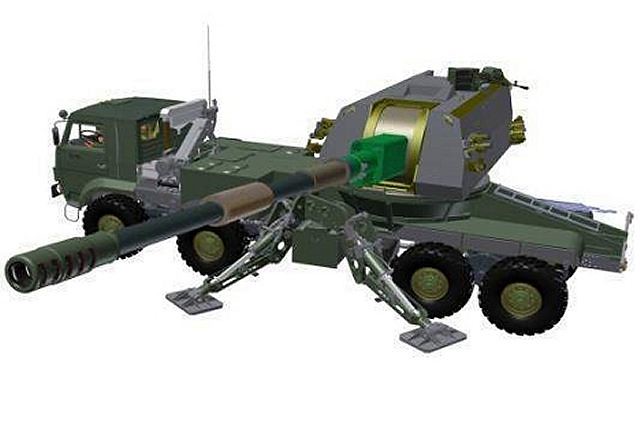
Russia will unveil soon their first 152mm 8x8 wheeled self-propelled howitzer Koalitsiya-SV
The first Russian-made 152mm 8x8 wheeled self-propelled howitzer Koalitsiya-SV based on a KamAz truck will be presented at the defence exhibition REA 2013 (Russian Expo Arms) in Nizhny Tagil, September 2013. The Russian Defence Ministry has launched a programme to gradually replace tracked artillery pieces in its arsenal with wheeled types.
KamAZ spokesman Oleg Afanasyev told Izvestiya that the new howitzer will be based on the four-axle KamAZ-6560 truck, which has a history of construction and military applications. The platform underwent minor modifications to accommodate the Koalitsiya piece, including the installation of a more powerful engine and a reinforced frame to withstand the recoil.
"This is essentially the platform used in the Pantsir-S SAM system," Afanasyev explained. "It meets the factory and military specifications. It is also in production, which means there will be no production-entry hiccoughs."
According to Afanasyev, a prototype Koalitsiya platform has been shipped to the Motovilikhinskiye Zavody factory in Perm in Russian Urals, which manufactures the howitzer. Factory testing of the complete item is expected to last until late 2015, and will lead up to the official commissioning of the new weapon.
The new howitzer will reportedly be fully automatic, meaning that the crew will remain in the armoured cab for the loading and firing sequence.
Sources at the Defence Ministry told Izvestiya that the howitzer is primarily intended as an asset for assault and light mountain brigades, which require mobility and high road speeds. Lesser-priority recipients are medium brigades, which currently use wheeled armoured personnel carriers (APC) instead of tracked infantry fighting vehicles to transport personnel. Heavy brigades are expected to be armed with tracked vehicles, which are normally better armoured than wheeled vehicles.
Sources at the Missile Troops and Artillery Department of the Russian Ground Troops Command told Izvestiya that the KamAZ-based Koalitsiya howitzer would supplement the previously ordered superlight howitzer.
Independent military expert Vyacheslav Tseluyko says the Koalitsiya howitser will find limited use.
"This type of howitzer would best fit the needs of medium brigades with APCs, whose high share of wheeled vehicles and fairly high marching speed would warrant the addition of such an asset," he explains. "Tracked Msta-S howitzers or towed Msta-B howitzers would slow down the advance of a marching convoy within such units. On the other hand, the howitzer would prove useless for light brigades because it is too big to fit into an Mi-26 [transport helicopter], which is a mandatory parameter for light weapons [operated under the Russian military system]."
Tseluyko also notes that the Russian Ground Troops have previously attempted to develop a wheeled howitzer with the Msta-K barrel, but failed because the wheels were not sturdy enough to withstand the recoil loads.
The Koalitsiya-SV howitzer was developed by Nizhny Novgorod-based Burevestnik research institute, and entered production at Motovilikhinskiye Zavody in Perm.
Mock-ups of Koalitsiya family artillery systems, to be based on various chassis, were first demonstrated during Deputy Prime Minister Dmitry Rogozin's visit to Perm in July 2012.
It was at that time that Motovilikhinskiye Zavody proposed its grounds as the venue for a federal centre of innovative artillery technology, which was expected at the time to include Burevestnik and Yekaterinburg-based Artillery Plant No 9.
Army Recognition
KamAZ spokesman Oleg Afanasyev told Izvestiya that the new howitzer will be based on the four-axle KamAZ-6560 truck, which has a history of construction and military applications. The platform underwent minor modifications to accommodate the Koalitsiya piece, including the installation of a more powerful engine and a reinforced frame to withstand the recoil.
"This is essentially the platform used in the Pantsir-S SAM system," Afanasyev explained. "It meets the factory and military specifications. It is also in production, which means there will be no production-entry hiccoughs."
According to Afanasyev, a prototype Koalitsiya platform has been shipped to the Motovilikhinskiye Zavody factory in Perm in Russian Urals, which manufactures the howitzer. Factory testing of the complete item is expected to last until late 2015, and will lead up to the official commissioning of the new weapon.
The new howitzer will reportedly be fully automatic, meaning that the crew will remain in the armoured cab for the loading and firing sequence.
Sources at the Defence Ministry told Izvestiya that the howitzer is primarily intended as an asset for assault and light mountain brigades, which require mobility and high road speeds. Lesser-priority recipients are medium brigades, which currently use wheeled armoured personnel carriers (APC) instead of tracked infantry fighting vehicles to transport personnel. Heavy brigades are expected to be armed with tracked vehicles, which are normally better armoured than wheeled vehicles.
Sources at the Missile Troops and Artillery Department of the Russian Ground Troops Command told Izvestiya that the KamAZ-based Koalitsiya howitzer would supplement the previously ordered superlight howitzer.
Independent military expert Vyacheslav Tseluyko says the Koalitsiya howitser will find limited use.
"This type of howitzer would best fit the needs of medium brigades with APCs, whose high share of wheeled vehicles and fairly high marching speed would warrant the addition of such an asset," he explains. "Tracked Msta-S howitzers or towed Msta-B howitzers would slow down the advance of a marching convoy within such units. On the other hand, the howitzer would prove useless for light brigades because it is too big to fit into an Mi-26 [transport helicopter], which is a mandatory parameter for light weapons [operated under the Russian military system]."
Tseluyko also notes that the Russian Ground Troops have previously attempted to develop a wheeled howitzer with the Msta-K barrel, but failed because the wheels were not sturdy enough to withstand the recoil loads.
The Koalitsiya-SV howitzer was developed by Nizhny Novgorod-based Burevestnik research institute, and entered production at Motovilikhinskiye Zavody in Perm.
Mock-ups of Koalitsiya family artillery systems, to be based on various chassis, were first demonstrated during Deputy Prime Minister Dmitry Rogozin's visit to Perm in July 2012.
It was at that time that Motovilikhinskiye Zavody proposed its grounds as the venue for a federal centre of innovative artillery technology, which was expected at the time to include Burevestnik and Yekaterinburg-based Artillery Plant No 9.
Army Recognition
Thứ Ba, 16 tháng 4, 2013
Russian MiG-31, S-300 missiles live firing in air defense drill
On April 12 of 2013, the Ashuluk training center in Astrakhan region, Russia took an interception drill under the leadership of the Central Military forces.
The exercise was a large scale with scenarios that the southern part of Russia identified alarm when the enemy forces preparing to conduct a missile raid.
The Mig-31 interceptor aircraft of Russian has been ordered to carry cruise missiles for patrolling and ready to shoot down the enemy missiles.
Meanwhile, the air defense missile system S-300 has also been conducting fire and maneuver to block missile assumptions.
Chủ Nhật, 14 tháng 4, 2013
Russia's Gepard class frigate lives firing
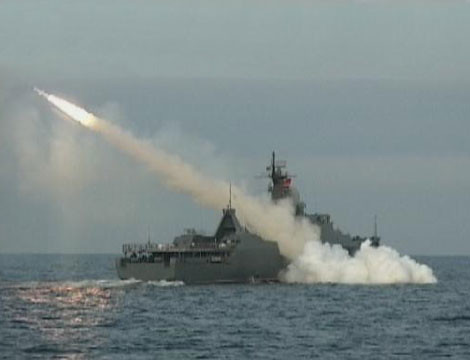
The 76mm cannon and Kh-35 anti-ship missile of Russian Gepard stealth frigate Project 11661 firing in an exercise.
In addition, two Gepard 3.9 were exported to Vietnam in 2011, Russian Navy has also equipped itself 2 ships.
The first was built in 1991, launched in 2001 called Tatarstan (hull number 691) with stretch of water all around 1,930 tons, length 102.14 m, width 13.09 m.
The ship was equipped with Kh-35 Uran anti-ship cruise missiles, the launchers are arranged along the 2 side of the vessel (later Vietnam's ships improved to cross-hull fitting for increasing stealth abilities).
By August 11 of 2012, Russia launched a new Project 11661K of Gepard class which improved strength of anti-ship weapons systems (using supersonic anti-ship missile with a range of 300km) and air defense weapons (equipped with a combination of guns, Palma-SU missiles similar to Vietnam's ships).
Thứ Hai, 1 tháng 4, 2013
Indochina falling under Russia's influence again
Russia is returning to Indochina not as a seller of weapons, but by means of investment in these countries by increasing tourism, developing small and medium business and buying real estate. Growing wealth of the Russians, warm climate, and the decline of interest in the dangerous Middle East sector has led to a reorientation of their interest towards Thailand, Vietnam and Laos.
Thai newspaper Bangkok Post wrote that "the Russians are coming" not with weapons but with pockets full of dollars. According to the paper, it is tourism, and not large business that plays a crucial role in the struggle for geopolitical influence in Indochina today. Indeed, in Vietnam, for example, the income of the entire tourism industry in the past year amounted to $35 billion, and the construction of the first nuclear plant in the country with the help of Russian investments is estimated at $10 billion.
Last year, 175,000 tourists from Russia visited Vietnam, which is 1.7 times more than in 2011. 1.3 million Russians traveled to Thailand, which is 25 percent more than in 2011. In this country the share of Russians is the largest among tourists from Europe. Laos has demonstrated a 30 percent increase - up to 7,000 in 2011, compared with the previous year, Bangkok Post quoted the data from local departments and ministries of Tourism.
Particularly impressive is the development of the Vietnamese direction, especially given that the number of European travelers has been steadily decreasing, for example, last year there were 69 percent fewer tourists from Germany. An important role here was played by a dramatic improvement in the relations between Russia and Vietnam, including in the military-technical aspect of cooperation. The recent visit of Defense Minister Sergei Shoigu began with a visit to the city of Cam Ranh, a former Soviet military base that Vietnam is ready to provide for maintenance of the Russian ships.
Cam Ranh today is a major tourist center. In particular, a new passenger terminal was built in the military airport, which secured it the status of an international airport. This gave an impetus to the socio-economic development of the region, and helped to increase the flow of foreign tourists visiting popular beach resorts of central Vietnam. "Vietnam Airlines" announced that in order to attract a larger number of tourists from Russia, they will start a weekly direct flight to Moscow from Cam Ranh on April 5th. The country is preparing to accept 3.5 million Russian tourists annually by 2020, that is, it is going to surpass the volume of tourists in Thailand.
Given that the average Russian tourist spends about $1,400 in 10 days in Indochina, the income from Russian tourism in Vietnam in 2020 will amount to approximately $5 billion a year. Vietnam is not the only country that can count money. This year, for the first time Laos took part in the International Travel Fair in Moscow to promote its tourist destination and fully involve the Russians. The country has opened a representative tourism office in Moscow and the Russian Federation signed a "Joint Action Program for 2012-2014 in the field of tourism" with the country.
Thailand is preparing for targeted hosting of tourists from Russia. "The flow of tourists from Russia, India and China is growing rapidly, and this is a long-term trend," Krailuck Asawachatroj, chief financial officer of the hotel chain Erawan, told Bangkok Post. "Economic growth in these countries has increased the purchasing power of their citizens, and to spend the money they began travelling abroad," said the director. It should be noted that all of these countries abolished visas for Russian tourists.
Tourists often turn into business people and buy real estate. The growth of living standards in China makes Indochina countries attractive to business because labor costs are lower. In early 2011, according to the American Association of Foreign Investors in Real Estate (AFIRE), Vietnam has become the best country in the world for real estate investment. The country allows enterprises with 100 percent foreign capital. The service industry and production of consumer goods are entirely in private hands. According to a study of the international auditing company Grant Thornton, hotel business is one of the most profitable in Vietnam. Russians are treated well in Vietnam, and Russian investors are well loved. Moreover, Vietnamese complain that there are not enough of them.
In Thailand, according to real estate agency Knight Frank, Russian and Chinese "are buying Phuket", primarily housing of medium and luxury class. According to local experts, each year Thailand receives over $1 billion in Russian private investment, the Russians are a strong competition to local firms in the tourism industry, although it is not welcomed by the local entrepreneurs. Russian immigrants, including those who have expired visas, are accused of taking jobs from local residents. The service sector workers, including guides, masseurs and taxi drivers, are not pleased with the Russians. However, it shows the breadth of the movement called "the Russians are coming," and that business is much more effective in promoting Russia than weapons.
Lyuba Lulko
Pravda.Ru
Thai newspaper Bangkok Post wrote that "the Russians are coming" not with weapons but with pockets full of dollars. According to the paper, it is tourism, and not large business that plays a crucial role in the struggle for geopolitical influence in Indochina today. Indeed, in Vietnam, for example, the income of the entire tourism industry in the past year amounted to $35 billion, and the construction of the first nuclear plant in the country with the help of Russian investments is estimated at $10 billion.
Last year, 175,000 tourists from Russia visited Vietnam, which is 1.7 times more than in 2011. 1.3 million Russians traveled to Thailand, which is 25 percent more than in 2011. In this country the share of Russians is the largest among tourists from Europe. Laos has demonstrated a 30 percent increase - up to 7,000 in 2011, compared with the previous year, Bangkok Post quoted the data from local departments and ministries of Tourism.
Particularly impressive is the development of the Vietnamese direction, especially given that the number of European travelers has been steadily decreasing, for example, last year there were 69 percent fewer tourists from Germany. An important role here was played by a dramatic improvement in the relations between Russia and Vietnam, including in the military-technical aspect of cooperation. The recent visit of Defense Minister Sergei Shoigu began with a visit to the city of Cam Ranh, a former Soviet military base that Vietnam is ready to provide for maintenance of the Russian ships.
Cam Ranh today is a major tourist center. In particular, a new passenger terminal was built in the military airport, which secured it the status of an international airport. This gave an impetus to the socio-economic development of the region, and helped to increase the flow of foreign tourists visiting popular beach resorts of central Vietnam. "Vietnam Airlines" announced that in order to attract a larger number of tourists from Russia, they will start a weekly direct flight to Moscow from Cam Ranh on April 5th. The country is preparing to accept 3.5 million Russian tourists annually by 2020, that is, it is going to surpass the volume of tourists in Thailand.
Given that the average Russian tourist spends about $1,400 in 10 days in Indochina, the income from Russian tourism in Vietnam in 2020 will amount to approximately $5 billion a year. Vietnam is not the only country that can count money. This year, for the first time Laos took part in the International Travel Fair in Moscow to promote its tourist destination and fully involve the Russians. The country has opened a representative tourism office in Moscow and the Russian Federation signed a "Joint Action Program for 2012-2014 in the field of tourism" with the country.
Thailand is preparing for targeted hosting of tourists from Russia. "The flow of tourists from Russia, India and China is growing rapidly, and this is a long-term trend," Krailuck Asawachatroj, chief financial officer of the hotel chain Erawan, told Bangkok Post. "Economic growth in these countries has increased the purchasing power of their citizens, and to spend the money they began travelling abroad," said the director. It should be noted that all of these countries abolished visas for Russian tourists.
Tourists often turn into business people and buy real estate. The growth of living standards in China makes Indochina countries attractive to business because labor costs are lower. In early 2011, according to the American Association of Foreign Investors in Real Estate (AFIRE), Vietnam has become the best country in the world for real estate investment. The country allows enterprises with 100 percent foreign capital. The service industry and production of consumer goods are entirely in private hands. According to a study of the international auditing company Grant Thornton, hotel business is one of the most profitable in Vietnam. Russians are treated well in Vietnam, and Russian investors are well loved. Moreover, Vietnamese complain that there are not enough of them.
In Thailand, according to real estate agency Knight Frank, Russian and Chinese "are buying Phuket", primarily housing of medium and luxury class. According to local experts, each year Thailand receives over $1 billion in Russian private investment, the Russians are a strong competition to local firms in the tourism industry, although it is not welcomed by the local entrepreneurs. Russian immigrants, including those who have expired visas, are accused of taking jobs from local residents. The service sector workers, including guides, masseurs and taxi drivers, are not pleased with the Russians. However, it shows the breadth of the movement called "the Russians are coming," and that business is much more effective in promoting Russia than weapons.
Lyuba Lulko
Pravda.Ru
Thứ Năm, 28 tháng 3, 2013
Russian ships conduct firing practice in South China Sea
MOSCOW, March 28 (Xinhua) -- A group of six Russian navy warships conducted firing exercises in the South China Sea, the country's Pacific Fleet said Thursday.
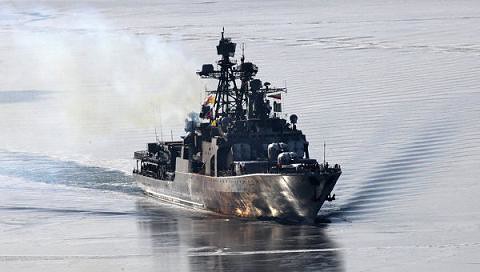
"A big anti-submarine ship Admiral Panteleyev (in picture) has conducted artillery shooting exercises in the South China Sea. The sea targets were destroyed," Pacific Fleet spokesman Roman Martov told local media.
Ka-27 carrier-born helicopters made several sorties in a simulated enemy submarine search. The crews also tested their ships' survival capabilities, Martov said.
The Russian ships, including one big anti-submarine ship, three landing ships, a tanker and a rescue vessel, are on their way to the Gulf of Aden where they will protect navigation against piracy.
This is the ninth mission by the Pacific Fleet to Somali shores.
Thứ Ba, 26 tháng 3, 2013
Why Russia needs a global naval presence
Russia is just one of a long line of second- or even third-tier countries striving to establish an open-sea fleet.

Russia is just one of a long line of second- or even third-tier countries striving to establish an open-sea fleet. Source: denis-tugolukov.livejournal.com
In recent weeks, the Russian authorities have made repeated statements about restoring the country's global naval presence, which was lost following the collapse of the Soviet Union. It was announced that a permanent task force fleet would be stationed in the Mediterranean, and Navy Commander Admiral Viktor Chirkov stated that similar formations could also appear in the Pacific and Indian Oceans. Talks have been held with Vietnam on the use of the former Soviet navy logistics base at Kamran.
The new phase of Russia's naval expansion is nothing on the scale of the Soviet fleet that once patrolled the world's seas. The Mediterranean flotilla will consist of just 5-6 ships, utterly incapable of confronting the U.S. Navy. At Kamran, the best case scenario will see the appearance of a logistical support point, whereas in Soviet times it was a fully-fledged naval base complete with a powerful defense system and permanently stationed troops.
Instead, it points to a different manifestation of globalization. Russia is just one of a long line of second- or even third-tier countries striving to establish an open-sea fleet. Besides China, which claims to be the world's second superpower, naval programmes are being developed by India, which is promoting the concept of an expeditionary fleet capable of operating anywhere in the world. South Korea plans to build an ocean fleet by 2020, Brazil’s National Defense Strategy 2008 contained a programme to build an open-sea fleet and Japan is quietly but effectively establishing a naval force. The desire to build an ocean fleet has also been expressed at various times by Iran and, somewhat earlier, Thailand (owner of the only aircraft carrier in South-East Asia).
The drive to create an open-sea fleet is the result of globalization — similar in many ways to the naval arms race at the turn of the 20th century. Back then, more than a century ago, globalization was associated with the acquisition of colonies and semi-colonies by the European powers and the US. In those days, the main threat to the interests of a great power came from rival powers. To protect colonies and transport links, they needed a powerful ocean-going battle fleet. An under-strength open-sea fleet made no sense, because it would have been destroyed in a direct confrontation with the enemy. That narrowed the number of participants in the naval race to a handful of the most economically robust nations.
Today's version of globalization has ditched the idea of colonies and zones of privileged interests. Even economically second-rate powers, such as Russia and India, can have multi-billion dollar investments and thousands-strong colonies of citizens on other continents. The main threats to the physical safety of the Diasporas and investments do not come from opposing armies, but from uprisings, social unrest, terrorism, piracy, and other activity by non-state actors.
The exorbitant price of direct military conflict between the major powers means that even mutually hostile countries employ tactics such as economic sanctions, blockades, and other non-military measures.
In these circumstances, a compact fleet capable of operating in open water is becoming a necessary tool for any large state with global economic interests. Developed countries in pursuit of their own global commercial interests either have their own open-sea fleet or are part of a military alliance with a country that does. All developing countries with global economic ambitions are currently building seaworthy fleets.
It is not about attritional rivalry with other powers, rather the creation of relatively compact formations able to deliver combat aircraft, cruise missiles, and special forces to any point on the surface of the globe, as well as to evacuate thousands of citizens from a hot spot. Such a fleet should be able to protect commercial shipping lanes from pirates and ensure the delivery of goods to any country against which unfair (from a Russian perspective) sanctions have been imposed.
In the absence of vessels specially equipped for such operations, for the time being Russia will make do with its Soviet legacy. Nevertheless, even now the Russian fleet is capable of carrying out continuous and long-term anti-piracy operations in the Gulf of Aden and maintaining a prolonged presence off the coast of Syria, thereby reducing the likelihood of direct military intervention from outside. Of course, any pretensions that Russia's new ocean fleet will rival the U.S. and its allies should be nipped in the bud immediately; Russia's attempts to confront the traditional maritime powers have usually ended in tears.
The author is an expert at the Center for Analysis of Strategies and Technologies.
First published in Russian in Vedomosti.
Russia is just one of a long line of second- or even third-tier countries striving to establish an open-sea fleet. Source: denis-tugolukov.livejournal.com
In recent weeks, the Russian authorities have made repeated statements about restoring the country's global naval presence, which was lost following the collapse of the Soviet Union. It was announced that a permanent task force fleet would be stationed in the Mediterranean, and Navy Commander Admiral Viktor Chirkov stated that similar formations could also appear in the Pacific and Indian Oceans. Talks have been held with Vietnam on the use of the former Soviet navy logistics base at Kamran.
The new phase of Russia's naval expansion is nothing on the scale of the Soviet fleet that once patrolled the world's seas. The Mediterranean flotilla will consist of just 5-6 ships, utterly incapable of confronting the U.S. Navy. At Kamran, the best case scenario will see the appearance of a logistical support point, whereas in Soviet times it was a fully-fledged naval base complete with a powerful defense system and permanently stationed troops.
Instead, it points to a different manifestation of globalization. Russia is just one of a long line of second- or even third-tier countries striving to establish an open-sea fleet. Besides China, which claims to be the world's second superpower, naval programmes are being developed by India, which is promoting the concept of an expeditionary fleet capable of operating anywhere in the world. South Korea plans to build an ocean fleet by 2020, Brazil’s National Defense Strategy 2008 contained a programme to build an open-sea fleet and Japan is quietly but effectively establishing a naval force. The desire to build an ocean fleet has also been expressed at various times by Iran and, somewhat earlier, Thailand (owner of the only aircraft carrier in South-East Asia).
The drive to create an open-sea fleet is the result of globalization — similar in many ways to the naval arms race at the turn of the 20th century. Back then, more than a century ago, globalization was associated with the acquisition of colonies and semi-colonies by the European powers and the US. In those days, the main threat to the interests of a great power came from rival powers. To protect colonies and transport links, they needed a powerful ocean-going battle fleet. An under-strength open-sea fleet made no sense, because it would have been destroyed in a direct confrontation with the enemy. That narrowed the number of participants in the naval race to a handful of the most economically robust nations.
Today's version of globalization has ditched the idea of colonies and zones of privileged interests. Even economically second-rate powers, such as Russia and India, can have multi-billion dollar investments and thousands-strong colonies of citizens on other continents. The main threats to the physical safety of the Diasporas and investments do not come from opposing armies, but from uprisings, social unrest, terrorism, piracy, and other activity by non-state actors.
The exorbitant price of direct military conflict between the major powers means that even mutually hostile countries employ tactics such as economic sanctions, blockades, and other non-military measures.
In these circumstances, a compact fleet capable of operating in open water is becoming a necessary tool for any large state with global economic interests. Developed countries in pursuit of their own global commercial interests either have their own open-sea fleet or are part of a military alliance with a country that does. All developing countries with global economic ambitions are currently building seaworthy fleets.
It is not about attritional rivalry with other powers, rather the creation of relatively compact formations able to deliver combat aircraft, cruise missiles, and special forces to any point on the surface of the globe, as well as to evacuate thousands of citizens from a hot spot. Such a fleet should be able to protect commercial shipping lanes from pirates and ensure the delivery of goods to any country against which unfair (from a Russian perspective) sanctions have been imposed.
In the absence of vessels specially equipped for such operations, for the time being Russia will make do with its Soviet legacy. Nevertheless, even now the Russian fleet is capable of carrying out continuous and long-term anti-piracy operations in the Gulf of Aden and maintaining a prolonged presence off the coast of Syria, thereby reducing the likelihood of direct military intervention from outside. Of course, any pretensions that Russia's new ocean fleet will rival the U.S. and its allies should be nipped in the bud immediately; Russia's attempts to confront the traditional maritime powers have usually ended in tears.
The author is an expert at the Center for Analysis of Strategies and Technologies.
First published in Russian in Vedomosti.
Thứ Hai, 25 tháng 3, 2013
Buratino Destroys ‘Enemy’ Targets for the First Time in Exercises
Thứ Tư, 20 tháng 3, 2013
Russian Air Force Readies for Massive Drills
More than 70 aircraft and some 1,000 troops will be deployed in a series of tactical drills in preparation for a large-scale exercise next week in northwest Russia, military officials said on Tuesday.
Preparations for the exercise, codenamed Ladoga-2013, have begun in the Republic of Karelia, and the Leningrad, Smolensk and Tver regions with tactical drills by fighters, bombers and army aviation.
Aviation to be used includes MiG-31 Foxhound and Su-27 Flanker fighters, MiG-25RB Foxbat interceptors, Su-24M Fencer attack aircraft, Su24MR reconnaissance aircraft and Mi-8 Hip multirole helicopters and Mi-24 Hind attack helicopters.
Ladoga-2013 will start next week over Lake Ladoga in Karelia, which borders Finland, the Western Military District operation command said.
RIA Novosti
Preparations for the exercise, codenamed Ladoga-2013, have begun in the Republic of Karelia, and the Leningrad, Smolensk and Tver regions with tactical drills by fighters, bombers and army aviation.
Aviation to be used includes MiG-31 Foxhound and Su-27 Flanker fighters, MiG-25RB Foxbat interceptors, Su-24M Fencer attack aircraft, Su24MR reconnaissance aircraft and Mi-8 Hip multirole helicopters and Mi-24 Hind attack helicopters.
Ladoga-2013 will start next week over Lake Ladoga in Karelia, which borders Finland, the Western Military District operation command said.
MiG-31 fighter
RIA Novosti
Đăng ký:
Bài đăng (Atom)