Hiển thị các bài đăng có nhãn East Vietnam Sea. Hiển thị tất cả bài đăng

Thứ Tư, 15 tháng 5, 2013

Taiwan boat returning after Vietnam interception

TAIPEI, Taiwan -- The Pingtung County-registered Lung Wang Li No. 97 (龍旺利97號) fishing boat was returning to Taiwan last night after being intercepted by Vietnamese vessels in the East Vietnam Sea (the south China sea), according to the Coast Guard Administration (CGA).

While making its way to Taiwan from Thailand, the Lung Wang Li No. 97 was intercepted by a Vietnamese vessel around 5:47 a.m. yesterday, in waters around 790 nautical miles to the south from Taiwan. Twenty minutes later, more than five similar Vietnamese vessels surrounded the Taiwanese boat, according to an initial CGA report.


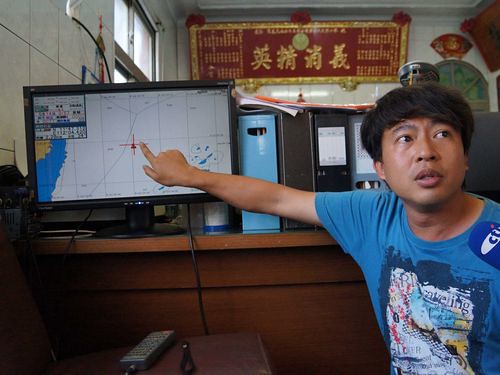
Son of Tsai Tien-yu, owner of Lung Wang Li No. 97, explains the fishing boat's course when it was intercepted.

The CGA said that the fishing boat was instructed to follow a searchlight and sail toward the Vietnam vessels.

The Taiwan boat's captain, surnamed Tseng, said that crewmen on these Vietnamese ships asked to board his vessel for inspection, according to a CGA statement.

Tseng later reported the case and asked for assistance from the CGA.

Upon receiving the report, the CGA immediately deployed one of its nearby patrol vessels to Tseng's ship.

But Tseng said the Vietnamese ships later left the scene at around 7:45 a.m., before the Taiwanese Coast Guard ship arrived. No Vietnamese crew members boarded the Taiwanese fishing vessel, the CGA said.

According to Tseng, none of the crewmen aboard the Vietnamese ships were in uniform.

The boat's owner, Tsai Tien-yu (蔡天裕), urged the government not only to step up long-term measures to ensure the safety of Taiwanese fishing boats, but also to enter fishery talks with Vietnam to prevent similar incidents from happening again.

Tsai said he has had similar experiences. Two of his boats operating on the open seas were detained by Vietnamese vessels 10 years ago, and he had to pay a US$30,000 “ransom” to the Vietnam government to get the boats back, the captain said.

The CGA responded in a very timely manner to yesterday's incident, Tsai said, adding that he received a call from the Coast Guard 10 minutes after reporting the incident to the Donggang (東港) fishery radio station.

Taiwan's representative to Vietnam, Huang Chih-peng, said he had been informed of the incident and was in close contact with Vietnamese officials regarding it.

Chinapost

Taiwanese fishing boat returning after being intercepted (Focus Taiwan)

Thứ Hai, 6 tháng 5, 2013

US backs PH, ASEAN on territorial dispute

The United States has expressed its support for the collective efforts of the Association of Southeast Asian Nations (ASEAN) to move forward and craft a legally binding Code of Conduct (COC) with China over the disputed South China Sea, the Department of Foreign Affairs (DFA) has reported.


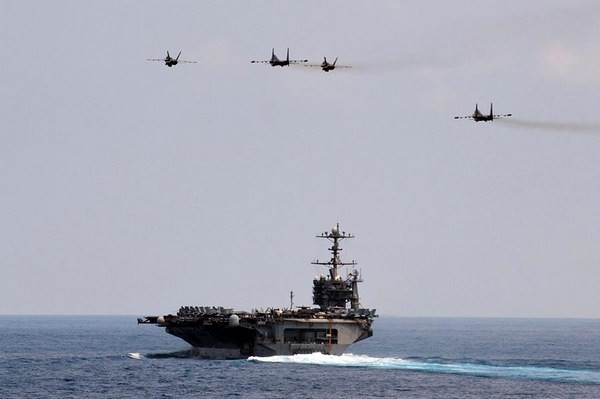
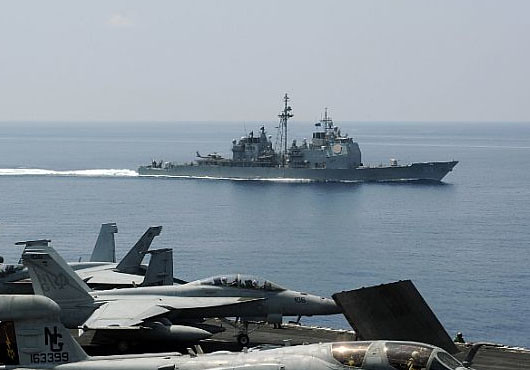
Two US FA-18Es fly in formation with two Sukhoi Su-30s from the Royal Malaysian Air Force above the aircraft carrier USS George Washington during operations on October, 2012. (US Navy photo)

In a statement, the DFA said US senior officials who attended the 26th ASEAN-US Dialogue held in Washington, DC, last May 2 and 3 also reaffirmed support for the arbitration move of the Philippines to settle its territorial conflict with China over the West Philippine Sea (South China Sea).

But Chinese Ambassador to the Philippines Ma Keqing, in a meeting with Vice President Jejomar C. Binay, said the issue should not have been brought to the United Nations for arbitration. Ma was responding to Binay's call for the tensions between the two countries to stop.

In a meeting, the US delegation emphasized the importance of upholding the rule of international law in the West Philippine Sea and opposed the use or threat of force to advance claims in the region.

"US Deputy Secretary of State William Burns, as well as Joseph Yun, acting Assistant Secretary for East Asia and head of the US delegation to the ASEAN-US Dialogue, reaffirmed the right of any state to use mechanisms under international law for the peaceful and just settlement of disputes, including arbitration," said the DFA.

Senior officials from all 10 ASEAN Member States and the ASEAN Secretariat were present during the meeting.

"The Philippines welcomes the support of the US and other countries for our efforts to resolve outstanding issues in the West Philippine Sea through peaceful means and consistent with the rule of law and our obligations under United Nations Convention on the Law of the Sea (UNCLOS)," the DFA quoted Foreign Affairs Undersecretary for Policy Evan P. Garcia as saying in the dialogue.

Garcia said the need for a COC was made more urgent by recent developments in the West Philippine Sea. He stated that despite the Declaration on the Conduct of Parties in the South China Sea (DOC) and calls by ASEAN and Dialogue Partners to exercise restraint and avoid any action that will escalate tension, "concerns regarding destabilizing activities remain."

The DFA undersecretary also gave an update on the Philippines' recourse to international arbitration under the UNCLOS, citing that it "is rooted in good global citizenship and will benefit all parties as it will clarify maritime entitlements under UNCLOS."

He added that this "will help assure peace, security, and stability in the region and contribute to its continued economic growth and prosperity."

"The zeal of the Philippines to conclude a Code of Conduct has not changed," Garcia stressed. "This is not inconsistent with our arbitration efforts. In fact, these are mutually supportive of each other as both are deeply rooted in the rule of law and the peaceful settlement of international disputes."

The dialogue was held to deepen ASEAN-US cooperation and discuss regional and international developments.

The meeting, co-chaired by the US and Myanmar, also discussed preparations for the ASEAN Post Ministerial Conference with the US and ASEAN-US Leaders' Summit scheduled later this year.

ASEAN-US dialogue relations were established in 1977. Starting with discussions on political and security matters in its early stages, the dialogue has expanded to other issues such as climate change, biodiversity, food and energy security, disaster risk reduction and maritime security.

(With a report from JC Bello Ruiz)

Yahoo News

Thứ Bảy, 27 tháng 4, 2013

US diplomat visits Hoang Sa Islands administration office

The US Consul General in Ho Chi Minh City has visited the office of the Hoang Sa (Paracel) Archipelago administration and held discussions with local government officials.


US General Consul Le Thanh An (2nd, L) at the office of the Hoang Sa District People's Committee in Da Nang

Analysts said the move could irk China as both Washington and Beijing compete for "the strategic heart and mind of Southeast Asia."

Consul General Le Thanh An led Tuesday a delegation of the US consulate to meet with officials of the Hoang Sa island district administration based in the central city of Da Nang, according to a statement posted on the website of the Hoang Sa People's Committee.

Dang Cong Ngu, Chairman of Hoang Sa District, briefed the US delegation on his office's operation and development plans, the statement said.

Vietnam appointed Ngu as Hoang Sa mayor in 2009 in a largely symbolic move to assert sovereignty over the archipelago, which has been occupied by China since 1974.

Le Thanh An said at the meeting that the US supported peaceful solutions for disputes in the East Sea, internationally known as South China Sea, and wanted the safety and freedom of sea navigation maintained on the basis of international laws, especially the United Nations Convention on the Law of the Sea (UNCLOS).

Both China and Vietnam are signatories to the UNCLOS but the US has not ratified it.

The visit took place two days after US Navy destroyer USS Chung-Hoon and the salvage ship USNS Salvor docked in Da Nang's Tien Sa Port.

The deployment of the guided-missile carrier comes at a time when China has publicly flexed its naval muscles in waters off the Vietnamese coast.

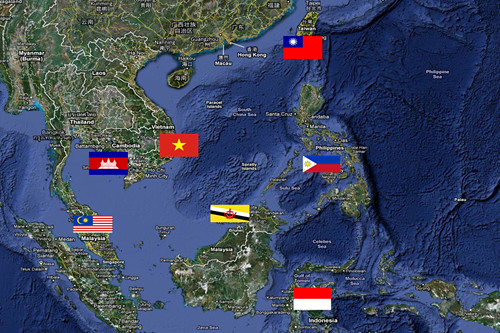
China and four members of the Association of Southeast Asian Nations (ASEAN) – Vietnam, the Philippines, Malaysia and Brunei – are embroiled in sovereignty disputes over the East Sea.

China’s claim is the largest, covering most of the sea’s 1.7 million square kilometers, a move emphatically rejected by independent experts.

Analysts consider the US envoy's visit a "diplomatic provocation" that risks triggering strong reactions from China.

"China will see it as a provocation I'd guess," said Mark Valencia, a Hawaii-based expert on the East Sea dispute.

Valencia said he was expecting China to complain about the US "meddling".

Since US President Barrack Obama announced a policy “pivot” towards the economically resilient Asia-Pacific region in late 2011, the US has consistently maintained that it will play a neutral role in the East Sea dispute.

The pivot has served to increase tensions between Washington and Beijing, analysts say, with China viewing it as a move to contain its growing military and economic clout.

Also in Da Nang, the US announced on April 24 that funding for a project to clean up dioxin, the toxic chemical left behind by Agent Orange at a former American airbase, would double to US$84 million.

Several experts have said US engagement in Da Nang must be considered from a global geopolitical point of view: Da Nang is a strategic deep water harbor in the East Sea, where China is rapidly expanding its military, economic and civilian presence.

"There is a geopolitical significance to these activities and their location in central Vietnam," said Carl Thayer, a maritime analyst with the University of New South Wales in Australia.

"China and the US may compete for the hearts and minds of Vietnam but Vietnam will pursue a policy of independence and self-reliance."

Thanhnien News

Thứ Năm, 25 tháng 4, 2013

How will China React to Gazprom Prospecting in Vietnamese Waters?

It is hardly a secret that Beijing’s claims to nearly all of the South China Sea’s waters have elicited concern from Southeast Asian nations.

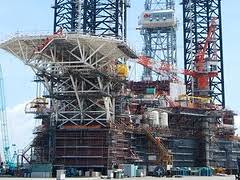
Now Russia’s state-owned natural gas giant Gazprom is upping the ante by announcing that it intends to start gas production off Vietnam’s coast in June. Gazprom Deputy CEO Vitaly Markelov told Gazprom magazine, “It is planned to build 16 exploitation wells to develop the deposits. Currently, the project is at the deposit development infrastructure stage. Work continues on building the fourth exploitation well at the WHP-MT1 extracting platform (the Moc Tinh deposit). Gas extraction is expected to start in June 2013.”


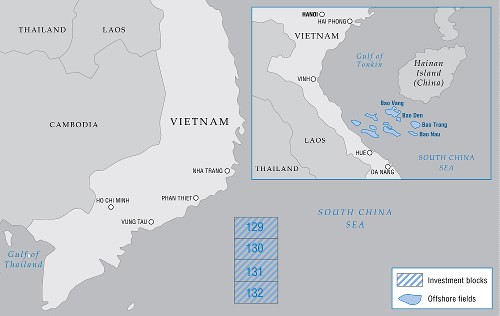
Exploratory drilling and seismic surveys by Gazprom in Vietnam (extended block No.112) and location of blocks Nos.129–132

Last year Gazprom received stakes in developing Blocks 05-2 and 05-3 in the southeastern part of the South China Sea. Gazprom has since opened two gas condensate fields in the Moc Tinh (05-3) and Hai Tchach (05-2 and 05-3) blocs, with reserves estimated at 55.6 billion cubic meters of gas and 25 million tons of gas condensate. The deposits are located 189.8 miles from Vietnam’s Vung Tau coastal area. The Nam Con Son underwater gas pipeline is in close proximity to the blocs, which are at depths of 330- 450 feet.

Note the distance offshore of the concessions. According to the Third United Nations Convention on the Law of the Sea (UNCLOS), which came into force in November 1994, UNCLOS recognized 12 nautical miles as normal for territorial seas and waters while UNCLOS Part V, Article 55 defined an “exclusive economic zone” (EEZ) for countries with maritime frontiers as extending 200 nautical miles from a nation’s coastline.

Not surprisingly, Vietnam has voiced vociferous opposition to Beijing’s South China Sea claims.

The U.S. government’s Energy Information Agency has waded into the dispute over the potential riches at stake as in its updated “South China Sea” brief, issued on 7 February, after noting, “The South China Sea is a critical world trade route and a potential source of hydrocarbons, particularly natural gas, with competing claims of ownership over the sea and its resources,” goes on to add, “EIA estimates the South China Sea contains approximately 11 billion barrels of oil and 190 trillion cubic feet of natural gas in proved and probable reserves.”

The U.S. Geological Survey has far higher estimates, calculating that the South China Sea may contain roughly 28 billion barrels of oil, while the Chinese government calculates that the South China Sea region contains nearly 200 billion barrels of oil. No one knows for sure, especially as the Chinese Navy harasses and chases off foreign survey vessels.

A bit of history here.

In 1974, during the Vietnam War, the Chinese military drove South Vietnamese troops out of the Paracel Islands, which were claimed by Beijing, Hanoi and Taiwan. Five years later, in February 1979 a brief Sino–Vietnamese war erupted on the border between the two ostensibly Communist powers. Also known as the Third Indochina War, China launched the offensive in response to Vietnam's invasion and occupation of Cambodia in 1978, which ended the murderous reign of the Chinese-backed Khmer Rouge. Both sides lost thousands of troops, and relations between the two have remained coolly formal ever since.

Which brings up the question – why is Gazprom seeking to fish for hydrocarbons in such troubled waters?

By. John C.K. Daly of Oilprice.com

Thứ Bảy, 20 tháng 4, 2013

China establishes surveillance system covering 4,406 islands, including disputed Spratlys

BEIJING - China has established a national island surveillance and monitoring system and completed airborne remote-sensing surveillance of what it claims to be its 4,406 islands, according to the Ministry of Land and Resources (MLR).


A Philippines protester burns a Chinese flag

The national system is mainly built on aerial surveillance, with satellites, unmanned planes, and cruisers as auxiliary instruments, the MLR said in its annual land resources report issued Saturday.

Since a national plan on island protection and exploration came into effect in last April, south China's Zhejiang, Fujian, Guangdong provinces, and Guangxi Zhuang Autonomous Region have passed their own provincial-level scheme, with Liaoning, Hebei, Shandong, Jiangsu, and Hainan completing their draft plan, the ministry said.

Last year, China completed an island name survey, including on-site investigation on part of the atolls in the three island groups known as Sansha in the South China Sea which covers the disputed island groups of Spratlys, Paracels, and Macclesfield. The Philippines and Vietnam also claim sovereignty over these islands.

The country also released the standard names and geographical coordinates of the Diaoyu Island and its affiliated islands in the East China Sea, as well as other geographical entities in their surrounding waters last year, according to the MLR report. China Diaoyu is also being claimed by Japan.

Interaksyon

Thứ Tư, 17 tháng 4, 2013

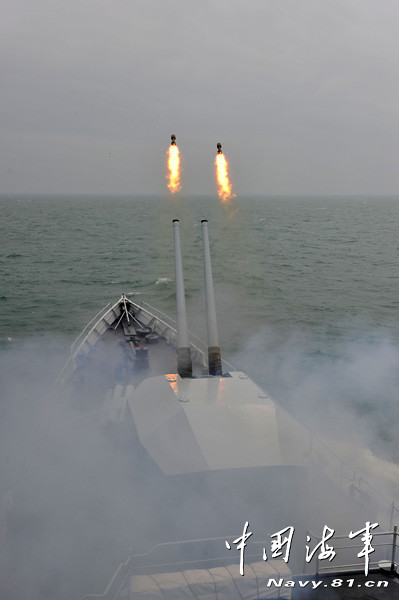
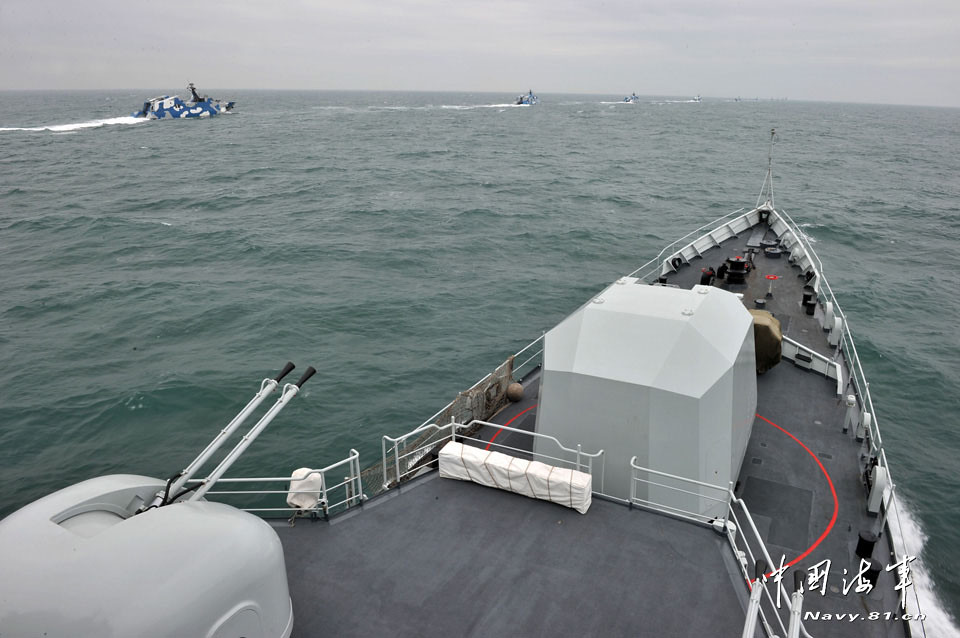
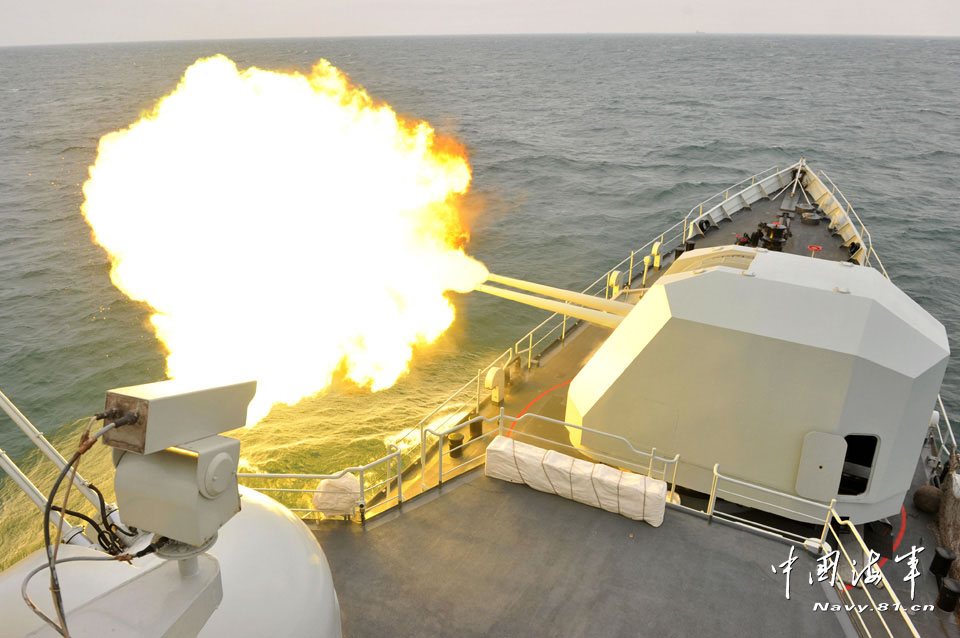
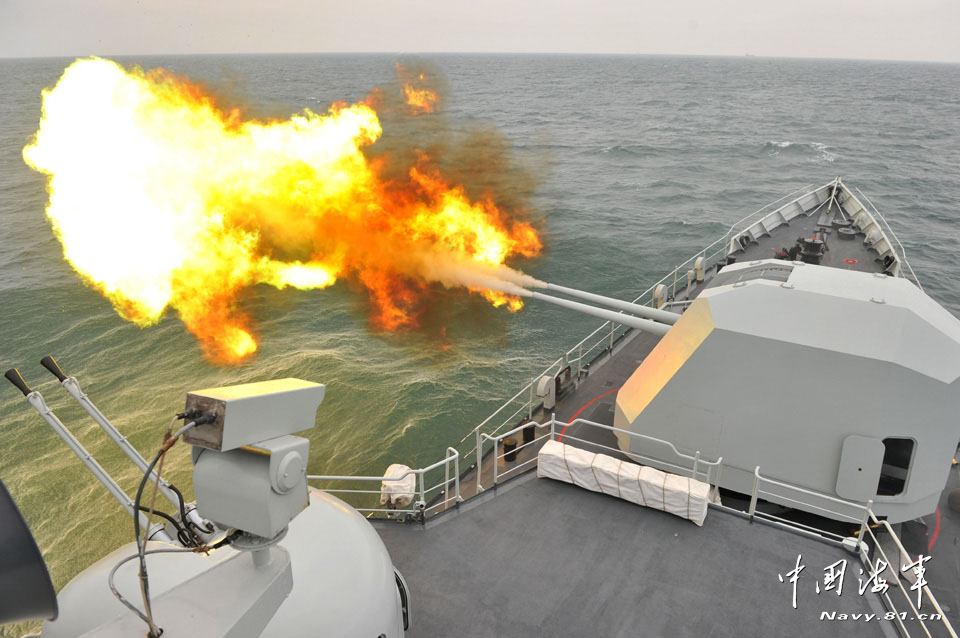
China's South Sea Fleet conducts live-ammunition fire drill

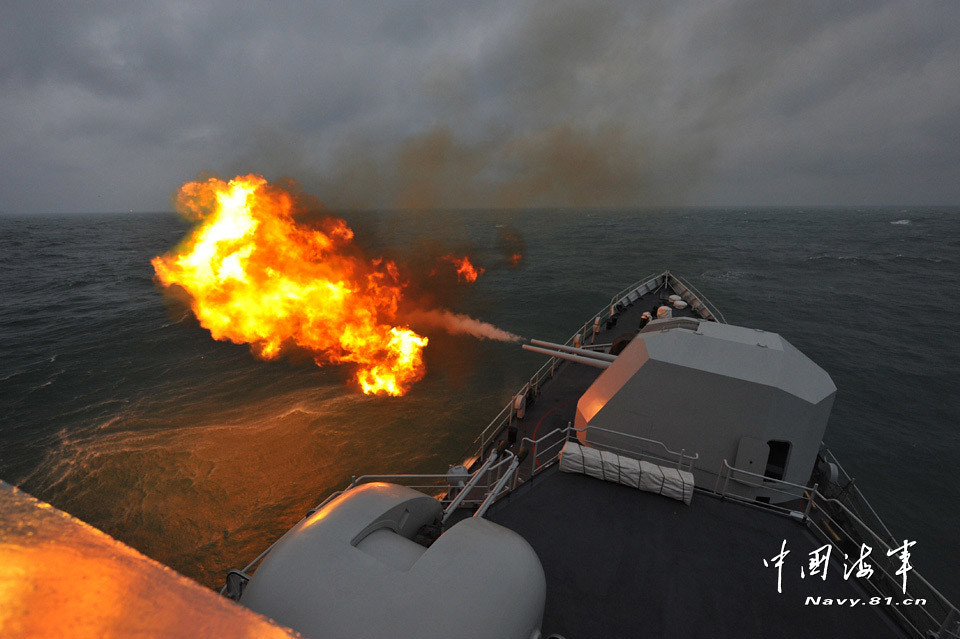
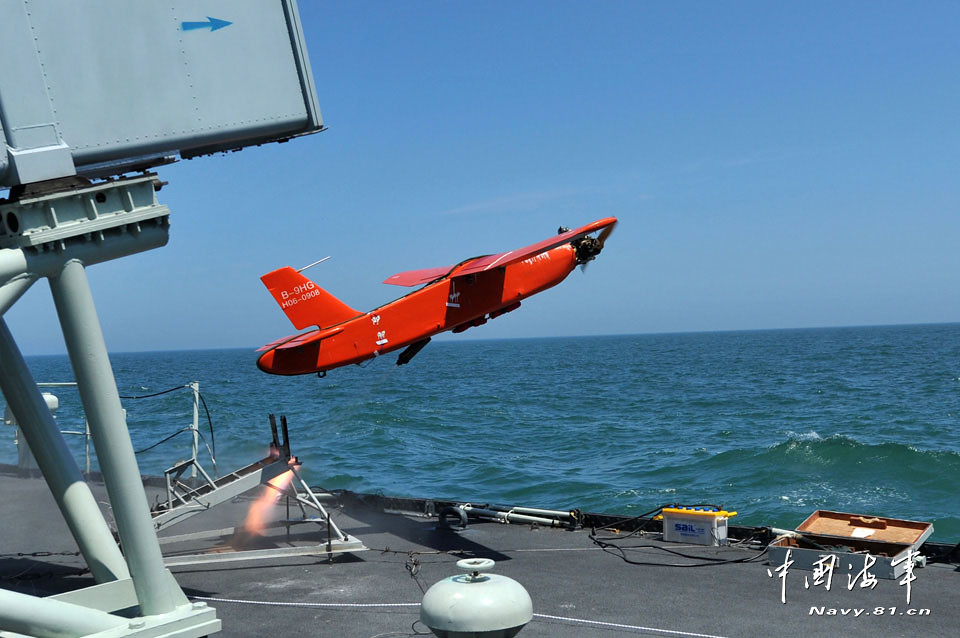
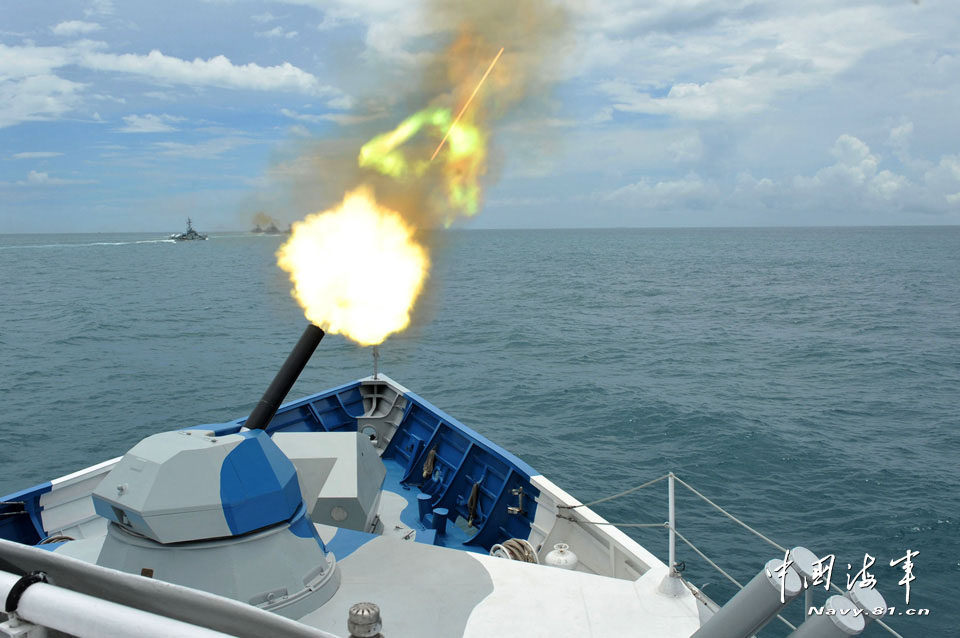
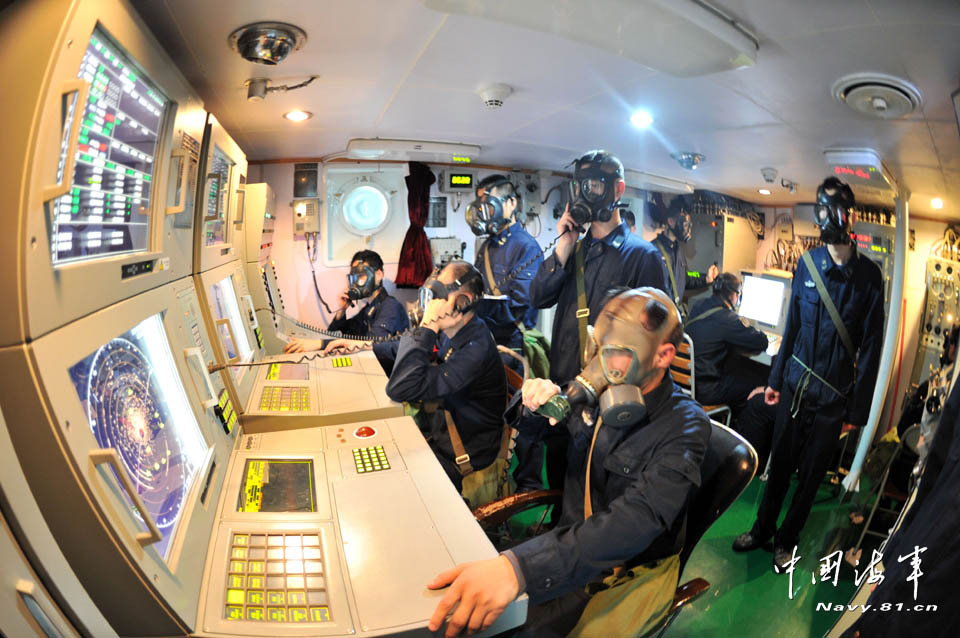
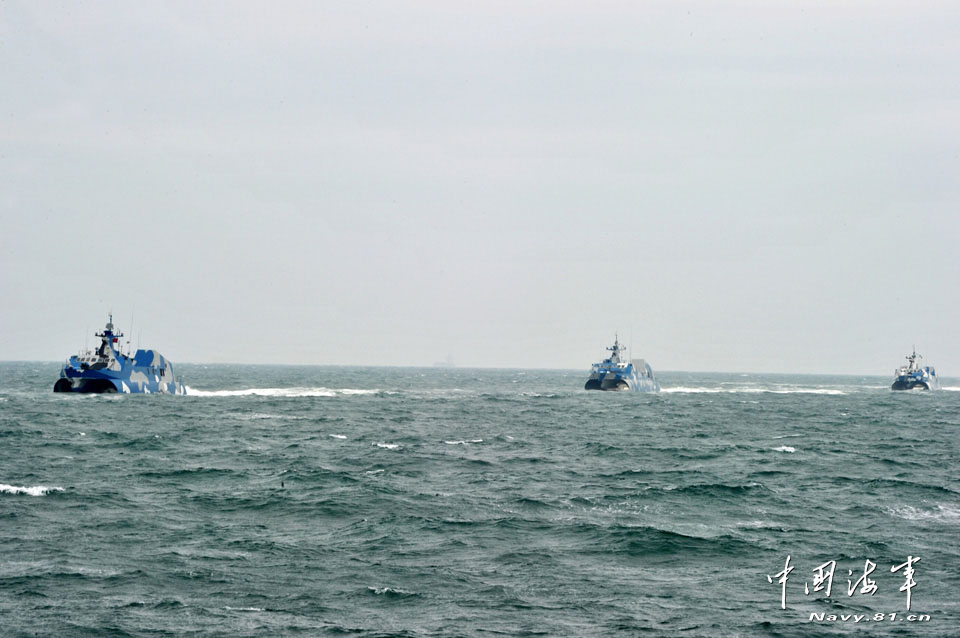
Warships of the South Sea Fleet of the Navy of the Chinese People's Liberation Army (PLA) conducted a live-ammunition fire drill in a certain sea area under the conditions of informationization in mid April.

Warships of the South Sea Fleet of the Navy of the Chinese People's Liberation Army (PLA) conducted a live-ammunition fire drill in a certain sea area under the conditions of informationization in mid April. (navy.81.cn/Cao Haihua, Zhao Changhong)

This drill highlighted the combat marshalling integration training, and the command post marshalling training, and further enhanced the navy's defense capabilities and combat effectiveness based on the information system.


People Daily

Thứ Hai, 8 tháng 4, 2013

USS John C. Stennis CSG Operates in South China Sea

The Nimitz-class aircraft carrier USS John C. Stennis (CVN 74) conducted flight operations April 5 in conjunction with maritime security patrols while steaming across the South China Sea.


Stennis routinely performs aircraft launch and recovery operations in cooperation with other U.S. ships in its strike group to enhance regional security and maintain operational readiness.

“We are excited to be back in 7th Fleet and the South China Sea,” said Capt. John Beaver, commander of Destroyer Squadron 21. “We have long standing partnerships in this region and an ongoing presence here is evidence of our enduring commitment to the peace and stability of Southeast Asia.”

Crisscrossing the South China Sea are vital international shipping lanes where nearly one-third of the world’s shipping passes through. The sea and small islands inside it are also subject to territorial disputes by many countries in the region due in part to the belief that the area contains large oil and gas reserves.

The John C. Stennis Carrier Strike Group (JCSCSG) entered the South China Sea April 4 after concluding a successful three-day port visit to the Republic of Singapore where Stennis hosted a formal reception for distinguished guests from Singapore and the U.S. Embassy. Sailors also took part in community relations projects and experienced local cultures.

Stennis entered U.S. 7th Fleet March 26 after spending nearly five months in U.S. 5th Fleet supporting Operation Enduring Freedom. The strike group also participated in theater security cooperation exercises with ships from nations who are equally committed to this region including the Royal Navy frigate HMS Monmouth (F 235), the French destroyer FS Chevalier Paul (D621), and the Royal Australian Navy frigate HMAS Toowoomba (FFH 156).

The John C. Stennis Carrier Strike Group, consisting of Stennis, Carrier Air Wing Nine (CVW 9), Destroyer Squadron 21 and guided-missile cruiser USS Mobile Bay (CG 53), is forward deployed to the U.S. 7th Fleet area of responsibility promoting maritime security operations and theater security cooperation efforts.


Xem Bản đồ cỡ lớn hơn

Naval Today

Thứ Bảy, 6 tháng 4, 2013

South China sea nations vary in approaches to press claims

STATE DEPARTMENT — U.S. Secretary of State John Kerry makes his first trip to Asia next week, where talks in Beijing are expected to focus on an increasingly-aggressive North Korea and on territorial disputes in the South China Sea. China's maritime rivals are pursuing their claims in a variety of ways.

Beijing says its live-fire exercises in the South China Sea are meant to defend against naval and air attacks in the contested waters.

But Vietnam says those Chinese patrols endanger navigation. It says China's navy fired on a Vietnamese fishing trawler near the disputed Paracel Islands.

China says it has done nothing wrong. "The response by the relevant Chinese body against the illegal Vietnamese fishing boat was appropriate and reasonable," said Foreign Ministry Spokesman Hong Lei.

In the South China Sea, Beijing has worked to separate rival claimants, says International Institute for Strategic Studies fellow Christian LeMiere.

"Obviously Vietnam on its own in a bilateral discussion with China is in a very much weaker position. But if it can gather the support of the U.S. or Japan or India, or at least demonstrate that these states have a stake in the negotiations, then Vietnam will find itself in a much stronger position," LeMiere said.

In its dispute with China, the Philippines is taking South China Sea rivalries to the United Nations while reaffirming old alliances.

"The Philippines is one our our five Asia-Pacific allies, and a very, very important relationship at this point in time when there are tensions over the South China Sea, where we support a code of conduct and we are deeply concerned about some of those tensions and would like to see it worked out through a process of arbitration," said Kerry.

So might Vietnam join the Philippine move to U.N. arbitration? Johns Hopkins University professor Ruth Wedgwood thinks it should.

"To my mind, it would make sense for Vietnam to join them and make it a parallel declaration that the Chinese Coast Guard, whether at the insistence of the Governor of Hainan or whether at the direction of Beijing, really ought not to be pressing each neighbor in the region to withdraw to a three-mile limit as in the olden days. The Chinese are pressing very hard," Wedgwood said.

It is that pressure that makes American University professor Pek Koon Heng believe Vietnam, Malaysia and Brunei will not join the Filipino claim. She says the legacy of Chinese invasion makes Vietnam especially cautious.

"Something Vietnam does, there is a hugh push back by the Chinese. The Vietnamese understand that there is only so much they can do because over the last ten years, naval modernization by the Chinese has proceeded so quickly," Heng said.

China claims most of the more than three-million-square-kilometer sea from Singapore to the Taiwan Strait -- through which half the world's commercial shipping passes.

Turkish Weekly

US deployment of 12 fighter jets to the Philippines the largest ever

Washington is this week deploying a dozen F/A-18 fighters to the Philippines, the first time it has sent so many of the aircraft there, to take part in annual military drills with a close security ally amid rising tension in the Asia-Pacific region.

The presence of the warplanes is not connected to tensions on the Korean Peninsula, a Philippine army spokesman said.

"These exercises were planned more than a year ago, well ahead of what is now happening in the region," Major Emmanuel Garcia said.

The bilateral military activities would begin today with 8,000 American and Filipino troops staging mock battles and simulating disaster responses, he said.

The war games are being held to test the two allies' defence plans based on the Mutual Defence Treaty, an important link in Washington's chain of security alliances in the Asia-Pacific region. The US has similar military arrangements with South Korea, Japan, Singapore and Australia.

"There will be table-top exercises on how the militaries of the two countries would respond to a destructive typhoon as well as in the event of a major ship collision on the high seas," Garcia said, adding the combat aspect would showcase the capability of the US Navy's multi-role fighters.

The Philippines lost its fighter capability around a decade ago after retiring its fleet of Vietnam War-era F-5A/Bs.

. Four officers of a US Navy minesweeper that ran aground on a coral reef in the Philippines are being relieved of their duties.

The US Pacific Fleet said initial findings indicated all four failed to adhere to standard navigation procedures at the time of the January 17 grounding of the Guardian. The sailors have been reassigned.

Additional reporting byAssociated Press

Thứ Sáu, 5 tháng 4, 2013

Vietnam to Push Ahead With Offshore Exploration

HANOI—State-owned Vietnam Oil & Gas Group, or PetroVietnam, plans to keep buying foreign oil-and-gas assets and hopes to be producing close to 100,000 barrels a day of oil overseas by 2020, four times the volume expected this year, the company's chief executive said.


Increased overseas oil production, which PetroVietnam says could be sold internationally or brought home for refining, will help Vietnam cope with rising energy demand, as a territorial dispute with China casts a shadow over its own promising offshore prospects.

Vietnam and its international partners will keep working to develop offshore oil-and-gas reserves within its maritime border, PetroVietnam President and CEO Do Van Hau told The Wall Street Journal.

"Recently, although there have been some Chinese claims about the sovereignty of Vietnam's territorial waters in the West Sea, there have still been many investors—domestic and foreign petroleum companies—continuing their research and cooperation and signing contracts to conduct petroleum activities in Vietnam's waters," he said.

The country's oil output has been largely stagnant around 300,000 barrels a day in recent years, and the government is eager to increase output of hydrocarbons to help fuel an economy that has grown by an average of 7% over the past decade. Natural gas output in 2013 is forecast at 9.2 billion cubic meters, down from 9.3 billion in 2012.

PetroVietnam's earnings and taxes account for between 20% and 30% of the national budget.

"So far we have not made commercial discoveries [in disputed areas], but if there are commercial discoveries—and I am optimistic that we will have them—then we will start developing them if they are within our continental shelf," he said, referring to the maritime territory within 200 nautical miles of Vietnam's coast.

Nine months ago, the government in Hanoi protested strongly after China National Offshore Oil Corp. invited bids for a new batch of oil exploration blocks, including some that are within the 200-mile limit that Vietnam claims as its exclusive economic zone, basing its case on the United Nations' Law of the Sea.

At the time, PetroVietnam urged China to cancel bidding for the areas it identified as being in Vietnamese waters, calling on foreign companies not to participate and noting that Oil & Natural Gas Corp., Gazprom OAO and Exxon Mobil Corp. have been operating under licenses issued by Vietnam in some of those areas for many years.

China's increasingly assertive claims of sovereignty over most of the South China Sea have pitted it against Vietnam, the Philippines, Malaysia and Brunei, with this resulting in military standoffs and claims that Chinese vessels have cut the cables of ships conducting seismic surveys for hydrocarbons.

Any perception that foreign companies with exploration blocks offshore Vietnam are withdrawing or not meeting their commitments due to disputes with China is incorrect, Mr. Hau said, adding that Exxon Mobil, Gazprom and Talisman Energy Inc. are among companies that are active in prospecting offshore.

Gazprom has 49% stakes in two offshore gas blocks, where commercial production is due to start in June, he said.

In March, PetroVietnam said it would continue to invite foreign partners to join its exploration projects, including those in the Red River Delta in northern Vietnam and deep-sea areas.

Large amounts of gas lie under the seabed offshore Vietnam, Mr. Hau said, noting that Exxon Mobil had made Vietnam's biggest gas find to date off the country's central coast.

In October 2011, Exxon Mobil announced it had discovered oil and gas offshore Da Nang in central Vietnam, in an area known as Block 119, which isn't in disputed waters, but it didn't say whether commercial quantities had been found.

Mr. Hau said Wednesday that the U.S. oil major is still evaluating the find, and production could potentially start in five to seven years.

To help meet its rising energy needs, Vietnam will in coming months invite bids for its first liquefied natural gas import terminal, which will have a capacity of 1.0 million tons a year, and it is also trying to complete an agreement with Chevron Corp. for a project that would cost more than $4.3 billion—to develop gas fields offshore southern Vietnam.

PetroVietnam and Chevron didn't meet an end-2012 target to agree on gas prices for the offshore Block B project, and talks on this continue, Mr. Hau said. That project involves building offshore pipelines and floating storage facilities, then piping up to 490 million cubic feet of gas daily ashore for use mostly in electricity generation at power stations that are yet to be constructed.

"Chevron continues to work with PetroVietnam to resolve commercial issues to enable a final investment decision," a Chevron spokesman said.

Vietnam's foreign energy investments are focused mostly on Russia, Latin America and Africa. Initial production from a 50-50 joint venture offshore Peru is due to start by the end of the year, with an eventual target of 60,000 barrels a day, Mr. Hau said.

In Cuba, PetroVietnam is assessing results of seismic surveys it has done at an offshore block after having drilled two dry wells at an onshore concession, which it subsequently abandoned, he said.

Progress in developing heavy-oil reserves in Venezuela is proceeding slowly, he said, adding that the project won't meet a target of reaching output of 50,000 barrels a day by next year, although oil has flowed from some of its pilot wells.

PetroVietnam has spent more than $1 billion on overseas investments, "and we will keep on spending," he said.

Combined output from domestic and international fields this year will be around 16 million tons, or 321,000 barrels a day, with most of the expected foreign output—totaling between 25,000 and 28,000 barrels a day—coming from a joint venture in Russia, Mr. Hau said.

Plans to expand Vietnam's still-small refining sector could advance as soon as May, when a final investment decision on the country's second refinery is expected, he said.

Japanese refiner Idemitsu Kosan Co. and Kuwait Petroleum International each hold a 35.1% stake in the planned $9 billion 200,000-barrel-a-day refinery to be built 180 kilometers south of Hanoi. PetroVietnam and Mitsui Chemicals Inc. own 25.1% and 4.7%, respectively. KPI is a unit of state-owned Kuwait Petroleum Corp.

Vietnam has started work to assess shale-gas opportunities in the country after surveys showed that its reserves of coal bed methane aren't commercial, he said. It is too early to provide any forecast on shale gas, he added.

PetroVietnam has an exploration and production contract with Mitra Energy for shale oil and gas in the Red River Delta region and has signed a joint research agreement with ENI SpA to evaluate the overall potential of shale oil and gas onshore Vietnam, Mr. Hau said.

—Vu Trong Khanh and Nguyen Anh Thu contributed to this article.
Write to Simon Hall at simon.hall@dowjones.com

WSJ
Thứ Tư, 3 tháng 4, 2013

US backs Philippines bid for arbitration on sea row

MANILA, Philippines — The United States has thrown its full support behind the Philippines’ bid to settle disputes with China in the West Philippine Sea (South China Sea) through arbitration as the country’s long-time defense ally underscored its importance as a partner in the Asia-Pacific.


In remarks before talks with Foreign Secretary Albert del Rosario in Washington D.C. Tuesday morning (US time), Secretary of State John Kerry also reiterated his government’s support for a code of conduct in the disputed waters, a critical international sea lane.

“The Philippines is one of our five Asia-Pacific allies and a very, very important relationship at this point in time when there are tensions over the South China Sea, where we support a code of conduct, and we are deeply concerned [about] some of those tensions and would like to see it worked out through a process of arbitration,” said Kerry in remarks before media at the US State Department.

Del Rosario said Kerry expounded on this during their meeting and “emphasized the importance the United States gives to maintaining peace and stability in the area.”

“More importantly, Secretary Kerry assured me that the US is committed to supporting the efforts of the Philippines to settle the disputes peacefully and in accordance with the rule of law,” said Manila’s top diplomat.

Del Rosario’s meeting with Kerry in Washington is the first for the two officials since Kerry’s appointment earlier this year.

During their talks, Del Rosario updated the US official on the country’s arbitration bid currently pending before the United Nations arbitral tribunal.

Filed in January, the legal action seeks to stop Chinese incursions into parts of the West Philippine Sea within established Philippine maritime boundaries and nullify China’s “nine-dash line” claim to the waters, which places almost all of the sea’s resource-rich territories within its domain.

“I emphasized its (arbitration) importance to the future stability of our region in particular and to the future efficacy of international law in general,” Del Rosario said in a statement.

“I stressed that we are committed to seeing this arbitration through. There should be no confusion or any doubts about our resolve,” he added.

China has formally rejected the Philippine move, asserting its “indisputable sovereignty” over the waters and reiterating that the dispute may only be resolved through direct negotiations. Under the rules, however, arbitration proceedings would proceed even without the participation of the other party.

(Inquerer)

China's Assertiveness Threatens Peace In South China Sea

(Investors) Territorial disputes are threatening to spark deadly clashes that could have worldwide repercussions between China and some or all of its neighbors in the South China Sea — Vietnam, the Philippines, Indonesia, Malaysia and Brunei.

China has deployed a powerful force of civilian, paramilitary and naval vessels to back up its disputed claims to about 80% of the waters and seabed of the South China Sea, including hundreds of tiny islands and reefs scattered across thousands of miles.

While it has little or no basis in international maritime law for its claims, China has become increasingly assertive because of its growing military power and fast-growing demand for the abundant supplies of oil, natural gas and fish in the South China Sea.

Chinese leaders also believe that a strong stance on territorial disputes is important to shore up their legitimacy in the face of growing domestic problems.

Estimates of the oil and natural gas reserves under the South China Sea vary widely.

Malaysia accounts for half of current oil and natural gas production, while China accounts for only about 2% of oil and less than 1% of gas production. China's small amount of known near-shore oil and gas deposits may be a major driver of its expansive claims.

China's Offshore National Oil Company predicts a veritable new Persian Gulf of oil and gas under the South China Sea, including 125 billion barrels of yet undiscovered oil and 500 trillion cubic feet of natural gas.

U.S. Energy Information Administration estimates are much smaller.

The South China Sea is also home to large, diverse, and highly coveted fish populations.

Chinese patrol boats have increasingly harassed or seized fishing boats from other nations operating in contested areas.

China's Challenge

Vietnam and other countries have behaved in a similar manner, but China's greater military might allows it to aggressively enforce legally unsupportable maritime claims.

Many of the areas claimed by China are well inside the exclusive economic zones that extend 200 miles into the South China Sea from Vietnam, the Philippines, Indonesia, Malaysia and Brunei.

The economic zones were established in 1982 by an international treaty called the United Nations Convention on the Law of the Sea. The treaty gives nations the right to manage and exploit resources within their exclusive economic zones, but not to exercise sovereignty.

The Law of the Sea treaty has been signed and ratified by China and 164 other countries.

Unfortunately, China follows only some of the treaty's provisions. China claims "unquestionable sovereignty" over sea areas and features that are not in its exclusive economic zone, contending it has historical rights to these areas that predate the treaty.

The U.S. Senate has never ratified the Law of the Sea treaty, even though the United States helped initiate and shape the pact. The administrations of Presidents Barack Obama, George W. Bush and Bill Clinton have all said the treaty is the operative law of the sea and pledged U.S. adherence to its provisions.

Senate ratification of the treaty would put America in a better position to engage with China and other nations to urge full treaty compliance, including the long-standing rights of freedom of navigation for warships in international waters.

China has challenged these guarantees in areas well outside its 12-mile territorial waters.

Rebalancing Power

Already, China has denied Filipino fishermen access to Scarborough Shoal, which lies entirely within the Philippines exclusive economic zone. China has also used intimidation to dissuade international oil and gas companies from exploring and drilling in areas it claims within Vietnam's exclusive economic zone — going so far as to cut the cables of Vietnamese and contracted foreign survey ships in several instances.

Tensions would only rise further if the U.S. became directly involved in the South China Sea territorial disputes.

Instead, the Obama administration should rebalance U.S. military power toward Asia to maintain a sufficient margin of superiority to support peace and maintain credibility with America's friends and allies, while doing its utmost to gain Senate ratification of the Law of the Sea treaty.

The best outcome would be for China and its neighbors to reach equitable agreements to co-develop seabed resources and co-manage fisheries in the South China Sea.

But so long as China pursues its current provocative policies, such agreements will remain politically impossible.

By ratifying the Law of the Sea treaty and maintaining high-level engagement with China regarding both differences and shared interests, the United States could help lower regional tensions and avert a full-blown conflict in the South China Sea.

•By Rechard P. Cronin who is the director of the Southeast Asia Program at the Stimson Center, a nonpartisan think tank that studies peace and security challenges around the world.

(Investors)

Chinese naval taskforce back to South China Sea

(Peopledaily) The four warships of the combat-readiness patrol and high-sea training taskforce under the South China Sea Fleet of the Navy of the Chinese People's Liberation Army (PLA) sailed through the Bashi Channel and entered the South China Sea at 22:00 on April 1, 2013 after accomplishing its training subjects in the waters of the western Pacific Ocean.

During the past three days, the taskforce has conducted the training on various subjects such as sailing control, targeted right-safeguarding, integration of single warship elements, special situation handling and so on, and carried out live-ammunition firing by main guns and secondary guns.

Beijing’s new kingpins taking aggressive maritime stance

(Philstar) China has intensified naval and coastal drills that analysts say typify Beijing’s new aggressive leaders. China again calls the moves part of its “peaceful rise,” but actually are expansionist so troubling neighbors.


Southeast Asia Sea that is called "The East Sea" in Vietnam, "The West Philippines Sea" in Philippines

Completed last weekend was a high-publicity naval operation to the outer limits of Beijing’s “nine-dash line” territorial grab of the South China Sea. Alongside it was the merging of five civilian armed agencies into one heavy-duty coast guard to assert control over the disputed zone.

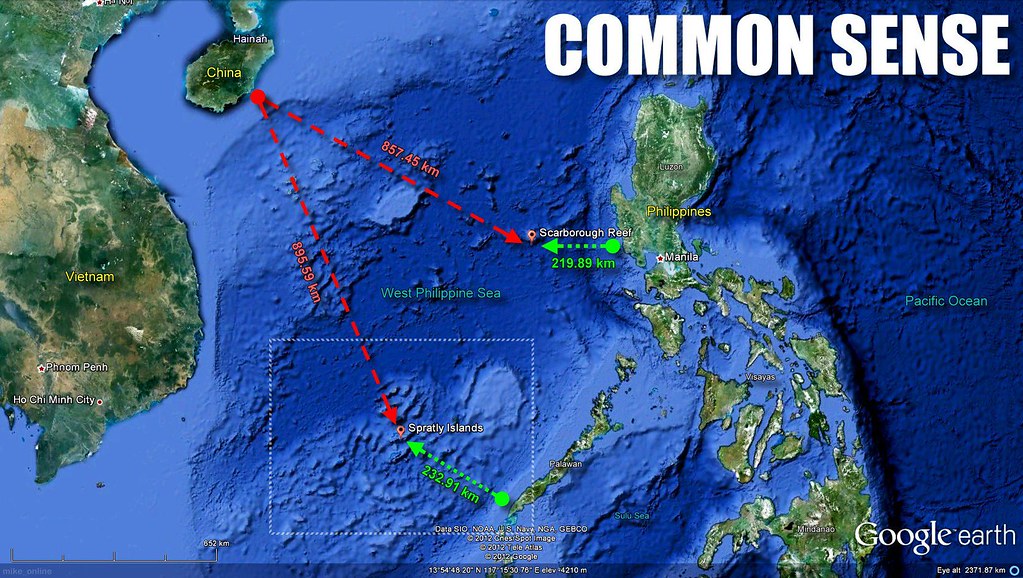
The naval maneuver was openly provocative. From Sanya base in Hainan Island a four-ship fleet sailed 870 miles to James Shoal, 50 miles from Malaysia’s coast and within its continental shelf. The ships proceeded to Mischief Reef, 130 miles from the Philippine coast within its continental shelf, but 800 miles from China. Before returning to port the fleet conducted blue-water exercises at the Bashi Channel between the Philippines and Taiwan.

The websites of China’s People’s Liberation Army-Navy and state news agency Xinhua carried up-to-date reports on the 11-day operation that started March 19. Highlighted was the flagship, an amphibious landing vessel. Featured too was the simultaneous pledging by the ships’ crew “to defend the South China Sea, maintain national sovereignty, and strive towards the dream of a strong China.”

Hong Kong’s Sunday Morning Post quoted Beijing naval expert Li Jie as saying: “The intended message by the PLA Daily and other official reports was to tell the world that, no matter what speculation was made by neighboring countries involved in territorial disputes with us in the South China Sea, our navy will still conduct patrol and training missions there. It’s to show our determination to defend our ocean territory.”

Founded on undisclosed “ancient maps,” Beijing’s nine-dash line encompasses nearly all of the South China Sea. Encroached are coastal waters of Vietnam, Brunei, Indonesia, Malaysia, and the Philippines. Manila has brought the issue for arbitration under the UN Convention on the Law of the Sea. The UNCLOS grants coastal nations 200-mile exclusive economic zones, which China trespasses.

Quoting another naval observer, Prof. Ni Lexiong of Shanghai, the Post said China also has dispatched more ships to the disputed Diaoyu Islands, which Japan also claims and calls the Senkakus, in the East Sea. In late 2012 China fortified the Subi Reef in the 200 or so Spratly Isles, also claimed by the Philippines, Vietnam, Malaysia, Brunei, and Taiwan. The moves quickly followed Xi Jinping’s ascent in November as head of the Chinese Communist Party and the Central Military Commission.

On the day Xi also took over the presidency last March 14, the National People’s Congress legislated a unified coast guard. Merged were the China Maritime Surveillance (CMS), the Border Control Department, the Fisheries Law Enforcement Command, the Customs Anti-Smuggling Bureau, and the Maritime Safety Administration. The five used to be under distinct ministries, vying for funding and influence. Their rivalry led to numerous encounters with neighbors, earning for them the moniker of “the five dragons stirring up the sea.”

That the five were fused into the CMS, under the State Oceanic Administration, shows China’s economic-paramilitary end. By posting civilian vessels to disputed areas of the South China Sea, Beijing can claim to be non-provocative, yet just as aggressive. The Economist last week quoted the think-tank International Crisis Group as analyzing that the merger could open China to joint coast guard exercises with other countries. But such peaceful hope quickly was dashed when Beijing announced that three CMS vessels in the Diaoyus were planning a landing party at “an appropriate time.” The unified agency, it bragged, had become an unstoppable dragon “full of strength from head to foot.”

In calling for China to become a maritime power, President Xi wants to be seen as different from predecessor president Hu Jintao and premier Wen Jiabao. Both had been criticized for “weakness” in avoiding confrontation. In contrast, Xi is one of the princelings, aggressive scions of communist party elders who rose up the ranks through nepotism. Before his ascent, Xi’s fellow-“Crown Prince Party men,” though all lower-ranking, were known to overrule sub-ministers and local administrators. Shanghai’s Professor Ni said, “As someone from the princeling background, Xi is more assertive and will certainly take a tougher stance on the issues in the East and South China seas.”

* * *

A very intriguing reaction of reader Bella Ramirez to my piece last week on the visita iglesia:

“My parents were from Pakil, Laguna. I’m glad you mentioned the Virgen de Turumba, as I am a witness to one of her many miracles.

“Sensing the coming War, my father had three crates of canned foods ready when on Dec. 8, 1940, after picking us up from school, we evacuated to Pakil at 4 p.m. on trucks. Japanese soldiers arrived. Their captain had the menfolk locked up in the San Pedro de Alcantara church. That night, the captain said, a very small lady with long hair and regal garment told him to release the prisoners for they were all good men. My father and nine-year-old brother were among them. The next morning the captain was awestruck when, looking up the altar, he saw there the regal, longhaired lady, the Virgen de Turumba.

“Mother sewed clothes for the Virgen, who was ‘picky’ with what she wore. There were days when a particular garment would fit her perfectly and days when it would be too loose or too tight.

“Pakil has a public swimming pool with water coming also from the mountain; some say it has healing power.”

* * *

GOTCHA By Jarius Bondoc

Thứ Ba, 2 tháng 4, 2013

Vietnam marine police to step up East Sea protection for fishermen

The Vietnam Marine Police Department has said it would beef up protection for Vietnamese fishermen fishing in the nation’s territorial waters with frequent patrols of the East Sea including areas off remote islands that it has clear sovereignty over.


A marine police ship sailing the East Sea

It would even accompany Vietnamese fishing boats if needed, the department said, adding these measures were being taken in response to a Chinese ship illegally opening fire on a Vietnamese fishing boat recently.
“We will stay 24/24 in remote islands and coordinate with other forces to support, or even accompany the fishermen to protect them,” a VnExpress report quoted department director, Major General Nguyen Dam, as saying.

Dam said the action of the Chinese ship firing flares at Vietnamese fishing boats on March 20 was a serious violation of international laws as well as the Declaration on the Conduct of Parties in the South China Sea (DOC).

Vietnamese marine police will ask Chinese forces to abide by international laws, he said.

On March 20, the fishing boat of Bui Van Phai, who hails from the central province of Quang Ngai, encountered a Chinese vessel at around 10 a.m. when it was winding up its fishing activities for the day in the Hoang Sa (Paracels) Archipelago.

The Chinese ship gave chase for about 30 minutes, firing flares and leaving after the boat’s cabin caught fire. The nine fishermen on board managed to put out the flames and prevent a potential explosion, Phai said.

On March 25, Ministry of Foreign Affairs spokesman Luong Thanh Nghi condemned the firing as "wrongful and inhumane,” as the boat was fishing in traditional fishing grounds in Vietnam's Hoang Sa Archipelago.

Dam, the Vietnamese general, said marine police are increasing their patrols in specific areas in the East Sea, internationally known as the South China Sea, where Vietnamese fishermen have been fishing for a long time.

“One of our most important tasks is to maintain security and a safe environment for fishermen and ensure marine economic activities,” he said.

The department held a conference in Hanoi on March 29 to review a campaign to enforce sea patrols from November 15, 2011 to March 15 this year.

According to a report released at the event, the national marine police chased away more than 350 foreign fishing boats violating Vietnamese waters during that period.

Dam said Vietnam marine police would continue chasing away foreign boats, including Chinese ones, fishing illegally in Vietnamese waters.

“This is our permanent task and we will have to do it better in the future,” he said.

“We are determined not to let other countries complicate the situation in the seas under Vietnam’s sovereignty and jurisdiction.”

China and four members of the Association of Southeast Asian Nations (ASEAN) – Vietnam, the Philippines, Malaysia and Brunei – are embroiled in sovereignty disputes over the East Sea.

China’s claim is the largest, covering most of the sea’s 1.7 million square kilometers.

Though this has been emphatically rejected by the other claimants and independent experts, analysts warn that Beijing is unlikely to back down from its expansive claims in the region, stretching from the eastern Himalayas to the East Sea.

The East Sea is thought to hold vast untapped reserves of oil and natural gas that could potentially place China, the Philippines, Vietnam, and other claimant nations alongside the likes of Saudi Arabia, Russia, and Qatar.

The waters hold around 11 billion barrels of oil and 190 trillion cubic feet of natural gas in proven and probable reserves, Reuters reported, citing the US Energy Information Administration.

Thanhnien News

Thứ Tư, 27 tháng 3, 2013

Chinese action against Vietnamese fisherman was 'legitimate'


Sailor Pham sits in his damaged fishing boat, which was allegedly attacked by Chinese boats in the disputed South China Sea

The action taken by Chinese authorities regarding a Vietnamese boat "illegally fishing" last week in the waters off "China's Islands" in the south China sea was "necessary and legitimate", Beijing said on Tuesday.

Chinese Foreign Ministry spokesman Hong Lei told reporters that China has "indisputable sovereignty" over the so-called "Xisha Islands" and their adjacent waters, and the Vietnamese fishing boat entered the waters for "illegal fishing operations".

"According to confirmation by relevant parties, no harm was done to the Vietnamese ship at that time and place," Hong said.

Vietnam claimed on Monday that a Vietnamese boat was "chased and fired at" by an unknown number of Chinese ships, and "its cabin was burned down" in the waters on March 20, according to Vietnamese Foreign Ministry spokesman Luong Thanh Nghi.

The fishing boat came from Vietnam's Quang Ngai province.

Hanoi urged Beijing to investigate and "compensate Vietnamese fishermen for their loss" in a statement on the ministry's website.

The statement did not say how many Chinese ships or what kind of vessels were involved, and Hanoi has not conceded that the fishing operation was illegal.

"China urges the Vietnamese to take effective measures to improve education and management of its fishermen and stop illegal operations," Hong said.

Wu Shicun, director of the National Institute for South China Sea Studies, said China's "Xisha Islands" are not within the scope of a territorial dispute, and Vietnam's hype about the confrontation is meant to aggravate the regional situation.

China has exercised restraint on the issue, but "Vietnam has planned to bluff the international community by playing the role of victim, and it is actually trying to justify its illegal claim over the islands", Wu warned.

As for the Vietnamese ship, it was not the first time it was caught illegally fishing, as previous media reports showed that it was among the two Vietnam-registered fishing ships that were driven out of China's territorial waters by a China Marine Surveillance fleet on March 13.

The two ships were driven out of the waters by the patrol ships Haijian 262 and Haijian 263, Xinhua News Agency reported.

Similar cases of illegal fishing were reported in recent years, and Beijing had previously sent warnings to Hanoi on acts by Vietnamese fishermen.

On March 4, 2012, Chinese authorities investigated and punished two Vietnamese fishing boats and 21 Vietnamese fishermen for illegally fishing in waters off the "Xisha Islands".

Li Guoqiang, deputy director of the Center for Chinese Borderland History and Geography at the Chinese Academy of Social Sciences, said the waters off the "Xisha Islands" have seen a growing number of illegal operations by Vietnamese fishermen, and Hanoi's policies and attitudes have been widely viewed as contributing to the incidents.

"Vietnam should be aware of the impact on bilateral ties with China," Li warned.

Relations between the two nations soured after Vietnam's National Assembly passed a "Vietnamese Law of the Sea" in June, claiming China's "Xisha and Nansha Islands" in the south China sea as being "within Vietnam's sovereignty and jurisdiction".

Asia One

China holds landing exercises in East Vietnam Sea

BEIJING (AP) — China's increasingly powerful navy paid a symbolic visit to the country's southernmost territorial claim deep in the East Vietnam Sea (south China sea) this week as part of military drills in the disputed Spratly Islands involving amphibious landings and aircraft.

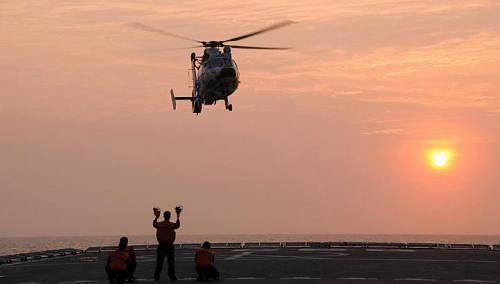
A Z-9 helicopter prepares to land on China's amphibious ship Jinggangshan in waters near south China's Hainan Province, in the East Vietnam Sea. China's increasingly powerful navy paid a symbolic visit to the country's southernmost territorial claim deep in the East Vietnam Sea this week as part of military drills in the disputed Spratly Islands involving amphibious landings and aircraft. -- PHOTO: AP


The visit to James Shoal, reported by state media, followed several days of drills starting Saturday and marked a high-profile show of China's determination to stake its claim to territory disputed by Vietnam, the Philippines, Taiwan, Malaysia and Brunei amid rising tensions in the region.

Sailors joined in the ceremony Tuesday aboard the amphibious ship Jinggangshan just off the collection of submerged rocks, located 80 kilometers (50 miles) off the coast of Malaysia and about 1,800 kilometers (1,120 miles) from the Chinese mainland, the official Xinhua News Agency reported Wednesday. China planted a monument on the shoal in 2010 declaring it Chinese territory.

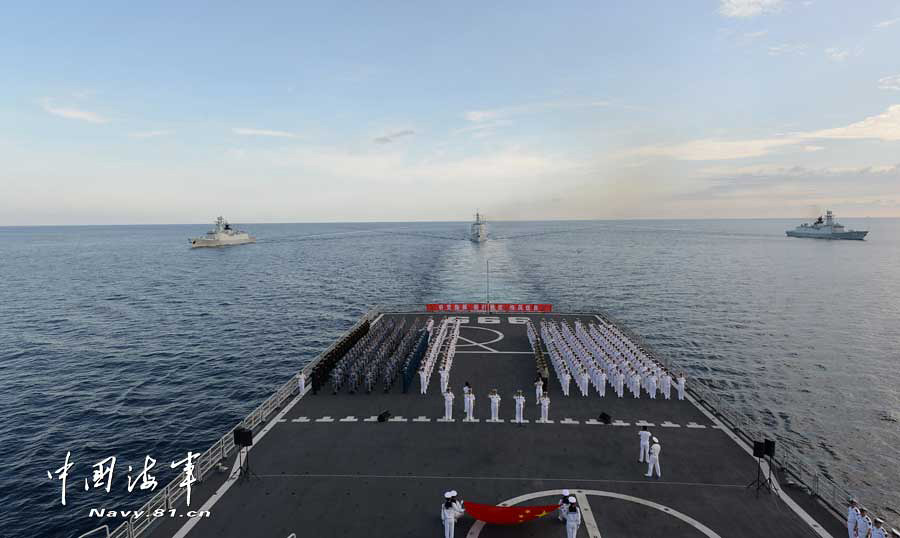
Sailors gathered on the ship's helicopter deck declared their loyalty to the ruling Communist Party and vowed to "struggle arduously to realize the dream of a powerful nation," Xinhua said.

The four-ship task force is headed next to the Pacific Ocean for deep-sea exercises via the Bashi Channel separating Taiwan and the Philippines, Xinhua said.

The exercises and visit to James Shoal did not encroach on any islands where neighboring countries have any substantial presence and drew no immediate response from them, but took place in an area with a complicated patchwork of overlapping claims.

The maneuvers were an important, symbolic declaration of Chinese sovereignty intended to show that Beijing will not waver over its territorial claims despite pushback in the region, said Peking University international relations expert Zhu Feng. Militarily, it means little since the navy has visited a number of times before and has no intention of basing troops near the remote shoal, he said.

"These recent naval operations can be seen as a strong indication of Chinese resolve, but they're also a continuation of the existing Chinese stance," Zhu said.

The Spratlys and other East Vietnam Sea island groups are surrounded by rich fishing grounds and some of the world's busiest shipping lanes. China and Vietnam have also begun experimental drilling in the area in hopes of tapping a suspected wealth of oil and gas, further exacerbating frictions that date back decades and have from time to time flared into military action.

China battled Vietnam for control of territory in the region as recently as 1988, and clashes between its naval forces and fishermen from Vietnam and elsewhere are frequently reported.

In the latest incident, Vietnam accused the Chinese navy of setting fire to the cabin aboard a Vietnamese fishing boat last week off the disputed Paracel Islands north of the Spratlys. Hanoi said it filed a formal complaint with the Chinese embassy and is demanding compensation and punishment of the sailors involved.

Beijing responded indignantly on Tuesday, saying its sailors had merely fired flares to drive Vietnamese boats from an area where it said they were fishing illegally. The navy denied causing any damage to the Vietnamese boats.

China's increasingly assertive defense of its claims in the area has sparked a backlash from Vietnam, the Philippines and others. Those countries have turned to the region's traditional dominant power, the U.S., as a counterweight, adding momentum to Washington's renewed focus on security ties in the Asia-Pacific, a strategic pivot viewed by Beijing as part of an effort to encircle it and stymie its development.

Along with maintaining garrisons on territory it claims, China has stepped up patrols by both its navy and ships from civilian maritime agencies that were recently consolidated into a single department along the lines of the U.S. Coast Guard.

The naval task force taking part in the latest drills consists of the Jinggangshan, the destroyer Lanzhou, and the missile frigates Yulin and Hengshui, among China's most modern and capable naval ship, according to an online report by the official People's Daily newspaper.

The drills on and around Johnson Reef and other Chinese-garrisoned islands and outcroppings involved hovercraft, ship-born helicopters, amphibious tanks, and land-based fighters, bombers and early warning aircraft, it said. Photos accompanying the report showed hovercraft setting off from the Jinggangshan and troops in lifejackets storming a beach.

China's High-sea training taskforce holds oath-taking ceremony in Truong Sa Islands, Vietnam

Copyright © 2013 The Associated Press. All rights reserved.

Chủ Nhật, 24 tháng 3, 2013

China's patrol boats fire burning Vietnamese fishing vessel

China's patrol boats fired burning a Vietnamese fishing vessel in Hoang Sa (Paracel) Islands, Vietnamese official media Xaluan reported on March 24.

The fishing vessel QNg 96382 TS fired buring. Photo: xaluan.com

Vietnamese fishing vessel (hull code 'QNg 96382 TS') of Vietnam's fisherman from Ly Son Island was fired by China's patrol ship in Hoang Sa Islands, an archipelago under Vietnam's soverignty.

According to RFA, the fishing vessel QNg 96,382 of Mr. Bui Van Phai, living in An Hai commune, Ly Son District, Quang Ngai Province.

The vessel was attacked when it was going to end fishing session in the area around Lin Con Islet, Paracel Islands of Vietnam in the East Vietnam Sea (the south China sea).

http://www.xaluan.com/modules.php?name=News&file=article&sid=565142

http://www.rfa.org/vietnamese/vietnamnews/cn-ship-fired-at-viet-fishing-vessel-03242013113946.html

Old maps proving Vietnam’s island sovereignty displayed

Eighteen maps, including four ancient ones, affirming Vietnam’s sovereignty over Hoang Sa (Paracel) and Truong Sa (Spratly) archipelagos, were on display at an exhibition in the southern province of Dong Nai on March 22.

Photo: Maps displayed at the exhibition. Photo: VNA

The old maps, including “An Nam dai quoc hoa do” ( Map of the Great Country of An Nam) published in 1838, “Dai Nam thong nhat toan do” ( Complete Map of Unified Dai Nam) published during the Minh Mang reign in 1834, and a 1904 map of Indochinese weather stations.

There was also a Chinese administrative map of provincial boundaries published under the Qing dynasty in 1904. The map shows that the southernmost point of China at that time ended at Hainan Island.

Additionally, the exhibition introduced over 100 photos featuring the two archipelagos as well as activities of Dong Nai people towards the country’s seas and islands.

Tran Dang Ninh, Director of Tran Bien Temple of Literature, where the exhibition took place, said the event will go on until April 30.

Within the framework of the event, there will be a wide range of activities, including a film making contest on Vietnam ’s seas and islands.

Tuoitre News

Thứ Sáu, 22 tháng 3, 2013

China commissions largest fishery ship in East Vietnam Sea

Beijing: China has commissioned its largest fishery patrol ship, which has a displacement of 49.5 million tonnes.

"Yuzheng 312" (in the photo) of the fisheries administration has begun its maiden patrol in the East Vietnam Sea (The south China sea).

The ship, the Chinese fleet's largest in terms of displacement, left Guangzhou and sailed to the disputed Truong Sa (Spratlys) Islands in the East Vietnam Sea to carry out a law enforcement mission.

The islands are under Vietnam's sovereignty.

The vessel has a displacement of 49.5 million tonnes and a navigation capability of 2,400 nautical miles with a maximum speed of 14 knots, state-run Xinhua news agency reported.

Routine fishery administrative patrols around the Truong Sa Islands will be carried out to better safeguard the legitimate interests of Chinese fishermen, a Chinese fishery official said last month.

PTI