Hiển thị các bài đăng có nhãn Indonesia. Hiển thị tất cả bài đăng

Thứ Tư, 19 tháng 6, 2013

Indonesia will Receive T-50 Golden Eagle Start in September 2013

Indonesia gears up for T-50: Indonesia will receive its full complement of 16 Korea Aerospace Industries T-50 Golden Eagle advanced jet trainer aircraft between September 2013 and February 2014.

KAI T-50i Golden Eagle for TNI AU (photo : daum)

The disclosure was made by a company spokesman at the company's chalet.

Jakarta ordered 16 T-50s in May 2011, marking the first export sale for the type, which is powered by a single General Electric F404 engine.

Indonesian pilots and maintenance crews are in South Korea familiarising themselves with the type.

In addition, KAI is confident of closing a deal with the Manila for 12 FA-50s, an armed variant of the T-50. Manila will use the type both for training and as a light fighter/attack aircraft.

The company, in co-operation with Lockheed Martin, is also competing against the Alenia/Aermacchi M-346 and BAE Systems Hawk for an eight aircraft requirement in Poland.

Warsaw is reviewing the technical proposals issued by the three companies, and will issue another request for proposals for pricing information in the coming months. A decision could come as soon as early 2014.

Flight Global

Thứ Bảy, 20 tháng 4, 2013

Indonesian Navy Selects NAUTIS Class A FMB Simulators for SIGMA Class Corvette Bridge Training

For training of its Sigma Class Corvette bridge personnel, the Indonesian Navy and Ministry of Defence selected VSTEP to supply two Class A NAUTIS Full Mission Bridge (FMB) Simulators for its Kobangdikal marine training facility in Surabaya.


Nautis VSTEP full mission bridge simulator (all photos : Nautis)

The Indonesian Navy is currently modernizing its fleet to more effectively combat maritime crime and piracy. Beginning 2012, the Indonesian Navy added several Sigma Class Corvettes to its active fleet. To allow realistic training of the Sigma Class bridge personnel, the Navy ordered two NAUTIS Full Mission Bridge Simulators, each with a 270 degree field of view projected on a cylindrical screen. The simulator bridges match the actual SIGMA Class Corvette bridge, allowing efficient and true-to-life bridge operations and navigation training. The Indonesian Navy also ordered five custom built ports, and customised navigation screens. VSTEP cooperated with local development and implementation partners, to increase the local content.


The NAUTIS FMB simulators have been delivered by maritime simulator developer VSTEP in cooperation with its Indonesian partner Terravision. The Kobangdikal Marine Facility in Surabaya counts as one of the most important development, training and education facilities of the Indonesian Navy. In addition to the two Class A NAUTIS FMB Simulators, two NAUTIS Instructor Stations and two NAUTIS Desktop Training Simulators have also been installed at the premises.

About NAUTIS
NAUTIS is a new generation of advanced DNV certified maritime training simulators for the civilian & military maritime industry. The NAUTIS range of maritime training simulators is developed by VSTEP and offers an affordable alternative for training maritime officers and crews. With a full range of simulators, from desktop trainer to full mission bridge simulator, VSTEP delivers high quality cost-effective simulator solutions fulfilling the training requirements of nautical colleges, naval academies, maritime training centres and individual ship owners in compliance to the latest STCW requirements. www.nautissim.com

About TerraVision
Terravision is a system integrator company which focuses in system implementation and integration and technical support of various system technology to Indonesian market which utilizes satellite network and data, high performance database with user friendly application.
www.terravision-indonesia.com

About VSTEP
VSTEP is a leading International developer of simulators and virtual training software. VSTEP creates 3D virtual training applications and simulators that allow people to build their skills in a practical and cost effective way. VSTEP has several core product lines, focusing on virtual incident training for first responders (RescueSim), maritime training solutions for the civilian & military maritime industry (NAUTIS) and training simulators to prepare camera operators to identify suspect human behavior before a crime or terrorist attack takes place (EyeObserve). www.vstepsimulation.com

(Nautis)

Thứ Hai, 15 tháng 4, 2013

The Indonesian Navy Task Force of PKR starts its mission in the Netherlands

The Indonesian Navy Task Force for the Project Procurement of Guard Missile Destroyer (GMD) ship or known as the Satgas PKR, has arrived in the Netherlands on April 8, 2013. Consisting of 12 (twelve) Indonesian Navy officers,-led by First Admiral Mulyadi-, this task force will conduct its mission in Netherlands for the period of 24 months.

The task force team had paid a courtesy call to the Ambassador of the Republic of Indonesia in The Hague,- H.E. Mrs. Retno L.P. Marsudi, accompanied by the Embassy’s Defence Attache, Col. Edy Sulistyadi, on Friday, 12 April 2013. During the meeting, the team explained road map of their work in the Netherlands.

As part of a signed deal between the Indonesian Ministry of Defence and the Damen Schelde Shipyard ship in Naval Shipbuilding (DSNs) Vlissingen to build 2 (two) Indonesian GMD ships, this task force will conduct its mission in assisting and supervising the construction process of the ships. The first ship will be handed over to the Government of Indonesia in January 2017, while the second one will be in October 2017. This cooperation will further strengthen bilateral relations between Indonesia and the Netherlands.

Thứ Bảy, 13 tháng 4, 2013

Indonesian Navy and Coast Guard may order up to 20 Aron littoral combat WIG Craft


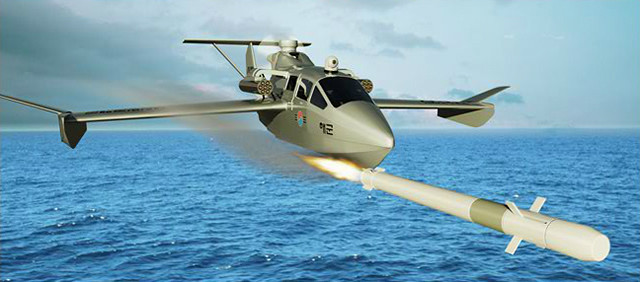
The Aron M50 during demonstartions in Indonesia. Picture: Aron

According to several South Korean media, Indonesian Navy and Coast Guard would be interested in ordered up to 20 Aron wing in ground effect craft, following an initial order of 2 units by the government. The South Korean company conducted a demonstration campaign at the Indonesian Navy (TNI AL) base in Jakarta.

The company previously received a lot of attention during INDODEFENCE 2012 which was held in November in Jakarta.

Aron would be offering the M50 variant of its craft in a littoral combat configuration to the Indonesian Navy and Coast Guard.

Equipped with Optronics systems and a small naval radar, an armed Aron M50 can fire small anti-ship missiles or guided rockets to attack larger ships. Aron deployed from coastal bases can provide a country with swift first response capability against trespassing vessels on its maritime territory. According to the manufacturer, Aron is an asset in strengthening core coastal patrol operations. It is able to assist in tactical response to enemy ships and control of long distance ocean borders.

In its basic configuration, the WIG craft is capable of reaching a top speed of 200 Km/h and has a range of 800 Km.


Aron M50 in Combat configuration. Picture: Aron

Navy Recognition

Thứ Năm, 21 tháng 3, 2013

Indonesia to Buy More Russian Jet Fighters, Patrol Ships

Indonesia plans to buy more than a dozen Russian Sukhoi fighter jets and domestically made, missile-equipped patrol ships as part of a $15 billion five-year campaign to modernize its military, defense officials said on Wednesday.

Southeast Asia’s largest economy has sharply increased its defense budget since 2010 as the military looks to bolster its capacity to protect shipping lanes, ports and maritime boundaries.

Indonesia is also wary of being left behind as China, Singapore, Vietnam, Thailand and other Asian nations ramp up defense spending.

Hundreds of Indonesian Military (TNI) soldiers gesture as they arrive at Tanjung Emas Port in Semarang on Feb. 28 after six months of border duty near Papua New Guinea. Indonesian defense officials on Wednesday said Indonesia planned to buy more than a dozen Russian Sukhoi fighter jets and domestically made, missile-equipped patrol ships. (JG Photo/ Dhana Kencana)
Defense Minister Purnomo Yusgiantoro said Indonesia wanted to buy a full squadron of the Sukhoi fighter jets and the patrol boats.

He also warned delegates at a military conference that rapidly increasing military spending and stronger defense capabilities in the region could sow distrust and fuel rivalry.

“If this is not accompanied by enhanced transparency that improves trust and confidence, it could run the risk of an arms race that adversely impacts on peace and stability,” he said.

Another Indonesian military official said the plan was to buy as many as 16 more Russian Sukhoi fighter jets, 17 patrol vessels, three light frigates and an undisclosed number of tanks and missiles.


Indonesia also planned to upgrade a squadron of US-made F-16s. Indonesia already has more than 10 Sukhoi jets.

Last October, the Defense Ministry said it was set to buy 130 Leopard 2 tanks from Rheinmetall AG of Germany worth a total of $280 million.

Indonesia, a vast nation of islands with key sea lanes and 54,700 km of coast, has also ordered three submarines from South Korea to expand its fleet to five.

Defense spending in 2012 stood at Rp 72.5 trillion ($7.54 billion), up 30 percent from 2011. It is expected to rise to Rp 77.7 trillion in 2013.

Reuters

Thứ Hai, 25 tháng 2, 2013

Indonesian Air Force gets two Sukhoi jet fighters, waits for four more

Two out of the six Sukhoi Su-30 MK2 jet fighters ordered by the Indonesian Air Force (TNI AU) arrived at Sultan Hasanuddin Air Force Base in Makassar late on Friday evening.

A spokesman from the base, Maj. Muliadi, said on Saturday the two jet fighters were part of an order of six Su-30 MK2s arriving in batches.

“The remaining four jet fighters will arrive in June and July,” he said.

The Russian-made jet fighters arrived onboard An-12-100 Ruslan strategic transport aircraft in disassembled condition and without engines. The engines are scheduled to arrive on Feb. 27 for the entire six jet fighters, totaling 12 engines.

In addition to the two jet fighters made by Komsomolsk-na Amure Aircraft Production Association (KNAPO), 17 technicians from the aircraft manufacturers will assemble the jet fighters.

Muliadi said the assembly process would take two weeks to complete, including test flights.

The Su-30 MK2 is a twin-engine, dual-seater jet fighter with a range of some 3,000 kilometers and is able to carry a payload of some eight tons.

As with previous shipments, the jet fighters do not come with weapons, other than internal cannons.

“The weapons will be purchased separately after the jet fighters are assembled, just like other batches,” Muliadi said.

Defense analysts have criticized the separate acquisition of the jet fighters, which do not include weapons such as bombs and missiles.

The government, however, said budget constraints had limited its ability to buy a complete package.

With the two jet fighters, now Indonesia has six single-seater Su-27 SKMs and six Su-30 MK2s.

The Su-27/30 jet fighters are known as “Flankers”.

By the end of this year, there will be 16 jet fighters of this type under the command of the 11th Squadron.

The fighters have been arriving in batches since 2003, starting with Su-27 SKM, which arrived at Iswahjudi Air Force Base in Madiun, East Java.

The home base of the fighters was then moved to Makassar in 2005, making the deliveries of the heavyweight jet fighters direct to Makassar since 2009, 2010 and 2013.

The government is currently improving its air force assets both in jet fighter and transport roles to augment and replace ageing aircraft.

Other than increasing the number of Flankers, the TNI AU is also expecting the delivery of 24 F-16 C/D Block 25, granted by the US. Indonesia will be responsible for bearing the cost of modernizing the lightweight, multi-role aircraft.

Indonesia currently has 10 F-16 A/B Block 15 OCUs, in the Third Squadron, which were acquired in 1989. These jet fighters will also undergo modernization.

In September, the TNI AU received four EMB-324 Super Tucano ground attack aircraft out of 16 ordered from Brazilian aircraft maker Embraer. Joining the 21st Squadron, the aircraft are a replacement for the legendary American-made Rockwell OV-10 Bronco.

Another new acquisition is the T-50 Golden Eagle lead-in fighter trainer (LIFT) aircraft from the Korean Aerospace Industry, to replace the British-made BAE Hawk Mk 53 in the 15th Squadron.

Indonesia will receive four C-130H Hercules heavy lift transport aircraft granted by Australia and will buy another six. Indonesia currently has two squadrons of Hercules, the 31st and 32nd.

Indonesia has also received two C-295 medium lift transport aircraft out of nine aircraft ordered from Spain-based Airbus Military in cooperation with state aircraft maker PT Dirgantara Indonesia, which will make the aircraft in Bandung. The C-295 will join the CN-235 and Fokker F-27 in the second squadron.

The Jakarta Post

Thứ Ba, 29 tháng 1, 2013

Indonesia Buys Chinese Missile for Warships

Jan 29, 2013- TEMPO Interactive, Jakarta: The Indonesian Navy (TNI AL) will use C-705 missiles from China in its locally-made fast missile boats (KCR). According to plan, 16 KCR-40 warships manufactured in Batam by PT Palindo Marine will be equipped with the missiles.

"The contract had been signed, the missiles are expected to arrive in 2014," First Admiral Untung Suropati, Chief of Information Center for TNI AL, told Tempo on Monday, January 28.

In accordance with Law No.16/2012, the government will cooperate in technology transfer in the purchasing scheme. With the scheme, it is expected that three domestic factories: PT. Pindad, Lapan, and PT. Indonesian Aerospace, will be able to manufacture their own missiles.

Earlier, the Director General of Defense Potential at the Defense Ministry, Pos Batubara, said that he was negotiating a technology transfer contract with China's manufacturers. He ascertained that local producers will be involved in the process. "We hope to be able to produce the missile ourselves," he said.

Head of Defense Planning Division at the Ministry of Defense, Major General Ediwan Prabowo, said that a number of local manufacturers have started their involvement in arming KCR 40. "PT. Pindad had begun its involvement, but the percentage is still small," Ediwan stated.

Without mentioning China's missile procurement contract, Ediwan said that the cost to make the KCR 40 amounts to Rp 75 billion per unit. The entire fund was sourced using a domestic lending scheme.

Thứ Bảy, 26 tháng 1, 2013

Third Indonesia-made missile ship delivered

Jan 26, 2013- The Defense Ministry of Indonesia accepted its third locally made KCR-40 fast missile boat on Friday, adding to the push to strengthen both the Indonesian Navy and local defense industries.


Defense Minister Purnomo Yusgiantoro officiated the ceremony for the KRI Beladau-643 at Batu Ampar Port in Batam, Riau Islands.

Also attending the ceremony were Indonesian Military (TNI) chief Adm. Agus Suhartono, Navy chief of staff Adm. Marsetyo, and vice president director of Bank Mandiri, Riswandi.


Pride of the nation: Soldiers attend the launch of the warship KRI Beladau at Batu Ampar quay, Batam, on Friday. With a maximum speed of 30 knots, the 44-meter vessel is billed as one of the most sophisticated, domestically built war machines. (Antara/Maha Eka Swasta)

Purnomo said the Beladau was the third KCR-40 to enter the Navy’s service after the KRI Clurit-641 and KRI Kujang-642.

The three vessels were part of a series of acquisitions of 16 KCR-40s until 2014. A fourth vessel will be delivered in November while the remaining 12 KCR-40s will be delivered by 2014.

Earlier this month, the ministry, which has a budget of Rp 81 trillion (US$8.42 billion) this year, revised down its target to reach the required level of weapons systems from three Strategic Plans (Renstra) to two five-year plans.

By procuring the KCR-40s at home, the ministry is maximizing local defense industries through requiring a transfer-of-technology with every purchase of a foreign weapons system.

Manufactured by PT Palindo Marine Shipyard, the KCR-40 will be equipped with Chinese made C-705 anti-ship missiles that have a range of some 150-kilometers. State aircraft maker PT Dirgantara Indonesia is expected to locally produce the C-705 missiles by 2017 or 2018.


Meanwhile, Agus expected the new vessel would increase the Navy’s capabilities in safeguarding Indonesia’s vast territorial waters.

The three KCR-40s will be operated by the Western Fleet in the shallow waters around Sumatra, parts of Java and Kalimantan.

Agus also touched on the plan to create a Central Fleet in addition to Eastern and Western Fleets.

“We are studying the organization. We will also create the Sea Defense Command [Kohanla] which will supervise the fleets,” he said, without elaborating on the time frame.

Commenting on the plan to establish the third fleet and Kohanla, Iis Gindarsyah from the Centre for Strategic and International Studies (CSIS) said that it was a sign of Indonesia’s aspiration for a green water navy.

“The projection is likely about the security of Indonesia’s maritime borders and strategic sea-lanes,” he told The Jakarta Post. He added that the current situation in the South China Sea had placed greater external pressures on Indonesia.

A green navy is often described as a navy with greater coverage than a traditional littoral brown water navy, but stops short of the expansive power of a blue water navy, which contains aircraft carriers.

In addition to having another fleet, the Navy is also preparing the Third Marines, who will be based in Sorong, West Papua.

The Navy has been modernizing its weapons systems in the past few years with acquisitions and plans to further acquire major weapons systems such as submarines, maritime patrol aircraft, anti-submarine warfare (ASW) helicopters, light frigates and guided missile destroyers.

The Jakarta Post