Hiển thị các bài đăng có nhãn China Military. Hiển thị tất cả bài đăng

Thứ Hai, 9 tháng 4, 2018

How China is quietly increasing its ability to wage war at sea

More intensive naval training is steadily improving the navy’s combat readiness, writes Collin Koh


The People’s Liberation Army Navy has been on a roll over the past month, staging successive air, naval and marine amphibious assault exercises across the Western Pacific.

Most notably, a large naval deployment was observed on satellite imagery in late March – about 40 vessels including what appeared to be the aircraft carrier Liaoning.

It was followed not far astern by a slightly smaller combat support ship, plus other vessels including submarines and two distinct three-aircraft aerial formations.

Clearly, there should be no dispute among naval observers that the formation in which the fleet sailed amounted to what can be termed a photo and PR exercise.

Some dismissed the manoeuvres as a propaganda exercise designed to flaunt the navy’s muscle, but others cautioned this could imply the PLA Navy has intensified its peacetime combat readiness and training.

Neither side is wrong, for both schools of thought encapsulate the meaning of gunboat diplomacy – the limited threat or use of naval force for the attainment of limited political objectives.

Usually some form of photo opportunity is obligatory on major naval exercises and examples are bountiful. Examples include Exercise Malabar in July last year, with all three carriers of the US, Indian and Japanese navies sailing in formation with fighter jets blazing above, plus the Thailand-hosted Asean Multinational Naval Exercise late last year, to name just a few.

The latest huge naval turnout in the South China Sea appears no different. But would it make sense for China to burn expensive fuel, taking so many warships and their crews away from other tasks, only to stage a photo op?

Focusing on the apparent propaganda value of the manoeuvres solely based on the satellite pictures diverts one’s attention away from a more pertinent phenomenon. That is, while much focus has been on the Chinese coastguard and fabled maritime militia in the South China Sea and in other East Asian maritime flashpoints involving China, the PLA Navy has been gradually improving its ability to fight in a high-intensity war. There is nothing radically new about this. The navy has been steadily building new ships over the years. Just over the past two years alone, over 40 new vessels were commissioned or launched.

But combat capability does not just emanate from inducting new hardware. Clearly the navy understands the value of honing its combat readiness through intense training. While one could question the various other factors that contribute to combat readiness – for example, command and control protocols – the fact of the matter is that in recent years, corresponding with the rate of naval shipbuilding efforts, there has also been an upswing in the navy’s training and exercise regimen.

New hardware allows the fleet to maintain a higher level of readiness compared to using older ships simply because of reduced maintenance requirements. Suffice to say, for now the navy has the luxury of utilising its new-built fleet of vessels to intensify training – more sea time for its crews, which translates into more familiarity with operating their vessels under varying conditions and getting acquainted with the strengths and weaknesses of their combat systems.

Until laggard maintenance schedules catch up eventually, which nobody can be certain of, one should assume that the navy will remain fixated with building a more proficient fleet capable of undertaking large-scale operations.

Also noteworthy is the growing amount of inter-fleet coordination. This is also nothing new – the PLA Navy South Sea, East Sea and North Sea fleets have mobilised assets to train with each other in the past. What is different this time around and will be in the future is that such inter-fleet exchanges will take place on a larger scale thanks to new ships and equipment available. To add to that, the navy has also been honing its interoperability with both the coastguard and maritime militia.

If one takes seriously the incessant exhortations from Beijing’s political elites to “train as you fight”, large-scale naval manoeuvres similar to the one observed in late March would plausibly not be a one-off event, but represent a new normal, made possible only as the navy gains new capabilities and its personnel acquire new-found confidence.

That could mean two things for peace and stability for the South China Sea and Southeast Asia.

On the one hand, a more capable PLA Navy might contribute towards the promotion of defence diplomacy. On the other, a more capable and overconfident PLA Navy may serve more as a tool of coercion. A navy is such a flexible instrument for foreign policy that it can well perform either of these tasks. It depends on how the navy’s political masters choose to utilise this capability.

The increasing power of China’s navy and its enhanced combat readiness should not be kept off everyone’s radar. It remains a force with an increasingly large shadow, ready to weigh in at any point of confrontation at sea with Beijing’s rivals. While not overexaggerating this threat, we should ignore this growing Chinese naval challenge at our peril.

Koh Swee Lean Collin is a research fellow at the maritime security programme at the S Rajaratnam School of International Studies, Nanyang Technological University, Singapore

Thứ Năm, 1 tháng 3, 2018

China’s military flexes muscles for domestic objective: more funding

With stealth jets entering service, leaked pictures of new high-tech naval artillery and proud reports of manoeuvres, China’s armed forces are putting on a show of power as they lobby for greater defence spending


China’s defence spending is only about one-quarter that of the United States, if official figures are accurate. Photo: Reuters

Beijing: With stealth jets entering service, leaked pictures of new high-tech naval artillery and proud reports of manoeuvres that “dare to shine the sword,” China’s armed forces are putting on a show of power as they lobby for greater defence spending.

Although it is the world’s largest military, the People’s Liberation Army has been privately unhappy that it got less than double-digit funding increases the past two years. It has recently been making the case that it needs more money to deal with increased global uncertainty, diplomats and several people with ties to the armed forces say.

In the run-up to the defence budget’s release at the annual meeting of China’s parliament next week, state media outlets have been filled with coverage of military drills, advanced new equipment and thrilling tales of derring-do in a new film very loosely based on China’s evacuating people from Yemen’s civil war in 2015.

The overall message is clear: China faces serious challenges, from US President Donald Trump’s threats of force against nuclear-armed North Korea to an increasingly tense border dispute with India and what Beijing sees as efforts by self-ruled Taiwan to assert its sovereignty.

Confronting those challenges requires cash, a point the military is now trying to drive home.

“If you keep telling your people China is facing all these threats, you have to be able to back it up to show you are spending enough,” said a senior Beijing-based Western diplomat.

President Xi Jinping promised in his keynote speech to the Communist Party Congress in October to make China’s armed forces world-class by the middle of the century. The military has deployed an increasingly sophisticated propaganda machine to make sure that promise stays top of mind.

A professionally shot air force video released to celebrate the Lunar New Year this month entitled “New fighters of the great power to safeguard the new era” led with footage of the latest fighter to enter service, the J-20 stealth jet, designed as a counterpart to the radar-evading the Lockheed Martin F-22 Raptor.

“It looks like they are making the case for a large rise in defence spending,” said an Asian diplomat, speaking of the recent uptick in military-related stories in China.

Nervous neighbours

China’s defence spending is only about one-quarter that of the United States, if official figures are accurate. China has repeatedly said that it has no hostile intent, that its military is for defensive missions, and that defence spending is transparent.

Many of the country’s neighbours beg to differ, calling out what they see as Chinese sabre-rattling as it ramps up drills in the region.

Vietnam, one of the most vocal opponents of China’s South China Sea claims, has tightened its military relationship with the United States. Taiwan has pledged to grow defence spending, and wants to buy new, advanced US equipment.

The official People’s Liberation Army Daily said this month that although China was committed to a defensive military policy, it had to “dare to shine the sword” with air patrols far from China’s coast, whether close to Taiwan or over uninhabited islets disputed with Japan in the East China Sea.

Such flights, it said, protected China’s “bottom line” on strategic issues.

One person with ties to the military said another pressing area for more spending was salaries, which have not kept up with those of private-sector workers.

“Simply relying on ‘the great Xi to lead us to victory’ won’t cut it,” the person said, referring to efforts to recruit the best and the brightest into the military by appealing to national pride.

Between the lines

The defence budget will only disclose a top-line number, with a percentage comparison to the previous year. No breakdown on spending is provided.

Last year, China’s parliament did not initially release the figure, sparking questions over transparency. But when it did, the budget increase was 7%, the smallest in more than a decade.

The budgeted increase of 7.6% for 2016 was the lowest in six years and the first single-digit rise since 2010, following a nearly unbroken two-decade run of double-digit increases.

Experts say the true figure is likely much higher than what is officially reported, with money for some military projects included in ostensibly non-military spending.

“Particularly given China’s civil-military integration, it is difficult to know where defence spending ends” and civilian research and development begins, said another Western diplomat, who analyses China’s military.

Some defence experts say that China is eroding the United States’ military technology dominance and that the People’s Liberation Army could surpass the US military in artificial intelligence capabilities, which have become a spending priority for Beijing.

But in the absence of transparency about new technologies, such as an experimental electromagnetic railgun state media suggested this year was being tested aboard a Chinese warship, there is scepticism about their combat readiness.

China has not fought a war since 1979, a brief invasion of Vietnam that ended badly for China.

China’s defence ministry declined to comment ahead of the figure being released by parliament. The general percentage rise is typically given the day before parliament opens, and the raw figure the next day. Parliament opens 5 March. Reuters

Chủ Nhật, 11 tháng 2, 2018

China sends Su-35 fighter jet for patrolling the South China Sea

China's Defense Ministry website on Feb. 9, 1818, published a video showing that its Su-35 fighter jets participated in patrols in the South China Sea. This video also shows scenes of Su-35 missile firing. The Su-35 is a Russian 4+ generation fighter developed from the Sukhoi multirole fighter platform.

Thứ Sáu, 5 tháng 1, 2018

'Don't fear death': China's Xi urges blunt call to PLA

China's military personnel should 'neither fear hardship nor death,' Xi said.

President Xi Jinping has issued a blunt call for China's military to be ready for war and unafraid to die defending the country, as geopolitical tensions mount in Asia.


Chinese soldiers applauding during a military parade at the Zhurihe training base in China's northern Inner Mongolia region. President Xi Jinping on January 3, 2018 has issued a blunt call for China's military to be ready for war and unafraid to die defending the country, as geopolitical tensions mount in Asia. Photo by AFP

Xi's exhortation to the world's largest fighting force, parts of which were revealed only late Thursday, came during what state media characterized as a rare address by the Chinese leader to the country's entire military.

Xi cemented his status as China's most powerful leader in decades during an October Communist Party congress, and this week's rhetoric and images of massed soldiers and tanks seemed designed to back up his new strongman image.

China's military personnel should "neither fear hardship nor death," Xi told thousands of military personnel during an inspection visit Wednesday to the People's Liberation Army's Central Theater Command in northern Hebei province, according to the official Xinhua news agency.

Xi also called for the military, a once-backward force whose rapid modernization over recent years has raised alarm in Asia and Washington, to continue upgrading.

He urged the PLA to step up research into high-tech means of warfare and engage in "real combat training", Xinhua said.

"Create an elite and powerful force that is always ready for the fight, capable of combat and sure to win in order to fulfil the tasks bestowed by the Party and the people in the new era," he was quoted saying.

As head of the Communist Party's Central Military Commission, Xi is commander-in-chief of China's more than two-million-strong armed forces.

Xinhua called Xi's address to the troops "the first time for the commission to hold a mobilization meeting for the whole armed forces."

Other media reports said thousands of troops elsewhere in the country assembled at their installations to hear his speech.

Since taking office in 2012, Xi has pushed for a muscular China, including calls in October to develop a "world-class" Chinese army by 2050.

China's neighbors have watched warily as the PLA has upgraded its arsenal with increasing sophisticated weaponry and sought to create a more effective and professional fighting force.

Analysts say Xi is very unlikely to risk putting China's still-untested new prowess into an outright military confrontation.

But concerns have grown as Beijing has imposed increasingly assertive claims to vast expanses of the contested South China Sea (which Vietnam calls the East Sea), while engaging in confrontations with Japan over disputed islands in the East China Sea, and with India over Himalayan regions.

Temperatures also have risen over North Korean leader Kim Jong-Un thumbing his nose at the world by repeatedly testing his country's banned nuclear weapons and missiles, while exchanging tit-for-tat threats with U.S. President Donald Trump.

During his visit to the military command, Xi was shown in combat fatigues inspecting troops, tanks, sniper training, and peering down the sights of an automatic rifle.

State media also said he paid a visit to an exhibit detailing the PLA's experience battling American-led forces during the Korean War.

Source: VnE, Xinhua

Chủ Nhật, 7 tháng 7, 2013

China's New Jet, Radar Complicate US Posture


TAIPEI — China’s increasing military musculature continues to crush the margins of how far the US military can conduct operations near the mainland, experts say. Through the purchase of Russian-made equipment, China is attempting to break beyond the current air defense range of 250 kilometers in what US experts refer to as China’s anti-access/area-denial strategy.

China plans to procure two new Russian weapon systems that will extend the range of its air defense strike capability to 400 kilometers. This would place all of Taiwan within the scope of China’s air defense network and endanger the Japanese-controlled Senkaku Islands, which China also claims.

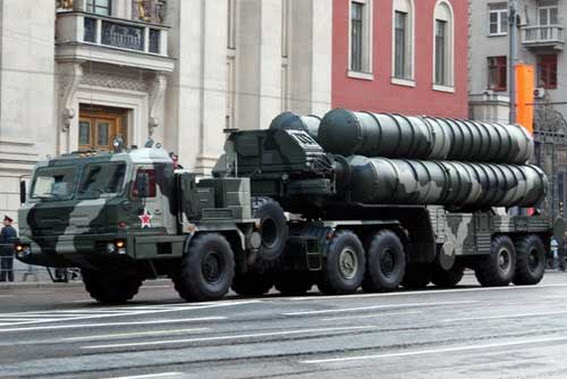
The first is the much-reported negotiation for the 400-kilometer range S-400 surface-to-air missile (SAM) system with a possible deal after 2017, when the Russian manufacturer, Almaz-Antey, fulfills Russian military orders.

The second is the Sukhoi Su-35S multirole fighter jet. These fighters will not be outfitted with the older Zhuk radar, but with the IRBIS-E radar, said Vasiliy Kashin, a researcher at the Moscow-based Centre for Analysis of Strategies and Technologies.

Built by Tikhomirov NIIP, the 400-kilometer range IRBIS-E multimode X-Band passive electronically scanned array radar can detect and track up to 30 airborne targets and attack up to eight at the same time, according to the company’s website. In addition, in the air-to-ground mode, it can track up to four ground targets, and can track one ground target while preserving air sector surveillance.

The S-400 and Su-35S with the IRBIS-E radar might become “a psychological deterrent to politicians in Washington when they contemplate a Taiwan contingency,” said Alexander Huang, a military specialist at Tamkang University, here.

Kashin said the tactical situation is “bad news for Taiwan,” as the Su-35S will be able to spot Taiwan’s F-16 fighters at 400 kilometers with its new radar. “That means Chinese Su-35s patrolling on the mainland side of the border will be able to see the targets all over Taiwan.”

If anything, these systems will “inspire determination to expedite production, procurement and deployment of the [Lockheed Martin] F-35 fighter by the US and its Asian allies,” Huang said.

The latest information on the Su-35S deal was revealed on June 10, when the director general of Russian Technologies Co., Sergey Chemezov, said the final commercial contract on the fighter sale could be expected by the end of this year.

Kashin said the “contract likely will be signed at the next meeting of the Sino-Russian intergovernmental commission on military technical cooperation, which can be expected to take place in November in Moscow.”

The first procurement contract is expected to include 24 Su-35S fighters, with an option for an additional 24 as things progress. Though 24 to 48 fighters are not a significant threat to US forces, they pose a problem for Taiwan as it retires 56 Mirage 2000 fighters and roughly 50 F-5s. Taiwan is upgrading 126 indigenous defense fighters and 145 F-16A/B fighters, but there has been a significant push by Taiwan to procure 66 F-16C/D fighters to counter reductions. Effective lobbying by China within the US government has blocked new F-16 sales to Taiwan.

With projected reductions in fighters, Taiwan’s military has begun fielding its first land-attack cruise missile, the Hsiung Feng 2E, and is working on a variety of new anti-ship cruise missiles.

However, Douglas Barrie, senior fellow for military aerospace at the London-based International Institute of Strategic Studies, said Taiwan’s growing interest in land-attack cruise missiles could be countered by the Su-35’s “potential ability to detect small low-flying targets at ranges suitable to support an engagement.”

The IRBIS system’s 400-kilometer range “could provide a useful gap filler” to support the Chinese air force’s limited number of airborne warning and control system aircraft (AWACS), Barrie said. “It remains to become clear what, if any, long-range air-to-air missile might be supplied with the Su-35.”

Both the S-400 and Su-35S with IRBIS-E radar are “impressive steps in increasing capability,” said Lance Gatling of Nexial Research, a defense consulting firm in Tokyo. However, there are technical challenges to integrating China’s AWACS capability with the S-400 and IRBIS-E. “SAM radars, ground-based, have the radar horizon issue, so they can’t see planes at very low altitude over Taipei.”

Taiwan could use the jamming capabilities of its new early warning radar at Leshan Mountain, near Hsinchu, to play havoc with China’s various radar systems, said a Taiwan defense industry source. The Leshan facility is considered one of the most powerful radars in the world, and unconfirmed sources here indicate it relays data directly to the US military to allow for the monitoring of aircraft and missile activity within China.

Gatling said the ultimate question on China’s procurement of the IRBIS and S-400 systems is: “How advanced is the integrated air defense system, data management and data links” in China? At present, this is difficult to define, as much of China’s military capabilities remain opaque to outsiders.

Defense News

Russia sells China S-400 surface-to-air missiles

Huanqiu.com says in its report titled Russia has decided to sell S-400 to China: “According to the July issue of Canadian “Kanwa Defence Review” an authoritative source of the Russian military industry says that Russia has decided to export S-400 anti-aircraft missiles to China.

This is one more concession that Russia has made in its arms sale to China following the exports of Su-35 fighter jets, and the Chinese version of the Lada class submarines.

“Kanwa says: China hopes to get the S-400s and has been making request for it for quite a few years at the annual meetings between the two governments. However, due to fears that China might copy it and other reasons, the Russian government did not clearly agree to sell he S-400s to China until 2012.

At the end of 2012, Russia for the first time directly told Beijing that it agreed to sell the S-400s. No formal agreement has so far been entered into, but negotiation about that has already been included in the agenda.

“Russia decided that it might sell China the radar and command and control systems of the S-400. What kind of missile system will be exported will be the key issue in the negotiations. One thing is clear: the versions allowed to be sold include the interception missiles with a range of 380 kilometres.

However, no final decision has been made as to whether sale will go ahead of the full set system of the S-400 interception missiles, also having a range of 380 kilometres.”

Kanwa’s article believes that China wants to get Russian technology to improve its Hongqi-9 surface-to-air missiles, which has only a range of 125 kilometres. In order to lengthen its range, it needs a new generation of engine, and improvement of its filling technology.

The 380 kilometre range of the S-400 is longer than most similar US missiles, and is therefore extremely attractive to China.

Moreover, due the modular structure of the S-400s, they can be used in combination with the S-300 missiles China has imported from Russia.

As for the reasons why Russia has decided the export: Kanwa believes that besides mutual political needs, the major reason is further US-Japanese cooperation in developing their ballistic missile defence system with the final target of obtaining an interception missile flying at the speed of 6.5 km/second.

As a result, China and Russia have intensified their discussions and cooperation in developing their ballistic missile defence systems.


Source: huanqiu.com “Russia has decided to export S-400 to China” (excerpts and summary translated from Chinese by Chan Kai Yee)

Thứ Sáu, 5 tháng 7, 2013

China deploys largest-ever single military force


China and Russia have begun their largest ever joint naval exercise in the Sea of Japan. It’s the Chinese navy’s single biggest deployment of military force in any joint foreign exercise.

The Chinese Navy has dispatched four guided missile destroyers, two guided missile frigates, a supply ship, and three ship-borne helicopters. There are nineteen warships and more than 10 aircraft and helicopters taking part in the maneuvers. China’s national defense ministry says the drills are not targeted at any third party, and the aim is to deepen cooperation between the two militaries.

The two navies will practice recapturing ships seized by pirates and search-and-rescue operations. There will also be a number of air defense, anti-submarine and anti-ship exercises. Operation "Joint Sea-2013" will run through to July 12th. Russia and China have regularly held joint naval drills since 2005, under the framework of the Shanghai Cooperation Organization.

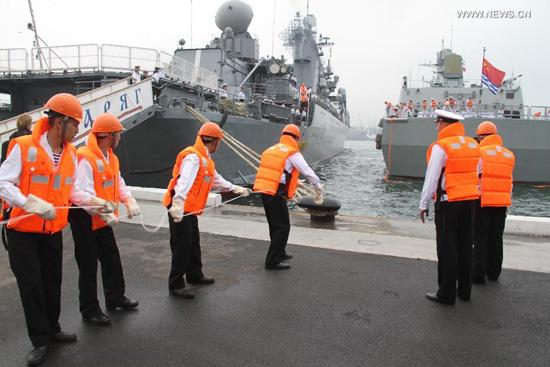
Destroyer Shenyang (R) of the Chinese People's Liberation Army (PLA) Navy is anchored in Vladivostok, Russia, July 5, 2013. Chinese fleet consisting of seven naval vessels arrived in Vladivostok on Friday to participate in Sino-Russian joint naval drills scheduled for July 5 to 12 at the sea area and airspace of the Peter the Great Gulf in the Sea of Japan. (Xinhua/Wang Jingguo)


Destroyer Shenyang (R) of the Chinese People's Liberation Army (PLA) Navy is
anchored in Vladivostok, Russia, July 5, 2013. Chinese fleet consisting of
seven naval vessels arrived in Vladivostok on Friday to participate in
Sino-Russian joint naval drills scheduled for July 5 to 12 at the sea area
and airspace of the Peter the Great Gulf in the Sea of Japan. (Xinhua/Wang Jingguo)

CCTV

NATO chief downplays reports of US spying in Brussels -- Stars and Stripes

U.S. spy agency NSA hit with furloughs starting next week -- Reuters

France 'runs vast electronic spying operation using NSA-style methods' -- The Guardian

Britain's Army reserves to become cyber security and intelligence specialists - and receive more benefits -- The Independent

Flabby hackers, we want you: Britain eases physical standards for military ‘cyber-reservists’ -- AP

Preparing for cyberwarfare -- Michael Richardson, Japan Times

Russia to Lay Down 3rd Yasen Class Nuclear Sub on July 26 -- RIA Novosti

Russian Air Force to Get Su-30SM Fighter Jets in Bulk -- RIA Novosti

Russian Defense Minister Wants More Spending on R&D Units -- RIA Novosti

Coming Soon: India’s First Indigenous Aircraft Carrier -- Zachary Keck, The Diplomat

Orbital Blockade Imposed On Iran -- Strategy Page

Iran upgrades missile defense system -- UPI

Mexican generals accused of ties with drug cartel set free -- Reuters

Russia offering Su-30s to Ethiopia -- Defence Web

Philippines To Buy 2 Maestrale Frigates From Italy -- Defense News/AFP

Chinese Navy Ships Arrive in Russian Far East for Drills -- RIA Novosti

US Navy Boosts Arabian Gulf Patrol Craft Force -- Defense News

Positive trends greet Navy’s Asia deployments, but tensions at sea remain -- Stars and Stripes

Laser Could be New Eyes of the Military -- Military.com/NewsRx.com

Army IT Deal Tops $45 Billion in June Awards -- DoD Buzz

Military Sonar May Hurt Blue Whales -- Live Science

Grieving parents sue for answers from Air Force -- Air Force Times

Brace for similar sequester impact in 2014, Greenert says -- Stars and Stripes/Virginia Pilot

National Guard soldiers, airmen to be furloughed -- AP

Squeezing the Pentagon: The wrong way to cut America’s military budget -- The Economist

In the 1970s, the U.S. military struggled with morale -- Jim Michaels, USA TODAY

Thứ Tư, 3 tháng 7, 2013

Two new-type frigates of PLA Hong Kong Garrison commissioned

HONG KONG, July 2 (ChinaMil) -- The Hong Kong Garrison of the Chinese People's Liberation Army (PLA) held the commissioning, naming and flag-granting ceremony for the Huizhou frigate and the Qinzhou frigate at 10:00 on the morning of July 1, 2013 at the Stonecutters Island naval port in Hong Kong, marking that the two new-type frigates are formally commissioned.


The newly-commissioned Huizhou frigate and the Qinzhou frigate with the hull numbers of 596 and 597 respectively are China's independently designed, developed and produced new-generation light guided-missile frigate integrated with many types of weapons and equipment, possessing good stealth performance and strong electromagnetic compatibility, according to the briefing.

The two frigates will be mainly responsible for tasks including patrolling, defense, naval escort and operation against sea targets after their commissioning. In addition, they will gradually replace the guided-missile escort boats now in service, becoming the main combat equipment of the PLA Hong Kong Garrison for maritime defense.

After the ceremony, the two frigates were open to the Hong Kong residents for the first time and a total of 13,000 Hong Kong residents boarded the frigates for visit.

People Daily

Thứ Hai, 1 tháng 7, 2013

Jinan MAC in Live-Ammunition Firing Drill

A brigade of the air force under the Jinan Military Area Command (MAC) of the Chinese People's Liberation Army (PLA) organized its troops to conduct live-ammunition firing drill in an unfamiliar field, in a bid to further enhance troops' combat capability in harsh conditions and complex environment.


Thứ Sáu, 28 tháng 6, 2013

Chinese Officers and Men in Live-Ammunition Firing Drill

The officers and men of the two artillery regiments under the Beijing Military Area Command (MAC) of the Chinese People's Liberation Army (PLA) took part in live-ammunition firing drill at the Zhurihe Combined Tactics Training Base in Inner Mongolia, in a bid to improve troop's fire strike capability.


People Daily

Thứ Tư, 26 tháng 6, 2013

China's naval aspirations: A 'blue-water' force


YOKOTA AIR BASE, Japan — A century before Columbus discovered America, Chinese naval vessels many times bigger than the Santa Maria sailed the high seas, reaching as far as Africa.

In this photo released by China's Xinhua news agency, China's first aircraft carrier, the Liaoning, is anchored in the northern port in Qingdao, east China's Shandong Province, Wednesday, Feb. 27, 2013. The Liaoning has docked at its new permanent base where it will be responsible for operations in waters surrounding Japan and the Korean Peninsula, media reports said.
But, unlike European voyages of discovery, the Chinese efforts did not forge a global empire. Beset by internal strife, China abandoned its naval efforts, and by 1500, it was a capital offense to build a seagoing junk with more than two masts.

Today, fueled by a booming economy, Chinese naval power is on the rise again.

The People’s Liberation Army (PLA) Navy has been producing frigates, destroyers, submarines and missile boats at an unprecedented rate. In September, it commissioned its first aircraft carrier, the 74,406-ton Liaoning.

U.S. naval commanders, ordered to move the bulk of their fleet to the Pacific theater, say it’s clear that China is building a “blue-water navy,” capable of sustained operations across oceans and able to project power far from the home country.

The U.S. has denied its “Pacific pivot” is directed at China but has called for “transparency” from the PLA.

“They are not making clear why they require these sorts of forces,” said Jan Van Tol, a retired U.S. Navy captain who is a senior fellow at the Center for Strategic and Budgetary Assessments in Washington. He noted that China wouldn’t need an aircraft carrier to seize Taiwan since the island, which China regards as rebellious province, is well within range of mainland air fields.

One reason for a blue-water navy could be for China to protect its trade routes, rather than relying on the U.S. to guarantee freedom of navigation, Van Tol said.

The Chinese government reported imports and exports worth $3.87 trillion in 2012, surpassing, for the first time, those of the U.S. — valued at $3.82 trillion by the U.S. Commerce Department.

China also could be seeking to emulate the U.S. ability to project naval power and build influence, Van Tol added.

“The Chinese now want to do whatever the Americans can do and say: `We are here in the region,’” he said.

Col. Lui Mingfu, of the PLA’s National Defense University, told Australian media in February that China’s goal is to force the U.S. out of the Western Pacific.

Mingfu said American strategic influence would be confined "east of the Pacific midline" as it is displaced by Chinese power throughout East Asia, including Australia.

Such rhetoric is being noted by people like Capt. James Fanell, deputy chief of staff for intelligence and information operations at the U.S. Pacific Fleet. He recently told the U.S. Naval Institute in San Diego that the PLA Navy regularly operates in the Pacific and Indian Oceans and maintains a robust presence around the East and South China seas.

“These moves into the 'distant seas' would seem inevitable for a nation as large as China,” he said. “But it goes without saying that this expansion into blue waters is largely about countering the Pacific Fleet.”

China’s Xinhua news agency reported that a PLA Navy destroyer and two frigates exercising in the Western Pacific earlier this year were practicing maritime confrontation, open-sea mobile combat, law enforcement and open-sea naval commanding.

“Make no mistake, the PLA Navy is focused on war at sea and about sinking an opposing fleet,” Fanell said.

There is evidence that the PLA Navy has ambitions even beyond the Pacific.

Van Tol said China sent a frigate through the Suez Canal in 2011 to evacuate citizens during unrest in Libia, and Chinese ships have participated in anti-piracy efforts off the coast of Somalia.

According to a Dec. 10 Congressional Research Service report on Chinese naval modernization, the PLA Navy comprises 275 vessels: 75 warships, 60 submarines, 55 amphibious ships and 85 small missile boats. The U.S. Navy’s current strength is 285 ships and submarines.

Despite the similarities in numbers, Van Tol said it’s hard to compare the navies. A vessel that the Chinese might describe as a “frigate” might not be deemed worthy of the class in the U.S., he said, but added: “They have certainly been building at a vigorous rate.”

China has a large commercial ship-building industry capable of producing high-quality vessels.

Some of its latest naval designs, such as the Lanzhou-class destroyers, are equipped with powerful radar. Since 2004, the Chinese have launched more than 80 new Houbei-class missile boats, and they are acquiring increasingly advanced diesel submarines, Van Tol said.

Ralph Cossa of the Pacific Forum in Hawaii said China’s submarine fleet is the best that Russia will sell or can be copied. But he added: “The Russians aren’t selling their very best to China.”

China’s anti-submarine warfare capability remains weak, said Lyle Goldstein, an associate professor in the China Maritime Studies Institute at the U.S. Naval War College in Newport, R.I.

The Chinese have mounted a massive research effort to improve their sonar capabilities but will likely lag at least two decades behind the U.S. and its allies, he said.

“Certainly for the next decade there is a major gap to be exploited,” he said. “We need to make the investments today to keep that gap in play.”

U.S. attack submarines have the firepower and survivability to be a strong deterrent and should be spared from budget cuts, he warned.

“I think we could do with fewer carrier battle groups and putting that money towards attack submarines fleet, which is of primary importance,” he said. “That is America’s sharpest weapon.”

The anti-ship ballistic missile (ASBM) that the Chinese are developing would be a powerful weapon although there’s no indication of a successful test against a moving target at sea, he said.

Compared with the Soviet Union’s naval build-up — which involved launching a new submarine every month during the height of the Cold War — the Chinese effort is more deliberate, he said.

“The carrier program has gone forward but it is fairly slow,” he said. “They don’t seem to be in a great hurry. It is within China’s capabilities to build a navy that looks like the U.S. Navy in 15 years, but they may be more restrained.”

The PLA Navy’s lack of combat experience is another question. The U.S. Navy has had 90 years to reach its current level of proficiency in aircraft carrier operations, Van Tol said.

“It took a lot of training and accidents before we got good at it,” he said. “The Chinese are just starting down that road, and it’s hard to predict where they will go.”

Cossa would rank the PLA Navy behind Japan’s Maritime Self Defense Force.

“The Chinese are improving, but there is no question that the Japanese navy is far superior in terms of technology, training and sustaining operations,” he said.

The PLA Navy may soon be comparable in strength to the Spanish or Italian fleets, but launching an aircraft carrier isn’t enough to make it competitive with the top powers, Cossa said.

“You need to be able to support it (an aircraft carrier) with missile boats and submarines, and all this looks like it is years away for China,” he said.

In an effort to gain experience in blue-water operations, the PLA Navy is ranging further from its home ports than many people realize, said Goldstein.

In recent years, it has made port calls in Fiji and New Zealand.

“China is building strategic relationships along the sea lanes from the Middle East to the South China Sea in ways that suggest defensive and offensive positioning to protect China’s energy interests, but also to serve broad security objectives,” a 2005 Department of Defense report said.

China’s Global Times newspaper recently reported that a Chinese company had taken over operation of the strategic Gwadar Port in Pakistan, at the door to the Strait of Hormuz and, according to some commentators, a potential naval base.

Goldstein said China’s presence in overseas ports has been almost entirely commercial so far, but he noted that if the PLA Navy wants to operate far from home, it will need places to refuel and repair its vessels.

“For years the Chinese have condemned countries having overseas bases,” he said. “We have seen ship visits but we haven’t seen efforts to build and sustain a base overseas. Someday that may come.”

Star and Stripes


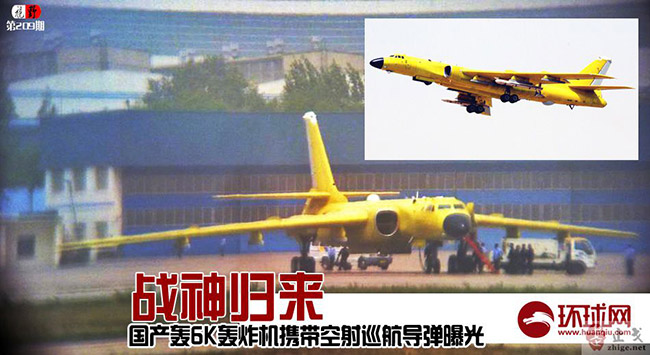
Chinese Air Force Gets More H-6K Strategic Bombers


The Chinese People’s Liberation Army Air Force (PLAAF) recently received 15 Xian H-6K bombers with nuclear capabilities, according to Jane’s Defence Weekly.

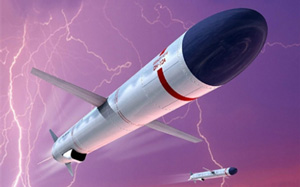
Variants of the CJ-10 anti-ship/land attack cruise missile can be launched from different platforms. Six are carried by Xian H-6K strategic bomber, The missile is also carried on board the Type 095 and 052D destroyers and on land-based mobile launchers.
The H-6K, an updated version of the H-6 bomber (originally, a locally built version of the 1960s vintage Russian Tupolev Tu-16 bomber), is a medium-sized craft designed for long-range attacks, stand-off attacks and large-area air patrol. Unlike its predecessor, the H-6K can carry cruise missiles under its wings. The H6-K also

maneuvers more deftly than the H-6 and requires a smaller crew to operate. H-6K reportedly has a combat radius of 3,500 km. It can carry weapons in the internal weapon bay and on four underwing pylons. The nuclear-capable Changjian-10 (long sword) CJ-10A cruise missiles it carries have a range of 1,500-2,000 km, effectively extending the bomber’s combat range to 4,000-5,000 km – long enough to reach Okinawa, Guam and even Hawaii from China’s mainland.

Analysts stipulated that PLAAF missiles be able to reach Taiwan, southwestern Japan and Guam, a range of control that requires a 3,000 km combat radius and powerful attack capability. Only the combined combat radius of the H6-K and Changjian-10 strike range currently satisfy the length requirement for those missions.


Latest Chinesse media photo of the H6K Bomber

Defense-Update

Thứ Tư, 19 tháng 6, 2013

Taihu new generation offshore supply ships to join Chinese navy ship


Chinese navy mesh Qingdao June 18 electric Reporter Qian Xiaohu, special correspondent Wang thick reports: June 18 morning, China's self-developed design of the new integrated supply ship - ship into the column named Taihu flag presentation ceremony, held in Qingdao, a naval pier, marking the ship officially joined the People's Navy battle sequences. Yang Jun, deputy commander of the North Sea Fleet to fly the flag of the ship and awarded the grant naming certificate.

Taihu ship, hull number 889, Captain 178.5 meters, width of 24.8 meters, full load displacement of over 20,000 tons, launched in March 2012. The ship is China's new generation of large offshore supply ships, but also the North Sea Fleet received the first one of this type of supply ship. Recharge the receiving device using international standards, with a high degree of automation, easy operation, fit and strong, fast recharge, protection of high efficiency, can be horizontal, vertical, vertical, and rely on a variety of ways to help the implementation of fleet replenishment operations, with two side three to four stations simultaneously recharge capability.

Lake North Sea Fleet warships to deliver combat support ship detachment, the principal responsible for wartime join mobile maritime fleet destroyer implement navigation or mooring supplies, usually accompanied by a destroyer squadron executive voyage and visit tasks.

ceremony, Taihu ship commissar Shaohui Liang on behalf of the ship's officers, expressed a mission to keep in mind, live people trust, conscientiously study and knowledge of new equipment, to listen to the party, then follow the party as a stand-ship of the country, to pull concluded that complement well as the responsibility to act, with loyalty and hard work to create a comprehensive maritime security powerhouse perfect.

http://www.51jiwo.com/military/4160.html

Thứ Bảy, 15 tháng 6, 2013

China steps up military recruitment, changes enrolment season


Beijing: For the first time in 23 years, the Chinese military, the world's largest, has changed its enrolment period to attract more talented people, officials said.

An online recruitment service run by the Ministry of National Defence (MND) will be ready for applications and will conduct recruiting procedures, including body check-ups, from August 1, a statement said.

The statement said that the new recruitment period follows the graduation season and will help attract more talented young people to the army.

Previously, recruitment period began in October, state-run news agency Xinhua reported.

Sources said the decision has been approved by the Cabinet and the Central Military Commission, which controls the 2.3 million strong People's Liberation Army (PLA).

The MND asked conscription authorities across the country to prioritise admissions of better-educated young applicants.

The Chinese military started recruiting college graduates in 2001. More than 1.3 lakh PLA soldiers were college graduates as of the end of 2009.

To help the military recruit more students, the country's top legislature amended the Military Service Law in 2011, raising the maximum age for recruits to 24. China has also relaxed restrictions regarding the height, weight and appearance of recruits since then.

Press Trust of India

Thứ Tư, 12 tháng 6, 2013

China 'generates fear' in Asia-Pacific: US general

It’s not unknown that China is causing maritime disputes with its Asian neighbours. What bothers though is China’s dubious military buildup. A deputy commander of the US Marine Forces Pacific expressed his concern at the Pentagon on what China’s shady activity can do in the Asia-Pacific region.

Brig. Gen. Richard Simcock said that China’s lack of transparency regarding its military buildup as well as its purpose will generate fear in the region. The MC General’s expressed concern was brought about by the continuous, if not escalating, territorial issues of China with Japan and the Philippines. China has deployed patrols around, if not within, both countries’ marine territories. Despite diplomatic interventions from Japan and the Philippines, China remains resolute with its claims. Even US President Barack Obama urged Chinese President Xi Jinping, during their recent meeting in California, to “de-escalate, not escalate” disputes with Japan and to have conversations “through diplomatic channels and not through actions out of the East China Sea.”

The Philippines, however, remains too diplomatic in dealing its territorial disputes with China, which have been intensified because of the archipelago’s issues involving Taiwan over a fisherman that got killed. And if Hong Kong’s racist hurls to the Philippines during their supposed friendly Football match at the Mong Kok Stadium last June 4 can be counted to intensify the neighbours’ ailing relationship, then the Philippines better think of a more effective way to settle their disputes. And they should bear in mind how stern China is. Japan, on the other hand, is joining a US-led amphibious training, which has already begun on Monday and will end on the 26th of this month. Simcock also said that Japan wants “to greatly increase their amphibious capability.” The military drill, called Dawn Blitz 2013, also involves Canada and New Zealand. “Japan is an example of a country, one that has the capability to develop and produce those kinds of forces, amphibious ships, which are not easy to build.”

Although Gen. Richard Simcock said that what China is doing “generates fear,” he added that the natural disasters Asia-Pacific nations are prone to have also increase their concerns. “The typhoon, the earthquake, the tidal wave, the tsunami. It’s coming. So, countries act. When there’s fear, they take actions to reduce the risk and make sure that the populace is safe,” he said. China is sure to keep its stand. Other nations should also make their resolve; regardless if China is not “very transparent” military buildup will result to something MC Brig. Gen. Richard Simcock is anxious about or not.

Japan Daily Press

Thứ Hai, 3 tháng 6, 2013

China expands nuclear arsenal, says think tank


A Swedish think tank says China is the only state among the nuclear Non-Proliferation Treaty members that has expanded its nuclear arsenal.

The Stockholm International Peace Research Institute, or SIPRI, released its yearbook for 2013 on Monday.

It says 5 nuclear powers belonging NPT and 3 others --- India, Pakistan and Israel possessed approximately 17,200 nuclear warheads as of January this year. That's 10 percent less than a year earlier.

The United States and Russia reduced their strategic nuclear weapons under the terms of New START, the Treaty on Measures for the Further Reduction and Limitation of Strategic Offensive Arms. They also retired ageing warheads.

The institute says China has 250 nuclear warheads now, 10 more than last year.

It also says Pakistan and India, which aren't members of the NPT, appear to have expanded their stockpiles by 10 each.

Officials from the institute say they don't feel the nuclear weapon-possessing states are genuine about giving up their arsenals.

NHK

Thứ Năm, 30 tháng 5, 2013

Chinese navy seaplane crashes off port of Qingdao

Shuihong 5 seaplanes
BEIJING — China’s Defense Ministry says a navy seaplane has crashed into waters near the eastern port city of Qingdao.

A notice posted on the ministry’s website said the plane went down Thursday morning while conducting a training mission in Jiaozhou Bay. It said a search and rescue mission was launched by the navy but gave no word on casualties.

Reports of crashes and other military mishaps were relatively rare in the past, but the traditionally secretive People’s Liberation Army has been making greater efforts at transparency as it seeks to transition into a modern military.

The North Sea Fleet operates four Shuihong 5 seaplanes dating from the 1980s that are used primarily for low-altitude maritime patrol and surveillance missions. Each carries five crew members.

Thứ Tư, 29 tháng 5, 2013

PLA joint cyberwarfare drill to show new strength and sophistication

Massive, multi-pronged military exercise to test electronic and conventional capabilities - and send a clear message to Tokyo and Manila


PLA prepares massive drill to show off its new strength and sophistication

The People's Liberation Army will conduct its first joint combat drills involving cyberwarfare, special troops, army aviation and electronic countermeasures units next month to test the integration and co-ordination of its land and air forces, state media reported yesterday.

Eight military academies will also join the exercises. Military experts said the high-profile drills were aimed at showing the world China had successfully narrowed the gap with Western countries in terms of modern warfare strategies.

Xinhua said the joint exercises would be staged at the mainland's biggest military training area, at the Zhurihe base inInner Mongolia , late next month.

It quoted the PLA's general staff department as saying that forces from the 38th and 65th combined corps of the Beijing military area command and academies including those focused on special operations, army aviation and defence information, and the air force's early-warning school would take part.

It would be the first PLA exercise to focus on different combat forces and using digital technology in a modern warfare scenario, Xinhua said.

The drill will simulate "non-contact assaults" alongside conventional operations.

"'Non-contact assaults' means digital operations, including cyberwarfare, electronic warfare and intelligence warfare systems, as well as others," said Xu Guangyu , a former general who is now a senior researcher at the Beijing-based China Arms Control and Disarmament Association.

"'Assault operations' doesn't mean the PLA will stage a 'pre-emptive strike' drill, but [is] based on the existing 'active defence strategy' to simulate how to fight back if our country is invaded," he said.

Antony Wong Dong, of the Macau-based International Military Association, said the participation of the eight academies meant the drill would also test some military theories.

"It's a rare, massive drill, covering so many different kinds of combat troops and military researchers, with the institute of special operations and the air force's early-warning school being new military research organisations," he said. "It also indicates the PLA is trying to catch up with the US Army in integrating digital operations into different combat forces on the land and in the air."

Shanghai-based military commentator Ni Lexiong said the unprecedented joint exercise showed that the PLA's air and land forces wanted to show the world - and especially neighbouring countries involved in territorial disputes in the East and South China seas - their military muscle following a recent focus on the mainland's naval buildup.

Last week, the PLA Navy also carried out a rare joint exercise involving its three fleets - the North Sea, East Sea and South Sea fleets - in the South China Sea as disputes drag on between Beijing and Tokyo over the Diaoyu Islands in the East China Sea and between Beijing and Manila over Second Thomas Shoal 80 miles off the Philippines, which China sees as part of the Spratly Islands.

SCMP

Thứ Ba, 28 tháng 5, 2013

China’s Amphibious Game Changer? - Pictures show

Amid simmering tensions in East Asia over a series of sovereignty disputes at sea, where new, unpredictable bouts of escalation are always around the corner, China has continued to build up the capabilities it will need should it one day decide to use force.

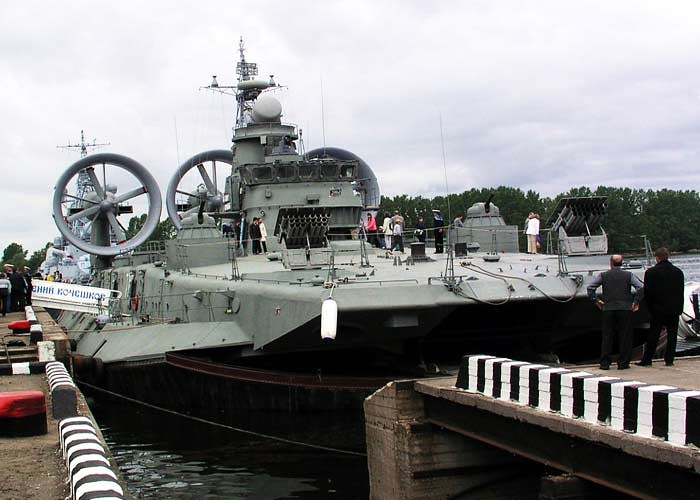
The latest addition to its growing arsenal — the world’s largest Landing Craft Air Cushion (LCAC) vehicle — reached Guangzhou earlier this month, and could enter service soon.


The vehicle in question, a Ukraine-built “Zubr” amphibious hovercraft (also known as the “European bison”), is part of a US$315 million deal signed between China and the state-owned Ukroboronprom defense conglomerate in 2009. Under the agreement, two LCACs, developed by the Ukrainian Almaz Central Marine Design Bureau, are to be built by the Ukraine-based Feodosia Shipbuilding Company, and two more by Chinese shipyards, under the supervision of Ukrainian engineers.


The first vehicle, which was handed over to the PLAN during a ceremony last month, arrived in Guangzhou — likely at Guangzhou-Huangpu Shipbuilding Co — where it was presumably fitted with additional electronics and weapons systems on May 24. A second one is currently under construction at Feodosia.


Nearly four-stories-high, the 555-ton LCAC could be a game-changer in amphibious operations within the region. The data sheet speaks for itself. According to various sources, the Zubr has a range of 380 nautical miles (480 km), can remain at sea for five days before replenishment, and can travel at up to 60 knots (55 knots for sustained cruising). Its payload capacity, at approximately 150 tons, is more than twice that of the LCACs in service in the U.S. and Japanese military, meaning that it can carry the equivalent of three main battle tanks (e.g., Type-80); 10 armored vehicles (e.g., BMP-2); 10 armored personnel carriers (e.g., BTR-70); or eight amphibious tanks. Meanwhile, its four compartments can accommodate 140 troops, or over 350 without armor.


Furthermore, compared with U.S. or other equivalents, the Zubr is armed to the teeth. Its standard configuration includes two MS-227 launchers for 140 mm unguided rockets, two AK-630 30 mm close-in weapons systems (CIWS), Igla-1M air-defense systems, as well as mine-laying capability (between 20 and 80 mines, depending on the configuration). Such firepower means that aside from carrying out over-the-beach landing of troops and combat materiel, the Zubr can also provide fire support during operations ashore.

While defense analysts speculate that the LCAC could play an important role in amphibious operations against Taiwan’s outlying islands, such as Kinmen and Matsu, a more immediate concern involves contingencies in the South China Sea, where China is embroiled in various disputes with the Philippines and Vietnam, as well as Malaysia, Brunei, Indonesia, and Taiwan.


It is not yet known whether all four LCACs will join the PLAN’s Southern Fleet, or whether China intends to acquire or build more. But the South China Sea is where the Zubr would be at its most effective, given that regional navies (with the exception of Taiwan) are ill equipped to deal effectively with it, not to mention the fact that the area provides an environment that is suitable for this type of hovering vehicle.

LCACs can usually navigate over 70 percent of coastal landing environments — including marshes and beaches — against only 15 percent for traditional landing craft.

Artilcle of The Diplomat/ All photos is copyright of Báo Đất Việt

China's military to drill on digitalized forces

BEIJING, May 28 (Xinhua) -- The People's Liberation Army (PLA) will conduct an exercise next month to test new types of combat forces including units using digital technology amid efforts to adjust to informationalized war, it announced on Tuesday.

It will be the first time a PLA exercise has focused on combat forces including digitalized units, special operations forces, army aviation and electronic counter forces, according to the general staff department.

The drill will be carried out in late June at the Zhurihe training base in north China's Inner Mongolia Autonomous Region, the country's largest military training field.

Forces from the 38th and 68th combined corps of the Beijing Military Area Command as well eight military academies will participate, according to the department.