Hiển thị các bài đăng có nhãn South Korea. Hiển thị tất cả bài đăng

Thứ Bảy, 29 tháng 6, 2013

SKorea extends $7.3 billion fighter jet bidding

SEOUL, South Korea (AP) -- South Korea has extended its window for accepting bids from aircraft makers to supply 60 fighter jets at an estimated cost of $7.3 billion (8.3 trillion won).

Arms procurement official Baek Youn-hyeong says bidding will resume Tuesday after an 11-day round ended Friday with no winner.

Republic of Korean Air Force F-5E Tiger II

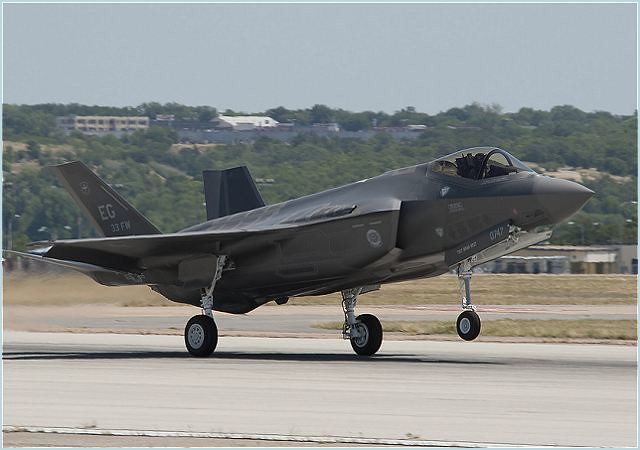
The 60 new fighters would replace South Korea's aging fleet of F-4s and F-5s. Boeing's F-15 Silent Eagle, EADS' Eurofighter Typhoon and Lockheed Martin's F-35 Joint Strike Fighter are competing.

Yonhap news agency says no bidders proposed prices lower than the estimated cost. It didn't cite sources. Baek declined to confirm the report.

South Korea faces rival North Korea over a heavily armed border after the 1950-53 Korean War ended in a truce.

© 2013 The Associated Press. All rights reserved.

Thứ Tư, 19 tháng 6, 2013

S. Korea To Buy 500km-range European Missiles

SEOUL — South Korea will buy European bunker-busting missiles as the United States refused to sell the same kind of weapons to the country, the state procurement agency said Wednesday.

At a meeting presided over by Defense Minister Kim Kwan-Jin, the Defense Acquisition Program Administration (DAPA) approved a plan to purchase air-to-ground missiles with a 500-kilometer (312.5-mile) range from the German-Swedish joint venture Taurus System.

TAURUS Systems
Taurus long range air-to-surface missile warhead launched from a fighter jet

Taurus stand-off missile system

The number of missiles and proposed budget have not been confirmed yet, it said. But Yonhap news agency said South Korea planned to buy about 170 Taurus bunker busters worth more than US $300 million in total.

Launched from a relatively safe distance from the enemy, the GPS-guided cruise missiles can hit strategic targets with precision, DAPA said in a press statement.

“The long-range air-to-ground missiles will add to our strategic assets, bolster deterrence against war and drastically enhance survivability of the aircraft and pilots as well,” DAPA said.

Currently, the only long-range missiles in the Air Force’s inventory are 40-odd SLAM-ER missiles with a range of 278 kilometers, Yonhap said.

DAPA had planned to choose between Taurus and Joint Air-to-Surface Standoff Missiles (JASSM) by US giant Lockheed Martin.

But the Pentagon has not approved sales of the 370-km range missile, classified as a strategic weapon, to South Korea.

“In the face of mounting threats from North Korea, we need to acquire them at an earliest possible date. However, the acquisition of JASSM has become infeasible due to the US government’s decision,” DAPA said.

On Tuesday, South Korea formally opened bidding on a $7.3 billion deal to provide 60 advanced fighter planes, with three aviation giants vying for what is the Asian nation’s largest defense contract to date.

US companies Boeing, Lockheed Martin and the European aerospace consortium EADS are in the running, and all have prefaced their bids with various sweeteners to try to edge out their rivals.

Defense News

Thứ Tư, 12 tháng 6, 2013

S. Korea to deploy new surface-to-air missiles for Aegis destroyers

SEOUL, June 12 (Yonhap) -- South Korea will arm its Aegis destroyers with the surface-to-air Standard Missile 6 (SM-6) starting 2016 as part of efforts to bolster its missile defense against North Korean threats, a senior government official said Wednesday.

The SM-6, which is suitable for low-altitude sky defense with a maximum range of 320-400 kilometers, is an upgrade of the SM-2 by U.S. defense firm Raytheon.

The South Korean military has sought to upgrade its SM-2 missiles deployed on one of its three Aegis destroyers as they are considered ineffective in shooting down North Korea's ballistic missiles due to their short range.

The decision to buy the newest naval missiles is part of Seoul's plan to develop an independent, low-tier missile shield called the Korea Air and Missile Defense System (KAMD).

"The defense ministry and the Joint Chiefs of Staff will prepare a plan to develop the KAMD system to deter North Korea's missile and nuclear weapons by the end of this year," the official said, asking for anonymity as he is not allowed to talk to media.
The KAMD involves early warning radars, ship-to-air and land-based missile defense systems, arming Seoul with the ability to track and shoot down the North's low-flying, short- and medium-range missiles, with help of U.S. early warning satellites.

The KAMD plan includes purchasing hundreds of rounds of Patriot Advanced Capability-3 (PAC-3) missiles and additional PAC-2 missiles for deployment from next year, as well as development of mid- and long-range surface-to-air missiles in the next decade.

For that goal, the South Korean military has jointly formed a working group with its U.S. counterparts to conduct a study on the Korean missile defense system, the official said.

"We will operate a working group with the U.S. to analyze the KAMD program," he said. "The research is expected to be completed around February 2014."

The latest move, however, sparked further speculation that Seoul is preparing to join the U.S.-led missile defense system that involves ground-based interceptors and the X-band radar.

The issue of whether to join the costly American program has been a sensitive one in South Korea as it could spur a regional arms race with China and further contribute to mounting costs in the national missile program.

On Tuesday, an opposition lawmaker claimed that South Korea is one of America's partners on its missile defense program, citing Seoul's participation in U.S.-led international defense training and trilateral drills last year, which also included Japan.

Defense Minister Kim Kwan-jin, however, denied Seoul's participation in the U.S. missile defense program, saying America's multi-tiered anti-missile defense system does not suit the battlefield environment of the Korean Peninsula.

As speculation grows, the defense ministry on Wednesday issued a statement to reiterate its earlier stance of not having joined the U.S. missile shield.

"Our military is currently working to establish a Korean missile defense system focusing on final stage, low-altitude defense that fits the strategic atmosphere on the Korean Peninsula," the defense ministry said in a release.

For the effective establishment and operation of the Korean system, Seoul is cooperating with Washington in intelligence sharing, and participating in international missile defense trainings as part of that effort, the ministry said.

Yonhap

Chủ Nhật, 26 tháng 5, 2013

Seoul plans to purchase US weapons worth $1b


Seoul has notified Washington of its intention to purchase weapons systems worth US$800 million (S$1 billion) to be mounted on its new fleet of warplanes should a US fighter be picked for its 8.3-trillion-won ($7.4 billion) acquisition project.

The Defence Security Cooperation Agency, which handles Washington's foreign military sales, revealed Seoul's request to buy high-tech arms such as Advanced Medium-Range Air-to-Air Missiles, GBU-12 laser-guided bombs and GBU-39 bunker busters.

Last month, Seoul made a separate request to purchase Lockheed Martin's F-35 stealth fighter or Boeing's F-15 Silent Eagle.

The Eurofighter Typhoon of the European Aeronautic Defence and Space Company is another candidate in the competition, through which Seoul seeks to purchase 60 jets to replace its aging F-4 and F-5 jets. The winner is expected to be announced next month.

Observers said the US products would be at an advantage in the contest given Seoul considers interoperability with US forces and alliance-related factors. But EADS has made attractive offers, such as investing $2 billion in Korea's project to develop indigenous fighters.

Asia One

S. Korea to buy 20 maritime patrol aircraft

SEOUL, May 26 (Yonhap) -- The South Korean military has approved a plan to buy 20 maritime patrol aircraft to improve the Navy's surveillance capabilities of North Korea, a military source said Sunday.

The Joint Chiefs of Staff has recently approved the Navy's request to add 20 maritime patrol aircraft to supplement the aging squadron of 16 Lockheed Martin P-3C Orions.

"The Defense Acquisition Program Administration is currently working on a plan, which is likely to be an overseas purchase program," the source said, asking for anonymity as it is not yet open to the public. The budget for the project is estimated at 1 trillion won (US$889 million).


Among the potential candidates are Airbus Military's C-295 MPA, Boeing's P-8 Poseidon, Lockheed Martin's SC-130J Sea Hercules, according to officials.

The U.S. Navy has recently received the seventh production of Boeing's P-8 Poseidon to replace its P-3Cs.

Separately, a naval modernization program has been underway to upgrade P-3C's radar and censor system by 2016.

Deployed in 1995, the maritime aircraft is capable of conducting various operations in anti-submarine and anti-ship warfare. It is armed with Harpoon Block II air-to-ground missiles and a tactical information system interoperable with the KF-16 fighter jet.

The latest decision comes as Seoul has been putting more resources into coastal warfare and defense capabilities in frontline border islands in the face of North Korea's growing threat near the tensely guarded western sea.

North Korea has a large fleet of submarines, and one of them is blamed for torpedoing the South Korean warship Cheonan in the Yellow Sea in March 2010, killing 46 sailors. The North also shelled a South Korean border island later that year, killing four people.

Yonhap News

Thứ Bảy, 25 tháng 5, 2013

American Weapons Packages For South Korean Fighter Aircraft Revealed

F-15 Silent Eagle

As obligated to do, the Defense Security Cooperation Agency (DSCA) has notified the United States Congress of a possible Foreign Military Sale to South Korea.

The two weapons packages are associated with Boeing's F-15 Silent Eagle and Lockheed Martin F-35, both are which are competing to win South Korea's competition for 60 new fighter aircraft.

In the case of the F-15 Silent Eagle, the package consists of:
  • 274 AIM-120C-7 Advanced Medium Range Air-to-Air Missiles (AMRAAM)
  • 6 AIM-120C-7 AMRAAM Guidance Sections 
  • 362 Joint Direct Attack Munition (JDAM) Tail Kits, BLU-109/KMU-557C/B (GBU-31) w/SAASM/AJ 
  • 780 JDAM Tail Kits, MK-82/BLU-111 KMU572C/B (GBU-38) w/SAASM/AJ 
  • 6 MK-82 Filled, Inert Bombs 
  • 170 JDAM Tail Kits, MK-84/BLU-117 KMU-556C/B (GBU-31) w/SAASM/AJ
  • 1312 FMU-152A/B Fuzes (FZU-63 Initiator) 
  • 542 GBU-39/B Small Diameter Bombs 
  • 170 BLU-117 2000LB General Purpose Bombs 
  • 362 BLU-109 2000LB Penetrators 
  • 4 BLU-109 Inert Bombs 
  • 154 AIM-9X-2 (Blk II) Tactical Missiles w/DSU-41 
  • 33 CATM AIM-9X-2 (Blk II) Captive Air Training Missiles 
  • 7 AIM-9X-2 (Blk II) C ATM Guidance Units 
  • 14 AIM-9X-2 (Blk II) Tactical Guidance Units
The package for the F-35 consists of:
  • 274 AIM-120C-7 Advanced Medium Range Air-to-Air Missiles (AMRAAM) 
  • 6 AIM-120C-7 AMRAAM Guidance Sections 
  • 530 Joint Direct Attack Munition (JDAM) Tail Kits, BLU-109/KMU-557C/B (GBU-31) w/SAASM/AJ 
  • 4 JDAM BLU-109 Load Build Trainers 
  • 6 MK-82 Filled Inert Bombs 
  • 4 BLU-109 Inert Bombs 
  • 1312 FMU-152A/B Fuzes (FZU-63 Initiator) 
  • 542 GBU-39/B Small Diameter Bombs 
  • 530 BLU-109 2000LB Penetrators 
  • 780 GBU-12 Bombs 
  • 4 GBU-12 Dummy Trainers 
  • 154 AIM-9X-2 (Blk II) Tactical Missiles w/DSU-41 
  • 33 AIM-9X-2 (Blk II) Captive Air Training Missiles (CATM) 
  • 7 AIM-9X-2 (Blk II) CATM Guidance Units 
  • 14 AIM 9X- 2 (Blk II) Tactical Guidance Units
The package for the F-15 is worth $823 million and for the F-35 is worth $793 million. The price in both cases includes:
  • containers
  • missile support and test equipment
  • provisioning, 
  • spare and repair parts
  • support equipment
  • personnel training and training equipment
  • technical documentation
  • engineering and technical support
  • other related elements of program support

The F-15 and F-35 are competing against the Eurofighter Typhoon in South Korea, which is expected to select which of the 3 is the winner as early as June of 2013.


http://www.dsca.mil/pressreleases/36-b/2013/Korea_13-22.pdf

http://www.dsca.mil/pressreleases/36-b/2013/Korea_13-24.pdf

Thứ Sáu, 24 tháng 5, 2013

EADS offers US$2 bln investment on Korean fighter jet project

SEOUL, May 23 (Yonhap) -- The European Aerospace Defense and Space Company (EADS) on Thursday offered to invest US$2 billion in South Korea's long-delayed fighter jet development project if it wins Seoul's jet procurement deal.

The multinational defense firm made the offer as its Eurofighter Tranche 3 has been competing with Lockheed Martin's F-35 stealth jet and Boeing's F-15 Silent Eagle for the 8.3 trillion won ($7.3 billion) contract to replace the South Korean Air Force's aging fleet of F-4s and F-5s.

The EADS also promised to build a maintenance repair and overhaul (MRO) facility and an aerospace software center as well as provide marketing support for Korean-made combat aircraft.

Eurofighter by the European Aerospace Defense and Space Company (EADS) (Yonhap file photo)

"If Eurofighter's deal is realized, it is expected to boost South Korea's aerospace industry," the EADS said in a statement.

First launched in 2002 to build F-16 class fighter jets, Seoul's ambitious plan to develop fighter jets in the next decade has been delayed as local think tanks and experts question the feasibility of the multi-billion dollar project as well as the technical aspects to domestically produce aircrafts and meet overseas demand.

The EADS, which seeks to have competitive edge over its American competitors, earlier proposed to manufacture 53 out of 60 planes in local factories if it wins the multi-billion dollar deal in its recent marketing efforts.

The European company's aggressive marketing efforts come at a time when many have called on the Park Geun-hye administration to promptly make a decision to either go ahead with the large-scale airplane development project or put on the brakes if it is deemed economically unsustainable.

The Defense Acquisition Program Administration (DAPA) remained cautious over the EADS's investment plan as it is preparing to make a final decision with a goal of picking a contractor within June.
"The EADS made the investment offer on the condition that it wins the procurement deal," a DAPA official said, asking for anonymity. "The government has not yet confirmed whether it would go ahead with the fighter jet development project."

On Thursday, DAPA said it has completed price negotiations and will begin the bidding process in June.

"The price negotiations have been completed and we don't plan to have another round of negotiations," DAPA spokesman Baek Yoon-hyeong said in a briefing. "We plan to conduct the auction within June."

According to DAPA officials, the acquisition agency has recently decided to postpone the proposed first delivery of fighter jets from December 2016 to August 2017, in consideration of the delayed selection process.

The agency had initially planned to announce a contractor last October under the former administration of President Lee Myung-bak, but it was postponed over calls by politicians to wait until the next government took office.

Yonhap News

Thứ Năm, 18 tháng 4, 2013

S. Korea to Buy 36 Apache Helicopters

The government has picked Boeing's AH-64E Apache Guardian helicopter for a strategic project aimed at neutralizing North Korea's multiple rocket launchers and hovercraft that threaten the northwesternmost islands.

A committee chaired by Defense Minister Kim Kwan-jin on Wednesday gave the final nod to the selection of the AH-64E over Bell Helicopter's AH-1Z Viper and the T-129 of Turkish Aerospace Industries.

Seoul will buy 36 Apache helicopters worth W1.8 trillion (US$1=W1,119) between 2016 and 2018.

The Apache came to notice for its ability to destroy tanks during the Gulf War and elsewhere. Its forte is the Longbow fire-control radar, which is supposedly capable of identifying friend or foe among more than 1,000 ground targets. It can trace the movement of 256 targets and prioritize the 16 most dangerous ones.

The Apache can load air-to-ground anti-tank missiles, air-to-air missiles, 30-mm chain guns and infrared surveillance devices.

For instance, Apache helicopters equipped with air-to-ground Hellfire II missiles can hit a target up to 8 km away. They can also strike enemy choppers or fighter jets with the air-to-air Stringer missile.

The government hopes that they will help the country balance out its numerical inferiority to North Korean tanks. As of January 2012, North Korea had about 4,200 tanks compared to South Kore's 2,400.

The Apache will also give the South the ability to strike North Korean hovercraft that threaten the northwesternmost islands even at night or in bad weather, unlike the Cobra helicopters currently deployed there.

Last year, the North completed a base that can accommodate about 60 hovercraft at Koampo, Hwanghae Province, only about 50 km from Baeknyeong Island.

The Army will now be able to put older attack helicopters of the 1970s and 80s out of service.

The Army favored the Apache throughout the bidding process because of its superior features, but the price was a concern. Originally, the choppers were expected to cost about W2 trillion, way beyond its budget.

But Boeing reportedly slashed the price when an American helicopter lost out to a European rival in Navy procurement in January this year.

Boeing is also promising to transfer related technology to Korea.

The ChosunIlbo

Thứ Bảy, 6 tháng 4, 2013

Korea ready to purchase 60 F-35 CTOL fighter aircraft from United States.

(Air Recognition) The Defense Security Cooperation Agency of United States notified Congress March 29 of a possible Foreign Military Sale to the Government of Korea for 60 F-35 Joint Strike Fighter Conventional Take Off and Landing (CTOL) aircraft and associated equipment, parts, training and logistical support for an estimated cost of $10.8 billion.


The conventional takeoff and landing (CTOL) F-35A is a multirole, supersonic, stealth fighter that has extraordinary acceleration and 9-g maneuverability and agility.

The Government of the Republic of Korea has requested a possible sale of (60) F-35 Joint Strike Fighter Conventional Take Off and Landing (CTOL) aircraft. Aircraft will be configured with the Pratt & Whitney F-135 engines, and (9) Pratt & Whitney F-135 engines are included as spares.

Other aircraft equipment includes: Electronic Warfare Systems; Command, Control, Communication, Computer and Intelligence/Communication, Navigational and Identification (C4I/CNI); Autonomic Logistics Global Support System (ALGS); Autonomic Logistics Information System (ALIS); Full Mission Trainer; Weapons Employment Capability, and other Subsystems, Features, and Capabilities; F-35 unique infrared flares; reprogramming center; F-35 Performance Based Logistics. Also included: software development/integration, aircraft ferry and tanker support, support equipment, tools and test equipment, communication equipment, spares and repair parts, personnel training and training equipment, publications and technical documents, U.S. Government and contractor engineering and logistics personnel services, and other related elements of logistics and program support. The estimated cost is $10.8 billion.

This proposed sale will contribute to the foreign policy goals and national security objectives of the United States by meeting the legitimate security and defense needs of an ally and partner nation. The Republic of Korea continues to be an important force for peace, political stability, and economic progress in North East Asia.

The proposed sale of F-35s will provide the Republic of Korea (ROK) with a credible defense capability to deter aggression in the region and ensure interoperability with U.S. forces. The proposed sale will augment Korea’s operational aircraft inventory and enhance its air-to-air and air-to-ground self-defense capability. The ROK’s Air Force F-4 aircraft will be decommissioned as F-35’s are added to the inventory. Korea will have no difficulty absorbing these aircraft into its armed forces.

The proposed sale of this aircraft system and support will not negatively alter the basic military balance in the region.

The prime contractors will be Lockheed Martin Aeronautics Company in Fort Worth, Texas; and Pratt & Whitney Military Engines in East Hartford, Connecticut. This proposal is being offered in the context of a competition. If the proposal is accepted, it is expected that offset agreements will be required.

Implementation of this proposed sale will require multiple trips to Korea involving U.S. Government and contractor representatives for technical reviews/support, program management, and training over a period of 15 years. U.S. contractor representatives will be required in Korea to conduct Contractor Engineering Technical Services (CETS) and Autonomic Logistics and Global Support (ALGS) for after-aircraft delivery.

There will be no adverse impact on U.S. defense readiness resulting from this proposed sale.

Air Recognition

Thứ Năm, 4 tháng 4, 2013

S.Korea to Buy Bunker-Buster Missiles from Europe

(Chosun) South Korea will likely buy European long-range air-to-surface cruise missiles by 2014. Launched from the air above Daejeon, the Taurus KEPD 350s could hit an underground bunker in Pyongyang with precision.

Taurus air-to-surface missiles are being launched from a German bomber jet. /Courtesy of Taurus Systems GmbH
A military officer said Wednesday price negotiations with Taurus Systems, a German-Swedish joint venture, will start soon since the missile has found favor with the brass here.

The Taurus would be the first strategic weapon Seoul has imported from Europe rather than the U.S.

The only long-range missiles in the Air Force's inventory are 40-odd SLAM-ER missiles with a range of 278 km, which were made by Boeing. An Air Force officer said, "We urgently need more long-range air-to-surface missiles due to the mounting nuclear threat and the increasing possibility of provocations from North Korea."

The Taurus has a range of 500 km. Launched from South Korean airspace that is not under threat from North Korean surface-to-air missiles, they could hit strategic targets like nuclear and missile bases in the rear with precision.

The country is expected to buy about 200 of them, to be mounted on F-15K or KF-16 fighter jets.

The Taurus has a dual-stage "blast/fragmentation" and/or "penetrator" warhead capable of penetrating up to 6 m of reinforced concrete. It is very accurate: despite a range of hundreds of kilometers, it has an error rate of a mere 2 to 3 m.

Meanwhile, the U.S. Defense Department said it has deployed another Aegis destroyer, the USS Decatur, to waters near the Korean Peninsula to guard against possible North Korean provocations.

Like the USS McCain, which was dispatched here earlier, the Decatur is an Arleigh Burke-class Aegis destroyer armed with SM-3 and Tomahawk cruise missiles that can intercept incoming ballistic missiles. It arrived in the western Pacific to "perform a missile defense mission," U.S. Defense Department spokesman George Little said.

Chosunilbo

Thứ Hai, 4 tháng 3, 2013

Chinese warships regularly patrol in S. Korean naval operation zone

SEOUL, March 3 (Yonhap) -- Chinese warships have regularly patrolled waters within the South Korean Navy's operational zone in the Yellow Sea without prior notification, multiple sources in Seoul said Sunday, sparking worries over the Asian power's growing naval presence.


Xem Bản đồ cỡ lớn hơn

China's destroyers and escort vessels have entered the so-called area of operations (AO) under the Korea Air Defense Identification Zone (KADIZ) in the Yellow Sea once or twice a week to conduct search maneuvers, the military sources said. They did not specify when the patrols started.

The KADIZ was designated by the commander of the U.S. Pacific Air Force Command in 1951 to prevent air clashes between nations surrounding the Korean Peninsula. Although the area is not South Korean airspace, the country's military supervises the zone and foreign aircraft must receive approval from the military 24 hours prior to entering the zone.

"There is no international regulations to force out foreign ships that enter the AO," a source said, asking for anonymity due to the sensitivity of the issue. "Although Chinese authorities claim it is part of their normal maritime operations, it effectively means that they don't recognize the AO."

The tensely guarded western sea was the scene of several deadly skirmishes with North Korea in the 1990s and early 2000s. Most recently, tensions escalated after Pyongyang torpedoed a South Korean warship in March 2010 and shelled Yeonpyeong Island eight months later, killing 50 South Koreans that year.

Another military source said the patrols illustrate China's growing naval presence in waters near the Korean Peninsula and Japan, calling attention to the Liaoning, China's first aircraft carrier which was recently deployed to the eastern port city of Qingdao.

"China's regular patrols within (South Korea's AO) and increasing naval capacity seem connected to (the Liaoning's deployment to Qingdao)," the source said.

The patrols come at a time when Beijing and Tokyo are at odds over territorial disputes and other Asian countries have expressed concern over China's growing naval strength in the region.

The Asian giant's latest military move sparked concern over the South Korean Navy's lack of capacity to handle long-range missions, with its role mostly limited in defense against North Korea.

South Korea's Navy chief earlier this month vowed to strengthen naval forces to cope with rising tensions in Northeast Asia, in light of the ongoing territorial disputes between China and Japan.

Adm. Choi Yoon-hee said the Navy will push to create two more naval task forces in the next two decades to respond to provocations from North Korea and safely protect its territory.

Yonhap

Thứ Sáu, 1 tháng 3, 2013

S. Korea, US begin 2013 annual military drills+ Video

. Korea, US begin annual military drills
South Korean and US troops have launched their annual joint drills amid heightened tension following the Democratic People's Republic of Korea’s third nuclear test last month.

South Korean Yonhap News Agency says the Foal Eagle exercises come after the DPRK warned the top US commander in South Korea of "miserable destruction" if the American military goes ahead with the two-month-long drills.

Tens of thousands of troops from ground, naval and air forces are taking part in the field training exercise. They will last until April the 30th. Separately, South Korean and US troops will conduct computer-simulated drills named Key Resolve from March the 11th to 21st.


CNTV/ NHK

Thứ Tư, 30 tháng 1, 2013

S. Korea Launches First Satellite Into Space, Weeks After N. Korean Launch

Jan 30, 2013- South Korea announced the successful launch of a rocket carrying an observational satellite into space on Wednesday. The success is a first for the nation’s space program and comes just weeks after their North Korean adversaries -- still formally at war with them, after the 1953 armistice -- surprised the world by launching their own satellite.


This was the South’s third attempt to launch a manned rocket in the past four years; two previous launches were scrapped after the discovery of technical glitches. South Korean officials are hoping to see signs of the satellite's successful operation by Thursday.

According to the Washington Post, cheering spectators watched as the rocket blasted off from a base near the southwestern village of Goheung. Crowds gathered around public televisions at train stations and other areas in the nation’s capital, Seoul. “I’m proud we have entered the ranks of satellite powers,” one spectator was quoted as saying.

But as many South Koreans are filled with pride, it is hard to ignore the implications of both North and South Korea’s satellite development amid heightened regional tensions in the Korean peninsula.

South Korea’s successful rocket launch was met with little (if any) criticism from the public, and particularly none from the United Nations, angering North Korea. After North Korea’s rocket launch in December, the United Nations Security Council responded by implementing sanctions on the nation for launching long-range rockets. The reason was that the U.S. and South Korea believe that the rocket launch was in fact a test for an intercontinental ballistic missile, with which the nuclear-armed, highly secretive dictatorship could threaten the world.

The satellite does not appear to be functioning, but North Korea’s December launch stirred international controversy after the rocket was surprisingly successful, traveling 10,000 km (6,200 miles), putting West Coast U.S. cities in range.

As a result, the U.S. and its allies called for a U.N. Security Council meeting.

China’s status as one of five permanent members of the Security Council, and lone ally to North Korea, ensured that sanctions as harsh as those imposed on Iran would not be applied to the closed-off nation. As a result, a watered-down resolution was eventually passed. The North Korean government is accusing its enemies and their allies for acting on a double standard between the two Koreas. Pyongyang responded with direct threats of nuclear development and “force” toward the U.S., the “sworn enemy” of the Korean people.

ibtimes