Hiển thị các bài đăng có nhãn PLAAF. Hiển thị tất cả bài đăng

Chủ Nhật, 7 tháng 7, 2013

China's New Jet, Radar Complicate US Posture


TAIPEI — China’s increasing military musculature continues to crush the margins of how far the US military can conduct operations near the mainland, experts say. Through the purchase of Russian-made equipment, China is attempting to break beyond the current air defense range of 250 kilometers in what US experts refer to as China’s anti-access/area-denial strategy.

China plans to procure two new Russian weapon systems that will extend the range of its air defense strike capability to 400 kilometers. This would place all of Taiwan within the scope of China’s air defense network and endanger the Japanese-controlled Senkaku Islands, which China also claims.

The first is the much-reported negotiation for the 400-kilometer range S-400 surface-to-air missile (SAM) system with a possible deal after 2017, when the Russian manufacturer, Almaz-Antey, fulfills Russian military orders.

The second is the Sukhoi Su-35S multirole fighter jet. These fighters will not be outfitted with the older Zhuk radar, but with the IRBIS-E radar, said Vasiliy Kashin, a researcher at the Moscow-based Centre for Analysis of Strategies and Technologies.

Built by Tikhomirov NIIP, the 400-kilometer range IRBIS-E multimode X-Band passive electronically scanned array radar can detect and track up to 30 airborne targets and attack up to eight at the same time, according to the company’s website. In addition, in the air-to-ground mode, it can track up to four ground targets, and can track one ground target while preserving air sector surveillance.

The S-400 and Su-35S with the IRBIS-E radar might become “a psychological deterrent to politicians in Washington when they contemplate a Taiwan contingency,” said Alexander Huang, a military specialist at Tamkang University, here.

Kashin said the tactical situation is “bad news for Taiwan,” as the Su-35S will be able to spot Taiwan’s F-16 fighters at 400 kilometers with its new radar. “That means Chinese Su-35s patrolling on the mainland side of the border will be able to see the targets all over Taiwan.”

If anything, these systems will “inspire determination to expedite production, procurement and deployment of the [Lockheed Martin] F-35 fighter by the US and its Asian allies,” Huang said.

The latest information on the Su-35S deal was revealed on June 10, when the director general of Russian Technologies Co., Sergey Chemezov, said the final commercial contract on the fighter sale could be expected by the end of this year.

Kashin said the “contract likely will be signed at the next meeting of the Sino-Russian intergovernmental commission on military technical cooperation, which can be expected to take place in November in Moscow.”

The first procurement contract is expected to include 24 Su-35S fighters, with an option for an additional 24 as things progress. Though 24 to 48 fighters are not a significant threat to US forces, they pose a problem for Taiwan as it retires 56 Mirage 2000 fighters and roughly 50 F-5s. Taiwan is upgrading 126 indigenous defense fighters and 145 F-16A/B fighters, but there has been a significant push by Taiwan to procure 66 F-16C/D fighters to counter reductions. Effective lobbying by China within the US government has blocked new F-16 sales to Taiwan.

With projected reductions in fighters, Taiwan’s military has begun fielding its first land-attack cruise missile, the Hsiung Feng 2E, and is working on a variety of new anti-ship cruise missiles.

However, Douglas Barrie, senior fellow for military aerospace at the London-based International Institute of Strategic Studies, said Taiwan’s growing interest in land-attack cruise missiles could be countered by the Su-35’s “potential ability to detect small low-flying targets at ranges suitable to support an engagement.”

The IRBIS system’s 400-kilometer range “could provide a useful gap filler” to support the Chinese air force’s limited number of airborne warning and control system aircraft (AWACS), Barrie said. “It remains to become clear what, if any, long-range air-to-air missile might be supplied with the Su-35.”

Both the S-400 and Su-35S with IRBIS-E radar are “impressive steps in increasing capability,” said Lance Gatling of Nexial Research, a defense consulting firm in Tokyo. However, there are technical challenges to integrating China’s AWACS capability with the S-400 and IRBIS-E. “SAM radars, ground-based, have the radar horizon issue, so they can’t see planes at very low altitude over Taipei.”

Taiwan could use the jamming capabilities of its new early warning radar at Leshan Mountain, near Hsinchu, to play havoc with China’s various radar systems, said a Taiwan defense industry source. The Leshan facility is considered one of the most powerful radars in the world, and unconfirmed sources here indicate it relays data directly to the US military to allow for the monitoring of aircraft and missile activity within China.

Gatling said the ultimate question on China’s procurement of the IRBIS and S-400 systems is: “How advanced is the integrated air defense system, data management and data links” in China? At present, this is difficult to define, as much of China’s military capabilities remain opaque to outsiders.

Defense News

Thứ Tư, 26 tháng 6, 2013

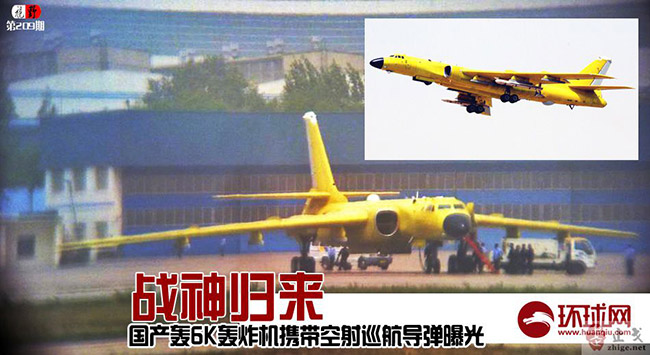
Chinese Air Force Gets More H-6K Strategic Bombers


The Chinese People’s Liberation Army Air Force (PLAAF) recently received 15 Xian H-6K bombers with nuclear capabilities, according to Jane’s Defence Weekly.

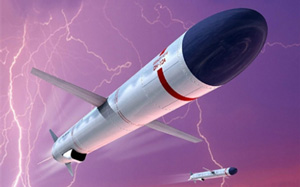
Variants of the CJ-10 anti-ship/land attack cruise missile can be launched from different platforms. Six are carried by Xian H-6K strategic bomber, The missile is also carried on board the Type 095 and 052D destroyers and on land-based mobile launchers.
The H-6K, an updated version of the H-6 bomber (originally, a locally built version of the 1960s vintage Russian Tupolev Tu-16 bomber), is a medium-sized craft designed for long-range attacks, stand-off attacks and large-area air patrol. Unlike its predecessor, the H-6K can carry cruise missiles under its wings. The H6-K also

maneuvers more deftly than the H-6 and requires a smaller crew to operate. H-6K reportedly has a combat radius of 3,500 km. It can carry weapons in the internal weapon bay and on four underwing pylons. The nuclear-capable Changjian-10 (long sword) CJ-10A cruise missiles it carries have a range of 1,500-2,000 km, effectively extending the bomber’s combat range to 4,000-5,000 km – long enough to reach Okinawa, Guam and even Hawaii from China’s mainland.

Analysts stipulated that PLAAF missiles be able to reach Taiwan, southwestern Japan and Guam, a range of control that requires a 3,000 km combat radius and powerful attack capability. Only the combined combat radius of the H6-K and Changjian-10 strike range currently satisfy the length requirement for those missions.


Latest Chinesse media photo of the H6K Bomber

Defense-Update

Thứ Ba, 11 tháng 6, 2013

China will buy more than 24 Su-35 fighters from Russia: source

China has sent a delegation to Moscow following the purchase of 24 Su-35BM fighters from Russia last year for an estimated US$1.5 billion, reports the Russian Military News Network.

A Russian Su-35 fighter. (Internet photo)

The Chinese delegation is currently visiting the Russian capital to discuss details concerning the Su-35 contract with various Russian organizations including Russia's state-run arms exporter Rosoboronexport, the United Aircraft Corporation and Sukhoi Company.

Sources within Rosoboronexport told the network that China will in fact purchase more than the reported 24 Su-35 fighters. However, neither Rosoboronexport nor Sukhoi Company — Russia's largest aircraft holding company — have released official statements confirming the sales.

Vyacheslav Dzirkaln, the deputy director of Russia's Federal Service for Military and Technical Cooperation, said that an official contract has already been signed early this year for Russia to provide the aircraft to China. Dzirkaln also added that China has yet to receive permission to produce its own version of the fighter.

Military sources said that the Su-35 is the best fighter currently available and while the Chinese delegation discusses the details of the contract with their Russian counterparts, it is believed that the political decision to sell more of the aircraft to Beijing had already been made, the Russian Military News Network said.

Want China Times

Thứ Năm, 2 tháng 5, 2013

China's first training base for carrier-born aircrafts

Chinese naval officials working at a land-based training facility for carrier-capable jets have taken some time to explain how their training works.

Pilots at the testing facility are practicing on China's home-developed J-15 fighter jets.

The jets have been designed specifically to take off and land on the Liaoning, China's first aircraft carrier.

But before the pilots get a chance to practice on the Liaoning, they have to train at the land-based facility, the exact location of which hasn't been officially disclosed.

Every pilot will have to pass a series of tests at the site before they'll be cleared for test training at sea.

The training center is set up to mimick what it will be like to land on the aircraft carrier, including landing using arresting cables.

Landing and taking off from an aircraft carrier is much different for a pilot than it is from a land-based airport.

As such, over 27-hundred flights took off and landed at the land-based test site before any flight testing first began on the Liaoning.

Tian Wei is a squadron leader at the training base. He says they've made up 10 different manuals to help the pilots through the nuances of learning how to operate their jets at sea.

"The follow-up training is very crucial. For example, a manufacturer makes a gun and shows you how to load the bullets and how to shoot. However, it requires a lot of practice if you want to hit the target, and hit it with accuracy. As such, we drafted a program and manual for our pilots to follow."

The training staff at the facility aren't taking any chances before letting the pilots test on the Liaoning.

The testing facility has been made more difficult to land on than it will be on the Liaoning.

There is only one arresting cable across the landing zone.

The aircraft carrier has 4 cables which the pilots can hit to allow them to stop.

Zhou Chunshan is the deputy commander of the training base.

"Land-based training is mostly focused on landing practice. Landing is the most difficult thing for a pilot to do on an aircraft carrier, so accuracy and consistency is the most important thing for our pilots. We record their landings and map how well they are progressing."

Authorities running the land-based training base say they are hoping to make improvements on the field to give their pilots more practice and training with simulated aircraft carrier take-offs as well.

Global Times