Hiển thị các bài đăng có nhãn Chinese aggression. Hiển thị tất cả bài đăng

Thứ Tư, 10 tháng 7, 2013

Japan: Risk of Incident From 'Coercive' Acts By China

TOKYO — China’s “coercive” behavior in waters around islands at the center of a bitter dispute with Japan is dangerous and could trigger an incident, Tokyo said Tuesday in a new defense paper.


A Chinese marine surveillance ship (R) alongside a Japan Coast Guard vessel near disputed islets on February 4, 2013. China's "coercive" behaviour in the waters around the land mass could trigger an incident, Tokyo said in a new defence paper. (JAPAN COAST GUARD/AFP/File)

At a cabinet meeting, hawkish Prime Minister Shinzo Abe and his ministers adopted the white paper, the first annual report on Japan’s defense capabilities and regional security since the islands dispute flared anew last year.

Tokyo nationalized three of the five Senkaku islands in September. Beijing lays claim to the islands and calls them the Diaoyus.

“China ... has taken action described as coercive, which includes risky behavior,” the 450-page report said.

“China’s activities include its intrusion into Japan’s territorial waters, its violation of Japan’s territorial airspace and even dangerous actions that could cause a contingency,” it said.

In particular, the paper said a Chinese frigate locked weapons-targeting radar on a Japanese destroyer in January — a claim Beijing has denied.

“These acts are extremely regrettable and China should accept and stick to the international norms,” it said.

Chinese and Japanese ships have for months traded warnings over intrusions into what both governments regard as their sovereign areas around the islands, which are strategically sited and rich in resources.

Chinese government ships have regularly sailed into the 12-nautical-mile territorial waters of the islands, where they are confronted by Japan’s well-equipped coastguard.

The most recent incident was Sunday.

Masayoshi Tatsumi, press secretary at Japan’s defense ministry, said the ministry was stepping up efforts to boost cooperation between the armed forces and coast guard in patrolling Japanese waters.

“We are taking all possible measures to maintain full readiness toward issues surrounding our country by using aircraft and other equipment in a flexible manner,” Tatsumi said.

Japanese fighters were scrambled more than 300 times against Chinese planes flying near Japan’s airspace for the year to March, a new record, the paper said.

Beijing’s foreign ministry spokeswoman, Hua Chunying, said the white paper “makes some unfounded accusations against China.”

“Recently Japan has often played up the so-called China threat and unilaterally caused tensions and confrontations,” she said.

“Given that some political forces and politicians in Japan clamor for war preparations, military build-up and frequent military exercises, the international community cannot but be worried about where Japan is heading.”

Japan has officially been pacifist since World War II but has 140,000 troops, 140 military ships and 410 aircraft as part of its “self-defense forces.” It raised its military budget by 0.8 percent for the year to March, the first annual gain in 11 years, citing the need to boost island defenses.

The defense paper also stressed the need to enhance the country’s alliance with the United States in the face of China’s increasingly assertive behavior.

Ties with Washington had been strained under Japan’s previous center-left government, which pushed for the relocation of US bases in Okinawa. But under the conservative Abe, Japan has adopted a more nationalistic tone, to Beijing’s concern.

Commentators say the disputed islands are a potential flashpoint for a possible military confrontation between Asia’s two largest powers.

“Senkaku is strategically important for Japan, China and Taiwan,” said Takehiko Yamamoto, professor of international politics at Waseda University in Tokyo.

Taiwan also claims the islands.

“Japan may need to work together with ASEAN (Association of Southeast Asian Nations) countries to jointly bring China to an arena of dialogue, but it will take some time,” Yamamoto said.

Several members of ASEAN are also at loggerheads with China over separate territorial disputes in the South China Sea, which contains some of the world’s most important shipping lanes and is believed to be rich in fossil fuels.

ASEAN has been pushing a reluctant China for talks on a set of rules governing conduct at sea meant to avert unilateral actions that could spark trouble.

At annual Asia-Pacific security talks a week ago, the Philippines warned that China was engaging in a military buildup at sea that threatened regional peace. China agreed at the talks to begin discussing a code of conduct with ASEAN.

The white paper is an assessment and summary of Japan’s thinking on defense matters and is intended as an effort at transparency aimed at both the public and at neighboring countires.

A policy paper that will discuss specifics on deployment of forces is expected later in the year.

Foxnews/ Defense News

Thứ Tư, 3 tháng 7, 2013

Taiwan Air Force forms an Anti-Submarine Air Group

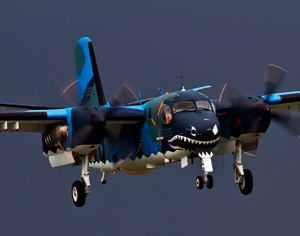
S2T Super Tracker of the Republic of China (ROC) Naval Aviation group.

Taiwan’s Ministry of National Defense announced the establishment of an Air Force anti-submarine group, maintained by eleven S-2T Turbo Tracker anti-submarine planes transferred from the Navy. The announcement was made by Chief of the General Staff Gen. Yen Ming during a commissioning ceremony at an air force base in Pingtung County, southern Taiwan. The main missions of the anti-submarine group will include countering the threat of submarine attack by opposing forces. The Turbo Trackers were originally built by the Grumman company (now Northrop Grumman).

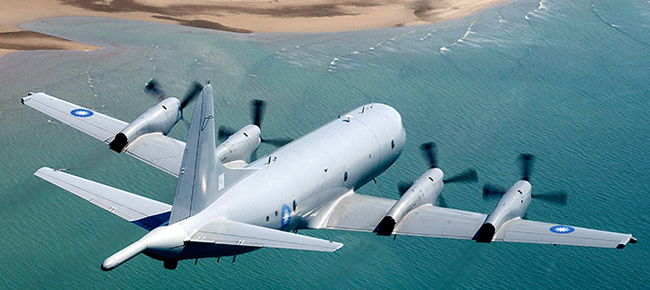
The commissioning of the new group was made in advance of the delivery of 12 P-2C Orions, the first is expected to be delivered from US Navy surplus by the end of 2013 and the entire delivery is expected to complete in 2014. The delivery of the P-3C was approved by the U.S. government in 2007, under a US$1.96 billion foreign military sale program.

Upgrades to the aircraft involved installation of new mission system avionics and service life extension kits to extend the operational life for 15,000 additional flight hours. Lockheed will also install complimentary navigation message ECP to update RINU-G and control display unit software for a message set. The Harpoon Block 2 missile requires the new message set for precision targeting. Other elements of the package include upgrades to the ALR-97/electronic support measures and ALR-95 system, as well as an upgrading of Mode 4 software to Mode-T.


Taiwan is about to receive 12 refurbished P-3C from the US, under a US$1.96 billion foreign military sale program signed in 2007. Photo: Lockheed Martin

Defense Update

Thứ Năm, 27 tháng 6, 2013

Confrontation over the South China Sea 'doomed', China tells claimants

(Reuters) - Countries with territorial claims in the South China Sea that look for help from third parties will find their efforts "futile", China's Foreign Minister Wang Yi warned on Thursday, adding that the path of confrontation would be "doomed".

Beijing's assertion of sovereignty over a vast stretch of the South China Sea has set it directly against Vietnam and the Philippines, while Brunei, Taiwan and Malaysia also lay claim to other parts of the sea, making it Asia's biggest potential military troublespot.

At stake are potentially massive offshore oil reserves. The seas also lie on shipping lanes and fishing grounds.

Wang didn't name any third countries, but the United States is a close ally of Taiwan and the Philippines, and has good or improving relations with the other nations laying claim to all or part of the South China Sea.

"If certain claimant countries choose confrontation, that path will be doomed," Wang said after a speech at the annual Tsinghua World Peace Forum.

"If such countries try to reinforce their poorly grounded claims through the help of external forces, that will be futile and will eventually prove to be a strategic miscalculation not worth the effort."

The Philippine military said this week it had revived plans to build new air and naval bases at Subic Bay, a former U.S. naval base that American forces could use to counter China's creeping presence in the South China Sea.

Wang's comments came days before the minister is due to attend a meeting of foreign ministers of the Association of Southeast Asian Nations grouping in Brunei from Saturday to Tuesday.

The 10-member ASEAN hopes to reach a legally binding Code of Conduct to manage maritime conduct in disputed areas. For now a watered-down "Declaration of Conduct" is in place.

The path to a Code of Conduct will be slow and deliberate, Wang said, adding that the Declaration of Conduct was a commitment made by China and the 10 ASEAN countries and China would continue to abide by it.

"The right way is to fully implement the Declaration, and in this process, move forward with the Code in a gradual way," Wang said.

Reuters

Thứ Sáu, 21 tháng 6, 2013

US opposes bullying by China in disputed seas

WASHINGTON (June 20) -- The nominee to become the top U.S. diplomat in East Asia delivered pointed comments about China in his confirmation hearing Thursday, saying there's no place for "coercion and bullying" in the region's seas.

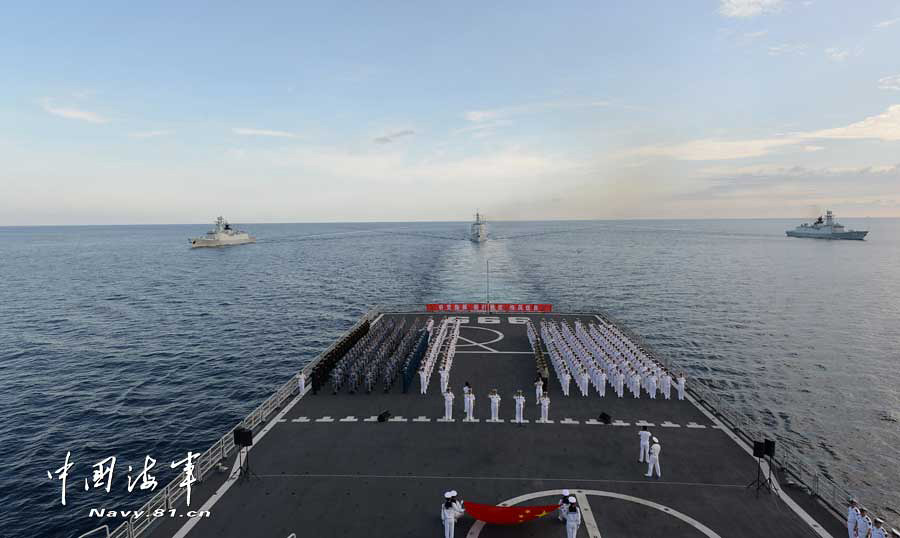
China's High-sea training taskforce holds oath-taking ceremony in Truong Sa Islands, Vietnam

Danny Russel told a Senate panel that he'll do everything in his power to "lower the temperature" in territorial disputes in the South and East China seas and push claimants including China toward diplomacy.

-->Barack Obama nominee Danny Russel cites North Korea, South China Sea

He also said it was "unacceptable" for China to demand only bilateral negotiations with the other claimants and voiced strong U.S. support for efforts by Southeast Asia to negotiate as a bloc and frame a "code of conduct" to manage the disputes - an issue to be taken up at regional security talks in Brunei later this month.

Russel is currently White House senior director for Asian affairs. He is nominee to become assistant secretary for East Asian and Pacific affairs, replacing Kurt Campbell, who resigned in February to enter business.

Russel is a 28-year career diplomat, less ebullient than Campbell, with long experience in Japan and Korea. His association with Asia began in his 20s when he spent three years studying martial arts in Japan.

He has played a central role in the Obama administration's strategic "pivot" to Asia. That's seen the U.S. stake out a diplomatic position on maritime issues that has irked Beijing, with Washington saying it has a national interest in the peaceful resolution of disputes in the South China Sea.

Six governments have overlapping claims to tiny reefs and islands across those resource-rich waters, with China claiming it has sovereignty over virtually all of it. While the U.S. itself is not a claimant, it says it has a stake in the freedom of navigation in its busy sea lanes, which are crucial to world trade.

"I certainly will do everything in my power to try to lower the temperature, push claimants including China into a diplomatic track and continue to warn them that the region in which China will flourish is a region of law, a region of order and a region of respect for neighbors, not one in which there is space for coercion and bullying," Russel said.

He said that President Barack Obama and Secretary of State John Kerry have raised the issue of China's behavior on the seas with its leaders, and the Chinese "are in no doubt that America stands by our allies."

The most volatile maritime disputes involving China in the past couple of years have involved U.S. treaty allies, the Philippines and Japan - nations which Beijing has blamed for triggering tensions.

While acknowledging U.S.-China competition, Russel said the U.S. supports the rise of a China that is stable, prosperous and abides by international rules and norms. He said the U.S. seeks "practical cooperation" that benefits both countries and the region.

He said positive cooperation with China would be "essential" in getting North Korea to abandon its nuclear weapons.

Russel confirmed that he has visited Pyongyang during his time at the White House. He said helping to achieve a halt or rollback in the North's atomic program would be a top priority if he becomes assistant secretary of state.

The full Senate must confirm his appointment.

Stripes

Thứ Hai, 17 tháng 6, 2013

Is China adopting a new maritime security policy?

By Jayadeva Ranade


Its growing assertiveness is a source of worry for the neighbours.

Several countries are concerned about China’s growing sensitivity and assertiveness on issues of sovereignty and territorial — including maritime — integrity, especially in the past five years. China’s actions have heightened tensions in the South China Sea and with Vietnam, the Philippines and Japan. China has neither hesitated to warn off Indian Navy and survey ships while they are in Vietnamese territorial waters.

China turned Chinese marine surveillance (CMS) ship and fishery patrol vessels into China Coast Guard to boost armed patrols in the South China Sea. In picture, China fishery patrol vessel 302 is renamed
China turned Chinese marine surveillance (CMS) ship and fishery patrol vessels into China Coast Guard to boost armed patrols in the South China Sea. In picture, China fishery patrol vessel 302 is renamed "China Coast Guard 3102" Photo: Thanhnien.com.vn

Interesting in this context is a recent (May 28, 2013) article in the People’s Daily, written by Mian Yang, dean of the Shanghai Institute of International Studies (SIIS) and younger brother of Chinese state councillor and former foreign minister Yang Jiechi. Written prior to the recent summit (June 7-8, 2013) between Chinese president Xi Jinping and US president Obama, he quite candidly stated that the increase in China’s comprehensive national strength had given its “new leaders” more confidence in dealing with the international community.

Mian Yang emphasised that this “self-confidence” has enabled China’s leaders to be “very firm” in safeguarding sovereignty and territorial integrity while simultaneously being flexible in dealings with smaller countries. He revealed that China’s new leaders will focus more on the neighbourhood and travel oftener in the region.

Reflecting this firmness on sovereignty and territorial issues, Chinese president Xi Jinping, according to the Japanese newspaper Asahi Shimbun (June 12), used the term “core interests” at the recent summit with Obama while referring to the dispute with Japan over the sovereignty of the Senkakus, which China calls the Diaoyu islands. China had referred to the islands as its “core interest” for the first time this April during a routine weekly news conference by a Chinese foreign ministry spokesperson. The US has, incidentally, briefed Japan on the talks at the summit.

Earlier this January, China’s National Administration of Surveying, Mapping and Geoinformation (NASMG) announced that Sinomaps Press had published new maps of China. These identify more than 130 islands and islets in the South China Sea, most of which have not featured on previous official Chinese maps. The earlier maps featured only some of the larger islands. The new maps also have an enlarged inset of the Diaoyu (or Senkaku) islands.

Predictably, the new map shows the entire state of Arunachal Pradesh and a large chunk of Jammu and Kashmir, mainly comprising Aksai Chin, as part of China. Pages of China’s new passports contain similar maps.

A major irritant for Beijing is, however, the maritime and aerial surveillance regularly carried out by US ships and aircraft inside China’s Exclusive Economic Zone (EEZ) and along China’s air-space off its coast. China has voiced its objections and in recent years intermittently shown its ire by confronting US aircraft and vessels, probably becoming the only country to do so.

A major accident was averted in April 2001 when a Chinese Air Force J-8 jet brushed wing-tips with a US Air Force EP-3 spy plane which was flying near China’s secret submarine base at Sanya on the southern tip of Hainan Island. The US pilot crash-landed his aircraft, but the Chinese pilot lost his life. Since 2009, several close confrontations have been reported between Chinese submarines, frigates and US navy vessels like the USS Impeccable and USS Victorious and the unarmed hydrographic vessel USS Bowditch. Chinese fishing ships reportedly harassed the USS Bowditch at least half a dozen times in China’s EEZ.

After one such incident ‘hawkish’ retired People’s Liberation Army (PLA) Air Force senior colonel Dai Xu, who is a regular commentator on Chinese TV channels and author of a book from which Xi Jinping often quotes, told the Chinese media that “concrete military actions should be taken.” He said “First warning, second expulsion. And if that does not work, the invading vessels can be directly surrounded and sunk.” Chinese military officers have also raised the issue at international conferences and on the sidelines of sessions of the National People’s Congress — China’s version of a parliament.

The issue resurfaced this May at a working session on maritime security during the Shangri-La Dialogue in Singapore.

Articulating long-held objections to the surveillance of China’s coastline and EEZ by US aircraft and ships, PLA senior colonel Zhou Bo disclosed that China had “thought of reciprocating” by “sending ships and planes to the US EEZ”, and had actually done so “a few times”. This is the first occasion when a Chinese military official has confirmed reports in circulation for some time that PLA Navy (PLAN) vessels had been detected around Okinawa and Guam.

The disclosure is significant for countries in the region as it suggests that Beijing’s maritime policy is set to shift towards increased assertiveness. It implies that as China’s military might rises and its economic and strategic interests expand, China will copy US behaviour. It will accord to itself the right to carry out surveys and gather intelligence inside the EEZs of other countries. China’s actions will initially affect South Korea, Japan and countries with competing claims in the South China Sea. As China’s navy extends its reach and capabilities, this policy will directly impact countries like India.

Ni Lexiong, director of the Sea Power and Defence Policy Research Institute at the Shanghai University of Political Science and Law, confirmed that the PLA senior colonel’s remarks reflected the “changing concept of maritime affairs” of China’s leaders “following the rapid development of China’s maritime industry and rising strength of its naval force in the past decade”. The remarks also suggest that Beijing’s interpretation of the UN Convention on the Law of the Sea could be under review.

The author is a member of the National Security Advisory Board (NSAB) and former additional secretary in the cabinet secretariat, Government of India. Views expressed are personal.

DNA India

Thứ Bảy, 15 tháng 6, 2013

China's stealth wars threaten stability

China is subverting the status quo in the South and East China Seas, on its border with India, and even concerning international riparian flows _ all without firing a single shot. Just as it grabbed land across the Himalayas in the 1950s by launching furtive encroachments, China is waging stealth wars against its Asian neighbours that threaten to destabilise the entire region. The more economic power China has amassed, the greater its ambition to alter the territorial status quo has become.

Throughout China's recent rise from poverty to relative prosperity and global economic power, the fundamentals of its statecraft and strategic doctrine have remained largely unchanged. Since the era of Mao Zedong, China has adhered to the Zhou Dynasty military strategist Sun Tzu's counsel, "subdue the enemy without any battle" by exploiting its weaknesses and camouflaging offence as defence. "All warfare," Sun Tzu famously said, "is based on deception".

For more than two decades after Deng Xiaoping consolidated power over the Chinese Communist Party, China pursued a "good neighbour" policy in its relations with other Asian countries, enabling it to concentrate on economic development. As China accumulated economic and strategic clout, its neighbours benefited from its rapid GDP growth, which spurred their own economies. But, at some point in the last decade, China's leaders evidently decided that their country's moment had finally arrived; its "peaceful rise" has since given way to a remarkably more assertive approach.

One of the first signs of this shift was China's revival in 2006 of its long-dormant claim to Indian territory in Arunachal Pradesh. In a bid to broaden its "core interests", China soon began to provoke territorial disputes with several of its neighbours. Last year, China formally staked a claim under the United Nations Convention on the Law of the Sea to more than 80% of the South China Sea.

From employing its strong trade position to exploiting its near-monopoly on the global production of vital resources like rare-earth minerals, China has staked out a more domineering role in Asia. In fact, the more openly China has embraced market capitalism, the more nationalist it has become, encouraged by its leaders' need for an alternative to Marxist dogma as a source of political legitimacy. Thus, territorial assertiveness has become intertwined with national renewal.

China's resource-driven stealth wars are becoming a leading cause of geopolitical instability in Asia. The instruments that China uses are diverse, including a new class of stealth warriors reared by paramilitary maritime agencies. And it has already had some victories.

Last year, China effectively took control of the Scarborough Shoal, an area of the South China Sea that is also claimed by the Philippines and Taiwan, by deploying ships and erecting entry barriers that prohibit Filipino fishermen from accessing their traditional fishing preserve. China and the Philippines have been locked in a stand-off ever since. Now the Philippines is faced with a strategic Hobson's choice: accept the new Chinese-dictated reality or risk an open war.

China has also launched a stealth war in the East China Sea to assert territorial claims over the resource-rich Senkaku Islands [called the Diaoyu Islands in China], which Japan has controlled since 1895 [aside from a period of administration by the US from 1945 to 1972]. China's opening gambit _ to compel the international community to recognise the existence of a dispute _ has been successful, and portends further disturbance of the status quo.

Likewise, China has been posing new challenges to India, ratcheting up strategic pressure on multiple flanks, including by reviving old territorial claims. Given that the countries share the world's longest disputed land border, India is particularly vulnerable to military pressure from China.

The largest territory that China seeks, Arunachal Pradesh, which it claims is part of Tibet, is almost three times the size of Taiwan. In recent years, China has repeatedly attempted to breach the Himalayan frontier stretching from resource-rich Arunachal Pradesh to the Ladakh region of Jammu and Kashmir _ often successfully, given that the border is vast, inhospitable, and difficult to patrol.

China's aim is to needle India _ and possibly to push the Line of Actual Control southward.

Indeed, on April 15, a platoon of Chinese troops stealthily crossed the LAC at night in the Ladakh region, establishing a camp 19km inside Indian-held territory. China then embarked on coercive diplomacy, withdrawing its troops only after India destroyed a defensive line of fortifications. It also handed a lopsided draft agreement that seeks to freeze the belated, bumbling Indian build-up of border defences while preserving China's capability to strike without warning.

India has countered with its own draft accord designed specifically to prevent border flare-ups. But territory is not the only objective of China's stealth wars; China is also seeking to disturb the status quo when it comes to riparian relations. Indeed, it has almost furtively initiated dam projects to re-engineer cross-border river flows and increase its leverage over its neighbours.

Asian countries _ together with the US _ should be working to address Asia's security deficit and establish regional norms. But China's approach to statecraft, in which dominance and manipulation trump cooperation, is impeding such efforts. This presents the US, the region's other leading actor, with a dilemma: watch as China gradually disrupts the status quo and weakens America's allies and strategic partners, or respond and risk upsetting its relationship with China, the Asian country most integral to its interests. Either choice would have far-reaching consequences. The only way to ensure peace and stability in Asia is to pursue a third option: inducing China to accept the status quo. That will require a new brand of statecraft based on mutually beneficial cooperation _ not brinkmanship and deception.
2013 PROJECT SYNDICATE


Brahma Chellaney is professor of strategic studies at the New Delhi-based Centre for Policy Research.

China and the Falklands Analogy: Preparing for the Wrong War?

If the Pentagon’s reading of China’s interest in “Falklands-style” campaigns of long-range power projection is accurate, the task of maintaining a U.S.-centric security order in East Asia may turn out to be more manageable than expected. But the PLA Navy cannot be counted on to dilute its efforts to the extent DoD now thinks plausible.

To this day, Britain’s 1982 campaign to recapture the Falkland Islands remains among the most relevant examples both of long-range maritime power projection with limited means, and of a weaker power using niche capabilities to complicate operational access and inflict significant damage on the opponent’s projection forces.

As a valued colleague of mine has noted in a recent post here at the NextWar Blog, DoD’s latest Annual Report on Military and Security Developments Involving the People’s Republic of China explicitly picks up on the Falklands analogy in its discussion of China’s future expeditionary capabilities:

“The PLA Navy’s goal over the coming decades is to become a stronger regional force that is able to project power across the globe for high-intensity operations over a period of several months, similar to the United Kingdom’s deployment to the South Atlantic to retake the Falkland Islands in the early 1980s.”

The analogy as such is hardly new, of course, and has already spawned a small literature of its own, including Lyle Goldstein’s insightful piece in Survival and a thorough analysis by Christopher Yung. A more recent contribution by CDR Jim Griffin, USN in Proceedings makes many of the same arguments in a more implicit fashion. All three treatments suggest that the Falklands experience has considerable relevance for the PLAN in both strategic and war-fighting terms. What is new in the Pentagon report, however, is the rather one-dimensional spin it imparts to the PLAN’s adoption of the Falklands campaign as a potential paradigm for future operations.

If we accept DoD’s take on the analogy, we would expect that China will cast itself unambiguously in the role of the expeditionary power (i.e., Great Britain) and, over the next several decades, spare no efforts to attain at least a limited capability for sustained power projection over transoceanic distances. It is certainly true that this would serve the desire of many Chinese naval enthusiasts to climb the rungs of the global naval hierarchy, Felix Seidler’s discussion of which I find most useful. However, it is not yet clear that the Pentagon’s interpretation accurately reflects what Chinese strategists have in mind when they plan for “Falklands-style” campaigns.

As Robert Ross argues in his 2009 piece on “China’s Naval Nationalism,” a blue-water orientation is not a natural strategic choice for a continental power that faces multiple potential threat axes on land as well as from the sea. For such actors, access-denial strategies, broadly conceived, tend to provide a much better return on investment. Thus, to the extent that the operational requirements for access-denial and long-range power projection differ, the strong Mahanian tendency that is evident in the Chinese discourse about maritime strategy would seem to give rise to an additional diffusion of effort (brown/green-water and blue-water) within the more fundamental diffusion of effort between land and sea. (It should be noted here that, for all his insistence of control over maritime communications, such a course would have been utterly foreign to Mahan.)

In other words, given China’s current position and the many uncertainties it continues to face, any attempt at replicating the capability profile of a “Rank 3″navy [“conducting one major ‘out of area operation and (…) engaging in high-level naval operations in closer ocean areas” (Grove 1990: 238)] would amount to a distraction from its key strategic dilemmas. A transoceanic expeditionary capability, in particular, would almost certainly constitute a misinvestment of limited resources. In a very real sense, every yuan invested in dedicated long-range projection forces is a yuan not invested in the control over China’s immediate regional environment. And every Type 052D sailing the Mediterranean on anything other than a one-off port visit will mean several destroyers not sailing the West Pacific.

Of course, this is not to say that China won’t do its potential opponents the favor of going down this risky path. Speaking in broad historical terms, rising continental powers do it all the time – and suffer the consequences. But Goldstein’s and Yung’s works on the PLA’s engagement with the Falklands experience suggest that PLA planners have so far emphasized an “Argentina Plus” approach that combines the far more compatible paradigms of robust access-denial and regional power-projection, and may continue to do so for the foreseeable future.

If such is the case, there will still be more than enough to write about in the Pentagon’s next Annual Report to Congress. As far as analogies go, a much more formidable Argentina that chooses to threaten U.S. interests where it is strong seems to me a far more worrying prospect than a cut-rate Great Britain that is all over the map.

Michael Haas is a Graduate Research Assistant at the Peace Research Institute Frankfurt (PRIF), Germany. The views presented here are his alone and do not reflect an institutional perspective.

CIMSEC

China steps up military recruitment, changes enrolment season


Beijing: For the first time in 23 years, the Chinese military, the world's largest, has changed its enrolment period to attract more talented people, officials said.

An online recruitment service run by the Ministry of National Defence (MND) will be ready for applications and will conduct recruiting procedures, including body check-ups, from August 1, a statement said.

The statement said that the new recruitment period follows the graduation season and will help attract more talented young people to the army.

Previously, recruitment period began in October, state-run news agency Xinhua reported.

Sources said the decision has been approved by the Cabinet and the Central Military Commission, which controls the 2.3 million strong People's Liberation Army (PLA).

The MND asked conscription authorities across the country to prioritise admissions of better-educated young applicants.

The Chinese military started recruiting college graduates in 2001. More than 1.3 lakh PLA soldiers were college graduates as of the end of 2009.

To help the military recruit more students, the country's top legislature amended the Military Service Law in 2011, raising the maximum age for recruits to 24. China has also relaxed restrictions regarding the height, weight and appearance of recruits since then.

Press Trust of India

Thứ Sáu, 14 tháng 6, 2013

China's 'behavior' needs even larger PHL defense spending - NSC

A ranking official of the National Security Council on Thursday detailed China's “aggressive behavior” in the West Philippine Sea, as he called for additional defense spending to uphold the Philippines' interests in the region.


Retired Navy Rear Admiral Vicente Agdamag, now Deputy Director General of the NSC Secretariat, said China’s actions confirmed its “clear intention to consolidate its control” over the disputed areas in line with the Chinese government’s nine-dash line claim.

“It started, actually, in March 2011 when a Chinese patrol ship challenged MV Veritas Voyager conducting a survey for Forum Energy, 85 nautical miles off Palawan,” he said, referring to an incident at the Reed Bank in the Spratly Islands.

Defense and military officials said two Chinese ships harassed the Department of Energy-commissioned survey ship. The Chinese ships told the crew of the Filipino ship to cease their activities because that was part of Chinese territory.

The Chinese vessels left when the AFP Western Command, based in Puerto Princesa City, promptly dispatched a Navy BN-2 Islander maritime patrol aircraft and an Air Force OV-10 light attack/reconnaissance aircraft. No armed confrontation was reported.

Agdamag also cited how Chinese ships prevented a Philippine Navy vessel, the BRP Gregorio del Pilar, from arresting Chinese fishermen caught illegally fishing at the Scarborough Shoal, locally known as the Bajo de Masiloc, in April last year.

The incident triggered a standoff between the China and Philippines, though China now is in virtual control of the shoal. The Philippine government withdrew its two ships from the shoal due to inclement weather, leaving China in complete control of the area, which is about 124 nautical miles from Zambales.

“Lately, we received reports that [Chinese] surveillance ships are imposing a 24 kilometer wide ban on fishing in the area. They are imposing an exclusion zone already in Bajo de Masinloc,” said Agdamag.

As of April this year, he said there were nine Chinese vessels at the shoal – five Fisheries Law Enforcement Command (FLEC) vessels and four Chinese Maritime Surveillance ships.

He also cited China’s establishment of Sansha City in Woody Island near China and Vietnam “to oversee and exercise the administrative control” over its claimed islands in the West Philippine Sea.

Agdamag also noted China’s issuance of passports showing a nine-dash line map and threats to board foreign vessels in the disputed areas.

He also said Pagasa town Mayor Eugenio Bitoonon was harassed twice by Chinese vessels – once in November last year and the latest just last May – at the disputed areas.

Last February, Agdamag said three Chinese Navy ships entered the West Philippine Sea to conduct patrol and training missions and anti-piracy drills. A month later, several Chinese “modern warships” were also dispatch to the Bashi channel, between Taiwan and the Philippines, for training missions.

Also last March, a Chinese destroyer, two frigates, an amphibious ship and helicopters and amphibious tanks conducted an eight-day military drill in the Spratly Islands. The Spratlys is being claim in part or in whole by the Philippines, China, Taiwan, Malaysia, Brunei and Vietnam.

“Right now, there are 18 maritime surveillance ships operating in our area,“ the official also said. He did not say if there were FLECs or Chinese military ships still within Philippine territory.

Further increase in defense expenditures

Agdamag said the issue is being addressed by political, diplomatic, and legal actions taken against China.

He said the military is establishing a “minimum deterrent capability,” alluding to the military’s modernization program. President Aquino recently signed the modernization law allocating P75 billion for the implementation of the military modernization program until the end of his term in 2016.

Nevertheless, the official said his office is recommending a further increase in defense expenditures. “We are recommending that we commit an increase in our investment for defense, from .5 to 1 percent of the GDP (Gross National Product),” he said.

Agdamag explained that their proposed increase is on top of the budget of the defense and military establishment which is equivalent to 1.1 percent of the national budget.

“We are recommending an additional of .5 to 1 percent (of GDP), not only to be at par with our neighbors, [but] more importantly to develop a modicum of a credible defense capability to protect our maritime and strategic interest,” he said.

Agdamag added that the country also needed to enhance its security relations with other countries, specially with the US, “when it is still able to deter China”, to buy time for the Philippines to develop its military capability.

“We need to pursue a healthy and friendly relationship with China and work with her for regional peace and prosperity.... to buy us time to grow our economy and expand our military capabilities,” he explained further.

“So right now, we are buying time, we need at least 10 years with sustained economic growth of 7 to eight percent in order to grow our capability upgrade program.”

Also, Agdamag disclosed an ongoing review of the “contingency plans” of the AFP’s Northern Luzon Command and Western Command, as per Executive Order 82 issued by President Aquino last year.

NOLCOM has responsibility over the Scarborough Shoal, while WESCOM has the West Philippine Sea as its area of concern. — DVM, GMA News

Thứ Tư, 12 tháng 6, 2013

China expert: U.S. folds as China expands in South China Sea

An expert on China and its government warns that the communist nation has been aggressively claiming territory in the South China Sea. The United States, meanwhile, has responded weakly.


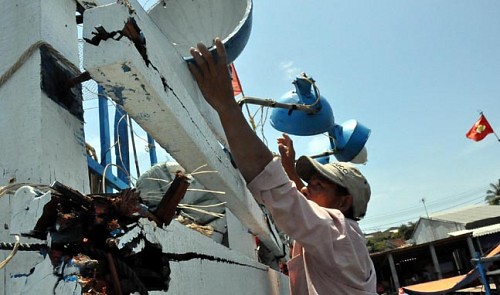
The fishing ship of Quang Ngai Province (Vietnam) was damaged heavily after being hit twice by a Chinese ship off Hoang Sa (Paracel) Islands on May 20, 2013.

Gordon Chang, an attorney and author, says China has been claiming disputed islands in the area for over a year, which would shut the waters to international commerce.

Why? Because China's political structure is "brittle" and its economy is "faltering," Chang claims.

"And this belligerence, I think, is the result of internal weakness," Chang says. "China right now is a threat to the international community and to the United States not because it is strong, but because it is weak."

Chang authored the book The Coming Collapse of China. The theory that the growing country is actually at risk of ruin is a running theme at Chang's self-named website. He lived and worked in China, and now writes and speaks about the country to a worldwide audience.

Recently the New York Times reported that the Beijing regime has privately circulated an official map to foreign diplomats that shows for the first time that 80 percent of the South China Sea is China's.

Therefore Beijing now takes the position that the ships and planes of other countries will have to get its permission to enter the area, which has long been considered international water and airspace.

More than half of the world's annual merchant tonnage passes through the South China Sea.

But Chang says, unfortunately, U.S. response to the Chinese threat has been feeble. "This is bipartisan failure in Washington, both Republicans and Democrats," he says. "So when it comes to China, which I believe is the greatest threat to American security, we have inadequate policies."

Chang says he was not encouraged by this past weekend's meeting between President Obama and China's new leader, President Xi Jinping.

One News Now

China 'generates fear' in Asia-Pacific: US general

It’s not unknown that China is causing maritime disputes with its Asian neighbours. What bothers though is China’s dubious military buildup. A deputy commander of the US Marine Forces Pacific expressed his concern at the Pentagon on what China’s shady activity can do in the Asia-Pacific region.

Brig. Gen. Richard Simcock said that China’s lack of transparency regarding its military buildup as well as its purpose will generate fear in the region. The MC General’s expressed concern was brought about by the continuous, if not escalating, territorial issues of China with Japan and the Philippines. China has deployed patrols around, if not within, both countries’ marine territories. Despite diplomatic interventions from Japan and the Philippines, China remains resolute with its claims. Even US President Barack Obama urged Chinese President Xi Jinping, during their recent meeting in California, to “de-escalate, not escalate” disputes with Japan and to have conversations “through diplomatic channels and not through actions out of the East China Sea.”

The Philippines, however, remains too diplomatic in dealing its territorial disputes with China, which have been intensified because of the archipelago’s issues involving Taiwan over a fisherman that got killed. And if Hong Kong’s racist hurls to the Philippines during their supposed friendly Football match at the Mong Kok Stadium last June 4 can be counted to intensify the neighbours’ ailing relationship, then the Philippines better think of a more effective way to settle their disputes. And they should bear in mind how stern China is. Japan, on the other hand, is joining a US-led amphibious training, which has already begun on Monday and will end on the 26th of this month. Simcock also said that Japan wants “to greatly increase their amphibious capability.” The military drill, called Dawn Blitz 2013, also involves Canada and New Zealand. “Japan is an example of a country, one that has the capability to develop and produce those kinds of forces, amphibious ships, which are not easy to build.”

Although Gen. Richard Simcock said that what China is doing “generates fear,” he added that the natural disasters Asia-Pacific nations are prone to have also increase their concerns. “The typhoon, the earthquake, the tidal wave, the tsunami. It’s coming. So, countries act. When there’s fear, they take actions to reduce the risk and make sure that the populace is safe,” he said. China is sure to keep its stand. Other nations should also make their resolve; regardless if China is not “very transparent” military buildup will result to something MC Brig. Gen. Richard Simcock is anxious about or not.

Japan Daily Press

Thứ Ba, 11 tháng 6, 2013

China's manned sub on track for S. China Sea

June 11 (Xinhua) -- An oceanographic ship carrying the Jiaolong manned deep-sea submersible is expected to arrive at the designated dive area in the South China Sea in one week, according to the ship's onboard headquarters.


Though Xiangyanghong 9 could experience waves up to 3 meters high in the next three days, the sea conditions will not affect the ship's voyage, Sun Hulin, a meteorological technician onboard, told Xinhua.

Jiaolong will conduct tests on its positioning system during the journey, according to the ship's onboard headquarters.

The manned submersible, aboard support ship Xiangyanghong 9, left the country's eastern port city of Jiangyin on Monday for its first voyage of experimental application.

During the 103-day mission, the sub will submerge for scientific research in the South China Sea, the northeast Pacific Ocean and the west Pacific.

Xinhua

Thứ Bảy, 8 tháng 6, 2013

China has been building military buildings in Philippines' Scarborough Shoal

(GDVN) - Just a few next weeks, the new structures of China's military buildings will emerge in the Philippines' Scarborough Shoal with 5-star Chinese flag.

The staging of the Chinese illegal construction in Mischief Reef in the Spratly Islands after illegally seized in 1995

On June 6, a Philippine military official, told the Bussiness Mirror, revealed that the government (of Philippines) has had satellite images show that China has started illegal construction works on Scarborough Shoal which Beijing got up control from Manila in April last year.

"The military construction, defense establishments have appeared in satellite images taken Scarborough Shoal shows that China has actually built illegally buildings in the Phuluppines's territorial waters. At least 3 Chinese vessels alternately have been deploying here and gathering sacks of sand, gravel, stone, cement and steel," the official said.

Earlier, Defense Secretary Voltaire Gazmin told the Philippine media that China has bloked barrier lagoons gateway to Scarborough Shoal in order to prevent Filipino fishermen returning to traditional fishing grounds of their sovereignty waters.

Another source added, Just a few next weeks, the new structures of the Beijing's military buildings will emerge in the Philippines' Scarborough Shoal with 5-star Chinese flag.

Relations between Manila and Beijing had fallen into the worst crisis since April last year, in which the two sides agreed to withdraw ships from the area for decreasing stress, but China has not kept its promise.

This year, China continues using the pretext of invading Scarborough to illegally present in the Second Thomas Shoal (located in the Spratly Islands ).

GDVN

GDVN is the Vietnam's agency of non-public colleges and universities.

Thứ Năm, 6 tháng 6, 2013

China blocks Philippines' Second Thomas Shoal

Global Times on June 6 cited "reliable source", said China determines to block Philippines' resupply for the garrison stationed in the Second Thomas Shoal in the Spratlys, south China sea.

A Chinese warship “illegally” appears at the Second Thomas Shoal near the contested Spratly Islands
A Chinese warship “illegally” appears at the Second Thomas Shoal in the disputed Spratly Islands

Earlier, on June 5 Philippine media said Beijing had to add 1 maritime surveillance vessel pervading around the shoal area to watch and prevent Philippines' resupply logistics activities in the area. However, Defense Minister and Commander of the Philippine Navy determined to maintain this operations.

The "Reliable Source" through Global Times on the threatening tone: "Philippine ships will have no any idea about the back to the Second Thomas Shoal !"

The "source" also confirmed a missile destroyer of the Chinese navy has left the shoal after US attack aircraft carrier USS Nimitz entered the South China Sea for 2 day exercises.

However, Glonal Times said, the U.S. still maintains a large force in the South China Sea with Richard amphibious assault ship, Tortuga amphibious ship, Rasmussen missile frigate that totaling forces of about 1,000 personnels.

A report of GDVN quoted analyst of Alex Woo and Tsim Sha Tsui on South China Morning Post on June 6, said China has no historical evidence, singly claims the South China Sea with "nine dash lines" is their territory and the Beijing's military forces repeatedly pledged to "protect" the so-called "sovereignty" in the region.

Beijing has always condemned the historical period of Japanese militarism which has invaded and caused much suffering for their people, but China is gradually becoming a Japanese former - uses forces to claim "sovereignty" and take over the entire South China Sea. However, according to Alex Woo and Tsim Sha Tsui, the days of using forces to conquer other countries to usurp territory were long past.

Phunutoday.vn

Thứ Hai, 3 tháng 6, 2013

China And The Biggest Territory Grab Since World War II

Yesterday, the New York Times reported that China’s mapping authority, Sinomaps Press, issued a new map of the country showing 80% of the South China Sea as internal Chinese water.

What’s at issue? Each year, more than half of the world’s annual merchant tonnage passes through the South China Sea as well as a third of the global trade in crude oil and over half of LNG trade.


Filipinos protest in front of the Chinese Consulate in Los Angeles on May 11, 2012 in California, as part of a global protest over an escalating territorial row in the South China Sea. The territorial row centres on Scarborough Shoal, a tiny rocky outcrop in the South China Sea about 230 kilometres (140 miles) from the Philippines' main island of Luzon which the Philippines says is part of its territory because it falls within its exclusive economic zone. China, however, claims virtually all of the South China Sea, which is believed to sit atop huge oil and gas reserves, as its historical territory, even waters close to the coasts of other Asian countries. Editorials in newspapers controlled by the ruling Communist Party have repeatedly warned that China is prepared to go to war against the Philippines to end the stand-off. AFP PHOTO/Frederic J. BROWN (Photo credit should read FREDERIC J. BROWN/AFP/GettyImages)

Beijing’s assertion of sovereignty over that body of water does not necessarily mean it will close the South China Sea off to international commerce. Yet that would be the next step. Given its extremely broad view of its right to regulate coastal traffic, Beijing will undoubtedly define the concept of “innocent passage” narrowly and require vessels entering that sea to obtain its permission beforehand and similarly require aircraft flying over it to do the same. The South China Sea, bordered by eight nations, has long been considered international water.

The New York Times noted Asian diplomats have seen the map with the stunning claim. Its release, the Times article states, was delayed from late 2012 “so that it could be formally authorized by the Chinese senior leadership.” The map is not yet publicly available.

Chiang Kai-shek’s Republic of China in 1947 issued maps with dashes at the edge of the South China Sea. The ambiguous markings led to the term “cow’s tongue” because of the shape of the area defined by the dashes. Mao Zedong’s victorious People’s Republic in 1949 adopted as its own Chiang’s expansive South China Sea claims.

Hopeful analysts had long maintained that the dashes—nine or ten of them depending on the map—signified China’s claim to only the islands inside the cow’s tongue. Those islands are subject to competing claims by other shoreline nations, specifically, the Philippines, Vietnam, Malaysia, Brunei, Indonesia, and Taiwan. Moreover, there was great optimism when China ratified the U.N. Convention on the Law of the Sea in June 1996. That multilateral treaty includes detailed rules on the calculation of territorial waters—generally limiting territorial claims to waters no further than 12 nautical miles from shore—and those rules were inconsistent with Beijing’s general assertion of sovereignty over the South China Sea. Accordingly, analysts naturally thought—hoped, actually—that China had abandoned its expansive 1947-based claim.

Yet Beijing, despite treaty obligations, had long been laying the groundwork to close off the South China Sea to other nations. For instance, in August 2011 the official Xinhua News Agency issued a report stating China had “three million square kilometers of territorial waters.” It was impossible for the country to get to that figure without including its claim to most of the 2.6 million square kilometers of the South China Sea.

Moreover, in that same month Xinhua was even clearer when it asserted that the islands in the South China Sea “and surrounding waters” were “part of China’s core interests.” By using “core interests,” Beijing was signaling it could never compromise China’s sovereignty over either the islands or those waters.

In any event, Beijing’s new map, according to those who have seen it, removes any ambiguity by converting the dashes into a national boundary. All islands and waters inside the line, therefore, are China’s, at least according to the Chinese. It is the biggest attempted grab of territory since World War II.

The new map will roil Asian nations, of course. Last year, Beijing used force to seize Philippine territory, Scarborough Shoal in the South China Sea. The United States, despite its treaty obligations to defend the Philippines, let the Chinese take what they wanted. Nobody in the White House wanted to confront China, and there were voices in the Pentagon saying that China’s aggression served the Philippines right for kicking American forces out of the Clark and Subic bases. Now, the Chinese are going after Ayungin Shoal, long considered Philippine territory.

The ongoing seizure of pieces of the Philippines is an indirect challenge to America. Now, however, the issuance of the new map means Beijing has taken on Washington directly. If there has been any consistent American foreign policy over the course of two centuries, it has been the defense of freedom of navigation.

Why is this important? The world has prospered because of trade conducted freely over wide seas lanes and air routes. So China’s claim to the South China Sea, if permitted to stand, will mark the end of the open architecture of the Post-War world.

At the end of this week, President Obama will meet his Chinese counterpart, Xi Jinping, in Rancho Mirage for two days of intensive talks. The White House, in announcing the meeting on May 20, said it wanted to “discuss ways to enhance cooperation.” The administration is hoping to build an enduring partnership with China’s increasingly militant one-party state and is trying to avoid disagreement.

Yet on the Beijing’s sea claims there can be no compromise. Either the South China Sea is Chinese or it is international water. The stakes—for China, for the United States, for the international community—are hard to overstate.

Forbes

Chủ Nhật, 2 tháng 6, 2013

Spratlys,Senkakus . . . Okinawa? | Beijing coy on state-run think tank's claim it owns Japan isle

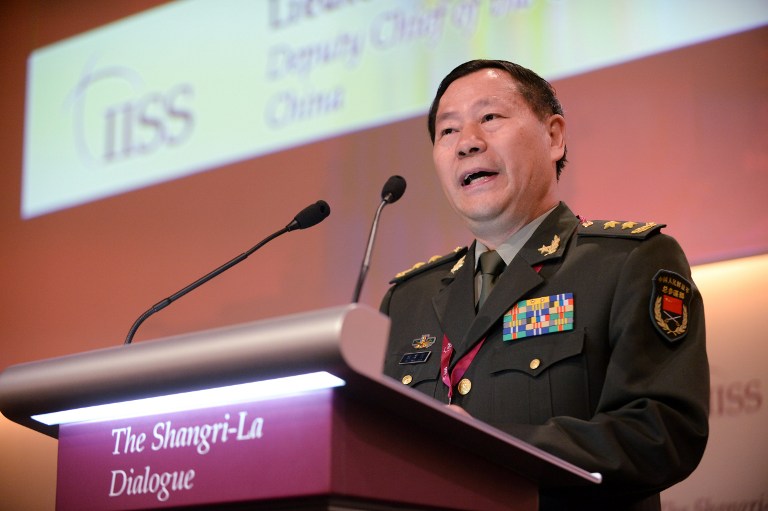
SINGAPORE - A top Chinese general on Sunday sought to distance the country from claims by some of its scholars that the Ryukyu Islands, which include Okinawa, do not belong to Japan.

Lt. Gen. Qi Jianguo tests the microphone as Philippine Defense Secretary Voltaire Gazmin watches at the Shangri-la Dialogue in Singapore. AFP PHOTO

Lieutenant General Qi Jianguo, deputy chief of staff of the People's Liberation Army, told a security conference in Singapore that the scholars' views did not represent the official position.

The People's Daily, China's most circulated newspaper, had published an article last month written by two scholars from a top state-run think-tank that argued Beijing may have rights to the Ryukyus.

The lengthy article argued that the island chain was a "vassal state" of China before Japan annexed it in the late 1800s.

"This is only an article of particular scholars and their views on these issues... It does not represent the views of the Chinese government," Qi said at the annual forum known as the Shangri-La Dialogue.

However, he repeated Chinese arguments for China's historical claims over a set of tiny uninhabited islets in the East China Sea known as the Diaoyus in China and Senkakus in Japan.

"I have to say Diaoyu islands and Ryukyu islands and Okinawa islands... the first, and the second and the third, are not the same nature. The Chinese government on this is very clear," he said.

Both countries have been locked in a long-running dispute over the island cluster in the East China Sea which Tokyo administers but is claimed by Beijing.

The two nations have stepped up a war of words in recent months, with Chinese vessels regularly entering waters around the islands, stoking fears of armed conflict.

Some Chinese see historical ties as a basis of sovereignty and dismiss Japan's possession of the islands as a legacy of its aggressive expansionism that ended in defeat at the end of World War II.

Before being annexed into Japan in the late 19th century, the independent Ryukyu kingdom, centred on Okinawa, paid tribute to China for centuries -- as did numerous other traditional Asian states -- often receiving favorable trading rights in return.

Okinawa hosts major US air force and marine bases and is home to 1.3 million people. The US military occupied Okinawa and some other islands in the Ryukyu chain for 27 years after the end of World War II, returning them to Japan on May 15, 1972.

Interaksyon.com

Chinese patrols in Asian seas 'legitimate': Top general

SINGAPORE: Chinese warships will continue to patrol waters where Beijing has territorial claims, a top general said Sunday, amid simmering rows with neighbouring countries over the South China Sea and islands controlled by Japan.

Chinese warships will continue to patrol waters where Beijing has territorial claims, a top general said Sunday, amid simmering rows with neighbouring countries over the South China Sea and islands controlled by Japan.

Lieutenant General Qi Jianguo, deputy chief of general staff of the People's Liberation Army, defended the patrols as legitimate and said his country's sovereignty over the areas could not be disputed.

'LEGITIMATE' PATROLS. Top Chinese military official, Lieutenant General Qi Jianguo speaks at the 12th Asia Security Summit Shangri-La Dialogue in Singapore on June 2, 2013. Photo by Roslan Rahman/AFP
"Why are Chinese warships patrolling in East China Sea and South China Sea? I think we are all clear about this," Qi told the annual Shangri-La Dialogue security conference in Singapore.

"Our attitude on East China Sea and South China Sea is that they are in our Chinese sovereignty. We are very clear about that," he said through an interpreter.

"So the Chinese warships and the patrolling activities are totally legitimate and uncontroversial."

Qi was responding to a question from a delegate after he gave a speech in which he sought to assure neighbouring countries that China has no hegemonic ambitions.

"China has never taken foreign expansion and military conquering as a state policy," he said in his speech.

"Although recently hot-spot issues in China's neighbouring area keep cropping up, we have always held that conflicts and disputes should be properly solved through dialogues, consultations and peaceful negotiations."

One delegate however said there appeared to be growing scepticism in the region over China's peaceful intentions because it was inconsistent with moves to send naval patrols in waters where other countries have also staked claims.

China is locked in a territorial dispute with Brunei, Malaysia, the Philippines and Vietnam in the South China Sea.

The four Southeast Asian states have partial claims but China says it has sovereign rights to nearly all of the sea, including waters and territories much closer to other countries and thousands of kilometres (miles) from the Chinese coast.

China also has a dispute with Japan over the Senkaku islands, which Beijing calls the Diaoyus, in the East China Sea.

Manila last month protested at what it said was the "provocative and illegal presence" of a Chinese warship near Second Thomas Shoal, which is occupied by Philippine troops.

Among the other moves that have caused alarm were China's occupation of a shoal close to the Philippines' main island last year, and the deployment in March of Chinese naval ships to within 80 kilometres (50 miles) of Malaysia's coast.

Competing claims have for decades made the area one of Asia's potential flashpoints for military conflict. China and Vietnam fought battles in 1974 and 1988 for control of islands that left dozens of soldiers dead.

The Economic Times

Thứ Tư, 29 tháng 5, 2013

Taiwan To Open New Cyberwar Unit

Taiwan To Open New Cyberwar Unit
TAIPEI — Taiwan is preparing to launch a fourth cyberwar unit, a local newspaper reported Wednesday, in response to what it claims is a growing security threat from Chinese hackers.

The new unit is scheduled to open July 1 and will work to counter cyber attacks on government websites, said the Taipei-based newspaper United Evening News.

It will bring to four the number of Taiwanese military units assigned to cyberwar and information-related tasks, added the paper.

The defense ministry declined to comment on the report.

Taiwanese government websites have frequently come under cyber attack from China, usually during disputes between the two sides, military authorities say.

In the six months to June last year, hackers launched more than one million attacks on the website of Taiwan’s National Security Bureau (NSB), the Liberty Times reported.

The NSB did not reveal how many of the attacks came from China while saying all hacking attempts were blocked.

But the bureau described the perceived cyber threat from the mainland as “very severe” when asked to evaluate it in parliament two months ago.

“China’s cyberwar capabilities were organised by the military and government units, using Internet viruses to attack Taiwan’s government, economic and military websites,” it said in a report cited by the Liberty Times.

However ties between Taipei and Beijing have improved markedly since Ma Ying-jeou of the China-friendly Kuomintang party came to power in 2008 on a platform of ramping up trade and tourism links with the mainland.

Ma was reelected in January 2012 for a second and final four-year term.

Yet China still considers Taiwan part of its territory awaiting reunification, by force if necessary, even though the island has ruled itself for more than 60 years after their split in 1949 at the end of a civil war.

Defense News

Thứ Ba, 28 tháng 5, 2013

Video: China's Navy conducts large scale maneuver in south China sea

A channel of China Central Television CCTV said the Chinese navy has completed the exercises in the South China Sea on Friday May 24.

This is the general naval execise of the first three fleets of China including, China's South Sea, East Sea and North Sea fleets from 2010 to present. Chinese naval power one again been proved amid South China Sea territorial disputes between China and the Philippines on the islands sovereignty worsening.

According to transmit signals from China's Central television channel CCTV, the three fleets devided into two groups of blue and red, while waging war assumptions.

Blue Team group, that was assigned as air strikes force, was operating on low-level of the water surface, attacking key points of the Red team. Meanwhile, the Red Team was using ground-to-air radar, ground radar and electronic fighting forces, conducting reconnaissance and counter-reconnaissance, jamming and anti-jamming, guiding the maneuver warfare on the sea.

The clips show a China's warship fires an anti-ship missile to destroy the enemy's ship hereafter:


South China Sea tension mounts near Filipino shipwreck

(Reuters) - A wrecked navy transport ship perched on a remote coral reef could be the next flashpoint in the South China Sea, where China and five other claimants bitterly dispute territory.

The Philippine government is accusing China of encroachment after three Chinese ships, including a naval frigate, converged just 5 nautical miles from an old transport ship that the Philippines deliberately ran aground on a reef in 1999 to mark its territory.

Philippine officials say they fear the Chinese ships will block supplies to about a dozen Filipino marines stationed in abject conditions on the rusting ship, raising tensions over one of Asia's biggest security issues.

The area, known as Second Thomas Shoal, is a strategic gateway to Reed Bank, believed to be rich in oil and natural gas. In 2010, Manila awarded an Anglo-Filipino consortium a license to explore for gas on Reed Bank but drilling stalled last year due to the presence of Chinese ships.

Manila says Reed Bank, about 80 nautical miles west of Palawan island at the southwestern end of the Philippine archipelago, is within the country's 200-nautical mile exclusive economic zone.

Beijing says it is part of the Spratlys, a group of 250 uninhabitable islets spread over 165,000 square miles, claimed entirely by China, Taiwan and Vietnam and in part by Malaysia, Brunei and the Philippines.

"China should pull out of the area because under international law, they do not have the right to be there," said Raul Hernandez, a spokesman for the Philippine Department of Foreign Affairs, noting the area's proximity to Palawan, the country's largest province.

He said the Chinese ships were a "provocation and illegal presence".

Chinese Foreign Ministry spokesman Hong Lei said on Tuesday the Second Thomas Shoal was part of the Spratly Islands, over which China had "indisputable sovereignty".

"It is beyond reproach for Chinese boats to carry out patrols in these waters," Hong said, adding China called on all parties to "refrain from taking actions that complicate the situation".

The tension illustrates how a decades-old territorial squabble over the South China Sea is entering a more contentious chapter as claimant nations spread deeper into disputed waters in search of energy supplies, while building up navies and alliances with other nations.

Second Thomas Shoal is one of several possible flashpoints in the South China Sea that could force the United States to intervene in defense of its Southeast Asian allies.

The tension comes just before U.S. Defense Secretary Chuck Hagel meets his Asia-Pacific counterparts at the so-called Shangri-La Dialogue in Singapore at the weekend. The South China Sea is on the agenda of the regional security forum.

"CLEAR AND PRESENT DANGER"

Philippine authorities say the three Chinese ships arrived in Second Thomas Shoal on or around May 8, escorting a fleet of 30 fishing boats. Two days later, the Philippines formally lodged a protest with China over the vessels.

As of Tuesday, two Chinese marine surveillance ships remained in the area, Philippine navy spokesman Colonel Edgardo Arevalo said. The fishing boats and the frigate had left, he said.

"The presence of those ships is a clear and present danger," said another senior Philippine navy officer, who declined to be identified as he is not authorized to speak to the media. He said the Philippines believed China was trying to pressure it to leave the shoal.

"We don't want to wake up one day with fresh structures sitting near our navy ship there. We have to bite the bullet and strengthen our position there or risk losing the territory."

The wrecked U.S.-built ship, the BRP Sierra Madre, is among Asia's loneliest military outposts. The ship was launched in World War Two, saw action in Okinawa and was used again in the Vietnam War. It was transferred to the Philippine government in 1976 under a military assistance program.

Soldiers are equipped with a small generator for cooking. Radios are battery-powered and supplies are delivered by boat.

"They want us out of the area," another Philippine navy officer said of China.

The Association of South East Asian Nations (ASEAN), a 10-nation grouping that includes the Philippines, has been talking to China about a binding code of conduct to ease tension. But China says it will negotiate "when the time is ripe".

ASEAN foreign ministers are due to meet in Thailand in August to forge a position on the code of conduct before meeting Chinese officials in late August or early September in Beijing.

The easternmost territory held by China is Mischief Reef, about 65 km (40 miles) northwest of Second Thomas Shoal. China occupied it in 1995. The Philippines occupied Second Thomas Reef with the BRP Sierra Madre in 1999, preventing China moving further east.

In March, Malaysia protested against the incursion of four Chinese ships in James Shoal, about 80 km (50 miles) off Sarawak on Borneo island. Chinese sailors fired guns in the air during the visit to the shoal. Last month, a Chinese maritime surveillance ship returned to James Shoal to leave behind steel markers to assert its claim.

RISK OF MISCALCULATION

Zha Daojiong, an international relations professor at Beijing's Peking University, said China was serious about asserting its claims in the South China Sea and it was important the region did not misunderstand this.

"There is now a quiet agreement among different Chinese voices that sometimes you have to act as well as issuing statements," he said. China would, however, never completely close the door on possible co-operation.

Ian Storey, a scholar at Singapore's Institute of South East Asian Studies, said tension at Second Thomas Shoal could prove more dangerous than last year's stand-off at unoccupied Scarborough Shoal, given the presence of Filipino troops.

"It is hard to imagine China using force to gain full control over Second Thomas, but some kind of blockade to drive out the Philippines' troops would have to be a possibility," Storey said. "There is a real chance of escalation or miscalculation."

(Additional reporting by Greg Torode in Hong Kong and Terril Jones in Beijing; Editing by Jason Szep and Robert Birsel)

Reuters/ HS/ GMA News