TOKYO - Japan is expected to pull missile units deployed around its capital off of alert status because it believes the threat of a launch from North Korea has subsided.
Media reports said the units were to be taken off alert status as early as Friday, but officials refused to comment.
Japan, South Korea and U.S. troops have been taking special measures to counter North Korean threats that it might launch a long-range missile or some kind of a retaliatory strike if provoked. The tensions reached their peak in April, as the United States and South Korea held large-scale joint military manoeuvrs, but have since calmed down.
Japan deployed PAC-3 anti-missile defence units at three locations in and around Tokyo, which is within range of North Korea's ballistic missiles, in early April.
Japan and the United States are arranging to ship a second batch of 12 MV-22 Osprey aircraft in July, likely to a Marine Corps base in the Chugoku region before their deployment in Okinawa, sources close to bilateral relations revealed Saturday.
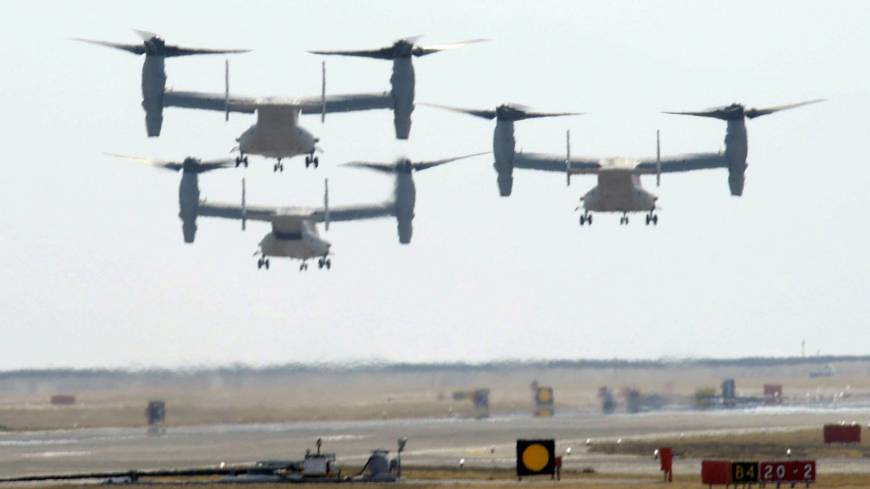
Hybrid transport: Three Osprey MV-22 transport aircraft depart U.S. Marine Corps Air Station Iwakuni in Yamaguchi Prefecture on March 8. | KYODO
As with the first group of 12 tilt-rotor MV-22s that arrived last year, the new aircraft are likely to be stationed temporarily at U.S. Marine Corps Air Station Iwakuni, Yamaguchi Prefecture, and then transported to the U.S. Futenma base on Okinawa Island after undergoing test flights and maintenance, the sources said.
Tokyo and Washington will expedite talks on when to move the hybrid transport planes to U.S. Marine Corps Air Station Futenma in the city of Ginowan. The Marine Corps plans to deploy a total of 24 Ospreys at the facility by 2014 to replace aging CH-46 Sea Knight transport helicopters.
The first batch of MV-22s arrived at Iwakuni last July and remained grounded for around two months while Tokyo reviewed U.S. investigations into two overseas crashes that year involving Ospreys to determine whether they were fit to fly in Japan. In spite of persistent local concerns about the aircraft’s safety record, the 12 Ospreys, which take off and land vertically, were deployed at the Futenma air station last October.
The U.S. government proposed shipping the second batch directly to Okinawa but Tokyo expressed reluctance, fearing the move would further roil local sentiment against the deployment, according to the sources.
Washington then agreed to first send the Ospreys to the Iwakuni base, they said. Like the first batch, the aircraft are expected to be shipped from California.