Hiển thị các bài đăng có nhãn Philippine Navy. Hiển thị tất cả bài đăng

Chủ Nhật, 25 tháng 11, 2018

Austal - Philippines Navy Offshore Patrol Vessel (OPV) Simulation


Austal’s OPV design for the Philippine Navy is based on a proven platform that has demonstrated success operating in tropical environments and conducting border patrol and maritime operations.

Principal Particulars

Length Overall: 81.7 metres
Beam (moulded): 13.3 metres
Hull draft (maximum): 4 metres

-->More details

* Video source: https://www.youtube.com/watch?v=cc934osX438

Thứ Bảy, 4 tháng 1, 2014

PH Military starts deployment of troops in Spratlys

MANILA, Philippines - The military yesterday started its rotation of Air Force and naval contingents for deployments in Pag-Asa Island in the Spratlys.

Originally scheduled before Christmas, the airmen were not immediately relieved by their counterparts at Armed Forces of the Philippines-Western Command (AFP-Wescom) headquarters in Palawan due to the prevailing weather system hovering over the region for the entire month of December.

Kalayaan Mayor Eugenio Bito-onon Jr. confirmed the deployment of fresh troops in the island municipality.


Philippine soldiers take part in a military parade before being deployed to the island of Mindanao. Photo published in 2011.

Since the sea around the island is very rough, Wescom has started shuttling new Air Force troops to the island town using a Navy plane, giving the islanders a chance to visit Palawan aboard the returning Navy aircraft.

Pag-Asa Island is located within the hotly contested Spratlys archipelago area but is closer by several miles to mainland Palawan than from the coastline of Vietnam, which is laying maritime claim over the region along with China, Brunei and Taiwan.

All claimant countries except Brunei have troops deployed in the region, with China becoming more aggressive in pressing its maritime claim to almost 80 percent of the entire South China Sea by deploying its warships and surveillance vessels to conduct regular maritime patrol over the area.

The other day, Beijing announced the completion of the training exercises of its aircraft carrier Liaoning in the region.

The training exercises almost resulted in a naval confrontation between a Chinese frigate and the US warship USS Cowpens in December.

Aside from the airmen who are deployed on rotation basis in Pag-Asa Island, the seat of Kalayaan Island town with a current population of almost 200 civilian inhabitants including children, contingents from the Philippine Navy are also stationed in the area to bolster the country’s territorial hold over the seven islets and two shoals in the region.

“We don’t monitor any naval activities of China out there because of the prevailing weather. The sea is very rough and it is very dangerous for any ship to venture out in the open sea for now,” Bito-onon said.

He added that he has yet to receive reports from local fishermen if the two Chinese maritime vessels have returned to Ayungin Shoal. The vessels left the area last month after taking up position near the shoal for several months.

Ayungin Shoal is located between Pag-Asa Island and mainland Palawan.

China, insisting that the shoal is an integral part of its maritime domain, has tried to dislodge a contingent of Marine troops stationed in the shoal aboard the grounded Navy logistic ship BRP Sierra Madre.

Philstars

Thứ Tư, 10 tháng 7, 2013

Philippines in the Market for 8 Attack Choppers


MANILA, (PNA) -- Defense Dept. spokesperson Dr. Peter Paul Galvez Tuesday confirmed the Philippines is in the market for eight brand new attack helicopters.

He said the acquisition process has been ongoing since last year.

Galvez said this upgrade project has a budget of P3,441,460,000 and will be sourced from the General Appropriations Act and the AFP Modernization Act Trust Fund of 2000.

The helicopters must have full night operation capability and complete weapons systems aside from integrated logistics support package.

Documents obtained by the Philippines News Agency suggested: "These helicopters shall be capable of performing close air support during day and night, and navigate safely during inadvertent instrument meteorological condition.

"Furthermore, they shall be equipped with armaments and avionics system highly suitable for said flying operation conditions.

"The guiding principles for this project shall be based on affordability and sustainability while conforming to the requirements of our Air Force in furtherance of accomplishing its mission."

Bidders should have completed, within 10 years from the date of submission and receipt of bids, a contract similar to the project.

"Delivery of the goods is required within a period of 540 calendar days from the opening of the letter of credit. Bidders should have completed, within 10 years from the date of submission and receipt of bids, a contract similar to the project," the documents stated.

PNA

Thứ Tư, 3 tháng 7, 2013

Philippines To Buy 2 Maestrale Frigates From Italy

MANILA — The Philippines is set to buy two Maestrale-class frigates from Italy, a defense official said Wednesday, as the Asian nation races to upgrade its military amid mounting territorial disputes with China.

A Maestrale-class frigate (photo grabbed from Marina Militare [Italian Navy]
A Maestrale-class frigate (photo grabbed from Marina Militare [Italian Navy] (Click on Image to Enlarge)

The frigates, along with 12 FA-50 fighter aircraft, are the most significant items on the government’s 75 billion peso (US $1.7 billion) military modernization budget over the next five years, Defense Undersecretary Fernando Manalo said.

“We are modernizing not because we want to go to war with China,” he told a news conference.

He said the government had a sworn obligation to defend the “West Philippine Sea,” using the government’s preferred term for Philippine-claimed areas in the South China Sea.

“We are not saying that this is part of our preparations to assert our sovereignty in the West Philippine Sea. What we are saying is that we cannot just give them up.”

The frigates would add to two refurbished Hamilton-class cutters formerly used by the US Coast Guard that the Philippines acquired from its US ally to upgrade its aging navy fleet, which includes some vessels that first saw action in World War II.

Manalo said the navy had already decided to acquire two new Maestrale-class frigates instead of buying used ones from the Italian navy, and had budgeted 18 billion pesos for them.

The Philippines could be ready to tender by the end of the year, he added.

Meanwhile, the government had alloted 18.9 billion pesos to acquire the fighter aircraft, which are built by South Korea, he added.

The modernization budget also provides for building or improving facilities to berth and provide maintenance to the vessels on the military’s shopping list, Manalo said.

President Benigno Aquino vowed Monday to rebuild the air force by 2016.

The Philippines, which has one of the weakest military forces in the region, retired the last of its US-designed F-5 fighters in 2005.

Defense News

Thứ Năm, 20 tháng 6, 2013

Pictures of the day: Philippines' new missile-armed warship

PN Spokesman Lt. Commander Gregory Fabic Said That In Due Course BRP Gregorio del Pilar And BRP Ramon Alcaraz Could Gain An Anti-submarine & Surface-to-surface Missiles Warfare Capability - a First For The PN...Photo Courtesy, Jbongsky30
Philippine Navy's Spokesman Lt. Commander Gregory Fabic Said That In Due Course BRP Gregorio del Pilar And BRP Ramon Alcaraz Could Gain An Anti-submarine & Surface-to-surface Missiles Warfare Capability - a First For The PN...Photo Courtesy, Jbongsky30

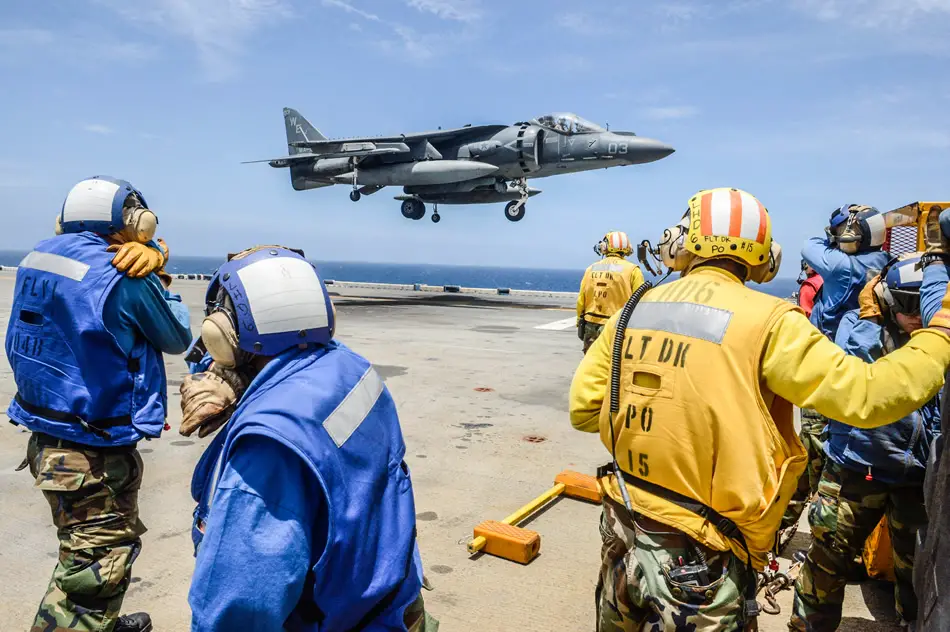
EAST CHINA SEA (JUNE 19, 2013) Sailors assigned to the amphibious assault ship USS Bonhomme Richard (LHD 6) shield their faces from jet exhaust as an AV-8B Harrier jet aircraft assigned to Marine Attack Squadron (VMA) 513 lands on the ship's flight deck. The Bonhomme Richard Amphibious Ready Group is conducting joint force operations in the U.S. 7th Fleet area of responsibility. (U.S. Navy photo by Mass Communication Specialist Seaman Apprentice Edward Guttierrez III)
(Click on image to enlarge)
EAST CHINA SEA (JUNE 19, 2013) Sailors assigned to the amphibious assault ship USS Bonhomme Richard (LHD 6) shield their faces from jet exhaust as an AV-8B Harrier jet aircraft assigned to Marine Attack Squadron (VMA) 513 lands on the ship's flight deck. The Bonhomme Richard Amphibious Ready Group is conducting joint force operations in the U.S. 7th Fleet area of responsibility. (U.S. Navy photo by Mass Communication Specialist Seaman Apprentice Edward Guttierrez III)

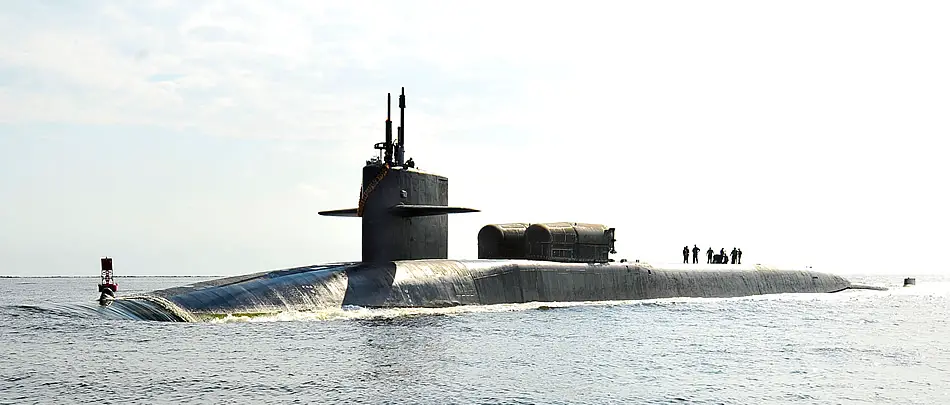
KINGS BAY, Ga. (June 17, 2013) The Ohio-class guided-missile submarine USS Florida (SSGN 728) returns to homeport at Naval Submarine Base Kings Bay following one year of at sea operations. (U.S. Navy photo by Mass Communication Specialist 3rd Class Ashley Hedrick)

U.S. Marines and Afghan soldiers provide security after unloading from a CH-53E Supper Stallion helcopter during Operation Nightmare in Nowzad in Afghanistan's Helmand province, June 6, 2013. U.S. Marine Corps photo by Cpl. Kowshon Ye

Army General Martin Dempsey, chairman of the Joint Chiefs (the leftmost of the trio atop the wing), checks out a B-2 bomber at Whitman Air Force Base in Missouri, June 18. DoD photo / D. Myles Cullen
US Army General Martin Dempsey, chairman of the Joint Chiefs (the leftmost of the trio atop the wing), checks out a B-2 bomber at Whitman Air Force Base in Missouri, June 18. DoD photo / D. Myles Cullen

At 8:30 on June 18, Tonnerre (L9014) amphibious assault helicopter carrier of the French Navy has docked at Baria-Secere Port, Phu My Town, Tan Thanh District, Ba Ria - Vung Tau, Vietnam. The Tonnerre, headed by Colonel Jean-François Querat, stayed at the port in the southern province of Ba Ria-Vung Tau nearby instead of visiting Ho Chi Minh City because it is too big to be accommodated by the city’s port.

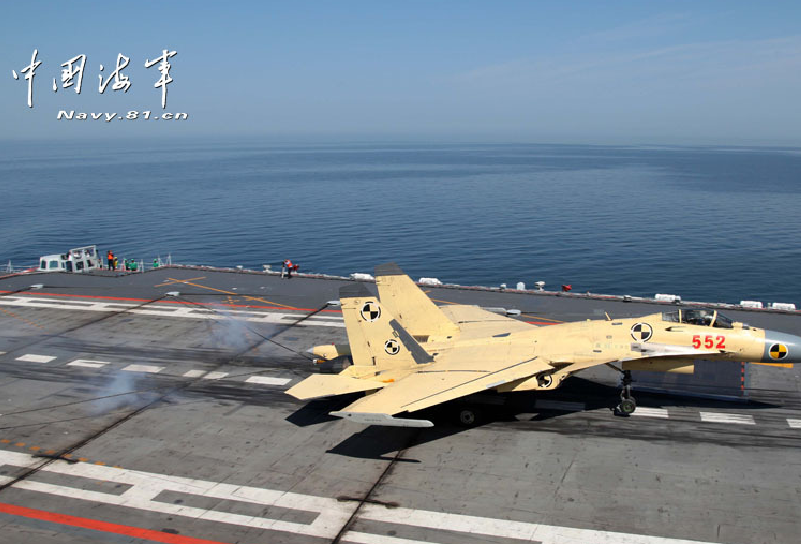
China on Wednesday successfully conducted taking-off and landing exercises of J-15 fighter jets on the country's first aircraft, the Liaoning.
China on Wednesday successfully conducted taking-off and landing exercises of J-15 fighter jets on the country's first aircraft, the Liaoning.This is the second time the country has conducted such training after a first jet landing exercise passed successfully on the deck in November last year. Jet exercises from aircraft carrier.[Photo/navy.81.cn]

PH, US to hold war games off Scarborough Shoal

MANILA, Philippines—The Philippines and the United States will hold joint naval exercises off Panatag Shoal (Scarborough Shoal), a reef in the West Philippine Sea (South China Sea) claimed by both the Philippines and China and site of a maritime standoff between the two countries that lasted more than two months last year.

But the Philippines and the US do not expect China to raise its hackles, as the joint maneuvers will be held in waters between Panatag Shoal (also known as Bajo de Masinloc) and the Luzon mainland, about 108 kilometers east of the disputed reef.

That is “very far” from Panatag Shoal, about the distance between Manila and Tarlac, so China cannot view it as an act of “intimidation,” said Lt. Cmdr. Gregory Fabic, spokesperson for the Philippine Navy.

Moreover, holding the naval exercises off northern Luzon had been planned long before the Philippines’ standoff with China at the reef last year, Fabic said.

The joint naval maneuvers will be held from June 27 to July 2.

Standoff continues

Technically, the Philippines and China are still in a standoff in the area. Philippine vessels withdrew at the height of a typhoon in mid-June last year to ease tensions at the shoal.

But the Chinese ships never left the area, cordoning off the mouth of the shoal’s lagoon to prevent entry of fishing boats from other countries.

As it has no capability to drive off the Chinese vessels by force, the Philippines took the dispute to the United Nations in January for arbitration.

The Philippines and China also have rival claims in the Spratly archipelago, a scattering of islets, reefs and atolls in the middle of the West Philippine Sea believed to be sitting atop vast energy resources.

Brunei, Malaysia, Vietnam and Taiwan also claim parts of the Spratlys in rivalry with China, which claims nearly all of the sea as its territory.

Called Cooperation Afloat Readiness Training (Carat), the naval maneuvers are a “five-year planned exercise” with the US Navy that began in 2011 and goes around the different naval forces commands in the country, Fabic said.

It was just a coincidence that Carat will be held this year in northern Luzon near Panatag Shoal, he added.

Carat was held in the Naval Forces Eastern Mindanao in Davao last year. It will be in the Naval Forces West in Palawan next year and in the Naval Forces Eastern Mindanao in Davao in 2015, he said.
Exercises with allies

The US Pacific Fleet conducts Carat with the armed forces of its allies in the Asia-Pacific region, such as Bangladesh, Brunei, Cambodia, Indonesia, Malaysia, Singapore, Thailand, East Timor and the Philippines.

“This aims to enhance the Philippine Navy and US Navy capabilities in naval operations through exchanges and tactical exercises,” Fabic said.

The exchanges, he said, include communications, naval surface operations, counterterrorism and maritime security operations, as well as humanitarian assistance and disaster response operations.

Taking part in the naval exercise are an unspecified number of Philippine and US naval vessels, Marine companies, the Philippine Naval Special Operations Group, Naval Construction Brigade or the Sea Bees Engineers and Philippine Coast Guard vessels, aircraft and diving and special operations teams.


AFP confirms re-provisioning, troop rotation activities in Ayungin Shoal (Second Thomas Shoal)

MANILA, Philippines – Armed Forces of the Philippines Chief of Staff General Emmanuel Bautista on Wednesday confirmed that the military has launched re-provisioning and troop rotation activities in the Ayungin Shoal.

“We have rotated the troops, periodically [we’re doing this], and we are resupplying them…,” he told reporters in an ambush interview at Camp Aguinaldo.

He said that the last crew rotation and re-supply operation was held only this month, adding that they do this on a regular basis, not only in Ayungin but also in other islands.

Bautista said they were not able to encounter any Chinese blockade during the re-supply.

The Philippines protested last month the intrusion of a Chinese warship and maritime surveillance vessels in Ayungin shoal, which is within the Philippine territory. The Chinese have continued their presence in the shoal, but the number of vessels varies, said Bautista.

The AFP Chief also emphasized that they will remain “non-confrontational” in dealing with China.
“We support the arbitration process [and] we will be non-confrontational. We do not want any conflict with any of our neighbors and we will continue to support the arbitration [efforts],” he told reporters.

Global Nation

Thứ Hai, 17 tháng 6, 2013

Next on Philippine Navy’s list: New frigate, anti-submarine helicopter

After acquiring the warship BRP Ramon Alcaraz the Philippine Navy said a frigate and an anti-submarine helicopter are next on its shopping list.


Philippine BRP Ramon Alcaraz outfitted with ASW capabilities, Harpoon missiles

The Alcaraz that is expected to arrive in the country this year, after successfully testfiring the Oto Melara 76mm artillery, Navy spokesman Lt. Cmdr. Gregory Geral Fabic said on Wednesday.

“Everything went well,” Fabic said, adding that the ship’s gas turbine, its main propulsion system, reached a speed of 25 knots without any problem.

The Alcaraz left Charleston, South Carolina on Tuesday with 14 officers and 74 enlisted personnel on board. After she arrives in August, the ship will be dry-docked in Subic for repainting and will be commissioned in September.

Fabic said the Navy’s next acquisition will be an anti-submarine helicopter for the Naval Air Group, which will complement the three Agusta Westland Power 109 helicopters arriving next year.

He said the new acquisition would boost the Navy’s anti-submarine warfare capability.

“These helicopters are just a few among the list of future acquisition for the Navy in order to attain its vision of becoming a strong and credible Navy that our maritime nation can be proud of,” Fabic said.

Earlier, Defense Undersecretary Fernando Manalo said the Navy will also purchase a brand new frigate worth at least P18 billion, scuttling an earlier plan to buy two refurbished ships of similar class at P12 billion.

Manalo said the decision would be advantageous to the armed forces in the long run because a brand-new ship would have a smaller maintenance cost.

”We realized that it will be expensive in the long run if we are going to buy second hand. So as much as possible, so long as our budget permits, we will buy a brand new one,” Manalo said.

He said a new frigate costs P18 billion, which is triple the price of a second-hand one, but it would not give the Navy a headache for the next 20 to 30 years.

The Navy is getting top priority in the ongoing modernization of the Armed Forces of the Philippines (AFP) owing to the growing tension in the West Philippine Sea (South China Sea).

The AFP is also considering acquiring a submarine to further beef up the Navy’s capability.

A submarine, it said, costs billions of dollars, which is almost impossible for the AFP to acquire, considering the funding it receives from the national budget and its list of other priorities.

The study showed that some P500 billion is needed for a desired “mix force” that would equip the Navy with the warfare capabilities that it really needs.

Lt. Cmdr. Nerelito Martinez, former acting chief of fleet staff for plans and programs, said the force mix is a modest list of vessels, craft and aircraft that can provide surface warfare, naval air warfare, undersea warfare and naval special operations capabilities.

He explained the fleet force mix was developed based on operational strategy, strategic defense concepts, tactical concepts, and deployment and sustainment concepts.

In the Philippine Fleet’s its mix force list are three submarines for undersea warfare and deterrence and three mine counter measure vessels for defensive mining in the critical areas to deny enemy entry.

Also on the list are six frigates configured for anti-air warfare, 12 Corvettes primarily designed for anti-submarine warfare, four strategic sealift vessels, 18 landing craft utility, three ocean tugs to tow large units, six yard/fire tugs to provide critical support to the warships in docking/undocking, providing firefighting and salvage services, and providing personnel transfer platforms, 12 coastal patrol interdiction craft, 30 patrol gunboats for territorial and coastal patrol, 42 multi-purpose assault craft, 24 right hull inflatable boats for naval special operations, 18 amphibious maritime patrol aircraft for maritime surveillance, 18 naval helicopters and 18 multi-purpose helicopters.

Martinez noted that majority of the current equipment in the Navy’s inventory were acquired many years back through grants from the US and other allied countries.

Manila Times

Thứ Sáu, 14 tháng 6, 2013

Philippines' newest warship Ramon Alcaraz test-fires successful in Florida

The Philippines’ newest warship successfully test-fired its main weapons system off the Florida coast on Tuesday, proving its reliability, according to the Philippine Embassy in the United States.

The BRP Ramon Alcaraz, a Hamilton-class cutter that had been used as patrol vessel by the US Coast Guard, tested its rapid-fire gun in the Atlantic Ocean off Mayport, Florida, on Tuesday afternoon, the embassy said.

PF-16 BRP Ramon Alcaraz (photo : philippineembassyusa)
PF-16 BRP Ramon Alcaraz test-fire in Florida (photo : philippineembassyusa)

In a report to the embassy, Capt. Ernesto Baldovino, the ship’s commanding officer, said the Italian-made Oto Melara gun hit floating targets and did not misfire during the test.

“We have successfully test-fired our Oto Melara gun with a high degree of accuracy. This weapons system is very reliable,” Baldovino said.

During the test, the Alcaraz fired 15 rounds—three to calibrate the gun and 12 at floating targets from a distance of 4 to 5 kilometers.

Satisfied

The test was conducted about three hours after the Alcaraz departed from Mayport, where it had docked to load ammunition, the embassy said.

“Captain Baldovino was more than satisfied with how the Oto Melara performed,” Capt. Elson Aguilar, the embassy’s defense and naval attaché, said in a statement.

The Alcaraz, a 115-meter decommissioned US Coast Guard vessel that the Philippines acquired last year, is on its way to Manila with $15.5 million (P620 million) worth of refitting and refurbishment and sea trials.

The vessel left port at Charleston, South Carolina, on Monday on its voyage to the Philippines. It will make port calls in Panama, San Diego, Honolulu and Guam, and is expected to arrive in the Philippines in the first week of August.

Formerly named Dallas, the cutter served with the US Coast Guard for 40 years.

The United States turned over the cutter to the Philippines last year under its Excess Defense Article Military Assistance Program.

http://newsinfo.inquirer.net/426055/new-ph-warship-test-fires-gun#ixzz2WC7Otdcr
Follow us: @inquirerdotnet on Twitter | inquirerdotnet on Facebook

China's 'behavior' needs even larger PHL defense spending - NSC

A ranking official of the National Security Council on Thursday detailed China's “aggressive behavior” in the West Philippine Sea, as he called for additional defense spending to uphold the Philippines' interests in the region.


Retired Navy Rear Admiral Vicente Agdamag, now Deputy Director General of the NSC Secretariat, said China’s actions confirmed its “clear intention to consolidate its control” over the disputed areas in line with the Chinese government’s nine-dash line claim.

“It started, actually, in March 2011 when a Chinese patrol ship challenged MV Veritas Voyager conducting a survey for Forum Energy, 85 nautical miles off Palawan,” he said, referring to an incident at the Reed Bank in the Spratly Islands.

Defense and military officials said two Chinese ships harassed the Department of Energy-commissioned survey ship. The Chinese ships told the crew of the Filipino ship to cease their activities because that was part of Chinese territory.

The Chinese vessels left when the AFP Western Command, based in Puerto Princesa City, promptly dispatched a Navy BN-2 Islander maritime patrol aircraft and an Air Force OV-10 light attack/reconnaissance aircraft. No armed confrontation was reported.

Agdamag also cited how Chinese ships prevented a Philippine Navy vessel, the BRP Gregorio del Pilar, from arresting Chinese fishermen caught illegally fishing at the Scarborough Shoal, locally known as the Bajo de Masiloc, in April last year.

The incident triggered a standoff between the China and Philippines, though China now is in virtual control of the shoal. The Philippine government withdrew its two ships from the shoal due to inclement weather, leaving China in complete control of the area, which is about 124 nautical miles from Zambales.

“Lately, we received reports that [Chinese] surveillance ships are imposing a 24 kilometer wide ban on fishing in the area. They are imposing an exclusion zone already in Bajo de Masinloc,” said Agdamag.

As of April this year, he said there were nine Chinese vessels at the shoal – five Fisheries Law Enforcement Command (FLEC) vessels and four Chinese Maritime Surveillance ships.

He also cited China’s establishment of Sansha City in Woody Island near China and Vietnam “to oversee and exercise the administrative control” over its claimed islands in the West Philippine Sea.

Agdamag also noted China’s issuance of passports showing a nine-dash line map and threats to board foreign vessels in the disputed areas.

He also said Pagasa town Mayor Eugenio Bitoonon was harassed twice by Chinese vessels – once in November last year and the latest just last May – at the disputed areas.

Last February, Agdamag said three Chinese Navy ships entered the West Philippine Sea to conduct patrol and training missions and anti-piracy drills. A month later, several Chinese “modern warships” were also dispatch to the Bashi channel, between Taiwan and the Philippines, for training missions.

Also last March, a Chinese destroyer, two frigates, an amphibious ship and helicopters and amphibious tanks conducted an eight-day military drill in the Spratly Islands. The Spratlys is being claim in part or in whole by the Philippines, China, Taiwan, Malaysia, Brunei and Vietnam.

“Right now, there are 18 maritime surveillance ships operating in our area,“ the official also said. He did not say if there were FLECs or Chinese military ships still within Philippine territory.

Further increase in defense expenditures

Agdamag said the issue is being addressed by political, diplomatic, and legal actions taken against China.

He said the military is establishing a “minimum deterrent capability,” alluding to the military’s modernization program. President Aquino recently signed the modernization law allocating P75 billion for the implementation of the military modernization program until the end of his term in 2016.

Nevertheless, the official said his office is recommending a further increase in defense expenditures. “We are recommending that we commit an increase in our investment for defense, from .5 to 1 percent of the GDP (Gross National Product),” he said.

Agdamag explained that their proposed increase is on top of the budget of the defense and military establishment which is equivalent to 1.1 percent of the national budget.

“We are recommending an additional of .5 to 1 percent (of GDP), not only to be at par with our neighbors, [but] more importantly to develop a modicum of a credible defense capability to protect our maritime and strategic interest,” he said.

Agdamag added that the country also needed to enhance its security relations with other countries, specially with the US, “when it is still able to deter China”, to buy time for the Philippines to develop its military capability.

“We need to pursue a healthy and friendly relationship with China and work with her for regional peace and prosperity.... to buy us time to grow our economy and expand our military capabilities,” he explained further.

“So right now, we are buying time, we need at least 10 years with sustained economic growth of 7 to eight percent in order to grow our capability upgrade program.”

Also, Agdamag disclosed an ongoing review of the “contingency plans” of the AFP’s Northern Luzon Command and Western Command, as per Executive Order 82 issued by President Aquino last year.

NOLCOM has responsibility over the Scarborough Shoal, while WESCOM has the West Philippine Sea as its area of concern. — DVM, GMA News

Thứ Năm, 13 tháng 6, 2013

World War II LST Threatens China

June 12, 2013: The Philippines is fighting an unequal battle with China over conflicting claims to the Spratly Islands. Although closer to the Philippines than China, the Chinese have a much more aggressive style and far more military assets. But the Filipinos do the best with that they’ve got. For example, the Philippines stations military personnel (mainly marines, with some sailors) on nine islets and reefs in the Spratly Islands. That’s fewer than a hundred personnel, who basically watch and report activity around their isolated patch of ground. China has been a lot more active lately and the Filipinos get regular reports from these improvised outposts.


Decorative image. The Armed Forces of the Philippines Navy logistics support vessel BRP Dagupan City (LC 551) maneuvers into position in a formation exercise

One of those detachments doesn’t even have any dry land to stand on, just the rusting metal of a World War II era landing ship (the BRP Sierra Madre) that the Filipino navy deliberately ran up on Second Thomas Reef in 1999 to provide a place for an observation team.

Built in 1944 as LST (Landing Ship Tank) 821 it served in the U.S. Navy for only two years before being decommissioned. In 1966 LST 821 returned to service in Vietnam and after that was given to the Philippines where it served until 1999.

Nearly a thousand of these hundred meter (300 foot long) ships were built from 1942 to 1945. They could carry as many as 20 tanks, and put them right on to a beach. The beaching process was not without its shortcomings. While the ship had a full load displacement of 4,000 tons, it could only be at 2,400 tons when running up on the beach. Even at that, there was usually damage done to the LST. The average landing operation would render ten percent of the LSTs involved unfit for further service. Moreover, the wear and tear on those that survived the run up onto the beach was such that, during the war, only about 85 percent of the LSTs still operational were actually fit enough for another landing. In effect, after about ten landings, an LST was a wreck and no longer useable for anything but moving cargo from one dock to another. This was typical of all ships that ran up on beaches to disgorge their cargo.

The LST was basically a modified transport and, as such, was rather slow (14 kilometers an hour normally, with a max speed of 20-22 kilometers an hour). Normally they carried a crew of some 100 and were usually armed with eight 40mm anti-aircraft guns. LSTs were often converted to other uses, especially when they only had a few more beach landings left in their tortured hulls. Some were ended up serving as repair ships, PT-boat tenders, floating barracks and supply dumps, casualty evacuation ships and even improvised aircraft carriers for light reconnaissance planes (eight of which could be operated off a portable airstrip set up on deck). It was often said that "LST" referred to "Large Slow Target" because of their slow speed and weak anti-aircraft armament.

The grounded Filipino LST on the Spratly reef is rusting away and the current detachment of five marines and two sailors live under tarps rigged on the deck. It’s dangerous (and hot) inside the ship. The “crew” of the LST spends most of their time on watch or fishing. Water, food, batteries and other supplies are delivered periodically by boat from the Philippines, a trip that takes 36-40 hours each way.

The other eight detachments are supplied the same way, and live similar lives, except on land, usually with some trees and other greenery to keep them company.

Strategy Page

Thứ Hai, 3 tháng 6, 2013

US to boost PH maritime security amid sea row

MANILA has agreed to increasing the presence of American troops in the Philippines amid the growing tensions over the territorial disputes in the West Philippine Sea, Defense Secretary Voltaire Gazmin and Sunday.


In a meeting in Singapore, US Defense Secretary Chuck Hagel also expressed Washington’s readiness to help improve the Philippines’ defense capability by providing “technical and logistical support for maritime security,” Gazmin said.

“The discussion was centered on the continuously maturing defense cooperation between the Philippines and the United States, including high-impact high-value training exercises for maritime security, maritime domain awareness and humanitarian assistance and disaster relief,” Gazmin said in a text message from Singapore.

“There were also discussions on the topic of current and possible future activities of defense cooperation in the nature of capability-gap fillers where the US military may provide technical and logistical support for maritime security and humanitarian assistance and disaster relief and other matters of concern,” Gazmin added.

The two Defense chiefs reiterated their commitment to the Mutual Defense Treaty.

“The leaders also discussed deepening bilateral defense cooperation including work towards increasing rotational presence of US forces in Philippines to address common challenges,” Pentagon spokesman George Little said.

“Secretary Hagel stressed the importance of maintaining freedom of navigation in the region,” Little added.

China has maintained a near-permanent presence in Panatag and Ayungin shoals, which are well within the country’s 200 nautical mile exclusive economic zone.

Manila has filed several diplomatic protests against the Chinese incursions, and has lodged a case before the United Nations Convention on the Law of the Sea.

Taipei’s threats of naval exercises added to the already volatile maritime situation in the region after a Taiwanese fisherman was killed by members of the Philippine Coast Guard on May 9.

A top Chinese general said Sunday China’s warships would continue to patrol waters where Beijing has territorial claims.

Lt. Gen. Qi Jianguo, deputy chief of the general staff of the People’s Liberation Army, defended the patrols as legitimate and said his country’s sovereignty over the areas could not be disputed.

“Why are Chinese warships patrolling in East China Sea and South China Sea? I think we are all clear about this,” Qi told the annual Shangri-La Dialogue security conference in Singapore.

“Our attitude on East China Sea and South China Sea is that they are in our Chinese sovereignty. We are very clear about that,” he said through an interpreter.

“So the Chinese warships and the patrolling activities are totally legitimate and uncontroversial.”

Qi was responding to a question from a delegate after giving a speech in which he sought to assure neighboring countries that China has no hegemonic ambitions.

“China has never taken foreign expansion and military conquering as a state policy,” he said.

One delegate, however, said there appeared to be growing regional skepticism over China’s peaceful intentions because it was inconsistent with moves to send naval patrols to waters where other countries also have claims.

China is locked in a territorial dispute with Brunei, Malaysia, the Philippines and Vietnam in the South China Sea.

The four states have partial claims to islands but China says it has sovereign rights to nearly all of the sea, including areas much closer to other countries and thousands of kilometres from the Chinese coast.

China also has a dispute with Japan over the Senkaku islands, which Beijing calls the Diaoyus, in the East China Sea.

“I do hope the statements of the good general today will be translated into action,” Gazmin told reporters.

He said Qi’s remarks about China having no hegemonic ambitions were “far from what is happening” in the sea.

Manila last month protested at what it called the “provocative and illegal presence” of a Chinese warship near Second Thomas Shoal, which is occupied by Philippine troops.

Among the other moves that have caused alarm were China’s occupation of a shoal near the Philippines’ main island last year, and the deployment in March of Chinese naval ships to within 80 kilometres of Malaysia’s coast.

Competing claims have for decades made the area — home to rich fishing grounds and vital global shipping lanes and believed to sit atop vast natural gas deposits — one of Asia’s potential military flash points.

China and Vietnam fought in 1974 and 1988 for control of islands in battles that left dozens of soldiers dead.

The US-China strategic rivalry also loomed large during the conference, with Hagel on Saturday accusing Beijing of waging cyber espionage against the United States.

But Qi on Sunday allayed concerns that China had dropped a pledge not to be the first to use nuclear weapons in a conflict.

Omission of the “no-first-use” pledge in a recent defense white paper had created ripples in military circles and sparked speculation that China may have abandoned the policy.

Qi also distanced his government from claims by some Chinese scholars that the Ryukyu Islands, which include Okinawa, do not belong to Japan.

“This is only an article of particular scholars and their views on these issues… it does not represent the views of the Chinese government,” he said.

Maritime disputes and the risks of conflicts that could hurt Asia’s economic growth were a running theme during the three-day conference that ended Sunday.

“Asia holds great promise for ourselves and the world but continued peace and prosperity in this region are neither fait accompli nor automatic,” Singapore Defense Minister Ng Eng Hen told the conference.

“Instead, if we are to continue to enjoy stability and progress, we must work effectively in unison to strengthen areas of common interests.”

Gazmin defended Manila’s move unilaterally to bring its territorial dispute with China before a UN tribunal after China refused to take part.

“We hope that the arbitration tribunal will issue a clarification in accordance with international law that will direct China to respect our sovereign rights,” Gazmin told the forum. – With AFP

Thứ Năm, 30 tháng 5, 2013

Philippines to Receive Riverine Patrol Boats from US

The Philippine Navy (PN) is set to receive six riverine patrol boats (RPBs) from the United States in August under a US Navy (USN) Foreign Military Sales (FMS) contract.

The Silver Ship’s new 40 feet Riverine Patrol Boats can hit speeds of 40 knots. (all photos : Militaryphotos)

A Silver Ships riverine patrol boat (RPB) on trial in the United States.1513348A Silver Ships riverine patrol boat (RPB) on trial in the United States. (Silver Ships)

According to an official at manufacturer Silver Ships, a contract was signed with the USN in September 2011 and the boats were completed a year later. However, delivery was delayed until early May this year due to "non-availability of marine transport".

Although the boats are capable of open-water operations, they will be used primarily in shallow waters. They have a length of 40 ft, a beam of 10 ft 8 inches and a draft of less than two feet.


The boats feature a centre console configuration and a bow ramp to permit egress of embarked troops during beaching operations. They have three weapon mounts - two forward and one aft - for machine guns and grenade launchers as well as ballistic protection.

Powered by two Hamilton HJ-292 waterjets, each driven by a Yanmar 6LY2A-STP diesel producing 440 hp, top speed is 40 kt. Fully loaded, range is greater than 250 n miles at a cruising speed of more than 30 kt.

Besides Silver Ships, fellow US boatbuilder Willard Marine is supplying unspecified numbers of 7 m Sea Force 730 outboard rigged-hull inflatable boats (RHIBs) to the PN under an FMS programme.


In other news, the PN announced in March it was looking to buy three more multi-purpose attack craft (MPAC) to add to its fleet of six vessels. "This acquisition is under our mid-term development plan for 2014-2017," said PN spokesperson Lieutenant Commander Gregory Fabic.

The MPACs are similar to the CB-90 Combat Boat. The first three were constructed by Lung Teh Shipbuilding in Taiwan, while the following three were built locally to a revised design by Propmech Corporation, based in Subic Bay. The PN is hoping to later acquire 42 MPACs but funding remains an issue.

Janes

Thứ Tư, 29 tháng 5, 2013

Philippine BRP Ramon Alcaraz outfitted with ASW capabilities, Harpoon missiles

The Philippine Navy's (PN) second Hamilton Class cutter, the BRP Ramon Alcaraz (PF-16), will be fitted with anti-submarine warfare (ASW) capability, a military spokesman said.

Alcaraz, now undergoing sea trial off the waters off South Carolina, is expected to leave the US and sail to the Philippines first week June. The ship is scheduled to arrive in the country by August.

Lt. Cmdr. Gregory Fabic, the PN spokesman, said the ASW capability will be installed on the Alcaraz and a helicopter that will be assigned to her. ASW or Anti-submarine warfare capability refers to the capability to detect, track and destroy submarines.

"As an additional asset it will greatly improve our maritime domain/situational awareness (capability) because of its capable of long range deployment," said Fabic.

At present, the Filipino warship is believed to be carrying an 76mm Oto Melara automatic cannon, two 25 Bushmaster guns and assorted machine guns.

It is also reported to be carrying a Harpoon anti-ship missile system.

Also, since the ship is fitted with hangar facilities, the BRP Ramon Alcaraz can embark a naval helicopter that can further extend its monitoring and detection capability.

"A helicopter can be launched from the vessel allowing wider and further coverage," said Fabic, who also disclosed that additional surveillance equipment like radar can also be installed on the ship.

"As a platform, radar equipment like that of the littoral observation stations (coast watch stations) can be mounted for wider range data gathering. All of these will be linked in a shore facility for better command and control for effective decision making," the PN spokesman stressed.

According to Fabic, Alcaraz is "fully mission capable" on her arrival.

Manila Bulletin

Chủ Nhật, 26 tháng 5, 2013

Philippines to Procure 2 Naval Vessels worth P2 billion

MANILA, Philippines - The Department of National Defense (DND) is now rushing the procurement of big-ticket items, including the acquisition of two naval vessels to improve the country’s territorial defense.


PT Pal also offers SSV concept to Philippines Navy (all photos : Defense Studies)

In line with this, DND planners held a pre-procurement conference yesterday for the acquisition of two service support vessels (SSVs) worth P2 billion each for an outlay of P4 billion.

“We are rushing our procurement of big-ticket items for the Armed Forces of the Philippines (AFP),” said Defense Undersecretary Fernando Manalo, whose office is directly in charge of the acquisition of military hardware.

Defense sources said that Japan, Singapore, South Korea, France, and Italy have expressed interest in supplying the country with two SSVs that are multi-role vessels which could serve as a Navy platform for search and rescue operations during disasters since the ships could be fitted with hospital facilities and a helipad, aside from its primary role as a transport vessel capable of transporting one battalion of troops with armored vehicles.

“It’s a mission capable ship, though a little smaller than the MRV (multi-role vessel),” the source said.


He said the pre-bidding conference would be held soon for the procurement of the two vessels with several defense contractors expected to participate.

On top of this, the DND is also in the final phase of its procurement of a squadron of T50 trainer jets from South Korea through a government-to-government deal.

South Korea is also being eyed to supply the country with two brand new missile-firing frigates instead of the two Maestrale warships being offered by the Italian government.

The AFP has lagged behind its neighbors in terms of military assets and equipment due to neglect by the past administrations.

However, with the recent developments in the region, the Aquino government is prioritizing the acquisition of military hardware for the AFP to rebuild a credible defense capability to secure the country’s territory.

China’s aggressive posture in its territorial claims in disputed areas in the West Philippine Sea and South China Sea had prompted the AFP to speed up procurement plans for new military hardware.

Philstar

Thứ Bảy, 25 tháng 5, 2013

Philippine second warship armed with anti-ship missile system — DND official

The Philippine BRP Ramon Alcaraz (PF-16), the country’s second Hamilton-class cutter due to arrive this August, is a far more potent weapon platform than her sister ship, the BRP Gregorio del Pilar (PF-15), a Department of National Defense (DND) official who asked not to be named bared yesterday.

Missile container consist of eight SSM (all photos : Philippine Embassy for USA)

“Her weapons system is heavier and sophisticated than those of the BRP Gregorio del Pilar,” he said.

However, the DND officer declined to specify these weapon systems and stressed that such items cannot be divulged due to matters of national security.

He made this announcement when asked if there is truth to reports that a Harpoon anti-ship missile system was installed as part of BRP Ramon Alcaraz’s armament fit.

At present, the Filipino warship is believed to be carrying a 76mm Oto Melara automatic cannon, two 25 Bushmaster guns and assorted machine guns.

In contrast, the BRP Gregorio del Pilar, which arrived in the country in December 2011, is only armed with the 76mm Oto Melara automatic cannon, making it prudent to install additional 20mm automatic cannons as her secondary weapons.


BRP Ramon Alcaraz is presently carrying out sea trials off the waters of South Carolina in the United States.

She is expected to depart for the Philippines by first week of June.

The ship is “fully mission capable” on her arrival.

Maritime observers said this development speaks well of the PN efforts to modernize and boost its power projection capabilities.

“With the arrival of our Hamilton-class cutters, which are being converted to frigates, the PN has started its first step in developing its blue-water capability or the ability to detect or engage intruders in the high seas,” they said.

PNA/ Tribune Online

Thứ Sáu, 24 tháng 5, 2013

Philippines Interested in the aircraft carrier 'Principe de Asturias'

Indonesia has ruled out the purchase of the ship after the visit that turned several representatives of his government to the arsenal of Ferrol.

In the bid for the Spanish carriers have also entered several Arab. The sale agreement includes that reform or adjustments shall be Spanish shipyards (photo :  Jack C. Bahm)
In the bid for the Spanish carriers have also entered several Arab. The sale agreement includes that reform or adjustments shall be Spanish shipyards (photo : Jack C. Bahm)

The aircraft carrier 'Principe de Asturias' has several suitors since the Spanish Armada gave low fleet in February. At the moment it is docked in the arsenal of Ferrol, which is handling the liquidation proceedings and at the same time, it continues with the tasks of withdrawal of their useful material. The plans that were originally planned for that has been the jewel in the crown of the Spanish Armada was being scrapped, but the Ministry of Defence has opened out to the possibility of its sale. This option has become stronger in recent weeks, as LA VOZ announced last April, to the interest shown by the purchase of the vessel by Asian and Arab countries. The Spanish Navy has confirmed that there are potential buyers, but so far has not materialized any sales transaction.

A delegation from the Indonesian Navy moved to late March to Ferrol to visit the ship and learn about their capabilities. However, the government has ruled out the purchase. The auction is now in the hands of Philippines. If definitely take the step to purchase, enter into the select club of countries with these characteristics boats among its fleet. Only nine governments have aircraft carriers. So, the closest to Indonesia is China and Thailand. The latter state has a nearly identical aircraft carrier 'Principe de Asturias'. Ferrol was built between 1994 and 1996 and gave the Thai government in 1997.

The Spanish Navy has indicated that no further visits planned similar to that made by Indonesians, although the door is open. For sale carried out one of these nations, in the marketing agreement could include a necessary modernization that could run in the shipyards of Navantia, which would provide a significant workload for the company. Just the cost of the reform and the high maintenance costs of the aircraft carrier was prompting Defense to declare their withdrawal. In February, the ship docked in Ferrol, after leaving their base in Rota, to remove from within all elements that can be reused. If no country finally acquires the carrier, will be auctioning an end, following a public call, to be scrapped as junk.

The Defence Ministry would take economic return with the sales transaction and, at the same time would be a dignified exit for this vessel, which has been the flagship of the Navy for over two decades. Defense announced on November 22 the ship retirement after 25 years of service, but clearly did not disclose what his final destination, although in some forums they talked about scrapping. This possibility, of course, does not convince the pointing control and less traumatic options.

The carrier left the Feb. 7 based in Rota to go to Arsenal of Ferrol, which holds its termination process Fleet units. The parting of the 'Prince of Asturias' took the honors during a naval parade that was attended by Don Felipe and Defence Minister Peter Morenés. In its cover held a ceremony and a display of military aircraft have integrated their tactical equipment, helicopters and planes Harrie '.

The floor of the carrier process will take between six and nine months. The Navy LA VOZ recently confirmed that the process of demilitarization of the ship began earlier this year at the base of Rota and is now in the Arsenal of Ferrol. The same sources stressed already dismantled a series of elements, mainly historical value goods, also the equipment for aircraft operations and transmission equipment as well as ammunition and combat systems. By prior, the Navy made an inventory of the material of the ship and, at present, we study the incorporation of some of its parts to other units of the Spanish fleet. This withdrawal process is similar to that carried out in 2009 with two Baleares class frigates (F-71), which were replaced by the new F-100. The Navy has scrapped a boat in the last decade and vessels have left the service are moored.

Ship Reconstruction

The Navy insists that, once the process is completed low, the aircraft carrier will be ready for disposal, ie for sale. Clear, however, that if during the process of disarmament is a country interested in your purchase, automatically stops the removal, so that the carrier does not lose all its military capabilities. At this point, it is the pursued, will sign an agreement with the country concerned compromising the work of adaptation and remodeling industry with some Spanish.

That is, the option includes the reconstruction of the boat to the new needs of the buyer country is made in Spain. So, Navantia, the builder of the ship, has very competitive studies for the possible adaptation of the boat to the needs of third countries.

(LavozDigital)

English by Defense Studies

Thứ Năm, 9 tháng 5, 2013

Philippine Navy opens fire at Taiwanese fishing boat, 1 dead

Taipei expressed its "grave concern" to Manila yesterday after a Taiwanese fisherman was killed by armed men aboard a Philippine vessel.

The incident in waters 164 nautical miles off the southernmost tip of Taiwan came as the Philippine navy intensified its patrols after Beijing reportedly sent one of its largest fishing fleets to the disputed Spratly Islands in the South China Sea.

Taiwan's foreign ministry said the death occurred in overlapping economic zones of both the island and the Philippines when an armed vessel, identified as a Philippine ship, suddenly shot at a Taiwan-registered fishing boat operating in the area.

"The shooting caused serious damage to the boat, which subsequently lost mobility, and killed fisherman Hung Shih-cheng, 65," the ministry said in a statement. It added that the Philippine vessel was unaccounted for after the incident.

The fishing boat was towed back to Taiwan by two other Taiwanese fishing vessels, under the escort of the coastguard.

Three other crew members, including the skipper, were safe, the statement said.

The ministry asked Taiwan's representative office in Manila to "express our grave concern to the Philippine government over the incident and demand an immediate investigation of the case", as well as to find and penalise those responsible.

Taiwanese President Ma Ying-jeou had instructed all relevant government agencies to remain on top of the development of the case.

Taiwanese media quoted one of the crew members as saying the armed men were aboard a Philippine naval vessel.

But the ministry identified it only as a grey vessel with a white hold, which local media said matched that of a naval vessel.

Yang Yi , spokesman for the Taiwan Affairs Office under the mainland State Council, yesterday condemned what he described as "a barbarian act".

Though the incident did not happen anywhere in the vicinity of the highly disputed Spratly Islands, the use of firearms and an alleged Philippine naval vessel further stoked tensions in the South China Sea.

A flotilla of fishing vessels in Danzhou , Hainan , reportedly set sail on Monday for the Spratly Islands, which are claimed by the mainland, Taiwan, the Philippines, Brunei, Malaysia and Vietnam.

Philippine navy spokesman Colonel Edgardo Arevalo was quoted on Wednesday as saying that the Philippine navy was closely monitoring the movements of the Chinese flotilla.

SCMP
------------


Philippine Coast Guard admits killing Taiwanese fisherman, claims self-defense

MANILA, Philippines -- The Philippine Coast Guard on Friday admitted responsibility for the death of a Taiwanese fisherman off the coast of Batanes the day before, but said its personnel acted in self-defense when the foreign fishing vessel attempted to ram one of its ships.

A radio report said PCG commandant Admiral Rodolfo Isorena has ordered a thorough investigation of the incident in which Taiwanese fisherman as Hung Shih-Cheng, 65, died.

The report said the Coast Guard ship BFAR MCS 3001 fired at the fishing vessel "Guang Ta Hsin 28" which had a crew of three Taiwanese and an Indonesian some 164 nautical miles off Balintang Channel.

The PCG ship was attempting to accost the Guang Ta Hsin 28 and two other Taiwanese vessels.

However, the Guang Ta Hsin 28 reportedly headed for the PCG vessel to ram it, prompting its crew to open fire.

Earlier, Chinese media reported the incident involved the Philippine Navy.

The Navy denied any involvement and said all vessels of Naval Forces Northern Luzon were in port at Subic or in Sual, Pangasinan.

"The Philippine Navy denies any involvement in, much as we were saddened by, the news about an incident where a Taiwanese fisherman was reportedly shot and the wound led to his death," Navy spokesman on the West Philippine Sea, Colonel Edgard Arevalo, said.

A report run by the Chinese news agency Xinhua, quoted Tsay Tzu-yaw, deputy head of Taiwan's fishery administration, as saying a Philippine military ship opened fire on the fishing boat some 180 nautical miles off Erluanbi, the southernmost tip of Taiwan.

The Xinhua report also said the Filipino ship continued to chase and fire at the fleeing Taiwanese vessel, which sustained heavy damage.

“We strongly protest and condemn that a Philippine government boat attacked our fishing boat and demand the Philippines formally apologize, apprehend the murderer and compensate,” a statement from Taiwan’s Ministry of Foreign Affairs said.

Asked about the report, Foreign Secretary Albert del Rosario said: "We cannot confirm it. We will check that."

The Philippine Navy on Friday denied reports in Chinese media that its personnel killed a Taiwanese fisherman Thursday morning.

The Philippines and Taiwan, along with Brunei, China and Malaysia, have conflicting claims to parts of the South China Sea.

China and Taiwan have been ruled separately since the end of a civil war in 1949, although Beijing claims the island. The Philippines has no diplomatic ties with Taiwan but maintains economic and cultural links. (with a report from Jaime Sinapit, InterAksyon.com and Agence France-Presse)

Interaksyon

Taiwanese Fisherman's body shot dead by Philippine Coast Guard arrives in Taiwan: