Hiển thị các bài đăng có nhãn World Military. Hiển thị tất cả bài đăng

Thứ Bảy, 3 tháng 3, 2018

China shows its missiles can strike covering US bases in Japan and S. Korea


China recently launched a video projecting military power, launching a series of cruise missiles capable of carrying nuclear warheads, the range that covered US bases in Korea and Japan.

According to the Daily Star, state-run Chinese media recently posted video of DF-10 cruise missiles firing from ground launchers.

The missile has a range of 1,500 kilometers, covering the US military base in Korea and on the Japanese island of Okinawa.

Thứ Tư, 28 tháng 2, 2018

Saab GlobalEye on operational mission


GlobalEye AEW&C provides air, maritime and ground surveillance in a single solution. It combines a powerful new extended range radar with the ultra-long range Global 6000 jet aircraft from Bombardier. A solution that maximizes operational performance – both in terms of detection capability and mission endurance – while at the same time offering outstanding crew comfort.

Thứ Tư, 10 tháng 7, 2013

New Russian Air Defense System to Detect Missiles at Blastoff


MOSCOW (July 9)– Russia’s new aerospace defense system will ensure guaranteed detection of enemy ballistic and long-range cruise missiles at blastoff, a top military official said Tuesday.

General Staff chief Valery Gerasimov said the system would feature advanced information-gathering, data-processing and attack capabilities with an early-warning radar system to be deployed along the entire Russian border.

Other measures will include the modernization of existing surface-to-air missile systems and the provision of advanced S-400 and S-500 air defense systems, “capable of reliably protecting critical installations against air and missile attacks,” he said.

That will significantly enhance the survivability of Russia’s strategic nuclear forces, he added.
Priority in the organizational development of Russia’s armed forces through 2020 will be given to the strategic nuclear forces and the aerospace defense system, Gerasimov said.

Russia’s Strategic Missile Forces will continue to be equipped with advanced Yars ballistic missile systems featuring higher capabilities in overriding enemy missile defense systems, he said.

In mid-June, Russia’s prototype medium-range air defense system that should replace the S-300 was demonstrated to President Vladimir Putin. The Vityaz system, manufactured by the Almaz-Antei corporation, which will have a more advanced radar and a launcher with 16 missiles, compared with only four on the S-300, should enter service next year, Almaz-Antei chief designer Igor Ashurbeili previously told RIA Novosti.

The Vityaz will complement the Morfey, S-400 and S-500 air defense systems in Russia’s future aerospace defense network to engage targets at ranges from five to 400 kilometers, and at altitudes from five meters to near outer space.

In late May, Russia’s Aerospace Defense Forces conducted a series of snap drills that checked the combat readiness of aerospace defense units, air force units and air defenses in the Western Military District, as well as military transport and long-range aviation command. The exercises involved 8,700 people, 185 aircraft and 240 military vehicles.

RIA Novosti


Putin inspects latest sophisticated missiles right after G8

Chủ Nhật, 7 tháng 7, 2013

Italy, Russia to Modernize Diesel Submarine Project

ST. PETERSBURG, July 5 (RIA Novosti) – Russia and Italy have decided to optimize their joint next-generation diesel submarine project, a Russian naval design bureau said Friday.

S-1000 diesel submarine project

The S-1000, a 1,000-ton diesel submarine, is a joint project begun in 2004 by Russian submarine builder Rubin and Italy’s Fincantieri. Russia and Italy presented a mockup model of the S-1000 at an international arms show in France in October 2006.

Andrei Baranov, deputy head of the Rubin Central Design Bureau, said that in its proposed configuration, the S-1000 is of “little interest” for potential clients, adding that a decision had been made to improve the project and target specific countries that need a submarine fleet.

The submarine was originally designed for anti-submarine and anti-ship warfare, reconnaissance missions, and transportation of up to 12 troops. It is 56.2 meters long, has a top speed of 14 knots and is equipped with a new fuel cell-powered Air Independent Propulsion (AIP) system developed by the Italian firm.

Although its exterior will stay as designed, there will be considerable changes to “what’s inside” the submarine, Baranov said, adding that the target regions for selling submarine would remain the Middle East and Southeast Asia.

He cited several reasons for the upgrading the sub, including to market it to the Russian and Italian navies. He said the S-1000 design was drawn up almost a decade ago and much has changed since then. And, he noted, such small submarines are currently in great demand in the world, and there is intense competition on the market.

“Countries that are actively looking for new submarines are setting some totally unexpected demands for those ships,” he said.

RIA Novosti

Thứ Sáu, 5 tháng 7, 2013

Preparing for cyberwarfare


SINGAPORE – The realm of conflict between states that could lead to war has expanded in recent years. The United States and other major military powers are gearing up to defend themselves from attack in cyberspace, just as they have done in the past from land, sea, air and outer space attack. The U.S. has identified, but not yet named, more than 20 nations that now have military units dedicated to employing cyber technology in war. The roll call certainly includes China and Russia, as well as the U.S. itself.

China said in May that its armed forces would conduct their first cyber exercises in June to “test new types of combat forces.” The exercises would involve “digitalized units, special operations forces, army aviation and electronic counter forces,” the official Xinhua news agency said. Earlier this year, Russia’s Defense Minister Sergei Shoigu gave the General Staff several months to complete proposals to set up an army cyber command by the end of 2013.

However, Western cyber officials and analysts say that the announcements by China and Russia formalize moves that are already well established. A 2011 survey commissioned by the United Nations Institute for Disarmament Research found that 33 states, including China and Russia as well as the U.S., included cyber warfare in their military planning and organization.

Japan was not on this list. But like many other countries, it, too, has since taken steps to protect itself from cyber attack. This is because cyberspace — the globally connected network computers, and wired or wireless communication devices — is critical for the functioning of modern governments, armed forces and economies.

The U.S. Department of Defense officially made cyberspace a new domain of warfare in 2011. It has a rapidly growing Cyber Command under a general who also heads two related intelligence agencies. One collects huge volumes of electronic data from around the world on America’s cyber adversaries. The other is mandated to protect US national security systems from infiltration and disruption.

Despite big cuts in U.S. military spending, another 4,000 information technology specialists are due to join Cyber Command in the next four years, quadrupling its size. This will happen as an additional $23 billion is invested in cyber security.

Outlining the program on June 27, the chairman of the U.S. Joint Chiefs of Staff, army Gen. Martin E. Dempsey, said that he expects cyberspace missions to become a dominant factor in military operations. But what will the rules of military engagement be in this largely lawless and opaque digital frontier?

Speaking in Singapore on June 1 at the Shangri-La Dialogue on Asia-Pacific security, U.S. Defense Secretary Chuck Hagel noted that the Obama administration had repeatedly expressed concerns about the growing threat of cyber intrusions, some of which appeared to be tied to the Chinese government and military.

But he added a significant caveat: “To try to figure out where a cyber attack has come from, who initiated it, (and) for what reason, that’s not quite as easy as the days when you could identify a navy sailing across the ocean … or an army crossing a border to attack you.”

Still, this has not stopped the U.S. from recently updating its rules of engagement for cyber warfare for the first time in seven years, and developing emergency procedures to guide rapid responses to attacks judged to have serious national security or economic consequences.

“One thing is clear,” Gen. Dempsey said. “Cyber has escalated from an issue of moderate concern to one of the most serious threats to our national security. We now live in a world of weaponized bits and bytes, where an entire country can be disrupted by the click of a mouse.”

The U.S. says it’s concerned with two broad kinds of cyber threats. One is against critical government, military and civilian infrastructure, such as electricity and water supply, transportation and communication networks, and financial services.

In the last two years, detected intrusions into America’s vital infrastructure have increased 17-fold. The computer control systems that run U.S. chemical, electrical, water and transport sectors have all been probed by hackers. As long ago as 2009, national security officials warned that cyber spies from China, Russia and other unnamed countries had penetrated the U.S. electricity supply grid, leaving behind software programs that could be activated to disrupt the system during a crisis or war.

The second main area of concern about cyber threats is the large-scale theft of valuable U.S. government, military, private sector and allied country secrets, either by state-sponsored hackers or criminals. Japan is known to share these concerns and the two allies have recently increased their cyber cooperation.

The head of Cyber Command, Gen. Keith B. Alexander, told a congressional panel on June 12 that hostile cyber programs and capabilities were growing, evolving and spreading. “We believe,” he said, “(that) it is only a matter of time before the sort of sophisticated tools developed by well-funded state actors find their way to groups or even individuals who, in their zeal to make some political statement, do not care about the collateral damage they inflict on bystanders and critical infrastructure.”

Alexander added that on a scale of one to ten, with ten being strongly defended, “our critical infrastructure’s preparedness to withstand a destructive cyber attack is about three, based on my experience.”

Meanwhile, at Cyber Command three kinds of teams are preparing to operate around-the-clock. “National mission” teams will counter foreign cyber attacks on the U.S. A second, larger, set of “combat mission” teams will support combatant commanders in carrying out military operations in the field.

A third group of “cyber protection” teams, the largest category, will operate and defend the computer and communication networks, including satellites in outer space, that support U.S. and allied operations around the world. About one-third of these teams are scheduled to be working by September, with the rest phasing in over the following two years.

Alexander told Congress in March that offence, in other words retaliation, would be part of the teams’ mission if the U.S. was attacked in cyberspace. “Thirteen of the teams we’re creating are for that (offensive) mission set alone,” he said. “We’re also creating 27 teams that would support combatant commands and their planning process for offensive cyber capabilities.”

Assuming the U.S. could positively identify the source, what kind of foreign cyber attack would prompt a response? And how would the U.S. respond? Rules of military engagement are always classified to keep such knowledge from adversaries.

However, it is widely assumed that a destructive cyber attack on the U.S. would be met with a similar retaliatory response. Dempsey said this might not necessarily be the case and that it could, instead, be a conventional military response.

Under the U.S. Constitution, the elected president, as commander in chief of the armed forces, would have to decide whether a foreign cyber attack was sufficiently serious to be declared a hostile act, and thus an act of war.

Given the particular foggy nature of cyber space, and the difficulty in tracing the source of disguised cyber attacks, it is likely that U.S. President Barack Obama would err on the side of caution.


Michael Richardson is a visiting senior research fellow at the Institute of Southeast Asian Studies in Singapore.


Japan Times

Thứ Tư, 3 tháng 7, 2013

Navy Pivots Training to Match Pacific Transition

The U.S. Navy’s multi-national exercises in the Pacific theater are growing in size and taking on new dimensions due to the U.S. military’s overall strategic re-balance or “pivot” to the region, service officials explained.

Air-Sea Battle
US Navy's Air-Sea Battle Illustration

Although many of the multi-national exercises currently underway have been growing in recent years, the U.S. military’s strategic focus on the area is having a profound impact upon training activities there, Navy officials acknowledge.

The Navy’s Pacific pivot means that the service will base as much as 60-percent of its fleet in the region, work to strengthen ties with regional partners and place up to four Littoral Combat Ship vessels on rotational deployments through Singapore.

The ongoing Cooperation Afloat Readiness and Training, or CARAT, exercise, now in its 19th year, has been steadily growing larger over the years and taking on a broader scope of activities. CARAT is a nine-country series of bilateral exercises between the U.S. and Bangladesh, Brunei, Cambodia, Indonesia, Malaysia, Singapore, the Philippines, Thailand, and East Timor, Navy officials said.

The exercise is designed to enhance maritime security skills and interoperability among participating forces through a series of joint exercises which include communications activities, aircraft monitoring drills and visit, board, search and seizure drills, among other things.

In particular, the presence of the LCS allows for joint collaborative activities in shallow water previously not possible in these kinds of exercises. The recently-completed CARAT Malaysia marked the LCS’ first time participating in this series of bilateral naval exercises, Navy officials indicated.

CARAT Malaysia included the USS Freedom, an LCS, as well as the guided-missile destroyer USS Curtis Wilbur, the amphibious dock landing ship USS Tortuga, and the rescue and salvage ship USNS Safeguard, said Lt. Anthony Falvo, spokesman, U.S. Pacific Fleet.

“The Pacific re-balance is allowing us to do things we have not been able to do in the past. Some of our allies were looking for something a little more compatible with what they had. The LCS allows us to better train and adapt to our partner navies who have been operating smaller, shallow-draft platforms for years,” said Falvo.

Unlike the deep draft known to accompany some of the U.S. Navy’s larger ships, the LCS can more readily and easily interoperate in shallow water with ships from allied navies such as the Philippines, Malaysia, Thailand and others, Falvo explained.

“The LCS is opening a whole new world for the U.S. Pacific Fleet, as it allows the U.S. Navy access to ports and waters that have been hard for us to access previously due to deep-draft platforms and ships. With her shallow draft, the LCS platform allows us the ability to engage potential shore-based threats from as little as 13 feet of water,” Falvo added.

The CARAT drills, happening now with the Philippine Navy and the USS Fitzgerald along with some other ships, also help the U.S. establish and refine operations with partner nations. Being able to operate and address threats close to shore — in close coordination with regional allies – is a key part of the Navy’s pacific re-balance or emphasis.

The Pacific fleet is also participating in its 8th annual so-called Pacific Partnership humanitarian exercise, a multi-national disaster relief exercise designed to increase capabilities in the region for countries such as Bangladesh, Indonesia, the Philippines and East Timor, among others.

Pacific Partnership has also grown in scope and size. The exercise included eight partner nations and eight NGOs in 2006, and last year’s mission included 13 partner nations, 28 NGOs, four U.S. agencies and a joint effort across the Department of Defense, Falvo said.

Also, Pacific Partnership 2013 will be the first mission where our partner nations lead individual phases, he explained.

“Australia will lead in Papua New Guinea, New Zealand will lead in both Kiribati and Solomon Islands, while the United States leads in Samoa, Tonga, and the Marshall Islands. Sharing of lead responsibilities and logistical resourcing among partner nations will keep this mission sustainable in light of future fiscal challenges,” he added.

DoD Buzz

Russia Hands Over New Stealth Frigate to India

Russia has delivered the last in a series of three frigates built for the Indian Navy, state-run arms exporter Rosoboronexport said.

Trikand missile frigate

The Trikand missile frigate was handed over to the Indian crew at the Yantar shipyard in the Baltic exclave of Kaliningrad on Monday.

“During the ceremony, the Russian and Indian officials signed an acceptance act, and an Indian navy flag was hoisted on the ship,” Rosoboronexport said in a statement.

Russia and India signed a $1.6 billion contract on the construction of three modified Krivak III class (also known as Talwar class) guided missile frigates for India in 2006.

The first frigate, INS Teg, joined the Indian Navy on April 27, 2012, while the second, INS Tarkash, arrived at the port of Mumbai in India on December 30, 2012.

The frigates are each armed with eight BrahMos supersonic cruise missiles, jointly developed by Russia and India.

They are also equipped with a 100-mm gun, a Shtil surface-to-air missile system, two Kashtan air-defense gun/missile systems, two twin 533-mm torpedo launchers and an antisubmarine warfare (ASW) helicopter.
Russia built three Talwar class frigates for India - INS Talwar (Sword), INS Trishul (Trident), and INS Tabar (Axe) under a previous contract.

RIA Novosti

Thứ Hai, 1 tháng 7, 2013

Iran Building New Battleships, Destroyers

TEHRAN (FNA)- Iranian experts and engineers are working on new models of missile-launching battleships and destroyers, a senior Navy commander announced on Saturday.


"We have built Mowdge-2 class destroyer, also known as Damavand, which was launched in the Northern waters of the country and we have more destroyers under construction now," Deputy Commander of the Navy for Technical Affairs Rear Admiral Abbas Zamini said on Saturday.

"Construction of Peykan-class missile-launching battleships is on our agenda as well," he added.

In recent years, Iran has made great achievements in its defense sector and attained self-sufficiency in producing essential military equipment and systems.

Iran's first home-made destroyer, Jamaran, was launched in late February 2010. The Mowdge Class vessel has a displacement of around 14,000 tons and is equipped with modern radars and electronic warfare capabilities and is armed with a variety of anti-ship, surface-to-surface and surface-to-air missiles.

Iranian defense ministry officials had said earlier that the third generation of the home-made vessel, Jamaran-3 destroyer, will come into operation by the end of the current Iranian year (March 21, 2013 - March 20, 2014).

Iran in late 2012 boosted its naval power in Persian Gulf waters after a new missile launching vessel and two light submarines joined its Navy fleet.

The body of Sina-7 missile-launching frigate was launched in a ceremony in Iran's Southern port city of Bandar Abbas on the occasion of the National Day of Navy.

During the ceremony attended by Iranian Navy Commander Rear Admiral Habibollah Sayyari, two Qadir-class light submarines also joined the Iranian naval fleet.


Farnews

Thứ Bảy, 29 tháng 6, 2013

Iranian, Russian Navies to Launch Joint Naval Wargames in the Caspian Sea


The Russian and Iranian navies are planning to hold joint exercises in the Caspian Sea in the second half of this year, the Russian news agency Novosti reported. According to Nikolai Yakubovsky, deputy commander of Russia’s Caspian Flotilla, the exercise follows a previous one held in 2009. Caspian Flotilla commander Admiral Sergey Alekminsky confirmed few months ago that that the two navies could strengthen their collaboration in the future.

The Russian flotilla maintains a small force comprising two Gepard class frigates, three Tarantul class corvettes and several missile patrol boats. The Iranian Caspian fleet based at Bandar-e Anzali also maintains a small fleet of patrol boats and minesweepers. The fleet will get a major boost next year, as the domestically built Jamaran-2 frigate, recently launched at Bandar-e Anzali.

Yakubovsky made the announcement after a meeting with the commander of a group of Iranian guided-missile boats that were visiting the port of Astrakhan. Iranian navy representatives welcomed the opportunity to take part in the joint exercises, but declined to discuss the plans in more detail. In 2009, Russia and Iran held their first joint naval exercise in the Caspian, involving about 30 ships.

Defense Update

Photo: Iran's first domestically made Jamaran destroyer. These include a Mowj-1 class destroyer, launched in 2010, and Velayat, a Mowj-2 class destroyer, whose construction is 70 percent complete and will finish by the end of the current year, he said, according to Press TV.

The new projects also include Mowj and Sina-class destroyers and guided missile frigates, Zamini said.
The Iranian Navy floated out its first domestically built destroyer, Jamaran, in February 2010.

The 1,420-ton destroyer is equipped with modern radar systems and other electronic warfare capabilities. It has a top speed of up to 30 knots and a helipad. It also features highly advanced anti-aircraft, anti-surface and anti-subsurface systems.

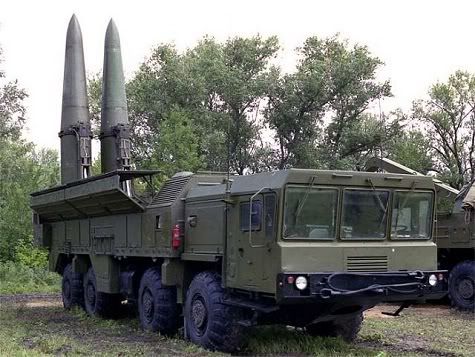
All Russian Missile Brigades to Get Iskander Systems by 2018

All Russian Missile Brigades to Get Iskander Systems by 2018

Iskander-M ballistic missile systems, which can effectively engage two targets within a minute at a range of up to 280 kilometers, will be provided to all Russian Ground Forces missile brigades by 2018, the country’s defense minister said Friday.

The missiles have a non-ballistic flight path that is difficult for the enemy to predict and are guided throughout their flight.

On Friday, a missile brigade in southern Russia’s Astrakhan Region received an advanced Iskander-M missile complex, which “has no match in the world for its tactical specifications,” Defense Minister Sergei Shoigu said on a visit to the facility, Russian media reported.

The complex was delivered in a complete set, rather than “piecemeal” as previously done, the minister said. He stressed the importance of ensuring high personnel-training standards and the construction of new infrastructure for the system to be operated effectively.

In 2011, then-President Dmitry Medvedev announced plans to deploy Iskander missiles in Russia’s westernmost Kaliningrad Region, to counter the threat posed by US plans to deploy missile defense elements in Europe. NATO and the United States have insisted that the shield would defend NATO members against missiles from North Korea and Iran and would not be directed at Russia.

Russia proposed a joint missile defense system, an idea that many experts both at home and abroad dismiss as unviable and unrealistic. Then it demanded “legally binding guarantees” that US/NATO missiles would not be aimed at Russia.

Since Moscow’s proposal received a lukewarm response in the West, Russia has been warning of unspecified low-cost “asymmetric measures” to counter the future Western missile defense system.

ROA Novosti

Thứ Sáu, 28 tháng 6, 2013

US Ospreys and Air Tankers Put Iran in Israel's Reach

The United States plans to give Israel weapons that would enable it to send ground forces against Iranian nuclear facilities that it can’t penetrate from the air.

A KC-130J load master watches a refueling of an MV-22B Osprey during a training mission in 2012. (Cpl. Michael Petersheim/US Marine Corps)

The deal includes air-refueling aircraft, advanced radars for F-15 fighter jets, and up to eight V-22 Ospreys, an aircraft that can land like a helicopter and carry two dozen special operations forces with their gear over long distances at aircraft speeds.

The Osprey “is the ideal platform for sending Israeli special forces into Iran,” says Kenneth Pollack, a former CIA analyst now at the Brookings Institution’s Saban Center for Middle East Policy.

The aircraft could help solve Israel’s inability to breach Iran’s uranium enrichment facility buried under a granite mountain at Fordow. It might be impregnable to even the heaviest conventional bunker-busting munitions in the U.S. arsenal, Pollack said. Israeli military planners have been brainstorming how to conduct an effective operation, Pollack said, citing conversations with senior Israeli military officers.

“One of the possibilities is (Israel) would use special forces to assault the Fordow facility and blow it up,” Pollack said.

The weapons deal would be part of a military aid package for Israel that includes $1 billion for up to eight V-22 tilt-rotors; $500 million to retrofit radars into F-15 fighters and another $1 billion for a variety of air-to-ground weapons. Additional details about the U.S.-financed deal were revealed during a visit to Washington by Israeli Defense Minister Moshe Yaalon on June 15.

The State Department said discussions of the arms deal are ongoing.

Secretary of State John Kerry on Thursday had a working dinner with Israeli Prime Minister Benjamin Netanyahu in Jerusalem and will visit with Israeli, Palestinian and Jordanian officials through Saturday, discussing broad regional issues and the peace process.

Jonathan Schanzer, executive director of the Foundation for the Defense of Democracies, said the arms package was part of an Israeli wish list including some items that were not discussed publicly to help it keep amilitary edge over other nations in the region and for possible operations against Iran.

Israel’s air force would be hard-pressed to cause lasting damage to the Iranian nuclear program because it cannot sustain long-term bombardment and has limited bunker-busting capabilities and limited air-refueling capabilities, said Kenneth Katzman, who co-wrote the 2012 report “Israel: Possible military strike against Iran’s nuclear facilities” for the Congressional Research Service.

When he first announced the deal during a visit to Israel in April, Defense Secretary Chuck Hagel said the Ospreys would provide Israel with high-speed maritime search-and rescue-capabilities.

Yaalon said the arms sale would send a message to Israel’s chief adversary in the region.

“Without a credible military option, there’s no chance the Iranian regime will realize it has to stop the militarynuclear project,” Yaalon said.

Other parts of the arms package include Boeing’s KC-135 “Stratotanker,” which can refuel Ospreys and other aircraft while airborne and extend the tilt-rotor aircraft’s 426-mile range almost indefinitely. The deal also includes anti-radiation missiles that are used to target air defense systems, and advanced radars for Israel’s fleet of F-15 fighter jets, according to a Defense Department press release.

That equipment would increase Israel’s capabilities against Iran, said Ely Karmon, a senior research scholar at the Institute for Counter-Terrorism at The Interdisciplinary Center in Herzliya, Israel.

The refueling equipment would extend the reach of Israeli special forces, which could be used against Iran as they were in Israel’s attack on a Syrian nuclear facility under construction in 2007, Karmon said.

In the 2007 attack, at least one Israeli team was on the ground to provide laser targeting of sophisticated airmunitions, Karmon said. “The same would be done for Iranian sites.”

The Osprey also could be used for search-and-rescue operations if Israeli aircraft involved in a complex airoperation are shot down and pilots endangered, Karmon said.

Michael Rubin, an analyst for the American Enterprise Institute, said senior U.S. and Israeli bombers would do significant damage to Iran’s hardened sites by targeting the entrances, and Israel could use the Ospreys for missions other than Iran’s nuclear sites. Israel may want the ability to send troops to secure chemical facilities in remote regions of Syria or to block Iranian shipments bound for terrorists in the Gaza Strip, Sinai Peninsula or Lebanon, Rubin said.

“Sudan and Eritrea are floating the idea of building an Iranian naval base or shipping Iranian missiles to the Gaza Strip,” Rubin said, referring to the Palestinian territory controlled by the terrorist group Hamas. “If you wanted to disrupt such missiles in a convoy, you’d do it with an Osprey.”

The arms deal also sends a message to Iran and reassurance to Israel that the United States is serious about standing by the Jewish state, Karmon said.

Katzman said he doesn’t think the arms sale provides Israel with significant new capabilities that Israel did not already have. He said the overall defense package, which also includes advanced F-16 fighter jets for the United Arab Emirates and Saudi Arabia, Iran’s chief rivals in the Persian Gulf, is more “a symbolic move to show (American) resolve to Iran,” Katzman said.

Defense News

Thứ Năm, 27 tháng 6, 2013

Russian Navy Pulls Personnel Out of Syria Base


(RIA Novosti)- Russia currently has no military personnel at its resupply facility in the Syrian port of Tartus, a senior diplomat said, though an expert affiliated with the Ministry of Defense downplayed it as a possible temporary measure.

“Currently, there is no one in Syria from the Russian Defense Ministry,” Deputy Foreign Minister Mikhail Bogdanov told the Al-Hayat international pan-Arabic newspaper.

“We never, at any time, had a real military base in Tartus… That center has no military or strategic significance. It never did and it doesn't now,” Bogdanov added, speaking in an interview that was first published last Friday in Arabic.

The naval maintenance center in Tartus, established in Soviet times, remains Russia’s last military foothold outside the former Soviet Union. The facility, used for the maintenance and resupply of Russian warships in the Mediterranean, had a staff of “several dozen,” Russian Foreign Minister Sergei Lavrov said in February.

The Russian Defense Ministry did not comment on Bogdanov’s statement. Spokespeople for the ministry and the Russian Navy could not be reached for comment Thursday.

An unnamed military official confirmed the story to Vedomosti business daily on Wednesday, saying that the Russian leadership was worried about the safety of the facility’s personnel, given the ongoing civil war in Syria. More than 90,000 people have been killed in the country since fighting broke out between government forces and rebels in March 2011, according to the latest UN figures.

Any incident involving Russian servicemen in Syria could also have unwanted political repercussions, the source said. Moscow has been providing diplomatic backing to embattled Syrian President Bashar Assad against pressure from Western powers and Gulf kingdoms.

The Russian Navy currently has a flotilla of 16 warships and auxiliary ships in the Mediterranean, but no Russian ships have called at Tartus in recent months, according to Russia’s General Staff.

The facility in Tartus only sees use on rare occasions when Russian warships call there, said Igor Korotchenko, editor-in-chief of the National Defense monthly Russian-language magazine and head of the Defense Ministry’s public council.

“I cannot confirm the pullout, but it probably means that there are simply no current plans to use the base in Tartus,” he told RIA Novosti on Thursday.

“They’ll likely redeploy when it’s needed. It’s just a technicality,” Korotchenko said.

RIA Novosti

Thứ Tư, 26 tháng 6, 2013

Russian Arms Exports Up 15% Since January

President Vladimir Putin said Monday that Russian weapons exports had grown 15 percent since the start of the year, in comparison with the same period last year.

“The first results of the year once again confirm that Russia’s ties abroad in regard to military-technical collaboration are continuing to strengthen,” the president told a gathering of defense industry officials.

Last year, Russian weapons exports were up 12 percent year-on-year, at $15.7 billion. In April, Putin said Russia controlled more than a quarter of the world’s arms market.

On Monday he emphasized the need for Russia to consolidate its positions on the global aircraft market, especially in after-sales servicing.

Russia has a “solid portfolio of orders” for helicopters, he said, adding that about 9,000 Russian-made helicopters were currently in operation in more than 100 countries.

Putin reiterated state support for arms manufacturers, recalling that in the past three years they received more than 27 billion rubles ($820 million) from the federal budget in subsidies alone.

India is the leading buyer of Russian arms, with Vietnam, Myanmar, Venezuela and Middle Eastern nations also among Russia's top weaponry purchasers.

RIA Novosti

Thứ Ba, 25 tháng 6, 2013

US Marine Corps and Japanese Forces Storm Ashore ... Together

WASHINGTON — At some point between June 11 and June 28, a US Marine Corps MV-22 Osprey will, for the first time, land on the deck of a Japan Maritime Self-Defense Force ship as part of a major amphibious exercise between the US, Japan and regional allies.

Japanese SDF LCAC hovercrafts. A Japan Self-Defense Force Landing Craft approaches the shore of San Clemente Island, Calif., during exercise Dawn Blitz. (US Navy)
A Japan Self-Defense Force Landing Craft approaches the shore of San Clemente Island, Calif., during exercise Dawn Blitz. (US Navy)

Known as Dawn Blitz 2013, the amphibious assault war game off the southern California coast involves about 1,000 Japanese soldiers, three Japanese warships and assorted attack and cargo helicopters, which will team with the 1st Marine Expeditionary Brigade (MEB) and the US Navy’s Expeditionary Strike Group 3. The Marines also are bringing three squadrons of Osprey tilt-rotor aircraft and a handful of F/A-18 fighter jets to the scrum.

Canada and New Zealand each sent company-size elements to take part in the exercise, with observers from Australia, Mexico, Chile, Colombia and Peru in attendance as well.

So much representation from Canada and Latin American partners might seem out of synch with a Pacific-based amphibious scenario. But Brig. Gen. John Broadmeadow, commander of the 1st MEB, told reporters June 13 that partnerships like this are likely to become the norm.

“We are hitting a lot of [US Southern Command’s] objectives” in the exercise, he said. “This isn’t a one-way partnership between us and the Japanese; this is a broad coalition that looks at our pivot to the Pacific from a more global perspective, and that our South American partners are as important in that coalition as our traditional Pacific partners.”

US forces assigned to Southern Command, or SOUTHCOM, cover the Caribbean Sea and Latin America south of Mexico.

The Marine Corps is using the exercise as another way to get “back to the sea” after 12 years of fighting in the deserts and mountains of the Middle East, while imparting its knowledge of amphibious operations to partner nations that lack that capability.

“If you want to use the sea as a maneuver space and gain a positional advantage … that type of graduate-level amphib work takes years to develop,” Broadmeadow said.

For the first time, Japanese troops will plan and conduct ship-to-shore assaults both in partnership with Marine units and alone, while taking part in land operations with their Canadian and New Zealand counterparts.

Broadmeadow cautioned that the scenarios are not meant to represent any current threat from North Korea or any other specific hot spot.

As for the Osprey operations, the Japanese asked to see the MV-22 used in a humanitarian scenario, in which casualties are brought from shore to ship. So the birds will take off from shore before settling on the flight decks of the Japanese ships Shimokita and Hyuga.

Like every other DoD activity, the exercise has been bitten by budgetary concerns.

“We haven’t put the numbers of ships into the exercise as we originally envisioned,” Broadmeadow admitted. But he said he is still confident that the event is big enough and dynamic enough to benefit partner nations and his Marines.

Defense News

This is a video of LCAC unloading a tank.

Thứ Hai, 24 tháng 6, 2013

U.S. Defense Industry Flees the Country


(FP)- The defense drawdown is now well underway, and the defense industry is starting to pack up, if one is to believe what is being said this week at the Paris Air Show.

Defense budgets peaked in FY 2010, including war funding, and have been down about 10 percent in constant dollars. Factor in the budget sequester for this year, which looks like it will hang on through the rest of the fiscal year (and maybe make a repeat appearance next January), and the defense budget will have fallen 24 percent in constant dollars from their height.

The future does not look different. If the sequester remains, one can expect another roughly $500 billion to disappear from projected defense budgets over the next nine years.

Full article: http://www.foreignpolicy.com/articles/2013/06/21/us_defense_industry_flees_the_country?wp_login_redirect=0

Australia, Japan and US Naval Forces Conduct ASW Exercises

Australia, Japan and US Naval Forces Conduct ASW Exercises

Australia, Japan and U.S. Naval forces flexed the Anti-Submarine Warfare (ASW) aspects of exercise Pacific Bond 2013 near the Marianas Island chain, June 23.

“This ASW exercise is a building block toward acquiring the ability to seamlessly integrate on common initiatives to promote security and prosperity in the Western Pacific,” said Lt. j.g. Joshua Foote, Destroyer Squadron 15′s assistant plans officer.

“We will not only have improved our individual tactical proficiency, but we will also gain an increased understanding of how our each of us achieves success in difficult tactical situations through the particular skills each ally brings to the table.”

The three navies integrated their skills to detect, track and defeat an adversary submarine in a variety of scenarios over the course of two days. They also conducted events to develop proficiency in other warfare areas such as air defense and surface warfare.

“My challenge was to generate an anti-submarine warfare team on board a ship that was predominantly an air defence frigate,” said Lt. Cmdr. Jonathan Bannister, HMAS Sydney’s torpedo and anti-submarine officer. “We are proud of the way [our] Sailors rose to the challenge and pulled out all stops to get involved, to learn and to do whatever it took to achieve ASW competency for the patrol.”

Tri-lateral exercises like Pacific Bond are outlined to improve interoperability and readiness among navies.

“Another important aspect of this ASW exercise is working with our allies to strengthen our bonds, enhance maritime interoperability, and demonstrate our cooperative commitment to security, stability, and freedom of the seas in the Western Pacific,” said Foote.

Pacific Bond is a multi-national naval exercise designed to advance participating nations’ military-to-military coordination and capacity to plan and execute tactical operations in a multi-warfare environment.

Participating units from U.S. Navy are the guided missile destroyers USS Preble (DDG 88) and USS Chung-Hoon (DDG 93); members of the forward deployed Destroyer Squadron (DESRON) 15; one P-3C aircraft; one submarine; Royal Australian Navy guided-missile frigate HMAS Sydney’s (FFG 03) and Japan Maritime Self-Defense Force ship, JS Murasame (DD 101).

Map DataMap data ©2013 Google, ZENRIN Imagery ©2013 TerraMetrics - Terms of Use
Map Data
Map data ©2013 Google, ZENRIN Imagery ©2013 TerraMetrics
Traffic
Map
Satellite


Naval Today