Hiển thị các bài đăng có nhãn Russian Weapons. Hiển thị tất cả bài đăng

Thứ Hai, 1 tháng 7, 2013

T-50 Fighter to be Ready in 2013

Russian military to take delivery of 70 units of the stealth fighter this year; Indian version to be ready in 2018.

The Sukhoi PAK FA (Prospective Airborne Complex of Frontline Aviation), the T-50 fighter, a stealthy acrobat, will be seen on Russian airspace later this year.  The important phase of engine development has been completed, Sukhoi said at the recently-concluded Paris Air Show.

According to the Russian military, which just completed stage one of flight tests, initial results suggest the Russian fighter turned out to be on a par with and even better in certain areas than its main American rival, the F-22 Raptor.

United Aircraft Corporation Chief Executive Mikhail Pogosyan says five T-50s are participating in the testing programme, which has allowed Russian designers to speed up the process and close the gap with the Americans. The F-22 has been serving in the US Air Force for a long time and is still, for good reason, considered to be the most advanced fighter. Far less is known about its Russian rival.

According to its designers, the T-50 is the embodiment of the latest in Russian aircraft technology. A number of innovative solutions have been implemented in the machine, including stealth technology, new construction materials and coatings, artificial intelligence, and the element base, which have brought Russia’s military aircraft building to a qualitatively new technological level.

A whole range of the latest polymer carbon plastics have made their debut on the T-50. They weigh 50 percent less than aluminum of comparable rigidity or titanium and are 20-25 percent lighter than steel. New materials cover 70 percent of the fighter’s surface. Its weight has been reduced to just a quarter of that of a fighter made of conventional materials, allowing the designers to increase its combat load.

The Sukhoi Design Bureau has highlighted “the PAK FA’s unprecedentedly low level of radar, optical and infrared visibility.” The T-50’s effective reflective area will amount to 0.5 square metres (its predecessor, the Sukhoi-30MKI, has 20 square metres). This means that the Sukhoi-30MKI appears on the radar screen as a 5x4 metre metal object, while the T-50’s reflection would only be a 1/40 of that, making it much more difficult to notice or aim weapons at it – especially as the machine benefits from the exceptional manoeuvrability that has been a hallmark of Sukhoi fighters.
In addition, the T-50 meets the main requirement of modern fighters – a high degree of intellectualisation. Its radar, complete with an active electronically-scanned array (AESA), can “see” everything that is going on in the air or on the ground at a distance of hundreds of kilometres. It can track multiple airborne and surface targets simultaneously, while keeping them in the crosshairs of its weapons.

Several dozen sensors attached to different parts of its hull not only enable it to monitor the surroundings but also to exchange real time data with ground control and within its airborne unit at the same time. The T-50’s “e-pilot” functionality is constantly analysing the situation, offering the pilot several options to act on. The pilot will receive the bulk of flight and combat data in the form of symbols and signs, making it easier to process and substantially easing the pressure on the pilot, while allowing him to focus on the tactical mission at hand.

The T-50 can take off and land from an only 300-400-metre runway. Going forward, it will serve as a basis for a navy variant. Weapons will be stored completely in internal compartments to meet the stealth technology’s requirements. According to certain reports, those compartments would be able to carry up to eight R-77 air-to-air missiles or two up to 1,500-kg guided aerial bombs.

Additionally, two long-range missiles could be suspended externally, to allow the fighter to engage targets located as far as 400 km away.
Indian version to be ready in 2018
The fact that India has joined in development of the fighter suggests that the programme is promising and meets the highest standards. New Delhi has allocated almost $25 billion for this purpose and expects to obtain a proprietary version of the fifth-generation fighter by 2018. It is that machine that will be exported, according to Russian specialists, while the Russian-made T-50 will remain an exclusively domestic model – like the American F-22. Russian airmen expect to take delivery of the first serially produced fighters as soon as in 2013 and plan to purchase at least 70 units. 

[via]

Thứ Bảy, 29 tháng 6, 2013

S-500 air defense system to be ready in 2016 - General Staff


Mass delivery of new armaments and military hardware for the forces will start in 2016, Russian General Staff Chief Valery Gerasimov said.

"A new tank, an infantry combat vehicle and an armored personnel carrier will be ready in 2015; the Prospective Airborne Complex of Frontline Aviation, the S-500 air defense system and a corvette will become available in 2016, and a new-generation destroyer will be created in 2018," he said at a meeting of the Russian Defense Ministry Board in Moscow on Thursday.

The work on these armaments "has been steady and uninterrupted," he said.

The rate of modern armaments and hardware in the Russian Armed Forces is supposed to reach 30 percent in 2015 and 70-100 percent in 2020, the General Staff chief said.

"Annual deliveries of 70 to 100 jets, over 120 helicopters, eight to nine warships and submarines and up to 600 armor pieces have been planned for reaching the goal," Gerasimov said.

Available weapons will be modernized alongside the procurement of new hardware, he said. "Troops will receive over 2,500 pieces of modernized armaments and hardware before 2020, and their main parameters will not be inferior to those of contemporary products," he said.

More than 400 military units will be equipped with contemporary and prospective armaments, military and special-purpose hardware before 2020, Gerasimov said.

It is also planned to raise the serviceability status of weaponry. It will reach 85 percent in the Army, 80 percent in the Air Force and 78 percent in the Navy by 2016. The Navy indicator will grow to 85 percent by 2020, the General Staff chief said.

Contracts for the entire period of service life of mass products will be signed starting from this year, he said.

The strategic nuclear forces, the Aerospace Defense Forces, signal, reconnaissance, radio-electric warfare and command units and high-precision weapons are the re-arming priorities, the general said.

RBTH

Thứ Tư, 26 tháng 6, 2013

Russian Arms Exports Up 15% Since January

President Vladimir Putin said Monday that Russian weapons exports had grown 15 percent since the start of the year, in comparison with the same period last year.

“The first results of the year once again confirm that Russia’s ties abroad in regard to military-technical collaboration are continuing to strengthen,” the president told a gathering of defense industry officials.

Last year, Russian weapons exports were up 12 percent year-on-year, at $15.7 billion. In April, Putin said Russia controlled more than a quarter of the world’s arms market.

On Monday he emphasized the need for Russia to consolidate its positions on the global aircraft market, especially in after-sales servicing.

Russia has a “solid portfolio of orders” for helicopters, he said, adding that about 9,000 Russian-made helicopters were currently in operation in more than 100 countries.

Putin reiterated state support for arms manufacturers, recalling that in the past three years they received more than 27 billion rubles ($820 million) from the federal budget in subsidies alone.

India is the leading buyer of Russian arms, with Vietnam, Myanmar, Venezuela and Middle Eastern nations also among Russia's top weaponry purchasers.

RIA Novosti

Thứ Ba, 25 tháng 6, 2013

MiG-29 fighter aircraft crashes

JAMNAGAR: A MiG-29 fighter aircraft on a routine sortie today crashed near Lalparda village in Gujarat's Jamnagar district, with the pilot ejecting safely.

"A MiG-29 fighter jet today crashed at 13.30 hours near Lalparda village south of Khambhalia town," IAF officials said.


The aircraft was on on a routine sortie, they said. "The pilot got out safely when the plane crashed," they added.

IAF has ordered a court of inquiry in the matter, officials said, adding that their team is reaching the spot where the crash took place.

In August 2012, nine Air Force personnel, including five officers, on board two MI-17 helicopters were killed when two choppers of the Jamangar air base had collided mid-air shortly after take off.

Times of India

Thứ Bảy, 22 tháng 6, 2013

Russia Offers Iran New Replacement for S-300

June 22 (RIA Novosti) – Moscow made a new attempt to dodge a $4-billion lawsuit from Tehran over a failed deal to supply S-300 missile systems by offering another type of air defense system to Iran, Kommersant daily said Saturday.

S-300

The new offer on the table is Antei-2500, aka S-300VM, or SA-23 Gladiator in NATO nomenclature, the newspaper said, citing unnamed sources in the Russian arms trade industry. The missile defense system can simultaneously destroy up to 24 aircraft within the range a range of 200 kilometers or intercept up to 16 ballistic missiles.

The deal can be formalized during the visit of outgoing Iranian President Mahmoud Ahmadinejad to Moscow on July 1, an unnamed Iranian diplomat told Kommersant.

Iran was initially interested in the S-300 missile complexes, signing in 2007 a contract worth $800 million for five missile defense systems of this make.

But the deal was scrapped in 2010 by then-Russian President Dmitry Medvedev, who was unilaterally expanding on sanctions against Iran imposed by the UN Security Council.

Iran filed a $4-billion lawsuit against Russia in the international arbitration court in Geneva, which is currently pending review.

Moscow has struggled to have the lawsuit dropped, including by offering the Tor anti-aircraft systems as replacement, media reported earlier this month, adding that the offer was rejected by Tehran.

The Antei-2500, however, may be a better solution. The system does not formally fall under the existing sanctions against Iran while still being useful for the Middle Eastern country, which wants to have protection against a possible missile strike by its enemy Israel, Kommersant said.

While the S-300 was developed for the use by missile defense forces, the Antei-2500 was specifically tailored for the needs of ground forces, which could also be an advantage for Iran, known for its large land force.

Russia is already exporting the Antei-2500, having delivered two missile systems to Venezuela earlier this year. India and Turkey were also named as potential buyers, though no deals were formalized so far.

RIA Novosti

Thứ Năm, 20 tháng 6, 2013

Pogosyan sees market for 200 Su-35s


The mighty Sukhoi Su-35 lancing through the Le Bourget sky this week is just the beginning of the type's international exposure, according to Mikhail Pogosyan.

The head of Sukhoi's parent company, United Aircraft, is forecasting 200 sales of the type, split 50:50 between domestic and export. There are 48 currently on order so far by the Russian military and Pogosyan is eyeing 100 export sales, which should come from existing customers of Sukhoi or MiG jets.

Overall, UAC - the holding company umbrella under which the former Soviet fixed-wing aircraft industry has been consolidated - has stacked up an orderbook worth €25 billion ($33 billion), for 740 aircraft. About one-third of those orders are for civil types, including the Sukhoi Superjet 100, which made its Western-livery debut in the colours of Mexico's Interjet at Paris on Tuesday.
But while three years ago UAC's output was 95% military, today that figure is down to 85% - and Pogosyan expects civil-side growth will see it turning out equal numbers of military and civil aircraft by 2025. This year's output will be 70 military and 40 civil aircraft.

"Civil aircraft production rates have tripled in the last year alone," he says.

Last year's revenue of €4.5 billion was twice that in 2007, and Pogosyan expects sales to reach €7.5 billion in 2015 with the production of 200 aircraft, before doubling, to €15 billion in 2020.

UAC's consolidation of the Russian industry is continuing, with forthcoming mergers of Tupolev and KAPO, and of NAZ Sokol and MiG, says Pogosyan.

Flight Global

Thứ Ba, 18 tháng 6, 2013

Paris Air Show 2013: Su-35


The Paris Air Show this week hosted the first foreign demonstration of the Russian supermaneuverable multirole fighter the Sukhoi Su-35. The specific aircraft on show is the latest iteration of the aircraft, designated Su-35S, 48 of which have been allocated to the Russian Air Force as they roll off the production line between 2011 and 2015. Visitors to the air show were treated to a display of the Su-35's impressive aerobatics, including a demonstration of the breathtaking Pugachev's Cobra maneuver.

Su-35


Describing the Su-35S as a "4++ generation" jet fighter, Sukhoi claims that the characteristics of the aircraft exceed those of all European tactical fighters including the Dassault Rafale and Eurofighter Typhoon. Further, the company claims the aircraft can "successfully counter" fully-fledged fifth generation US jet fighters, Lockheed Martin's F-35 Lightning II and F-22 Raptor – a bold statement given the stealth capabilities of the latter.


Like the F-22, the Su-35S is capable of thrust vectoring, which is the ability to change the direction of thrust from the engines. This simplifies (in relative terms, at least) the execution of Pugachev's Cobra, a maneuver in which a jet fighter raises its nose to a vertical position (or even a backwards lean), greatly reducing its forward speed. In this position the pilot must increase power to maintain constant altitude, which, combined with a continued forward motion without roll or yaw, is a prerequisite of a properly executed Cobra.


The maneuver was first demonstrated at the 1989 Paris Air Show by Viktor Pugachev in a Sukhoi Su-27, the aircraft from which the S-35 has evolved, without the benefit of thrust vectoring. Though it has been claimed that the Cobra could theoretically be used in combat to cause a chasing assailant to overshoot, it has been dismissed by some as little more than a marketing gimmick and party trick, not to mention one that has been replicated by the F-22.


Window shoppers from potential export markets (i.e. those not on the USA's Christmas card list) in Paris this week may be more interested in more concrete aspects of the Su-35S' specification. Its maximum speed at altitude of 2,400 km/h basically matches that of the F-22. The Su-35S is also equipped with an infra-red search and track system that could conceivably used to detect stealth aircraft within a reported range of roughly 80 km (50 miles) – though whether an F-22 would let an assailant get within 80 km on its own terms is questionable. It has an operational range of 3,600 km (1,940 nautical miles) at high altitude.


There's doubtless a degree of bravado to Sukhoi's claims, and comparing fighter against fighter is far from straightforward. However, there's no doubt that the Su-35 is a capable and fearsome jet fighter.


Gizmag

Thứ Hai, 17 tháng 6, 2013

Russian Navy tests new stealth missile boat

(RIA Novosti) - A new attack missile craft will start sea trials with Russia’s Caspian Flotilla in early July, the Southern Military District said on Monday.


The Grad Sviyazhsk Project 21631 missile corvette is due to join the Flotilla after completing all trials and state tests before the end of the year, the district's press service said.

The corvette has a displacement of 949 tons and maximum speed of 25 knots. It is armed with Kalibr (SS-N-27) anti-ship missiles, 100-mm and 30-mm guns, as well as Igla-1M air defense missiles.

In addition to the Grad Sviyazhsk, the Caspian Flotilla will also take delivery of an Uglich missile corvette, a Grachonok-class high-speed patrol boat, several Serna class landing craft, and three tugboats in the near future, the strategic command’s press service said in March.

The Serna class landing craft can carry either one tank or two infantry fighting vehicles (or armored personnel carriers), or a 92-man landing party.

The Caspian flotilla already has several Serna class vessels, the Navy confirmed earlier, without giving a specific figure.

RIA Novosti

Russia to Display Yak-130 Combat Trainer at Paris Air Show


(RIA Novosti) - Russia will display its Yakovlev Yak-130 Mitten combat trainer, Sukhoi Su-35 Flanker-E multirole fighter and Kamov Ka-52 Hokum B attack helicopter at the Paris Air Show, the Federal Service for Military and Technical Cooperation reported Monday.

Sukhoi Su-35 multirole fighter

The Paris Air Show is an international event taking place every odd year at Le Bourget Airport in the French capital Paris. This year, it will be held June 17-23.

Kamov Ka-52 Hokum B attack helicopter

The Russian delegation to the show will be led by the head of the Federal Service for Military and Technical Cooperation, Alexander Fomin.


Yak-130 is an advanced pilot training aircraft, able to replicate characteristics of Russian 4+ generation fighters, as well as the Sukhoi T-50 fifth generation fighter. Combat training suite on the Yak-130 includes simulated and real firing systems with air-to-air and air-to-surface missiles, bomb dropping, gun firing and on-board self-protection systems.

RIA Novosti

Chủ Nhật, 16 tháng 6, 2013

Russia Hopes to Sell Su-35 Fighter Jets at Le Bourget


MOSCOW, June 16 (RIA Novosti) – Russia’s state arms exporter Rosoboronexport is planning to sign a number of export contracts on the delivery of advanced Su-35S fighter aircraft as well as Ka-52 helicopter gunships and Yak-130 combat trainers at the Paris Air Show, the company said.


“We are holding negotiations on all three aircraft and hoping to sign contracts at the show,” Rosoboronexport cited head of the company’s delegation at Le Bourget show, Sergei Kornev, as saying.
Kornev did not provide the details of the future contracts or specify the potential buyers.

The 50th Paris Air Show will take place at Le Bourget exhibition center on June 17-23. The world’s largest and oldest aviation exhibition puts together 2,113 leading players of the global aviation industry from 45 countries this year.

Rosoboronexport will promote over 100 types of military products, including aircraft, air defense systems, on-board equipment and munitions at the show.

The Su-35 Flanker-E multirole fighter, powered by two 117S engines with thrust vectoring, combines high maneuverability and the capability to engage several air targets simultaneously using both guided and unguided missiles and weapon systems.

From the Bleriot to the Su-35: Russian Air Force, Past and Present
The aircraft has been touted as "4++ generation using fifth-generation technology."

The Russian Air Force is due to receive 50 Su-35s by 2015, according to various reports.

The Ka-52 Hokum-B is a modification of the basic Ka-50 Hokum model. It is armed with a 30-mm cannon, Vikhr (Whirlwind) laser guided missiles, rockets and bombs. The helicopter is also equipped with two radars, one for ground targets and another for aerial targets, as well as a Samshite nighttime-daytime thermal sighting system.

It has a maximum speed of 350 kph, a flight ceiling of 5,500 meters, and a range of over 1,000 kilometers.

The Yak-130 Mitten is a highly maneuverable aircraft with an extended range of about 2,000 kilometers (1,250 miles) and a maximum speed of 1,060 kilometers per hour (600 miles per hour) in level flight. It can carry a combat payload of up to 3,000 kilograms (6,600 pounds).

The Yak-130 has been chosen as a basic aircraft for Russian Air Force pilot training. The Irkut aircraft maker and the Russian Defense Ministry signed in December 2011 a contract for the delivery of 55 Yak-130 jets by 2015.

RIA Novosti

Thứ Bảy, 8 tháng 6, 2013

Mikoyan Gurevich MiG-21 Fishbed: Its Main Variant and Offspring

The famous Mig-21 Fishbed has been around since 1950′s with the Soviet Russia studying the swept wing concept through the production of Ye-1 and Ye-2 prototypes. Nevertheless, they turn to the delta wing concept which happens to be a winning design that resulted 11,496 Fishbeds being used by 66 operators around the globe not including 2,400 Chengdu J-7 Airguard, a Chinese made Mig-21 operated by 15 nations across the world.

Mig Ye-2

Mig Ye-2

CU2771 Mikoyan-Gurevich MiG-21PF

Being one of the most numerous and widely operated jet fighter means that the Fishbed has been in action in almost all conflicts around the world including the Vietnam War, the Arab-Israel War, the Iran-Iraq War, the Gulf War and many more.

Throughout its 60 years of history it has spawned several main variants as well as designs being derived from the aircraft. Later production of the J-7 resulted the introduction of double delta wing fighter just like the F-7PG operated by the Pakistani AF. China has also further developed the Shenyang J-8 Finback (including J-8II) and the Nanchang J-12 which is based on the Mig-21/J-7 design.

F-7PG with double delta wing

F-7PG Airgurad with double delta wing

J-8 Finback

J-8 Finback

J-8B (II) Finback

J-8B (II) Finback

Nanchang J-12

Nanchang J-12

Its future carrier based advance trainer the Guizhou FTC-2000/ JL-9 is being developed from a two seat version of the JJ-7/Mig-21U Mongol trainer. A further development of the J-7, thanks to a brief cooperation between Chengdu and Grumman led to the Super 7 project. Despite Grumman withdrawal, the Super 7 project pressed on and became the FC-1/ JF-17 Thunder fighters which are currently in service with the Pakistani AF.

JJ-7 Mongol

JJ-7 Mongol

JF-17 Thunder

JF-17 Thunder

JL-9

Guizhou JL-9

India is also one of the operators of the Mig-21 Fishbed. In fact, the Hindustan Aeronautics Ltd (HAL) has been producing the Mig-21 FL/M/Bis/Bison under license since 1966, an experience which led to the indigenous HAL Tejas LCA project.

HAL Tejas LCA

HAL Tejas LCA

The Soviet has also come up with unique variant of the Mig-21. The Mig-21 Analog for example is an instrumental test variant which contributed to the Soviet’s Super Sonic Transport (SST) program. As a result of the program, a copy of the famed Concorde jetliner known as the Tupolev Tu-144 Concordski was rolled out.

Mig-21 Analog

Mig-21 Analog

The Mig 1.44 prototype is also thought to be based from Mig-21.

E-8_111


http://malaysiaflyingherald.wordpress.com/2013/06/07/mikoyan-gurevich-mig-21-fishbed-its-main-variant-and-offspring/

Thứ Sáu, 7 tháng 6, 2013

Russia successfully tests new ballistic missile

A prototype of a new intercontinental ballistic missile (ICBM) has been successfully tested on Thursday, the Russian Defense Ministry said.

The test launch was carried out from a mobile launch pad at the Kapustin Yar testing range in the Astrakhan region. It was intended to check the safety of the launch procedures and equipment and to confirm technical characteristics of the ICBM.

"The test launch was a success as the warhead hit a designated target within the set time frame," according to the statement issued by the Russian Defense Ministry.

Russia announced the development of a new solid-fuel ICBM, which will eventually replace the existing Topol-M and Yars missiles, in 2012, RIA Novosti news agency reported.

The Russian Strategic Missile Forces currently operates at least 58 silo-based SS-18 Satan ballistic missiles, 160 road-mobile Topol (SS-25 Sickle) missile systems, 50 silo-based and 18 road-mobile Topol-M (SS-27 Sickle B) systems, and 18 RS-24 Yars systems.

RTBH

Thứ Hai, 3 tháng 6, 2013

MiG To Continue Development Based On Skat UCAV


Russia has given the MiG Corporation permission to develop an Unmanned Combat Aerial Vehicle (UCAV) based on the Skat prototype it had previously demonstrated.

The Skat is designed to attack both mobile and stationary targets on land and sea, especially the suppression of air defense systems in high-threat areas. It can operate autonomously or in conjunction with other manned systems.

The Skat shares a similar low observable, blended, all-wing design that other contemporaries such as the American X-47B. Preliminary specifications suggested the Skat had a:
  • Maximum takeoff weight of 10000 kg
  • Payload of 2000 kg
  • Range of 4000 km
  • Speed of 800 km/hr
  • Ceiling of 12000 m
 The Skat supports internal weapons carriage.

The MiG Corporation is also looking to sign a contract for the delivery of MiG-35 fighter aircraft, possibly as early as this month in June 2013. They are to be equipped with the Zhuk-AE Active Electronically Scanned Array (AESA) radar.

MiG is still busy fulfilling the delivery of MiG-29K/KUB fighters to India's Navy. So far, it has delivered 20 MiG-29K out of a total order for 45 MiG-29K. The Russian Navy recently placed an order for 24 MiG-29K/KUB.

India is busy upgrading its fleet of legacy MiG-29 fighters aircraft with the assistance of the MiG Corporation. The first upgraded MiG-29 were delivered to India and the rest are to be upgraded locally in India.

Once upgraded, the MiG-29UPG will be able to perform both air-to-air and air-to-ground missions, unlike the original MiG-29, which was mostly used to intercept enemy aircraft.


http://en.ria.ru/military_news/20130531/181443413/MiG-Signs-Attack-Drone-RD-Contract.html

Chủ Nhật, 26 tháng 5, 2013

Russia Cancels S-300 Deal with Syria

Israel has convinced Russia to cancel the sale of advanced missile systems to Syria, says a Russian official.

Israel has convinced Russia to cancel the sale of advanced missile systems to Syria, says a Russian official.

Russia has cancelled the deal to sell S-300 missiles to Syria, a senior Russian official tells the British Sunday Times.

The official explained the cancellation was a result of Russia’s concern that the missiles could fall into the wrong hands and be used to attack civilian aircraft at the Ben Gurion airport.

“We are very much concerned about this; the large Russian community in Israel is a major factor in our attitude to Israel, and we will not let this happen,” the official told The Sunday Times.

He said that an agreement to cancel the deal with Syria was reached during the recent meeting in Russia between Prime Minister Binyamin Netanyahu and President Vladimir Putin. In return for cancelling the deal, the official added, Russia expects Israel to refrain from further air strikes in Syria.

The official pointed out that Netanyahu, along with National Security Advisor Yaakov Amidror, explained during the meeting with Putin that if the S-300 missiles fall into the hands of groups that oppose Israel, planes taking off and landing in Israel will be in the range of those missiles.

He added that Russia's main goal is to keep Syria as a single entity, noting that the Syrians are willing to come to an international peace conference to be held in Geneva next month without preconditions, but so far the rebels insist that President Bashar Al-Assad must resign.

"It is not acceptable and we are waiting for the United States to solve this problem with the rebels," the Russian official said. He also stressed that Russia has no plans to provide asylum to Assad in Moscow. "We're not going to offer this to him," he said.

Russia clarified last week that it would go ahead with selling S-300 advanced missile systems to Syria, despite a request by Israel to cancel the deal.

Speaking to the Lebanese-based Al-Mayadeen television, which is close to the Hizbullah terror group, Russian Foreign Minister Sergei Lavrov said that Russia is “committed to the agreements” signed with Syria regarding the advanced missiles and will “fully carry them out.”

As he has said previously, Lavrov reiterated that Russia does not intend to sign new agreements with Syria for the sale of weapons, but explained that since the S-300 deal was signed before the outbreak of the civil war in Syria, Russia intends to carry it out as planned.

"We have no intention of breaking international law," Lavrov explained. "However, we do not want our reputation as reliable suppliers of weapons to be affected."

The chairman of the Joint Chiefs of Staff, Martin Dempsey, called the Russian decision “ill-timed and very unfortunate”, adding that it “will embolden the regime and prolong the suffering.”

Israel National News

Thứ Bảy, 25 tháng 5, 2013

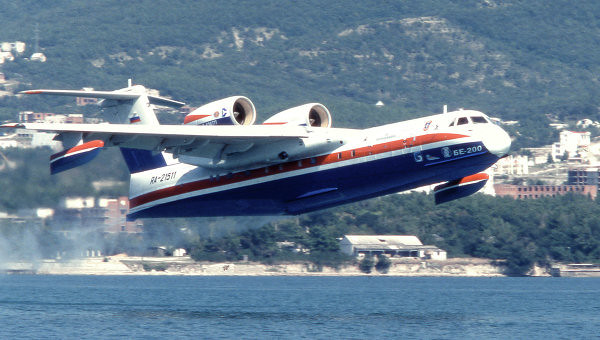
Russian Military Orders 6 Be-200 Amphibious Planes


MOSCOW, May 24 (RIA Novosti) – The Russian Defense Ministry has signed a contract with the Beriev Aircraft Company for the purchase of six Beriev Be-200 amphibious planes, Russia’s United Aircraft Corporation (UAC) said on Friday.

“The contract is worth 8.4 billion rubles [$268 million],” UAC said in a statement.

“The first two planes will be basic Be-200ChS models, while the following four will be the Be-200PS version without firefighting equipment,” the statement said.

It is the first purchase of Be-200 planes by the Russian military.

The Defense Ministry may order eight more planes in the future, according to UAC.

Be-200 is the world's largest multipurpose amphibious aircraft, designed for firefighting, search and rescue, maritime patrol, cargo and passenger transportation.

The plane can carry 12 tons of water or 7.5 tons of cargo, or up to 72 passengers.

At least five Be-200ChS firefighting planes are currently in service with the Russian Emergencies Ministry.


RIA Novosti

Thứ Bảy, 18 tháng 5, 2013

Russia Developing ‘Terrorist-Killer Robots’

MOSCOW, May 17 (RIA Novosti) - Russian experts are developing robots designed to minimize casualties in terrorist attacks and neutralize terrorists, Deputy Prime Minister Dmitry Rogozin said on Friday.


Robots could also help evacuate injured servicemen and civilians from the scene of a terrorist attack, said Rogozin, who oversees the defense industry.

Other antiterror equipment Russia is developing includes systems that can see terrorists through obstacles and effectively engage them in a standoff mode at a long distance without injuring their hostages, he said.

Rogozin did not say when the equipment might be deployed by Russia’s security and intelligence services.

Human Rights Watch has criticized fully autonomous weapons, known as "killer robots," which would be able to select and engage targets without human intervention and called for the preemptive prohibition on such weapons.

“Fully autonomous weapons do not exist yet, but they are being developed by several countries and precursors to fully autonomous weapons have already been deployed by high-tech militaries,” HRW said in a statement on its website. “Some experts predict that fully autonomous weapons could be operational in 20 to 30 years.”

“These weapons would be incapable of meeting international humanitarian law standards, including the rules of distinction, proportionality, and military necessity. The weapons would not be constrained by the capacity for compassion, which can provide a key check on the killing of civilians,” the human rights watchdog said. “Fully autonomous weapons also raise serious questions of accountability because it is unclear who should be held responsible for any unlawful actions they commit.”

RIA Novosti

Thứ Tư, 8 tháng 5, 2013

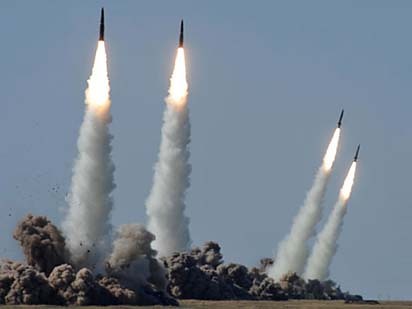
Russian missile systems can overcome any defense

According to Izvestia, Russia has stepped into the new enhancements to the missile system Iskander M campaign strategy allows to overcome missile defense system at the most current , including the system of American Patriot and Aegis and missile defense system of the Israeli Arrow.

The electronic warfare system new role as a means of effective camouflage for Iskander missile complexes in M as our last flight phase. That is the sensor and the positive interference for passive radar reconnaissance and fire control system of air defense and anti- missile defense opponents by creating the noise .

A senior representative from the Russian Defense Ministry told Izvestia that the details of Iskander M improvements have been transferred to the military missile brigade in the Western and Southern Military District ( Russian Federation).


"I can not speak specifically about the number and feature of the missiles, but Russia does not plan to completely replace the present Iskander-M missile brigades with the new and improved missile combination", Representatives of the Russian Defense Ministry explained.

With this new feature, Iskander M missile complexes will solidify as an effective deterrent capability and putting pressure on any U.S. decision to deploy missile defense system in Europe. It should be stressed that the missile defense system the United States not only acts as a safety symbol for Europe, but in economic terms it is the weapon system is expensive, are considered weapons of giauTo missile Iskander tactical campaign was developed in the Soviet Union late 1980s to replace the complex Tochka and Tochka U. Iskander was first recognized in 2006 equipped /.


dangcongsan.vn
----------

Thứ Năm, 25 tháng 4, 2013

Russian missile misses target again

In a joint exercise by Indian Air Force (IAF) and DRDO, a Russian short range surface-to-air missile was test fired from a defence base off the Odisha coast on Wednesday. The OSA-AK missile reportedly failed to hit a tow body suspended from a pilot less target aircraft (PTA) as it fell down before reaching the target.

Sources said air force personnel conducted the test, a part of target simulation exercise in the Integrated Test Range (ITR) at Chandipur on sea during noon.

The missile was fired from the launching complex - III and the PTA was flown from the launching -II of the ITR.

While three rounds of the missile were fired at 11.25 am, 11.45 am and 12.45 pm, the missile was to hit the tow body during the third attempt.

“The missile fell down immediately after take off. Though in initial two attempts the 10-km range missile travelled a certain distance, but during the target simulation exercise it failed to reach the target,” said a source.

It was the third attempt in last three days which also proved futile.

While on Monday the pilot less target aircraft fell down before releasing the tow body and flying for a stipulated period due to technical snags, a similar attempt on Tuesday also failed as the missile could not be fired.

A defence official said the aim and objective of the exercise was to gauge the effectiveness of the missile and killing capabilities mid air.

The Russia-manufactured missile has already been procured by India for the IAF fighter air-crafts.

OSA-AK missile has been developed to be used against aircrafts, surface-to-air missiles and air-to-air missiles.

The missile has already been inducted in the army and it was first user trial by the IAF.

Sources added that if all the preparations go according to the plan, another exercise will be conducted within a day or two.

Thereafter, the missile would be fired from the fighter air crafts targeting the PTA.

Indian Express

Thứ Ba, 23 tháng 4, 2013

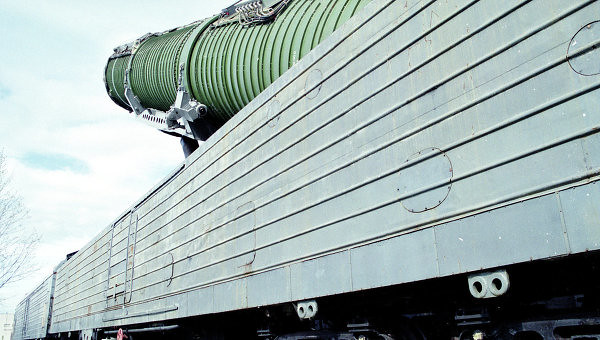
Russia Launches Rail-Mobile ICBM Project


MOSCOW, April 23 (RIA Novosti) - Russia's Moscow Institute of Thermal Technology has started an R&D program to develop new rail-mobile intercontinental ballistic missile (ICBM) systems, Deputy Defense Minister Yury Borisov said on Tuesday.

The work is in the initial stages, he said, adding the cost of the program has yet to be determined. He provided no timeframe for the program.

The Moscow Institute of Thermal Technology is the developer of the Bulava (submarine-based) and Topol and Yars (land-based) ballistic missile systems.

A prototype system could be deployed by 2020, a Russian defense industry official told RIA Novosti in December. The new missiles will be half the weight of their decommissioned Soviet analogues, allowing them to fit into one railcar, he added.

The original rail-mobile system included SS-24 Scalpel missiles which weighed 104 tons, required three locomotives to move, and were so heavy that they damaged railroad tracks. The missiles were based on trains in order to make them harder to find than stationary launchers, complicating a counter-strike.


The Soviet military deployed its first rail-portable long-range missile in 1987, and had 12 of them by 1991. Rail-mobile missiles were removed from service in 2002 and the last base dismantled in 2007 under the START II arms reduction treaty with the United States.

However, the treaty’s successor, START III, agreed in 2010, does not prohibit development of rail-mobile ICBMs.

Russian military analyst Alexander Konovalov said last year this apparent return to cumbersome Soviet concepts, even in revamped form, was a “bad idea” and that missile trains were outdated.

RIA