Hiển thị các bài đăng có nhãn US Military. Hiển thị tất cả bài đăng

Thứ Tư, 3 tháng 7, 2013

Why Pentagon Must Embrace Transformation, This Time

Military transformation boasts several fathers, including Andy Marshall (Yoda) of the Pentagon’s Office of Net Assessment, Andy Krepinevich of the Center for Strategic and Budgetary Assessments (a Marshall acolyte) and the late Vice Adm. Art Cebrowski of the Office of Force Transformation (OFT), but relatively few children. The OFT built the M80 Stiletto (pictured above) and some in the Pentagon believe the combination of UAVs, satellite targeting and data fusion cobbled together over the last decade comprise an accidental transformational capability. Rob Holzer, a former colleague of mine who went on to work for the one Pentagon office charged with pushing transformation forward in the face of a very unfriendly (or to be kind, cautious) military, argues it’s time for the US defense enterprise to finally and truly embrace transformation. The Editor.

M80 Stiletto. Designed for swarming, riverine, littoral ops.

The U.S. military must quickly come to grips with the inescapable fact that fundamental changes to the entire defense structure are looming — just as similar changes loomed little more than a decade ago before the events of 9/11 upended the strategic landscape. These changes could be far more disruptive than the reforms initially planned during former-Defense Secretary Donald Rumsfeld’s tenure and may be even more critical to long-term U.S. national security interests than the “Accidental Transformation” brought about during the protracted and irregular warfare in Iraq and Afghanistan.

Facing the dire prospect of long-term budgetary austerity at home, while at the same time confronting strategic uncertainty and growing risks abroad, the U.S. military must embrace the process of fundamental change that was derailed by the decade of war. In a word, that process is called transformation.

While the concept of transformation became distorted so that it often simultaneously meant everything and nothing — and most damaging — was too closely associated with former-Defense Secretary Donald Rumsfeld’s tenure at the Pentagon — the fundamentals of the concept hold even more import for the U.S. military today.

Transformation’s previous application was stymied since its implementation took place in an ad hoc fashion in response to urgent issues arising from battlefields in Iraq and Afghanistan. This “Accidental Transformation” still achieved notable breakthroughs in terms of exponential use of unmanned systems; robots; greater reliance on human factors in irregular warfare, and development of integrated warfighting networks and expanded use of network analytics to gain insights into terrorist organizations. Today however, transformation writ-large is a strategic imperative that the department ignores at its own peril.

At its core, transformation is about instilling a process of continual change in the U.S. military. It is about creating “maneuver space” so that dramatically new ideas and concepts can be prototyped and experimented with by the operational forces. This is not modernization or selected enhancements to existing programs. It is not about “things” so much as identifying a set of “big ideas” that will in turn yield leap-ahead technologies and capabilities. These ideas will then inject significant changes in current military organizational culture and doctrine. It is also about empowering junior officers to challenge the status quo and enabling them to pursue new ideas and concepts. That is where the true value of transformation as a strategy can take root.

Transformation is not about definitions, doctrine or master plans. It is not about compiling lists of programs to axe, although undeniably some weapon systems will have to go in order to free-up funding to invest in what capabilities come next. There is no magical end point that yields a transformed military. Instead the entire defense establishment must adopt a transformation strategy so it can fundamentally re-think and re-position itself to confront a host of adversaries adapting and innovating at rates much faster and much more dynamically than our institutions have grown accustomed to understanding.

Marginal change in defense will no longer suffice given the giant laundry list of strategic challenges facing the Defense Department in coming years. Glancing at a cursory list of global issues looming just over the horizon reveal the stark magnitude of the range of festering problems with which the U.S. military must deal. These extend from coping with rapidly rising powers like China, India and Brazil, to feeling its way through the aftershocks of the Arab Spring (including today’s widening proxy war in Syria), to responding to more frequent natural disasters and population migrations. Intertwined across all of these international issues are the twin problems of increasingly sophisticated military capabilities (ballistic missiles, precision munitions, cyber, WMD?) in the hands of more second tier states and non-state actors. In short, while state-on-state conflict may be in decline, mayhem across the globe is poised to explode.

The current Strategic Choices and Management Review (SCMR) directed by Defense Secretary Chuck Hagel and the upcoming congressionally-mandated Quadrennial Defense Review provide robust, near-term opportunities to begin implementing transformational change across the entire defense establishment. Transformation and not marginal changes will produce the agile, flexible, lean and technologically advanced force that defense leaders continue to call for. If as Secretary Hagel says “everything is on the table,” then the development of a comprehensive Transformation agenda calling for significant change and restructuring should be the output of these strategic reviews.

The likely imposition of another $1 trillion in cuts to Pentagon spending over the next decade, via sequestration, only bolsters the immediate need to dramatically transform defense. Now is the time to rethink defense for the 21st Century and shed the leaden vestiges of Industrial Age military organization, process and procurement.

If we are truly facing a historic fiscal correction, one that leaders like JCS Chairman Gen. Martin Dempsey say will last for five to seven years — or even longer — then only a bold strategy of transformation will yield the degree of change required to meet this unsettling future. Dempsey has urgently called for undertaking “unpopular but unavoidable institutional reforms” that include shedding excess equipment and bases, reforming how weapons and services are procured and reducing redundancy across the military services. That sounds a lot like the same strategic objectives that transformation advocates strove to implement back in 2000-2001.

Today’s strategic challenges are not unlike those that prevailed prior to the tragic events of September 11, 2001. When then-presidential candidate George W. Bush delivered his “Period of Consequences” speech at The Citadel in September 1999, he called the transformation of the U.S. military a massive, but important undertaking, since the Department was still too organized to meet Cold War threats and not Information Age battles. In an eerie echo of today’s oft-heard mantra, Bush also cited the need to create forces that were smaller, more agile and less cumbersome that currently in existence. Marginal improvements were to be avoided and new technologies and strategies would be emphasized.

To help guide the magnitude of the changes being considered, the Bush Administration created the Office of Force Transformation within the Pentagon which reported directly to Secretary Rumsfeld. The Secretary tapped the visionary admiral, Art Cebrowski, to lead this new entity. As president of the Naval War College, Cebrowski had articulated for the Navy a concept called Network Centric Warfare. The emphasis was on the NETWORK rather than the CENTRIC part (which many critics failed to fully comprehend) with the net result being a networked force was a much more effective force.

With OFT, Cebrowski argued that the Defense Department was entering a new era of military competition, driven by information-age dynamics, which called for fundamental changes in how the U.S. military was organized, trained and equipped. The future was about “the small, the fast and the many,” to quote Cebrowski, and generating these new capabilities would necessarily come by dispensing with those capabilities that were “fewer, larger and slower.”

However, the prolonged campaigns in Iraq and Afghanistan—and the focus they rightly demanded—sapped the energy from Transformation’s agenda and it brought it to a bureaucratic halt. This is not to imply that significant tactical and operational innovation did not take place—it most certainly did in the form of new types of units, great gains in ISR, irregular warfare doctrine, the advancement of SOF and much deeper cultural knowledge and understanding. But these achievements were not of the scale or magnitude once considered part of the Transformation agenda.

Cebrowski’s argument holds even more value given the stark choices confronting the Pentagon today and seems to reflect what current defense leaders are seeking to implement in light of both an uncertain strategic environment and an austere budget climate. Secretary Hagel’s exhortation that the department can’t continue “tweaking or chipping away” current capabilities, processes or organization but instead must tackle the harder issue of creating entirely new entities for the 21st Century is entirely within the transformation agenda.

Change is always hard. The future is always uncertain. But now is the time to press ahead with the transformational change that the department has put off for far too long. We can’t afford to wait another decade for transformation. The time is now.

Robert Holzer is senior national security manager for Gryphon Technologies TeamBlue and former director of outreach for the Pentagon’s now shuttered Office of Force Transformation.

Thứ Hai, 24 tháng 6, 2013

U.S. Defense Industry Flees the Country


(FP)- The defense drawdown is now well underway, and the defense industry is starting to pack up, if one is to believe what is being said this week at the Paris Air Show.

Defense budgets peaked in FY 2010, including war funding, and have been down about 10 percent in constant dollars. Factor in the budget sequester for this year, which looks like it will hang on through the rest of the fiscal year (and maybe make a repeat appearance next January), and the defense budget will have fallen 24 percent in constant dollars from their height.

The future does not look different. If the sequester remains, one can expect another roughly $500 billion to disappear from projected defense budgets over the next nine years.

Full article: http://www.foreignpolicy.com/articles/2013/06/21/us_defense_industry_flees_the_country?wp_login_redirect=0

Thứ Bảy, 15 tháng 6, 2013

Pentagon To Study The Brains Of Dead Soldiers

DOD establishes brain tissue bank


NEW YORK (MYFOXNY) - The U.S. Defense Department has established was it is calling the world's first brain tissue repository in an effort to understand more about traumatic brain injuries(TBI) to members of the armed services.

The Pentagon will attempt to collect several hundred samples for the repository. They will seek permission from the families of deceased service members to collect specimens.

"We have been at war for more than a decade and our men and women have sacrificed," said Dr. Jonathan Woodson, assistant secretary of defense. "The military health care system is bringing all the resources it can to better understand how to prevent, diagnose and treat traumatic brain injuries and to ensure that service members have productive and long, quality lives."

The Center for Neuroscience and Regenerative Medicine Brain Tissue Repository for Traumatic Brain Injury was established in Bethesda, Md.

It is being funded with a federal grant to advance the understanding and treatment of TBI in service members.

The goal it to address how head trauma leads to Chronic Traumatic Encephalopathy (CTE).

CTE is a neurodegenerative disorder that involves the progressive accumulation of a protein in nerve cells within certain regions of the brain. As the protein accumulates, it disturbs function and appears to lead to symptoms seen in affected patients such as boxers and football players with multiple head trauma.

Service members exposed to blasts "are coming home with troubling, persistent problems and we don't know the nature of this, whether it's related to psychiatric responses from engagement in warfare or related to actual damage to the brain, as seen in football players," said Dr. Daniel Perl, a neuropathologist and director of the brain tissue repository.

Myfoxny

Thứ Ba, 11 tháng 6, 2013

NSA Leaker Girlfriend Is A Beautiful Ballerina And Lingerie Model


EXCLUSIVE: The Beautiful Ballerina Girlfriend Whistleblower Ed Snowden Was Set To Wed Before He Left Her In Hawaii And Fled To Hong Kong To Leak NSA Secrets. Now She Says She Feels ‘Adrift’ -- Daily Mail

* Lindsay Mills, 28, is reportedly the girlfriend Edward Snowden left behind when he leaked information about PRISM surveillance
* She wrote on a blog about romantic heartbreak after Snowden fled to Hong Kong
* 'My world has opened and closed all at once. Leaving me lost at sea without a compass' she wrote
* Couple previously went to Hong Kong for romantic getaway
* Mills is a ballerina who attended the Maryland Institute College of Art
* She performs with the Waikiki Acrobatic Troupe

The whistleblower who leaked the NSA's secrets thought about marrying his girlfriend and had previously taken her on a romantic break to Hong Kong - where he was last seen fearing arrest.

Family friends told MailOnline that Ed Snowden, 29, wanted to be with stunning pole dancer Lindsay Mills for the rest of his life but took the decision to throw it all away to expose the US government.

They were deeply in love and on her blog Mills, 28, dotingly called him her ‘man of mystery’ who she had followed around the world for the last four years.

Full article: http://www.dailymail.co.uk/news/article-2339202/Lindsay-Mills-girlfriend-Edward-Snowden-Woman-NSA-leaker-left-member-acrobat-troupe.html

Thứ Năm, 6 tháng 6, 2013

US Defense Budget Proposal Released For Fiscal Year 2014

The United States House Appropriations defense subcommittee is proposing a $512.5 billion defense budget for the next fiscal year (FY) 2014, which begins October 1. It's $3.4 billion less than what President Obama had requested.

The draft includes $129.6 billion to pay for 1.3 million active-duty troops and 833,700 reserves, which includes a 1.8 percent pay raise instead of the 1 percent the Pentagon requested.

The $512.5 billion is for non-war spending only and does not include a separate $85.8 billion in war spending, which is $6.4 billion more than the Pentagon had requested.

Also included is $98.4 billion, around $750 million less than requested, for equipment procurement and upgrades. Around $66.4 billion is proposed for Research & Development (R&D).

Some highlights in the draft include:
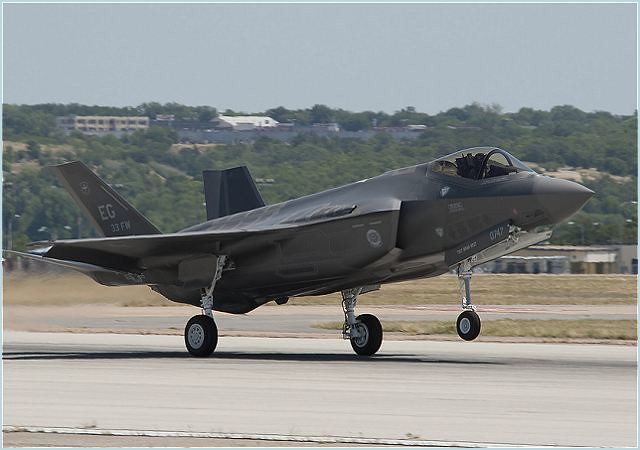
  • $5.1 billion for 29 F-35 fighter aircraft
  • $1.9 billion for 21 EA-18G Growlers 
  • $2.2 billion for 73 UH-60 Blackhawk and 37 MH-60S/R helicopters
  • $1.5 billion for 18 C-130J transport aircraft
  • $1.8 billion for five Evolved Expendable Launch Vehicles

Also funded are the CVN 78 aircraft carrier, SSN-774 nuclear attack submarines E-2D Hawkeye surveillance aircraft, F/A-18 Super Hornet naval aircraft, MQ-9 Reaper drone and F-15 and F-16 aircraft engines.

R&D will be done on the F-35 fighter, KC-46A tanker aircraft, P8-A anti-submarine/anti-surface warfare aircraft, next-generation long-range bomber aircraft, the Broad Area Maritime Surveillance, a new ballistic-missile submarine and various other programs.

http://thomas.loc.gov/cgi-bin/query/z?c113:H.R.1960:

Thứ Bảy, 18 tháng 5, 2013

Could the United States really go to war with China?


Are we on the brink of a new Cold War? The question isn't as outlandish as it seemed only a few years ago. The United States is still the sole reigning superpower, but it is being challenged by the rising power of China, just as ancient Rome was challenged by Carthage, and Britain was challenged by Germany in the years before World War I. Should we therefore think of the United States and China as we once did about the United States and the Soviet Union, two gladiators doomed to an increasingly globalized combat until one side fades?

Or are we entering a new period of diversified global economic cooperation in which the very idea of old-fashioned imperial power politics has become obsolete? Should we see the United States and China as more like France and Germany after World War II, adversaries wise enough to draw together in an increasingly close circle of cooperation that subsumes neighbors and substitutes economic exchange for geopolitical confrontation?

Full Article: http://www.foreignpolicy.com/articles/2013/05/16/china_united_states_cool_war_power?utm_source=feedly

Thứ Sáu, 10 tháng 5, 2013

U.S. Army Trains for 21st Century Warfare


At Fort Irwin's National Training Center in Calif., the most combat-hardened forces in the history of the U.S. Army are relearning how to wage war. The goal? To prepare for complex-hybrid wars in the future. WSJ's Julian Barnes reports.

Thứ Tư, 8 tháng 5, 2013

Pentagon prepares for possible military action in near--Earth space


The Deputy Defence Secretary Ashton Carter said that the U.S. military has launched a comprehensive investigation related to safeguard national security satellites.

According to Carter currently an integrated effort is being investigated to increase the effectiveness of the U.S. military and intelligence satellites in the event of an anti-satellite threat, as well as options are being developed to operate in the absence of satellite support.

He said, the U.S. fiscal Budget 2014 includes the funding for both the above initiatives as well as for the development of ways to counter the space capabilities of potential adversaries in the near-Earth space.


On Monday, the Pentagon released an annual report saying that China views the military control of outer space as a priority and is pursuing a variety of programs to improve its capacity to destroy and capture enemy satellites in the event of an armed conflict.

U.S. remains concerned about the development of anti-satellite weapons in China after the Chinese military in 2007 shot down its own defunct resource satellite orbiting the Earth.

Russia Radio
--------------

Photo: A Delta II rocket launches with the Aquarius/SAC-D spacecraft payload from Space Launch Complex 2 at Vandenberg Air Force Base, Calif. on 10 June 2011. The joint U.S./Argentinian Aquarius/Satйlite de Aplicaciones Cientнficas (SAC)-D mission will map the salinity at the ocean surface, information critical to improving our understanding of two major components of Earth's climate system: the water cycle and ocean circulation. EPA/BILL INGALLS/HANDOUT MANDATORY CREDIT: (NASA/BILL INGALLS) HANDOUT EDITORIAL USE ONLY

Thứ Hai, 6 tháng 5, 2013

US X-47B passes catapult-to-flight, arresting gear landing tests

(GDVN) - The U.S. Navy's new video released shows X-47B Reconnaissance Unmanned aircraft (for carriers) has been successfully tested with terrestrial catapult system and landing with brake cables - simulated situation corresponds to the landing on aircraft carrier.


The Northrop Grumman X-47B is a demonstration unmanned combat air vehicle (UCAV) developed by the American defense technology company Northrop Grumman.

The X-47 project began as part of DARPA's J-UCAS program, and is now part of the United States Navy's UCAS-D (Unmanned Combat Air System Demonstration) program, which aims to create a carrier-based unmanned aircraft. It is intended that the Unmanned Carrier Launched Airborne Surveillance and Strike System (UCLASS) will enter service in 2019.

The X-47B first flew in 2011, and as of 2013, it is undergoing flight testing, having successfully completed a series of land- and carrier-based demonstrations.