Hiển thị các bài đăng có nhãn Chinese Invasion. Hiển thị tất cả bài đăng

Thứ Tư, 15 tháng 5, 2013

Taiwan boat returning after Vietnam interception

TAIPEI, Taiwan -- The Pingtung County-registered Lung Wang Li No. 97 (龍旺利97號) fishing boat was returning to Taiwan last night after being intercepted by Vietnamese vessels in the East Vietnam Sea (the south China sea), according to the Coast Guard Administration (CGA).

While making its way to Taiwan from Thailand, the Lung Wang Li No. 97 was intercepted by a Vietnamese vessel around 5:47 a.m. yesterday, in waters around 790 nautical miles to the south from Taiwan. Twenty minutes later, more than five similar Vietnamese vessels surrounded the Taiwanese boat, according to an initial CGA report.


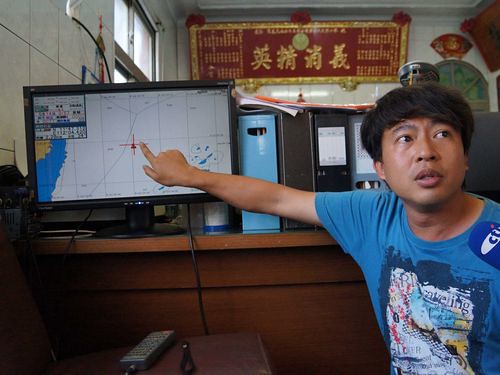
Son of Tsai Tien-yu, owner of Lung Wang Li No. 97, explains the fishing boat's course when it was intercepted.

The CGA said that the fishing boat was instructed to follow a searchlight and sail toward the Vietnam vessels.

The Taiwan boat's captain, surnamed Tseng, said that crewmen on these Vietnamese ships asked to board his vessel for inspection, according to a CGA statement.

Tseng later reported the case and asked for assistance from the CGA.

Upon receiving the report, the CGA immediately deployed one of its nearby patrol vessels to Tseng's ship.

But Tseng said the Vietnamese ships later left the scene at around 7:45 a.m., before the Taiwanese Coast Guard ship arrived. No Vietnamese crew members boarded the Taiwanese fishing vessel, the CGA said.

According to Tseng, none of the crewmen aboard the Vietnamese ships were in uniform.

The boat's owner, Tsai Tien-yu (蔡天裕), urged the government not only to step up long-term measures to ensure the safety of Taiwanese fishing boats, but also to enter fishery talks with Vietnam to prevent similar incidents from happening again.

Tsai said he has had similar experiences. Two of his boats operating on the open seas were detained by Vietnamese vessels 10 years ago, and he had to pay a US$30,000 “ransom” to the Vietnam government to get the boats back, the captain said.

The CGA responded in a very timely manner to yesterday's incident, Tsai said, adding that he received a call from the Coast Guard 10 minutes after reporting the incident to the Donggang (東港) fishery radio station.

Taiwan's representative to Vietnam, Huang Chih-peng, said he had been informed of the incident and was in close contact with Vietnamese officials regarding it.

Chinapost

Taiwanese fishing boat returning after being intercepted (Focus Taiwan)

Thứ Ba, 14 tháng 5, 2013

Chinese hackers caught trying to steal secrets of British& US stealth fighters

Chinese cyber spies have been caught trying to steal the secrets of Britain’s most sophisticated combat jet, The Mail on Sunday has learned.

A covert unit within the Chinese Army has been using highly sophisticated cyber weapons in a desperate attempt to acquire classified information about the stealthy Joint Strike Fighter (JSF).

Manufacturer Lockheed Martin claims it is thwarting tens of thousands of computer attacks every week to keep secure secrets about the jet – due to be in service with the Royal Navy and RAF by 2018.

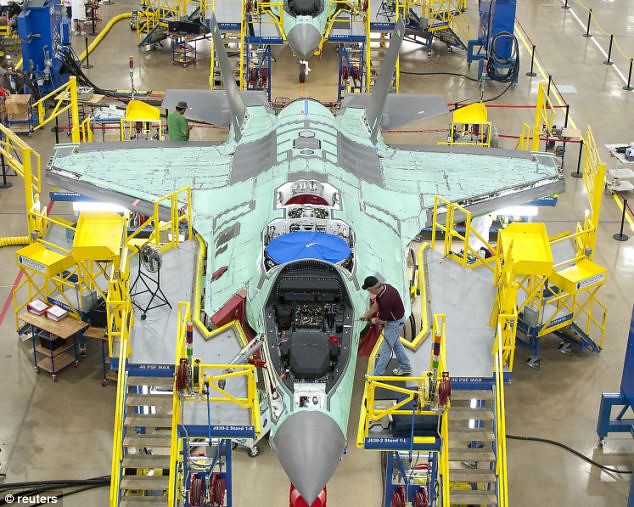
An F-35 fighter taking shape. Each of the jets costs £100million

Full article: http://www.dailymail.co.uk/news/article-2323067/Chinese-hackers-caught-trying-steal-secrets-new-stealth-fighter-tens-thousands-cyber-attacks-launched-jet-manufacturer-week.html

China threatens survival of fishing industry

The Chinese are increasing catch levels and forcing down the allowable catch rates of other nations


An international agency has warned that China is using vast subsidies to threaten the survivability of the fishing industry in the Western and Central Pacific - which includes New Zealand.

The alarm has been sounded in a briefing paper written for the 17-nation Forum Fisheries Agency (FFA), which says that unless something is done at a high level, non-Chinese fishing operations are in trouble.

The paper, presented at a meeting this week at the FFA headquarters in Honiara, Solomon Islands, said there is deep concern about growth in the Chinese fleet and the high level of subsidies Beijing gives its deepwater fishing boats.

"It is the official Chinese government policy to assist in the growth, expansion and modernisation of its (deep water fleet) DWF fleets and to use subsidies and incentives to achieve this aim," the paper said.

The extent and magnitude of the subsidies was significant and likely to provide the Chinese DWF with significant cost advantage over unsubsidised fleets.

Chinese spending on its fleet is growing with new tax incentives being introduced.

The subsidies make all other nations' fleets economically unviable due to their cost disadvantage.

The Chinese are increasing catch levels and forcing down the allowable catch rates of other nations, the paper warned.

"Without governmental intervention in this issue and broad and active affirmative support of (Pacific Island) governments, the prospect for the survival of domestic non Chinese flagged vessels in the (Western and Central Pacific) would be extremely challenging."

It said China plans to increase its DWF to 2300 vessels by the end of 2015.

It has a large array of subsidies including tax breaks to fishing companies, direct subsidies on fish caught, fuel offsets and favourable loan rates. Even provincial governments in China pay the access fees Chinese boats have to pay to fish in the South Pacific.

Environment organisation Greenpeace says the subsidies threaten Pacific tuna boat operators in particular.

"These subsidies fuel the plunder of South Pacific albacore and are now leading to localised depletions and declines in catch rates across the fishery, jeopardising the livelihoods of locally owned small-scale tuna boat operators in Pacific Island countries," said Greenpeace Australia Pacific oceans campaigner, Duncan Williams.

Stuff

Chủ Nhật, 12 tháng 5, 2013

Taiwan boosts patrols in waters near PH, demands action in 72 hrs before hiring freeze

TAIPEI - Taiwan Sunday sent four coastguard and naval vessels to strengthen patrols in waters near the Philippines following public outrage over the shooting of a Taiwanese fisherman by Filipino coastguards.


Taiwan Coast Guard Ship (illustration)


A Taiwanese coastguard official waves his cap as a fleet of naval and coast guard frigates sets sail from Kaohsiung. Photo: AFP

"The government is determined to protect our fishermen," cabinet spokeswoman Cheng Li-wen said in a statement as a frigate and coastguard vessels set sail for the area where the 65-year-old fisherman was killed Thursday.

Taiwan in a strongly-worded statement late Saturday demanded Manila apologize and compensate the victim's family or face a freeze on the hiring of its nationals.

It also asked the Philippines to bring to justice the coastguards responsible and start negotiating a fisheries agreement.

"If the Filipino government fails to respond in a positive manner within 72 hours, the hiring of Philippine workers will be frozen," said presidential office spokeswoman Lee Chia-fei.

There are about 87,000 Philippine domestic helpers and other workers in Taiwan and they send home hundreds of millions of dollars a year.


OFWs are seen at the Manila airport in this file photo. Taiwan, which hosts some 80,000 Filipino workers, has threatened sanctions, including a hiring freeze, if it does not get "positive" action from Manila on the shooting of a Taiwanese vessel, killing a fisherman.

More than 50 bullets hit the 15-tonne "Kuang Ta Hsin No 28", killing skipper Hung Shih-cheng. "This is nothing but a slaughter," prosecutor Liu Chia-kai said after examining the ship.

President Ma Ying-jeou Sunday visited the victim's family on an island off the southern city of Kaohsiung and promised to pursue the strong protest against the Philippine government.

Taiwan's government confirmed that websites of several government agencies, including the presidential office, the defense ministry and the coastguard administration, had been hacked, after Internet attacks on Philippine government websites were reported Friday night.

Several fishermen's groups said they plan to file a protest at the Philippine mission in Taipei Monday. Manila recognizes Beijing but not Taipei.

In Manila Abigail Valte, a spokeswoman for President Benigno Aquino, said Saturday that authorities had launched a "transparent and impartial investigation" into the incident.

She expressed hope that economic ties with Taipei would not be affected and added that the coastguard crew involved in the incident had been temporarily suspended from duty to ensure a fair inquiry.

Taiwan's government has come under pressure from the opposition and the media to take action, with the Philippines refusing so far to apologize and saying the coastguard was tackling illegal fishing.

Philippine coastguard spokesman Commander Armand Balilo said Friday the incident took place in Philippine waters and the crew had been carrying out their duty to stop illegal fishing.

"If somebody died, they deserve our sympathy but not an apology," Balilo told reporters.

The victim's son, who was with his father and two other sailors on the boat at the time, has insisted they did not cross into Philippine waters.

The incident comes at a time of heightened tensions around the region over rival claims to the nearby South China Sea.

China, the Philippines, Taiwan, Vietnam, Malaysia and Brunei all have competing claims to parts of the sea.

China's state media stood by Taiwan over the latest incident, asking Beijing to "teach Manila a lesson".

The media said the Philippines was trying to vent its anger and frustration over a dispute with China about the Spratly islands.

Interaksyon

Thứ Bảy, 11 tháng 5, 2013

China's expanding core interests

China Marine Surveillance is a full-time maritime sovereignty harassment organisation. Its cutters have no other mission but to harass other nations into submitting to China's expansive claims


Now that the 'tent confrontation` in Ladakh is over and politicians' call to "drive out" the Chinese has died down, the story will disappear from the front pages. Yet, the latest episode on the India-China border offers an opportunity to assess where India fits into China`s broader security posture and what may be the most judicious course.

The border kerfuffle has to be seen in the context of what China considers to be its "core interest" and what China's new president Xi Jinping calls the China Dream.

For long Taiwan, Tibet and Xinjiang were China's core interests — in defence of which it is ready to go to war. Hence its acute concern over the India-China border and its unrelenting effort to restrain the Dalai Lama`s influence. In 2009, China`s then state councillor Dai Bingguo elaborated on the notion of core interest: maintenance of the Communist Party-led system; protection of state sovereignty and territorial integrity; and development of the economy and society.

The following year, Chinese officials expanded the core interests to include China's sovereignty over the South China Sea islands and reefs covering 3.5 million square km of water. In 2011, China proclaimed that the Japan-occupied Senkaku islands too were part of its core interests.

Enter the new president and commander-in-chief Xi Jinping with his signature slogan: China Dream or "great rejuvenation of the Chinese nation". Building China`s military might is an important part of the rejuvenation that would restore China to its former power and glory. One of his first forays as the new chief was to a Chinese navy ship to call on the rank and file to step up preparations for "military struggle". Last month, a Defence White Paper released by China said that the mili-tary`s role was to "safeguard the realisation of the 'Chinese Dream'. "

China's seriousness about realising its dream of dominating the South China Sea and the East China Sea has been repeatedly demonstrated in the past months. In late March, a Chinese navy task, including an amphibious landing craft, sailed 1,800 km from the mainland to drop anchor at the James Shoal, an outcrop claimed by Malaysia barely 80 kilometers from its coast. It is not just its expanding naval force; China has put into service a panoply of resources, prime among them aggressive patrolling by its coast guard. As Captain James Fanell, a senior US naval intelligence officer, recently told a San Diego conference: "China Marine Surveillance cutters have no other mission but to harass other nations into submitting to China`s expansive claims." China Marine Surveillance, he concluded, " is a full-time maritime sovereignty harassment organisation."

Recently, China deployed a cruise ship carrying 300 or so `tourists` to sail to the Vietnamese claimed Paracel islands to establish its claim of sovereignty. By deploying coast guard and fishing vessels and cruise ships, unchallenged by weak claimants, China is on its way to reclaiming the hegemonic position it once held in East Asia.

Along its land borders, China has employed a variety of means to maintain its upper hand. Despite multiple provocations by Pyongyang and pressure by Washington, China has held firm to its troublesome ally. Concerned by recent Burmese moves to woo the United States and open the country to western investment, China has sent a clear signal to the leadership by supplying arms, including armoured personnel carriers, to Wa insurgents (former member of the Burmese Communist Party) along its border.

Compared with aggressive Chinese moves over the Senkaku islands and the South China Sea, the stand-off in Ladakh is a mild affair. While reminding India that it retains a vastly superior infrastructure and military, China is nonetheless keen to maintain good relations with India. As it focusses its attention on securing control over the oil-rich waters to its east, it prefers not to have any distractions in the west, especially along the border of a restive Tibet. Keeping India from a strong US embrace also remains an important goal, especially as Asean countries are increasingly looking to Washington for security.

Border incidents have happened hundreds of times and are bound to recur. While seeking a settlement through diplomacy, India's military preparedness has to be bolstered by the leverage that comes from the strengthening of strategic ties with the US, Japan, Vietnam and other countries concerned about China`s expanding core interests.

Times of India

Thứ Sáu, 10 tháng 5, 2013

The technology China wants in order to catch up with Western militaries


The Pentagon's latest report on the capabilities of the Chinese military mentions an important aspect to its buildup: China's efforts to develop advanced technologies that have both civil and military use. This means that China is trying to acquire tech that can be used to drive modern aerospace, computing, and transportation industries -- as well as 21st-century military equipment.

How does it get this information? Everything from outright cyber theft to old-fashioned espionage to legitimate business partnerships.

As the report says:

"The Chinese utilize a large, well-organized network to facilitate collection of sensitive information and export-controlled technology from U.S. defense sources. Many of the organizations composing China's military-industrial complex have both military and civilian research and development functions. This network of government-affiliated companies and research institutes often enables the PLA to access sensitive and dual-use technologies or knowledgeable experts under the guise of civilian research and development.

The enterprises and institutes accomplish this through technology conferences and symposia, legitimate contracts and joint commercial ventures, partnerships with foreign firms, and joint development of specific technologies. In the case of key national security technologies,
controlled equipment, and other materials not readily obtainable through commercial means or academia, China has utilized its intelligence services and employed other illicit approaches that involve violations of U.S. laws and export controls"

Here's a look at a handful of interesting cases of Chinese efforts to get a hold of technology -- both military and civilian -- that could help its military catch up with its Western counterparts.

First up is China's biggest chunk of modern military hardware, its sole aircraft carrier, the Liaoning. Chinese investors bought the Soviet-built ship -- sans engines, electronics, or weapons -- from Ukraine in 2001 with the stated purpose of turning it into a floating gambling den. We all know how that worked out. Instead of becoming a casino (or luxury hotel like the former Soviet carrier Kiev) Liaoning was commissioned into the PLA Navy last year and it'll serve as China's starter carrier, a floating lab where the navy can master carrier operations before it commissions at least two more carriers in the next decade or so. These ships -- and a crop of modern destroyers and other ships -- are meant to help China project power throughout the Western Pacific.


Then, there's its development of stealthy jets that strongly resemble (on the outside, at least) U.S.-made F-22 Raptors and F-35 Joint Strike Fighters. Remember, Chinese hackers reportedly broke into the networks of defense contractors working on the F-35 (including Lockheed Martin, maker of both the F-35 and F-22). In an interesting coincidence, China revealed its J-20 stealth jet in late 2010 boasting a nose section that looks a lot like the F-22's, right down to parts of the canopy design and what might be a 3-D heads up display. Then, last year, China unveiled its second stealthy fighter, the J-31 (below). That plane bears a way-too-close-for-comfort resemblance to the F-22 and the F-35. (Last year, a U.S. Air Force official pointed out that the F-35's computerized maintenance system containing tons of information about the jet had to be redesigned after it was found to be vulnerable to hackers.)


In September 2012, the United States convicted Sixing Liu, a Chinese citizen working for a U.S. defense contractor, of bringing electronic files containing "details on the performance and design of" guidance systems for missiles, rocket target-designators, and even UAVS, the Pentagon's latest report points out. The document also recounts that two Taiwanese nationals were charged in March 2012 with planning to get their hands on "sensitive U.S. defense technology" and passing it to China. The pair, Hui Sheng Shen and Huan Ling Chang, were allegedly going to take pictures of the technology, delete the images from their cameras, and then bring the memory cards back to China where the images would be recovered.


The DOD report also lists the case of aircraft engine-maker, Pratt & Whitney Canada (a subsidiary of U.S. defense giant United Technologies Corporation) illegally giving engine control software to China for use in its latest attack helicopter, the Z-10. UTC and two subsidiaries ended up having to pay a $50 million fine and had some of its export license privileges suspended temporarily as part of a settlement deal with U.S. authorities.


Then there's the case of U.S. defense giant General Electric's partnership with China's state-owned aviation firm COMAC -- a program aimed at developing digital avionics for China's first domestically made jetliner, the COMAC 919 (shown below). GE came under fire from Virginia congressman Randy Forbes, who claimed the technology used to develop next-generation airliner avionics was inked to the same technology used in the U.S. Air Force's premier fighter, the F-22. Forbes worried that sharing information on even a civilian version of these avionics would allow China to develop them for military use. The deal remains on, but given the news we've heard in the last year or so about Chinese hackers, one hopes that GE is being extra vigilant in protecting its most sensitive information.


The predecessor of the avionics deal is GE's partnership with AVIC (COMAC's parent firm) to develop modern jet engines in China. It might seem like decades-old technology, but building jet engines, especially those used in 21st-century fighter jets, are one of the toughest engineering challenges in aviation. AVIC has partnered with GE in an attempt to develop engines capable of powering large aircraft: from civilian jetliners to military transports, radar planes to bombers. As U.S. Naval War College professor Andrew Erickson has said, these joint ventures could "give the Chinese aerospace industry a 100 piece puzzle with 90 of the pieces already assembled. Enough is left out so that the exporting companies can comply with the letter of the export control laws, but in reality, a rising military power is potentially being given relatively low-cost recipes for building the jet engines needed to power key military power projection platforms."


http://killerapps.foreignpolicy.com/posts/2013/05/09/the_technology_china_wants_in_order_to_catch_up_with_western_militaries

Thứ Hai, 6 tháng 5, 2013

The Chinese Dilemma

May 6, 2013: Ever since the economy was turned lose in the 1980s, China has been having more and more trouble keeping its generals and admirals under control. The big problem is not the threat of a coup but corruption, which can lead to all sorts of problems. This has led to many Chinese leaders wondering if they can have corruption-free as well as effective modern armed forces. Thus the current military reforms in China, needed to turn the armed forces into a modern and effective organization, may end up putting the political leadership between a rock and a hard place.

Many Chinese leaders believe that they cannot have military leadership that is corruption free, capable of fighting a modern enemy, and politically loyal and reliable at the same time. What it comes down to is what is the main criteria for promoting junior officers, those who are loyal (and often corrupt and not capable warriors) or those who can get things done (and are often disdainful of corrupt and politically correct officers and government leaders).

Reliability and corruption has always been a problem in police states. The first communist nation, the Soviet Union, solved this by killing thousands of senior military officials in the 1930s, mainly for suspected disloyalty. There were side effects. This "Great Purge" was bad for morale and hurt the nation’s ability to defend itself when the Germans invaded in 1941. Two decades later, the Russians tried another approach. In return for keeping their mouths shut and staying out of politics, the military was given what amounted to a blank check. Oh, there was one other detail. The promise was made, and kept, by one faction in the Communist Party that wanted to oust, without a civil war, the then current head of the Soviet Union, Nikita Khrushchev and his faction. Unfortunately, this deal led to an arms race with the United States which, after two decades, wrecked the Russian economy and brought about the collapse of the Soviet Union.

The Chinese Communist Party noted that Russian experience and sought to avoid making the same mistakes. During the 1960s and 70s, China went through a period similar to the Russian Great Purge of the 1930s. However, China's "Great Cultural Revolution" did not do as much damage to the army, and in 1976 the army backed a group of moderate Party leaders in shutting down the Cultural Revolution for good.

Since then, the Chinese military has been well taken care of. The generals were allowed to go into business when the economy was opened up in the 1980s. Unfortunately, after a decade of that, it was noted that the generals were more interested in getting rich than in seeing to their military responsibilities. So the government shut down a lot of those businesses. The generals were not happy but they obeyed. The generals even stepped up in 1989, when the government needed muscle to shut down massive pro-democracy demonstrations in the capital.

The problem here is that the army is considered part of the Communist Party and its main job is to keep the communists in power. This was a concept pioneered by the Russians when the Soviet Union was formed in the early 1920s. The CCP (Chinese Communist Party) followed suit and this arrangement worked quite well, as long as most national wealth was controlled by the CCP. The Chinese economic reforms of the 1980s shifted control over of most GDP from party officials to entrepreneurs. While all officers and many lower ranking troops are CCP members, they came to see their future economic opportunities coming from the free market, not the favor of CCP bureaucrats.

Then there is the growing corruption, caused by the larger economy which gave communist officials more to steal or receive as bribes. The CCP has been increasing its efforts to curb corruption in the armed forces. It is taking two approaches. First, it is insisting that most new officers are college graduates. Since the PLA (People’s Liberation Army) was founded in the 1920s, the main qualification of a new officer was being a “good communist.” That is no longer the case and the last of the “old comrades” (officers who served in the late 1940s and early 1950s) are gone. There are still a lot of officers who came up in an atmosphere that favored “good communists” and tolerated a lot of corruption. Now a new generation of government leaders (all of them communists) are demanding that the officers be “good commanders” and much less corrupt. It’s a period of transition and there’s no telling when it will be reflected in better combat capabilities. But the CCP is now more worried about the growing number of officers who wrongly think they are in the military to defend China and not the CCP. This is very dangerous thinking as far as the CCP leadership is concerned.

As a result of these disturbing trends, the CCP recently ordered more attention be paid to the loyalty of officers, especially the many who are now college grads. The party wants everyone reminded that the military answers to the Chinese Communist Party first of all. The growth in college educated officers has led to more enthusiasm for political reform by younger officers and less concern about the survival of the party. This is a popular idea among pro-reform Chinese, who back the concept of the armed forces existing to defend China above all. This is heresy to the CCP.

The government is still concerned about corruption in the military (an ancient problem in China) because it has a direct impact on military capabilities. The same can be said for corruption outside the military, which is having a corrosive and increasingly obvious impact on the economy and public order. As the Chinese grow wealthier they get increasingly noisy about the corruption. Government efforts to curb corrupt practices are encountering a lot of (unofficial) resistance from the bureaucracy. It’s common for seemingly successful anti-corruption officials to be corrupt. There is a similar problem in the military, where two decades of anti-corruption efforts have reduced but not eliminated the problem. Between the corruption and shifting loyalties, it’s hard times for the party leadership.

Strategy Page

Tensions between China's Generals and the Civilian Leadership due to Ladakh stand-off

Fresh signs of tension between China’s military and the new Beijing regime are peering through a surprising backdoor. President Xi Jinping was thought to be closer to the generals than his predecessors but may now be involved in a backstage showdown with them over policy towards India, the other huge military power in Asia.

by BRIJ KHINDARIA, Foreign Affairs Columnist

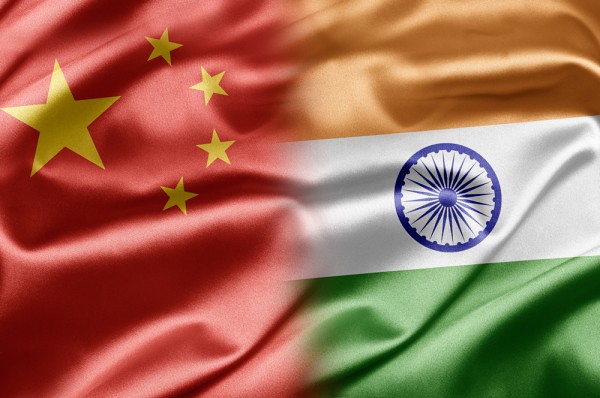
China India flag graphic via shutterstock.com

To underline India’s importance for Xi’s foreign policy, China’s new premier Li Keqiang plans to visit Delhi later this month, making India his first foreign trip since Xi and Li took power in March. But the atmosphere has been soured by the most serious Indian accusations in 25 years that Chinese soldiers have established military encampments six miles inside India in the Depseng valley of Ladakh. Incursions are common in the desolate and poorly delineated border but have never been this deep. The Chinese military has caused furor by claiming that territory so far away from the perceived border belongs to China.

Li’s visit was designed as a very positive move between two nuclear-armed giants that fought a war in 1962 and continue to have unresolved tensions along almost the entire length of their border. It was also meant to extend a friendly hand to Delhi, which has started to lean towards the US after decades of non-alignment. Alongside economic deals, goals included talking down Delhi’s fears of China’s growing military power and softening its belief that Beijing’s grip on Tibet is destroying Tibetan culture.

The Indian army noticed the Depseng valley camps about two weeks ago, causing uproar in parliament and the media although the foreign minister tried to play them down as spots of “acne” that can be treated “by simply applying an ointment.” Beijing says the dispute should be settled through negotiations but has not admitted that the soldiers are on Indian territory.
The disturbing and surprising element is that the incursions occurred just weeks before Li’s planned visit. The timing might mean that China’s generals are trying to force Xi’s hand because they do not want more trade and business expansion with India without concessions on the border. In the past five years, China has become India’s largest trading partner opening up opportunities for friendship.

The attempt now may be to use the sweeteners of economic partnership to get Delhi to swallow the bitter pill of Chinese claims to territory in the Ladakh region. The area is vital for India because it touches Pakistan, a bitter enemy and friend of China’s military that helped it to acquire the nuclear bomb and continues to be a major weapons supplier.

The Chinese military’s usual method is to push the envelope to evaluate the other side’s reactions. It is sending a signal to Delhi that the dragon is nearby to dissuade further leaning towards Washington, Beijing’s chief rival in a potential US-China cold war. The incursions may also be a signal to avoid leaning towards India’s largest weapons supplier, Russia, and instead build an independent relationship with Beijing but on terms favorable to the Chinese military’s perceptions. This is hard for Delhi because trust between the two countries falls far short of the friendship required for the Indian people not to feel threatened by Chinese power.

Currently, Indian nationalists are baying for a strong riposte to the incursions that might cause Li to cancel his visit. Some have accused the Indian prime minister and army of cowardice. Others note that India cannot successfully halt China in a border war because its supply lines are primitive compared to the four lane highways and airstrips near the border on the other side. They want a huge and sustained Indian military build up to face China in the future.

Apparently, China’s generals want to move quickly to pressure India before the military balance between the two countries becomes more equal and Indian can afford to react forcefully. However, it seems clear that Xi wants to focus on China’s economic problems rather than getting involved in a spat on India’s borders. A prolonged shootout may cause Washington and Europe to look on Beijing with renewed apprehension and trigger the US-China cold war that everyone wants to avoid.

Therefore, most hope that a visit to Beijing by the Indian foreign minister next week will defuse the situation. That should not be difficult since India wants only that the tents be dismantled. Whether that happens depends on Xi being able to stare down his generals.

Themoderatevoice

China sends fishing fleet to the Spratlys

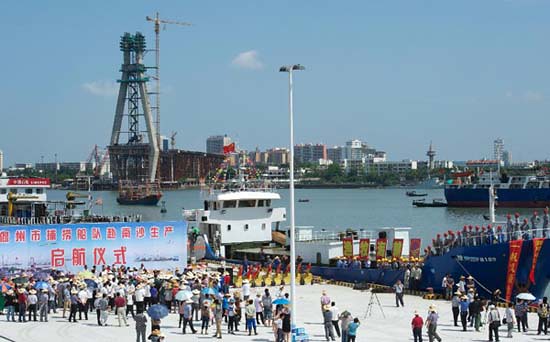
Thirty Chinese fishing vessels on Monday set off from a harbor in the China's southernmost province of Hainan for the Spratly Islands in the East Vietnam Sea, VnExpress reported on May 6th.


A fishing fleet is about set sail for Spratly Islands at the Baimajing Harbor in Danzhou City, south China's Hainan Province, May 6, 2013. Thirty Chinese fishing vessels on Monday set off for the Spratly Islands in the East Vietnam Sea. The fishing ships, each with a capacity exceeding 100 tonnes, will stay around the Islands for 40 days. (Xinhua/Wang Fuchun)

The fishing ships, each with a capacity exceeding 100 tonnes, will stay around the Spratly Islands for 40 days. The vessels, equipped with all-weather communication devices, will be under unified command.

A supply ship (4000 tonnes) and transport vessel (1500 tonnes) will be accompanying the fishing fleet.

"We are exploring ways to exploit high-seas resources in systematic manners," said Huang Wenhui, who heads the fishing office in the Department of Ocean and Fisheries of Hainan Province.

Thirty fishing vessels were sent to the islands in July last year.

"The ultimate goal of the operation is to develop a business model that allows fishermen to catch fish around the Nansha Islands on a regular basis", Huang added.

Chủ Nhật, 5 tháng 5, 2013

India - China military stand-off ends, Diplomatic tensions continue

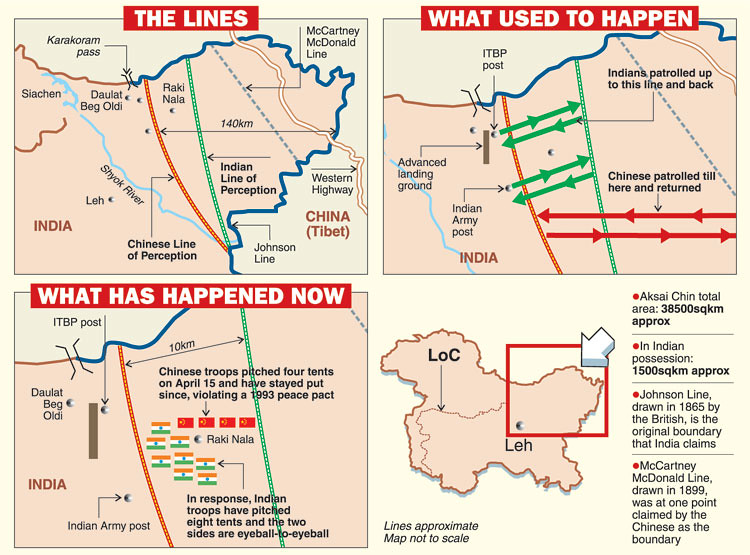
Indian media reported on May 5th, China made ​​a surprise withdrawal from the disputed area Daulat Beg Oldi (DBO) in Ladakh, where they penetrated and pitched tents 19km deep inside the Indian territory over 2 weeks ago.


China-India face-off ends as armies withdraw from Ladakh

After a tense face-off for a couple of weeks, Chinese troops have decided to withdraw from Indian territory in Depsang plains in northern Ladakh. This will pave the way for foreign minister Salman Khurshid's visit to Beijing on May 9 and the Chinese premier's India visit on May 20.

While the official line is that both armies have withdrawn to their previous positions, its unclear why the Indian army would have to move back since it is very much within Indian territory. In fact, in his statement to a parliament committee, the ministry of defence had clarified that Chinese troops had come 19km inside Indian territory.

Both sides held the fourth and fifth flag meetings between local commanders over the weekend, amid the faint possibility of a resolution to the continuing troop standoff in the Depsang Bulge area in the coming days, which would make it possible for the visit to go on. The first three flag meetings, on April 18, 23 and 30, at Spanggur Gap between the Daulat Beg Oldi and Chushul sectors had failed to break the deadlock.

It is unclear whether India made any concessions to the Chinese or whether the withdrawal was unconditional. The Indian government had been reluctant to take a strong line with the Chinese for what was a national security scare. It is only under intense public and political pressure that the UPA government finally took a hard line.

Did India make a deal?

The Chinese had been insisting that India dismantle its security and monitoring posts built in Chumar and other areas. India had resisted this because Chumar is considered to have strategic significance, particularly since Indian soldiers can monitor troop movements across the Line of Actual Control from there.

Before the news of the troops withdrawing was announced, some sources had said India might agree to remove some of the structures as "a face saver" to enable the Chinese troops to withdraw to their pre-April 15 positions. Analysts said if the Indian government had indeed agreed to make a deal with the Chinese, this kind of incursion would be repeated over and over again.

The Chinese intransigence had created a political problem with memories of the 1962 war and India's humiliating defeat by China playing in everyone's minds. Both the ruling Congress party and the opposition had asked for Khurshid's visit to be cancelled after Chinese troops refused to withdraw despite three flag meetings with the Indian side.

The Chinese action caught India by surprise in mid-April. The Indian government tried hard to rationalize the incursion, with the Prime Minister Manmohan Singh describing it as "localized problem" and Khurshid as mere "acne". The Indian reaction was seen to be late, inadequate and appeared to be glossing over the importance of the Chinese action.

The government has been trying to preserve the forthcoming visit of the Chinese Premier Li Keqiang scheduled for May 20. But political pressure and growing public opinion has hardened the government's stand in recent days, with government leaders saying the Chinese visit could be cancelled if their troops did not withdraw.


Border row high on bilateral agenda with China now


Chinese troops at Daulat Beg Oldi sector of Ladakh holding banner during the stand-off that reads: "You've crossed the border, please go back." (PTI photo)

NEW DELHI: Though the Chinese troops' withdrawal ended the stand-off in Ladakh, the Sino-Indian boundary dispute will loom larger in the upcoming bilateral engagement during Chinese Premier Li Keqiang's visit than it would ordinarily have.

According to intelligence sources, prior to the withdrawal, the Chinese were assured by the Indian side that their concerns over the Indian border fortifications that have come up in Chumar, as well as the recent strengthening of infrastructure "too close to the LoC", would be taken up soon at the highest level.

"This may possibly mean that the boundary issue may figure more prominently in Li's upcoming visit to India on May 20," a senior government official told TOI.

Incidentally, the assessment in the security establishment has been that the Chinese incursion, some 19 km into what India perceives as its side of the Line of Actual Control (LAC), was essentially to flag the border demarcation issue and force India to move beyond brushing aside each incursion as a "difference of perception between India and China over LAC."

The Chinese troops' unprecedented act of pitching tents and staying put for days together at the point of incursion, rather than following the laid down border protocol of retreating soon after Indian border troops raise a banner, was possibly to make a point that it was time that the border row was addressed.

The timing was perfect, coming as it did just ahead of Li's visit. In fact, the flagging of concerns over the border fortifications at the earlier flag meetings, the ITBP believes, may have been an after-thought and meant to prolong the stand-off until closer to the Chinese premier's visit.

With the troops finally agreeing to retreat, India expects the tents to be pulled down on Sunday night, resulting in an all-clear by Monday morning. But as officials pointed out, the Chinese appear to have already achieved the purpose behind their latest border provocation: to make the border issue a prominent item on the agenda for Li's visit.

Times of India

China’s India Land Grab - Border Tensions Continue To Escalate

NEW DELHI – Stoking tensions with Japan, Vietnam, and the Philippines over islands in the South and East China Seas has not prevented an increasingly assertive China from opening yet another front by staging a military incursion across the disputed, forbidding Himalayan frontier. On the night of April 15, a People’s Liberation Army (PLA) platoon stealthily intruded near the China-India-Pakistan tri-junction, established a camp 19 kilometers (12 miles) inside Indian-controlled territory, and presented India’s government with the potential loss of a strategically vital 750-square-kilometer high-altitude plateau.

China’s India Land Grab - Border Tensions Continue To Escalate

A stunned India, already reeling under a crippling domestic political crisis, has groped for an effective response to China’s land-grab – the largest and most strategic real estate China has seized since it began pursuing a more muscular policy toward its neighbors. Whether China intends to stay put by building permanent structures for its troops on the plateau’s icy heights, or plans to withdraw after having extracted humiliating military concessions from India, remains an open – and in some ways a moot – question.

CommentsView/Create comment on this paragraphThe fact is that, with its “peaceful rise” giving way to an increasingly sharp-elbowed approach to its neighbors, China has broadened its “core interests” – which brook no compromise – and territorial claims, while showing a growing readiness to take risks to achieve its goals. For example, China has not only escalated its challenge to Japan’s decades-old control of the Senkaku (Diaoyu) Islands, but is also facing off against the Philippines since taking effective control of Scarborough Shoal last year.

CommentsView/Create comment on this paragraphWhat makes the Himalayan incursion a powerful symbol of China’s aggressive new stance in Asia is that its intruding troops have set up camp in an area that extends beyond the “line of actual control” (LAC) that China itself unilaterally drew when it defeated India in the 1962 Chinese-initiated border war. While China’s navy and a part of its air force focus on supporting revanchist territorial and maritime claims in the South and East China Seas, its army has been active in the mountainous borderlands with India, trying to alter the LAC bit by bit.

CommentsView/Create comment on this paragraphOne of the novel methods that the PLA has employed is to bring ethnic Han pastoralists to the valleys along the LAC and give them cover to range across it, in the process driving Indian herdsmen from their traditional pasturelands. But the latest crisis was sparked by China’s use of direct military means in a strategic border area close to the Karakoram Pass linking China to India.

CommentsView/Create comment on this paragraphBecause the LAC has not been mutually clarified – China reneged on a 2001 promise to exchange maps with India – China claims that PLA troops are merely camping on “Chinese land.” Yet, in a replay of its old strategy of furtively encroaching on disputed land and then presenting itself as the conciliator, China now counsels “patience” and “negotiations” to help resolve the latest “issue.”

CommentsView/Create comment on this paragraphChina is clearly seeking to exploit India’s political disarray to alter the reality on the ground. A paralyzed and rudderless Indian government initially blacked out reporting on the incursion, lest it come under public pressure to mount a robust response. Its first public statement came only after China issued a bland denial of the intrusion in response to Indian media reports quoting army sources.

CommentsView/Create comment on this paragraphTo add to India’s woes, Salman Khurshid, the country’s bungling foreign minister, initially made light of the deepest Chinese incursion in more than a quarter-century. The garrulous minister called the intrusion just “one little spot” of acne on the otherwise “beautiful face” of the bilateral relationship – a mere blemish that could be treated with “an ointment.” Those inept comments fatally undercut the government’s summoning of the Chinese ambassador to demand a return to the status quo ante.

CommentsView/Create comment on this paragraphWith Prime Minister Manmohan Singh’s corruption-tainted government tottering on the brink of collapse, there has been no official explanation of how India was caught napping in a militarily critical area where, in the recent past, China had made repeated attempts to encroach on Indian land. In fact, the government inexplicably replaced regular army troops with border police in 2010 to patrol the mountain-ringed plateau into which the PLA has now intruded. Known as Depsang, the plateau lies astride an ancient silk route connecting Yarkand in Xinjiang to India’s Ladakh region through the Karakoram Pass.

CommentsView/Create comment on this paragraphIndia, with a military staging post and airstrip just south of the Karakoram Pass, has the capacity to cut off the highway linking China with its “all-weather ally,” Pakistan. The PLA intrusion, by threatening that Indian base, may have been intended to foreclose India’s ability to choke off supplies to Chinese troops and workers in Pakistan’s Gilgit-Baltistan region, where China has expanded its military footprint and strategic projects. To guard those projects, several thousand Chinese troops reportedly have been deployed in the rebellious, predominantly Shia region, which is closed to the outside world.

CommentsView/Create comment on this paragraphFor India, the Chinese incursion also threatens its access to the 6,300-meter-high Siachen Glacier, to the west of Depsang. Pakistan claims the Indian-controlled glacier, which, strategically wedged between the Pakistani- and Chinese-held parts of Kashmir, served as the world’s highest and coldest battleground (and one of the bloodiest) from the mid-1980’s until a cease-fire took effect in 2003.

CommentsView/Create comment on this paragraphIndia’s nonmilitary options to force a Chinese withdrawal from Depsang range from diplomatic (suspension of all official visits or reconsideration of its recognition of Tibet as part of China) to economic (an informal boycott of Chinese goods, just as China has hurt Japan through a nonofficial boycott of Japanese-made products). A possible military response could involve the Indian army establishing a camp of its own on Chinese territory elsewhere that China’s leaders regard as highly strategic.

CommentsView/Create comment on this paragraphBut, before it can exercise any option credibly, India needs a stable government. Until then, China will continue to press its claims by whatever means – fair or foul – it deems advantageous.

Project-Syndicate