Thứ Ba, 23 tháng 4, 2013

Russia Launches Rail-Mobile ICBM Project


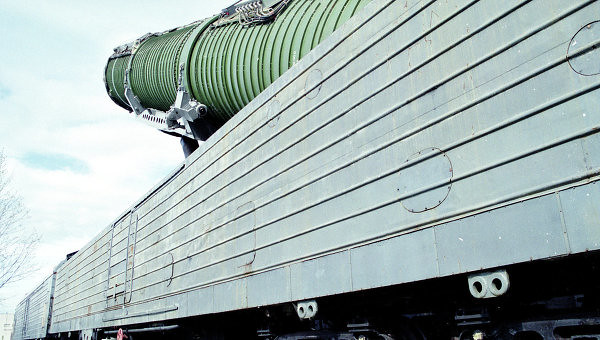
MOSCOW, April 23 (RIA Novosti) - Russia's Moscow Institute of Thermal Technology has started an R&D program to develop new rail-mobile intercontinental ballistic missile (ICBM) systems, Deputy Defense Minister Yury Borisov said on Tuesday.

The work is in the initial stages, he said, adding the cost of the program has yet to be determined. He provided no timeframe for the program.

The Moscow Institute of Thermal Technology is the developer of the Bulava (submarine-based) and Topol and Yars (land-based) ballistic missile systems.

A prototype system could be deployed by 2020, a Russian defense industry official told RIA Novosti in December. The new missiles will be half the weight of their decommissioned Soviet analogues, allowing them to fit into one railcar, he added.

The original rail-mobile system included SS-24 Scalpel missiles which weighed 104 tons, required three locomotives to move, and were so heavy that they damaged railroad tracks. The missiles were based on trains in order to make them harder to find than stationary launchers, complicating a counter-strike.


The Soviet military deployed its first rail-portable long-range missile in 1987, and had 12 of them by 1991. Rail-mobile missiles were removed from service in 2002 and the last base dismantled in 2007 under the START II arms reduction treaty with the United States.

However, the treaty’s successor, START III, agreed in 2010, does not prohibit development of rail-mobile ICBMs.

Russian military analyst Alexander Konovalov said last year this apparent return to cumbersome Soviet concepts, even in revamped form, was a “bad idea” and that missile trains were outdated.

RIA

China Forms Its First Carrier Escort Group

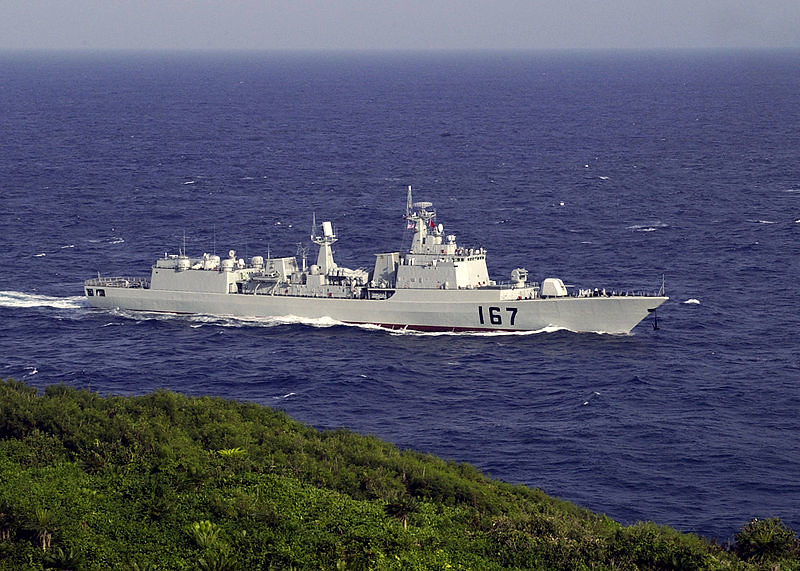
April 23, 2013: The escort group for China’s first aircraft carrier (the Liaoning) is being formed. It currently consists of two Type 051C destroyers and two Type 054A frigates plus a supply ship. It is similar to what the U.S. has long used, which is currently 3-4 destroyers, 1-2 frigates, an SSN (nuclear submarine) and a supply ship. Chinese SSNs are few and not very good, which is why China probably has not assigned one to their escort group.

Type 051C destroyer
Type 051C destroyer

The Type 51C is a 7,100 ton destroyer optimized for anti-aircraft defense. It carries 48 Russian S-300 anti-aircraft missiles (range 150 kilometers) in vertical launch tubes plus eight C-803 anti-ship missiles (range 300 kilometers), one 100mm gun, two 30mm anti-missile autocannon, six torpedo tubes and a helicopter. It has a crew of 290 and a top speed of 48 kilometers an hour.

The Type 54A frigate is a 4,300 ton ship with a top speed of 49 kilometers an hour. The crew of 165 operates a 76mm cannon, two 30mm multi-barrel anti-missile autocannon, eight C-803 anti-ship missiles, six anti-submarine torpedoes, 12 240mm anti-submarine rockets, 32 vertical launch cells containing anti-aircraft or anti-submarine missiles, and a helicopter. For both ships the radars, sonar, and electronics are all Chinese made.

As Japanese and South Korea have done, China appears to be following the American lead in destroyer design. The principal American destroyer is currently the Burke class. This is a design that is the culmination of over half a century of World War II and Cold War destroyer design experience. Even after the Burke was designed, in the 1980s, the design evolved. The first Burkes were 8,300 ton ships, while the latest ones, laden with more gear, and smaller crews, are 10,000 ton ships (what heavy cruisers weighed in World War II). With a top speed of nearly 50 kilometers an hour, their main armament is 90 vertical launch tubes flush with the deck, that can contain anti-aircraft, anti-ship, anti-missile or cruise missiles. There is also a 127mm (5 inch) gun, two 20mm anti-missile autocannon, six torpedo tubes and two helicopters. The Burkes were well thought out, sturdy and they got the job done. They became irreplaceable, and thus this class of warships will last more than half a century.

China is using its new Type 903 replenishment ships for its most important missions. The first of these 23,000 tons tanker/cargo ships appeared in 2004. The replenishment ship provides fuel, water, food, and other supplies to the task force it supports. The replenishment ship would go to local ports to restock its depleted stores of fuel, water, food, and other necessities.

The Type 903 is similar to the twelve American T-AKE replenishment ships in service. These 40,000 ton ships service a much larger fleet than the four Chinese Type 903s and are part of a larger number of replenishment ships the United States uses. China needs more replenishment ships now because it is more frequently sending warships long distances, not just to the Somali coast but also far into the Pacific.

The Liaoning is a 65,000 ton ship that had spent over a year on sea trials and began operating jets from its flight deck six months ago. China has stated that the Liaoning will primarily be a training carrier. The Chinese apparently plan to station up to 24 jet fighters and 26 helicopters on the Liaoning and use the ship to train pilots and other specialists for four or more additional carriers that are to be built. The new escort group will enable escort ships to practice operating with a carrier.

Strategy Page

Russian jets practised attacks on Sweden

Russian fighter planes carried out training missions just outside the Swedish border over Easter; Sweden's military, however, was too slow to react and had to rely on help from Nato, the Svenska Dagbladet newspaper (SvD) revealed on Monday.


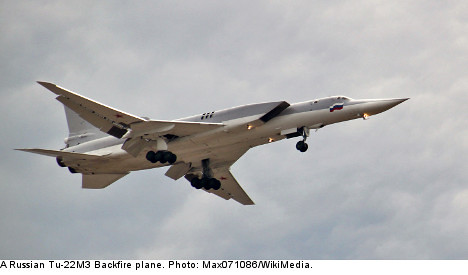
The aircraft included two heavy bombers Tu-22M3 (referred to as Backfires by Nato) which were flanked by four jet fighter escorts.

The planes flew from Saint Petersburg after midnight on March 29th, and headed past the eastern edge of Stockholm's archipelago. Usually, Russian jets continue such exercises by heading south towards Kaliningrad, a Russian exclave between Lithuania and Poland

However, in the early hours of Good Friday this year, the jets headed towards Sweden and flew over Gotska Sandön, an uninhabited Swedish island in the Baltic Sea. The planes were training for military attacks, information which had been kept secret from the public until Monday's report by SvD.

According to SvD's military sources, the planes were simulating attacks against Stockholm and somewhere in the south of Sweden.

No Swedish planes were prepared to meet the Russians and ward them off; however, jets from Nato in Lithuania and from Denmark were quick to respond, with two Lithuanian aircraft sent to shadow the Russian planes at a distance.

The Swedish Air Force did not deny the incident.

"I can confirm that there were two bombers - Tu-22 with Su-27 fighter escorts. They remained in international airspace at Gotska Sandön and carried out some form of exercise. Then they turned back the way they had come," Lieutenant-General Anders Silwer of the Armed Forces mission command told SvD.

In terms of Sweden's response, he added that the air force was "normally well prepared."

The incident occurred just two months after Defence Minister Karin Enström discussed Sweden's state of readiness policy in a speech.

"Safety, crisis preparations, and defence policy aim to be ready for the unpredictable all the time, around the clock," she said at the time.

The Local

The B-2 Stealth Bomber Will Deliver Nuclear Cruise Missiles Anywhere In The World

B-2 Stealth Bomber
The single wing B-2 has been stealthily slipping through skies for over 20 years, but until now its ability to carry nuclear munitions was limited.

That all changes with a report from the Senate Armed Services Committee on Strategic Forces (pdf) that lays out a plan to arm the B-2A stealth bomber with a state-of-the-art nuclear cruise missile, still in development.

The Long-Range Standoff Weapon (LRSO) has been testing well for months. It should be, considering the best minds at Boeing, Lockheed Martin, Northropp Grumman, and Raytheon have been working together to perfect the LRSO. Even DARPA had its hand in the plan for a missile like this to be fielded sometime over the next few years.

The U.S. is concerned that as technologies advance over the coming years, stealth will slip into the background and jets will require a "standoff capability" .


Business Insider

PH nears deal on purchase of Korean fighter jets

MANILA - The Department of National Defense (DND) is in the last stages of procuring 12 fighter jets from South Korea worth P18 billion.

Some of the hitches that authorities saw in the transaction can be ironed out by May.

DND spokesman Peter Paul Galvez said the terms of reference could be finished by next month. The terms of reference contains provisions on the delivery, technical specifications, payment scheme, among others.

“It’s in the final stages of crafting, in preparation for the procurement of the jets…After that (crafting of TOR), the contract follows, the negotiations for the contract (starts)," he said.

DND undersecretary for finance, munitions, installations and materiel Fernando Manalo said issues will need to be clarified before a contract is pursued.

"Within the month of May, the issues may be resolved…(We're hoping) that the issues will be settled within the month of May," said Manalo.

Asked when the contract will finally be signed, he said: "We are following a process.”

The purchase of the fighter jets is part of the military's modernization program.

It is also a signal that the country will finally have a "credible external defense."

The Air Force decommissioned its F-5s in 2005, leaving the country without a legitimate fighter aircraft to address external threats, such as in the West Philippine Sea.

ABS CBN News

Thứ Hai, 22 tháng 4, 2013

US, S.Korea open joint military drill to media

US and South Korean forces have allowed media access to their joint military drill as tension is running high with North Korea. The troops showed reporters an exercise in Pohang in the southeastern part of South Korea on Monday, April 22, 2013
US and South Korean forces have allowed media access to their joint military drill as tension is running high with North Korea.

The troops showed reporters an exercise in Pohang in the southeastern part of South Korea on Monday.

About 2,000 personnel unloaded military supplies from ships anchored off the coast for combat troops on the ground. The exercise is based on the scenario that enemy attacks destroy ports.

A US military official told reporters that the exercise is aimed at boosting the bilateral alliance.

The 2 countries are to continue their annual Foal Eagle joint drill until the end of April.

North Korea said last Thursday it would agree to dialogue with the US and South Korea if the countries suspended the drill.

The 2 nations opened the exercise to the media apparently to show their resolve that they will not tolerate North Korea's provocative words and actions.

Also on Monday, a South Korean Defense Ministry spokesperson said North Korea apparently has not removed its mid-range ballistic missiles deployed on the Sea of Japan coast.


NHK

China's "carrier killer" can be destroyed by US Navy, CRS specialist

(Tien Phong Online) - The report of the Congressional Research Service (CRS) said the China's new anti-ship ballistic missile DF-21D can be destroyed and not really be "the game changer".


Despite the ominous warnings from U.S. defense analysts that the country is facing the risk of losing its aircraft carriers by Chinese ballistic missiles.

However, by Ronald O'Rourke, a CRS specialist for U.S. Navy combat-operation, China's new anti-ship ballistic missile DF-21D (said to be a "U.S. aircraft carrier killer") may be destroyed by implementing measures combined activeness and passiveness.

According to the report, "China Naval Modernization: Implications for U.S. Navy Capabilities," by the end of March, 2013, O'Rourke said that the attack chain of Chinese ballistic missiles is not impossible to be intercepted.

At some stages in the series of Chinese ballistic missile attacks, the proactive measures that can be taken to intercept. These phases include: When a ship (aircraft carrier) is detected, the data is transmitted to the Chinese missile launchers, missiles to be launch, Chinese missile warheads find targets.

O'Rourke provides some concrete measures proposed to deal with the DF-21D as follows:

First, the U.S. Navy could do more to control electromagnetic radiation or using deception signals.

Second, the U.S. Navy could use the electric system to disable or interfere the enemies's reconnaissance systems and find maritime long-range targets, to destroy China ballistic missiles in various stages of flight, diversionary , snare Chinese ballistic missiles as they approach the target that has been identified.

The choice solution to destroy China's ballistic missiles in flight include: Development versions of SM-3 BMD ballistic missile interceptor. The U.S. Navy should boost perchasing missile interceptor SM-3 Block IIA missile to replace the SM-2 Block IV.

Other options include: Developing and deploying supersonic electromagnetic rail guns, promote the development and deployment of electron laser intensity weapons (shipboard high-power free electron lasers), solid-state lasers on the battleships.

The Chinese ballistic missile will be intercepted as accessing the targets of determining if U.S. warships are equipped with electronic warfare system or systems to create smoke cloud to jamming navigation radar of Chinese ballistic missiles.

O'Rourke said that the Congress should consider whether the Flight III version of the DDG-51 destroyer, Arleigh Burke class that U.S. Navy plans to purchase in 2016.


DDG-51 Arleigh Burke class destroyers, of the most powerful surface combatant class in naval history.

According to the CRS expert, DDG-51 will have the ability to anti-air warfare (AAW) and ballistic missile defense (BMD) in order to implement the task for AMDR (Air and Missile Defense Radar) to face Chinese anti-ship ballistic missiles.

DDG-51 Flight III Destroyer is enhanced AAW and BMD capability from the present Flight IIA DDG-51.

DDG-51 Flight IIA is equipped with new version of AMDR, take a size of 12-14 feet. With this size, the new radar is more sensitivity than the SPY-1 radar equipped in the DDG-51 Flight IIA destroyer.

Video: US Navy tests 'game-changing' supersonic electromagnetic rail gun


Source: Tien Phong