Chủ Nhật, 7 tháng 7, 2013

Italy, Russia to Modernize Diesel Submarine Project

ST. PETERSBURG, July 5 (RIA Novosti) – Russia and Italy have decided to optimize their joint next-generation diesel submarine project, a Russian naval design bureau said Friday.

S-1000 diesel submarine project

The S-1000, a 1,000-ton diesel submarine, is a joint project begun in 2004 by Russian submarine builder Rubin and Italy’s Fincantieri. Russia and Italy presented a mockup model of the S-1000 at an international arms show in France in October 2006.

Andrei Baranov, deputy head of the Rubin Central Design Bureau, said that in its proposed configuration, the S-1000 is of “little interest” for potential clients, adding that a decision had been made to improve the project and target specific countries that need a submarine fleet.

The submarine was originally designed for anti-submarine and anti-ship warfare, reconnaissance missions, and transportation of up to 12 troops. It is 56.2 meters long, has a top speed of 14 knots and is equipped with a new fuel cell-powered Air Independent Propulsion (AIP) system developed by the Italian firm.

Although its exterior will stay as designed, there will be considerable changes to “what’s inside” the submarine, Baranov said, adding that the target regions for selling submarine would remain the Middle East and Southeast Asia.

He cited several reasons for the upgrading the sub, including to market it to the Russian and Italian navies. He said the S-1000 design was drawn up almost a decade ago and much has changed since then. And, he noted, such small submarines are currently in great demand in the world, and there is intense competition on the market.

“Countries that are actively looking for new submarines are setting some totally unexpected demands for those ships,” he said.

RIA Novosti

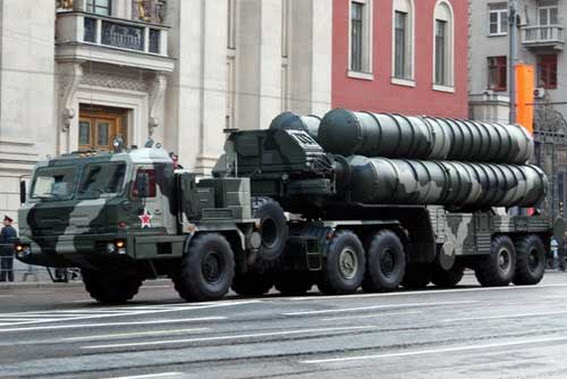
Russia sells China S-400 surface-to-air missiles

Huanqiu.com says in its report titled Russia has decided to sell S-400 to China: “According to the July issue of Canadian “Kanwa Defence Review” an authoritative source of the Russian military industry says that Russia has decided to export S-400 anti-aircraft missiles to China.

This is one more concession that Russia has made in its arms sale to China following the exports of Su-35 fighter jets, and the Chinese version of the Lada class submarines.

“Kanwa says: China hopes to get the S-400s and has been making request for it for quite a few years at the annual meetings between the two governments. However, due to fears that China might copy it and other reasons, the Russian government did not clearly agree to sell he S-400s to China until 2012.

At the end of 2012, Russia for the first time directly told Beijing that it agreed to sell the S-400s. No formal agreement has so far been entered into, but negotiation about that has already been included in the agenda.

“Russia decided that it might sell China the radar and command and control systems of the S-400. What kind of missile system will be exported will be the key issue in the negotiations. One thing is clear: the versions allowed to be sold include the interception missiles with a range of 380 kilometres.

However, no final decision has been made as to whether sale will go ahead of the full set system of the S-400 interception missiles, also having a range of 380 kilometres.”

Kanwa’s article believes that China wants to get Russian technology to improve its Hongqi-9 surface-to-air missiles, which has only a range of 125 kilometres. In order to lengthen its range, it needs a new generation of engine, and improvement of its filling technology.

The 380 kilometre range of the S-400 is longer than most similar US missiles, and is therefore extremely attractive to China.

Moreover, due the modular structure of the S-400s, they can be used in combination with the S-300 missiles China has imported from Russia.

As for the reasons why Russia has decided the export: Kanwa believes that besides mutual political needs, the major reason is further US-Japanese cooperation in developing their ballistic missile defence system with the final target of obtaining an interception missile flying at the speed of 6.5 km/second.

As a result, China and Russia have intensified their discussions and cooperation in developing their ballistic missile defence systems.


Source: huanqiu.com “Russia has decided to export S-400 to China” (excerpts and summary translated from Chinese by Chan Kai Yee)

Thứ Sáu, 5 tháng 7, 2013

Su-35 Capable of “Previously Unheard-of Manoeuvrability”- Test Pilot Bogdan

Sergey Bogdan, Hero of Russia and Sukhoi test pilot, who flew the Su-35 at the Paris Air Show, talks to Ogomyok about the aircraft and the state of aviation engineering in Russia.

The display sequence you flew in the Su-35 left the impression that the aircraft is weightless: it can stop in mid-air and descend in circles, sailing like a leaf on the wind. Is this fighter as easy to fly as it would appear from down below?

I love the Su-35, not least because I had the pleasure of being the first pilot to take it into the air. Its control system is awesome. In fighters of previous generations, as the aircraft loses airspeed its controllability often deteriorates, causing it to stall into a spin or inducing wing flow separation.

With the Su-35 you can forget about such problems. This aircraft can halt to a stop and slide down tail-first while fully responding to the pilot attitude inputs. The Su-35 is capable of previously unheard-of manoeuvrability.
Did you manage to fully demonstrate the fighter's potential at Le Bourget?
The Su-35's primary characteristics are impossible to demonstrate at an air show for obvious reasons. A fighter's primary advantage lies in its combat performance. Here are some figures for you: the Su-35 exceeds any other fourth-generation fighter in operational effectiveness by 40 percent. For a number of parameters it is 10 percent better than the [existing] fifth-generation fighters. The air forces of Malaysia and India regularly stage exercises involving Russian-made combat jets; our aircraft invariably come on top in all air-to-air combat scenarios.

Do you have gifted apprentices among test pilots?
There was a period when Russian military flying schools, including the most famed of them such as the Kacha and Borisoglebsk schools for pilots (I am a graduate of the latter), massively cut back on their cadet intake and dramatically reduced the flying hours. Making a truly high-class pilot requires some seven years of on-the-job training after graduation. It is also important to have a pool of flying officers to choose from because modern aircraft designs require talented pilots at the controls. 

As the commander of the Sukhoi's flight testing service I have been blessed with brilliant students. We have seven active pilots on the team; six of them are already current on the [T-50] fifth-generation fighter. The seventh has fallen behind somewhat owing to frequent field trips but he will catch up soon. Each of these men is capable of flying the sequence I demonstrated at Le Bourget.
Your flying career began in the 1990s, a very difficult period for Russia's economy. How did you manage to stay on in this trade?
I was plain lucky; I got enrolled with the test pilot school, which offered intensive flying despite the overall problems of the Russian Air Force. The workload was quite high: sometimes I would get to fly five different types in just one 6- to 7-hour shift. I still remember how difficult it was for me to do my first carrier landing, with the flight deck heaving and rolling under me.

In your opinion, which sectors of Russian aviation engineering require special attention?
Our fighter aviation is currently in top shape. It would be great if we could keep it at present level while stimulating the development of new aircraft designs. Our greatest concern is commercial aviation. When I see an Airbus A380 for example I wish this aircraft had been designed in Russia. We need to establish a presence in this critical niche because achievements in commercial aircraft construction are essential to a country's image in the international arena. 

Indrus

Chinese general: Philippines stirs trouble for asking US help

MANILA, Philippines - A Chinese military general told foreign media Thursday that the Philippines plays the character of a "troublemaker" in the South China Sea.

"The role of the Philippines in the South China Sea is actually, in my view, a troublemaker," People's Liberation Army Major General Luo Yuan, known as "The Hawk" among Beijing's military leaders, said in his first interview with foreign media.

Luo said the Philippines attempted to provoke the Chinese government by asking help from the United States, whom he called "biased" over the maritime dispute.

A Chinese news analyst had also called the Philippines a "troublemaker" for seeking help from other nations in pursuing its claims over parts of the potentially oil-rich Spratlys region.

Luo, who is also vice minister of World Military Research Department of the Academy of Military Sciences in Beijing, also took a swipe at India and warned the country not to increase its military power at the Depsang Valley border amid China's incursion since April.

"No other major country in this world has been subjected to foreign aggression and invasion by other major countries, so that is why no other country is more eager than China to become strong," Luo said.

China has kept disputed islets being occupied by Philippines, Malaysia and Vietnam under surveillance, as it also claims ownership of the territory. China is claiming almost the entire South China Sea.

In an interview with China Internet Information Center in 2012, Luo claimed that the Philippines has an agenda for making a hard line stance on its claim over Scarborough Shoal (called "Huangyan" by China and "Panatag" by the Philippines).

"The Philippine claim that the Huangyan Island belongs to them is based on their own understanding of the 1982 UN Convention on the Law of the Sea ... The Philippines is testing whether the international community will accept their actions, and whether China will acquiesce," Luo said.

The military academic added that if the Philippines becomes successful in its campaign over the shoal, it will build confidence in its neighbors to also pursue their claims on parts of the South China Sea, which may eventually force China into losing the islands.

"The Philippines wants to find out whether China will completely rule out military action in any event during this period of "strategic opportunity," or even exchange the island in a peace settlement," he said.

Luo also believes that the country is testing the effectiveness of its relations with the US and see whether Washington will take its side on the standoff.

Luo is also famous for his blogs and social media postings. Among the most contentious posts he had written on Chinese networking site Weibo earned over 200,000 comments, according to a report

"Protect the nation's rights externally, punish the traitors internally," he said in the post.

Philstar

USS Kearsarge in Night Operation


Video by Sgt. Chris Stone 26th Marine Expeditionary Unit
An MV-22B Osprey assigned to Marine Medium Tiltrotor Squadron (VMM) 266 (Reinforced), 26th Marine Expeditionary Unit (MEU), lands aboard the USS Kearsarge (LHD 3), during nighttime flight operations at sea, June 27, 2013. The 26th MEU is a Marine Air Ground Task Force forward deployed to the U.S. 5th Fleet area of responsibility aboard the Kearsarge Amphibious Ready Group serving as a sea based, expeditionary crisis response force capable of conducting amphibious operations across the full range of military operations. (U.S. Marine Corps motion media by Sgt. Christopher Q. Stone, 26th MEU Combat Camera/Released).

Preparing for cyberwarfare


SINGAPORE – The realm of conflict between states that could lead to war has expanded in recent years. The United States and other major military powers are gearing up to defend themselves from attack in cyberspace, just as they have done in the past from land, sea, air and outer space attack. The U.S. has identified, but not yet named, more than 20 nations that now have military units dedicated to employing cyber technology in war. The roll call certainly includes China and Russia, as well as the U.S. itself.

China said in May that its armed forces would conduct their first cyber exercises in June to “test new types of combat forces.” The exercises would involve “digitalized units, special operations forces, army aviation and electronic counter forces,” the official Xinhua news agency said. Earlier this year, Russia’s Defense Minister Sergei Shoigu gave the General Staff several months to complete proposals to set up an army cyber command by the end of 2013.

However, Western cyber officials and analysts say that the announcements by China and Russia formalize moves that are already well established. A 2011 survey commissioned by the United Nations Institute for Disarmament Research found that 33 states, including China and Russia as well as the U.S., included cyber warfare in their military planning and organization.

Japan was not on this list. But like many other countries, it, too, has since taken steps to protect itself from cyber attack. This is because cyberspace — the globally connected network computers, and wired or wireless communication devices — is critical for the functioning of modern governments, armed forces and economies.

The U.S. Department of Defense officially made cyberspace a new domain of warfare in 2011. It has a rapidly growing Cyber Command under a general who also heads two related intelligence agencies. One collects huge volumes of electronic data from around the world on America’s cyber adversaries. The other is mandated to protect US national security systems from infiltration and disruption.

Despite big cuts in U.S. military spending, another 4,000 information technology specialists are due to join Cyber Command in the next four years, quadrupling its size. This will happen as an additional $23 billion is invested in cyber security.

Outlining the program on June 27, the chairman of the U.S. Joint Chiefs of Staff, army Gen. Martin E. Dempsey, said that he expects cyberspace missions to become a dominant factor in military operations. But what will the rules of military engagement be in this largely lawless and opaque digital frontier?

Speaking in Singapore on June 1 at the Shangri-La Dialogue on Asia-Pacific security, U.S. Defense Secretary Chuck Hagel noted that the Obama administration had repeatedly expressed concerns about the growing threat of cyber intrusions, some of which appeared to be tied to the Chinese government and military.

But he added a significant caveat: “To try to figure out where a cyber attack has come from, who initiated it, (and) for what reason, that’s not quite as easy as the days when you could identify a navy sailing across the ocean … or an army crossing a border to attack you.”

Still, this has not stopped the U.S. from recently updating its rules of engagement for cyber warfare for the first time in seven years, and developing emergency procedures to guide rapid responses to attacks judged to have serious national security or economic consequences.

“One thing is clear,” Gen. Dempsey said. “Cyber has escalated from an issue of moderate concern to one of the most serious threats to our national security. We now live in a world of weaponized bits and bytes, where an entire country can be disrupted by the click of a mouse.”

The U.S. says it’s concerned with two broad kinds of cyber threats. One is against critical government, military and civilian infrastructure, such as electricity and water supply, transportation and communication networks, and financial services.

In the last two years, detected intrusions into America’s vital infrastructure have increased 17-fold. The computer control systems that run U.S. chemical, electrical, water and transport sectors have all been probed by hackers. As long ago as 2009, national security officials warned that cyber spies from China, Russia and other unnamed countries had penetrated the U.S. electricity supply grid, leaving behind software programs that could be activated to disrupt the system during a crisis or war.

The second main area of concern about cyber threats is the large-scale theft of valuable U.S. government, military, private sector and allied country secrets, either by state-sponsored hackers or criminals. Japan is known to share these concerns and the two allies have recently increased their cyber cooperation.

The head of Cyber Command, Gen. Keith B. Alexander, told a congressional panel on June 12 that hostile cyber programs and capabilities were growing, evolving and spreading. “We believe,” he said, “(that) it is only a matter of time before the sort of sophisticated tools developed by well-funded state actors find their way to groups or even individuals who, in their zeal to make some political statement, do not care about the collateral damage they inflict on bystanders and critical infrastructure.”

Alexander added that on a scale of one to ten, with ten being strongly defended, “our critical infrastructure’s preparedness to withstand a destructive cyber attack is about three, based on my experience.”

Meanwhile, at Cyber Command three kinds of teams are preparing to operate around-the-clock. “National mission” teams will counter foreign cyber attacks on the U.S. A second, larger, set of “combat mission” teams will support combatant commanders in carrying out military operations in the field.

A third group of “cyber protection” teams, the largest category, will operate and defend the computer and communication networks, including satellites in outer space, that support U.S. and allied operations around the world. About one-third of these teams are scheduled to be working by September, with the rest phasing in over the following two years.

Alexander told Congress in March that offence, in other words retaliation, would be part of the teams’ mission if the U.S. was attacked in cyberspace. “Thirteen of the teams we’re creating are for that (offensive) mission set alone,” he said. “We’re also creating 27 teams that would support combatant commands and their planning process for offensive cyber capabilities.”

Assuming the U.S. could positively identify the source, what kind of foreign cyber attack would prompt a response? And how would the U.S. respond? Rules of military engagement are always classified to keep such knowledge from adversaries.

However, it is widely assumed that a destructive cyber attack on the U.S. would be met with a similar retaliatory response. Dempsey said this might not necessarily be the case and that it could, instead, be a conventional military response.

Under the U.S. Constitution, the elected president, as commander in chief of the armed forces, would have to decide whether a foreign cyber attack was sufficiently serious to be declared a hostile act, and thus an act of war.

Given the particular foggy nature of cyber space, and the difficulty in tracing the source of disguised cyber attacks, it is likely that U.S. President Barack Obama would err on the side of caution.


Michael Richardson is a visiting senior research fellow at the Institute of Southeast Asian Studies in Singapore.


Japan Times

Chinese General Warns India Against 'New Trouble'

BEIJING — An outspoken Chinese general known for his nationalist views warned India on Thursday against stirring up “new trouble” in a long-running border dispute, just as New Delhi’s defence minister was set to visit Beijing.

“The Indian side should not provoke new problems and increase military deployment at the border areas and stir up new trouble,” Maj. Gen. Luo Yuan told reporters.

Luo, the deputy-director general of the world military research department at a People’s Liberation Army academy, described himself at a briefing as a “reasonable hardliner.”

His articles appear prominently in state media, and he has 320,000 followers on Sina Weibo, a popular Twitter-like microblogging site.

He made waves last year with comments questioning the legitimacy of Japanese sovereignty over the Ryukyu Islands, a chain that includes Okinawa and hosts numerous United States military bases.

“India is the only country in the world that says that it is developing its military power because of China’s military threat,” said Luo, who was wearing a business suit.

“So I believe that India should be very cautious in what it does and what it says.”

A high-altitude frontier dispute between the nuclear-armed giants in the Himalayas has simmered for decades but intensified in May over troop movements in the region.

New Delhi alleged Chinese troops intruded nearly 20 kilometers into Indian-claimed territory.

A three-week standoff ensued and was resolved after talks between local military leaders and a withdrawal of troops from both sides.

The border situation was now generally “under control” following a visit to India in May by Chinese Premier Li Keqiang, Luo said.

His comments came as Indian defence chief A.K. Antony was due to arrive in China late Thursday for three days of talks, the first such trip in seven years.

Antony’s visit, on which he is accompanied by top Indian military commanders, coincides with a trip to China by Pakistani Prime Minister Nawaz Sharif.

Pakistan, India’s nuclear-armed neighbour and archrival, is a longstanding close ally of Beijing. Chinese officials describe their relationship with Islamabad as one between “all weather friends”.

Covering a wide range of topics, Luo touched on China’s history of humiliation by foreign powers in the 19th and 20th centuries.

“No other major country in this world has been subjected to foreign aggression and invasion by other major countries, so that is why no other country is more eager than China to become strong,” he said.

Besides India, Luo also took swipes at the US and the Philippines over a territorial row China has with the Southeast Asian country.

Calling the US “biased,” he said Washington has “added fuel to the fire” by cooperating with Manila amid the maritime dispute.

“The role of the Philippines in the South China Sea is actually, in my view, a troublemaker,” he said.

On Sunday, Manila accused Beijing of a “massive” military buildup in the sea, which is also the site of rival claims by Vietnam, Brunei, Malaysia and Taiwan.

Asked by AFP if Beijing’s close ally North Korea — which this year threatened to attack the US with nuclear weapons — was also a “troublemaker,” Luo suggested, albeit indirectly, that it was.

He referred to a speech Chinese President Xi Jinping gave in April saying there should be no tolerance for those fostering “chaos for selfish gains,” wording widely seen at the time as criticizing Pyongyang without mentioning it by name.

“So we can imagine which country it is or which countries they are that are engaged in undermining peace and stability in our neighbouring environment for their own selfish gains,” Luo said.


Defense News