Hiển thị các bài đăng có nhãn Vietnam People's Army. Hiển thị tất cả bài đăng
Thứ Tư, 28 tháng 2, 2018
Thứ Hai, 9 tháng 12, 2013
In pictures: Aircrafts of Vietnam People's Army
Vietnam People's Army (VPA) now has two air forces: Vietnam People's Air Force (VPAF) and Naval Air Force (VPNAF).
The Vietnam People's Air Force (Vietnamese: Không quân Nhân dân Việt Nam) is the air force of Vietnam. It is the successor of the former North Vietnamese Air Force and the absorbed Republic of Vietnam Air Force following the re-unification of Vietnam in 1975.
YouTube: The visiting to the Air Force 935 Regiment witnessing the super fighter Su-30MK2V
The Vietnam People's Air Force (VPAF) is one of three main branches in the Vietnam People's Army which is a part of the Ministry of Defence. The main mission of the VPAF is the defence the Vietnamese airspace and the provision of air cover for operations of the Vietnam People's Army.
More: Vietnam Airforce and Navy ready to take on the Chinese
Others: Ka-27, ka-25 (patrol); M-400, An-30 (Reconnaisance); Yak-52, Yak-130 (trainer); An-38, M-28, An-24, UH-1, Mi-8, Mi-17 (transport),...
Naval Air Force
Naval Air force - The newly-established 954 Air Force- naval brigade can perform the following tasks: military transport, reconnaissance, aerial, water-surface and on-the-ground observation, search and rescue at sea, on land and rescue and flood prevention.
Vietnam People's Navy prepared to build Naval Air Force to increase the capacity of coastal defense. On February 27, 2010, the General Staff (Vietnam People's Army) decides to build and make regular member the 954th Naval Air Force Regiment of Vietnamese Navy.
Vietnam has purchased three CASA C-212 Aviocar aircraft Series 400 professional beach patrol and tracking. The aircraft equipped with radar MSS 6000 and Naval Air Force will use for general patrol purposes. Vietnamese Navy received two Eurocopter EC225 Super Puma to offshore patrol and search and rescue missions.
Viking Air Company of Canada has contracted to sell to Vietnam six Seaplane DHC-6 Twin Otter Series 400 from 2012 to 2014. And 7 Kamov Ka-27 helicopters will be transferred to naval air force.
More pictures about VPA: http://worldmilitaryintel.blogspot.com/2013/05/vietnam-vietnam-capitalhanoi.html
The Vietnam People's Air Force (Vietnamese: Không quân Nhân dân Việt Nam) is the air force of Vietnam. It is the successor of the former North Vietnamese Air Force and the absorbed Republic of Vietnam Air Force following the re-unification of Vietnam in 1975.
YouTube: The visiting to the Air Force 935 Regiment witnessing the super fighter Su-30MK2V
The Vietnam People's Air Force (VPAF) is one of three main branches in the Vietnam People's Army which is a part of the Ministry of Defence. The main mission of the VPAF is the defence the Vietnamese airspace and the provision of air cover for operations of the Vietnam People's Army.
More: Vietnam Airforce and Navy ready to take on the Chinese
Others: Ka-27, ka-25 (patrol); M-400, An-30 (Reconnaisance); Yak-52, Yak-130 (trainer); An-38, M-28, An-24, UH-1, Mi-8, Mi-17 (transport),...
Naval Air Force
Naval Air force - The newly-established 954 Air Force- naval brigade can perform the following tasks: military transport, reconnaissance, aerial, water-surface and on-the-ground observation, search and rescue at sea, on land and rescue and flood prevention.
Vietnam People's Navy prepared to build Naval Air Force to increase the capacity of coastal defense. On February 27, 2010, the General Staff (Vietnam People's Army) decides to build and make regular member the 954th Naval Air Force Regiment of Vietnamese Navy.
Vietnam has purchased three CASA C-212 Aviocar aircraft Series 400 professional beach patrol and tracking. The aircraft equipped with radar MSS 6000 and Naval Air Force will use for general patrol purposes. Vietnamese Navy received two Eurocopter EC225 Super Puma to offshore patrol and search and rescue missions.
Viking Air Company of Canada has contracted to sell to Vietnam six Seaplane DHC-6 Twin Otter Series 400 from 2012 to 2014. And 7 Kamov Ka-27 helicopters will be transferred to naval air force.
More pictures about VPA: http://worldmilitaryintel.blogspot.com/2013/05/vietnam-vietnam-capitalhanoi.html
Thứ Sáu, 26 tháng 4, 2013
The outstanding feature of the Vietnamese defense policy
What are the most striking characteristics of Vietnam's defense policy after 38 years of reunification? VietNamNet would like to introduce the translation of the interview with Deputy Minister of Defense, Lieutenant General Nguyen Chi Vinh, a Party Central Committee member on Tuoi Tre Newspaper.
We would like to start the conversation from your thoughts – one of the military leaders who mature after the country’s reunification – about the historical event of April 30, 1975?
Each person, based on their particular circumstances, will have their own feelings. But there is one thing in common: it is the victory of the people of Vietnam and we are proud to pass an arduous war by the power of the entire nation. This victory has built the lasting peace, which is also a very important condition for the development of the country.
To go to the day of victory, we had to pay a very expensive price, with many people falling down. Perhaps after the April 30 victory, a few people thought that almost 40 years later, and perhaps beyond, our country must continue to make every effort to rectify the consequences of the war.
First and foremost are the psychological and emotional consequences. In addition, the war left many other consequences, such as Agent Orange, the landmine problem, finding missing martyrs ... These tasks need at least 30-40 years or longer to be completed.
You want to refer to the consequences of war to see more clearly the value of peace?
Peace is priceless, it's a peaceful life to the people, rice and warm clothing, the happiness of every family, the children's laughter, is no longer the mother who lost her children... With such simple but extremely spiritual meanings, it is well enough to see that peace is everything for us.
From the April 30 victory, we are proud, confident in the ability to protect the country, ensuring that the people of Vietnam will defeat all wars of aggression, but we must wholeheartedly keep the long peace of the country. A peace based on independence, territorial sovereignty, a peace which our people to decide our destiny.
All wars are all about peace, but that peace is peace in dependence or independence and freedom? We choose peace that the people of Vietnam are entitled to, which is peace in independence and freedom.
Things take to have peace, but there is a non-trade-off value – the national sovereignty, the right to live in independence and freedom. Moreover, to have sustainable peace, there must be independence and freedom. If we are dependent, the peace cannot last long, as cannot bring happiness to the people.
The difficulty today can make someone frustrated and question or concern whether the country can grow enough to avoid lag, enough to hold our territorial sovereignty?
In these days, looking at the April 30 victory, looking at the national spirit and ardent patriotism of the people, we have deep faith that the country will overcome all challenges to come up because we overcame long and hardship wars.
Currently, although there are obviously difficulties but there are much more convenient conditions. I do not agree when someone said that people, and especially young people are now less interested in the general issues of the country. It is absolutely not true. The problem is that we have to provide them with complete and objective information about the situation of the country, in terms of advantages as well as difficulties to create the strength of consensus.
The market mechanism affects people in many different directions, positive and negative. On the one hand we have to accept that characteristics of the development and integration, on the other hand we have to make everything transparent to the people to have the right direction.
To have sustainable peace, there must be sufficient capacity to protect the country, in terms of aggregate capacity of the country as well as characteristics of the defense. We believe to ensure that ability by the strategy on building the entire population defense. In any given moment we must always ensure self-protection, keep the territorial integrity, and not wait for new modern weapons for such assurances. The procurement of additional weapons and equipment, military modernization, strengthening the entire-people defense is to have to pay least, in the shortest time if problems occur with the Fatherland.
When at war, holding the gun to go to the battle field is dedication and sacrifice for the country, but now we need to tell young people what is dedication. When talking with my children, I often say that the most important for human is labor.
The predecessors must facilitate young people to work and dedicate with the right ability, qualifications and passion. So make sure our nation is a blessed nation, what the previous generations did, the younger generation will preserve and develop.
Whether peace, cooperation and development is a big trend, but right in our region there still exist many factors that make instability such as fiercer territorial and marine disputes. In this context, the national strength will be multiplied if we are truly tolerant and harmonious as the late Prime Minister Vo Van Kiet said?
Our people have a tradition of kindness, tolerance. The Party and State always aim to eliminate the guilt, hatred, close the past, look towards the future. As I said, every Vietnamese citizen though derive from particular situations have one in common – It is the national interest.
National unity must take the common goals as the similarities and accept differences, but not contrary to the national interest. Everyone when looking at the national interest will see and will make the similarities bigger.
In our meeting with the community of overseas Vietnamese, I always said that my greatest wish is that when they return home, they will feel that the country creates all conditions for their family reunification and for them to do business. We do not urge overseas Vietnamese to contribute to the country in one way, at first the country has to open her outstretched arms to her people.
The desire for peace can be seen in the defense policy of peace and self-defense in nature. However, on a number of regional forums, there were opinions around Vietnam’s purchase of aircrafts, submarines ... What do you think?
A country that buy weapon for defense in moderation is very normal. That procurement is in line with the economic potential of the country.
Vietnam is no exception. If you approach the purchase of weapon in military perspective, there are two features to note: First, we shop with a moderate rate, corresponding to the economic development of the country.
Second, we purchase weapons and military equipment just enough to our defense. We gradually modernize military. When military modernization in high growth, it will come back to help the country's economic development, for example, if national defense science and technology develops, it will have conditions to share resource to other areas.
According to information made public in the press, people know that Vietnam made deals with Russia to buy submarines, aircraft and military equipment from this country. This simply reflects that Russia is a prestigious weapon exporter or anything else?
This reflects that due to historical reasons, we are familiar with weapons of the former Soviet Union in the past and now the Russian Federation. Selecting weapons that are familiar with the existing maintenance system is more favorable than using the armament in the other systems.
Nowadays the sale of weapons and military equipment is normal, transparent and we have nothing to hide. We can purchase weapon of all countries, and many countries are willing to sell them to us.
It must be said that the weapons and equipment purchase should have trust between buyers and sellers. Vietnam and Russia had such a past; the current development strategy of Russia does not have a conflict with the interest for Vietnam. Russia is a strategic and a very reliable partner of Vietnam. That trust helps us to recommend the purchase of Russian armament while Russia, when Russia sell weapons to us, they also believe that we will never use the weapon to do anything contrary to their interests.
Another important reason is that Russian weapons are mainly defensive in nature. And generally, Russian weapons are very durable and have been tested over time.
A country like Vietnam needs durable weapons. We cannot change weapons continuously and Russian weapons meet that requirement. Finally, we have to say about the price, we have to find a seller with acceptable prices.
Observers commented that external activities of the Vietnam’s defense recently have become much more active. In that process, is there any country that has invited Vietnam to participate in military coalitions or set their military bases in the country?
So far no country has invited Vietnam to join military alliances or expressed a desire to put their military bases in Vietnam.
I think that the first cause of that silence is due to our initiative in making strong and consistent statement: Vietnam does not join military alliances, not allow other countries to set their military bases in our territory or use our territory against other countries, Vietnam not follow one to against the other countries.
It is the "three noes" of the Vietnamese defense policy.
How about Vietnam's perspective on participation in joint military exercises with other countries?
We should not use the word "military exercise," the word "rehearsal" is more accurate. In the current defense cooperation, there are “rehearsals,” not “military exercises,” for example, joint rehearsals on anti-terrorism, drills of maritime security protection, rehearsals on marine search and rescue.
These are cooperation of humanitarian, peaceful and constructive nature. We are ready to and have participated in such rehearsals, such as joint patrols at sea with some neighboring countries and countries in the region.
We do not participate in exercises of military nature, or the nature of threatening or attacking to a third country. We only join the rehearsals for peace and self-defense.
Does it mean that promoting defense external activities in the last few years is looking for new friends in this area?
First of all, the purpose of the defense foreign policy is to participate in the front of foreign affairs of the Party and State. The characteristic of the defense foreign policy is to create trust between countries. Nations may have a lot of cooperation fields, but cooperation in defense can enhance mutual trust. That mutual trust will return promote cooperation in other fields.
Another characteristic of defense cooperation is to directly address the risks on defense and military conflict, so we expand defense cooperation to make remote prevention.
Defense cooperation also directly serves the goal to modernize the army, acquire new knowledge to improve the qualification of our soldiers.
However, it is found that the defense cooperation must be based on the country's political stability. We have to build our defense potential strong enough to defend the country first, to have something to talk with others.
Recently, it was reported that Vietnam’s army will join the peacekeeping force of the United Nations. Can you give some details of this content?
So far, the preparation process has completed and if nothing changes, Vietnam will join the UN peacekeeping forces in the nearest time. Our aim when participating in this force is to implement the policy of Vietnam as a responsible member of the international community.
In principle, there are many but there are two basic principles: First, the activity that is truly peacekeeping, we will participate in at the request of the UN. We do not involve in the areas that are not peace making.
For example, we do not involve in the areas with wars and conflicts. We only engage in post-conflict reconstruction activities or the activities to deal with war consequences.
Second, we decide where to participate in, the level of participation, what to do and when to involve.... This is also the principle set out by the UN.
In the most recent meeting held earlier this month in Beijing, ASEAN and China realized that they should early launch formal negotiations for a Code of Conduct in the East Sea (COC). What do you think?
This is a good signal between ASEAN and China. We respond positively to that new move and the constructive attitude of related parties.
Of course, the important issue is that the COC will load what content, the negotiating parties to realize their commitments or not. Those who truly desire peace and stability in the East Sea are waiting for the COC to have binding provisions to urge the parties to comply with what they commit.
There are a lot of works to do. Personally I think there are two important principles: the first is international law, the second is the equality between countries.
In negotiations of the COC, it is necessary to assert and continue to strictly implement the DOC. In addition it is needed to point out the shortcomings of the DOC and the countries that do not implement what they committed.
Translated by Tran Cham
We would like to start the conversation from your thoughts – one of the military leaders who mature after the country’s reunification – about the historical event of April 30, 1975?
Each person, based on their particular circumstances, will have their own feelings. But there is one thing in common: it is the victory of the people of Vietnam and we are proud to pass an arduous war by the power of the entire nation. This victory has built the lasting peace, which is also a very important condition for the development of the country.
To go to the day of victory, we had to pay a very expensive price, with many people falling down. Perhaps after the April 30 victory, a few people thought that almost 40 years later, and perhaps beyond, our country must continue to make every effort to rectify the consequences of the war.
First and foremost are the psychological and emotional consequences. In addition, the war left many other consequences, such as Agent Orange, the landmine problem, finding missing martyrs ... These tasks need at least 30-40 years or longer to be completed.
You want to refer to the consequences of war to see more clearly the value of peace?
Peace is priceless, it's a peaceful life to the people, rice and warm clothing, the happiness of every family, the children's laughter, is no longer the mother who lost her children... With such simple but extremely spiritual meanings, it is well enough to see that peace is everything for us.
From the April 30 victory, we are proud, confident in the ability to protect the country, ensuring that the people of Vietnam will defeat all wars of aggression, but we must wholeheartedly keep the long peace of the country. A peace based on independence, territorial sovereignty, a peace which our people to decide our destiny.
All wars are all about peace, but that peace is peace in dependence or independence and freedom? We choose peace that the people of Vietnam are entitled to, which is peace in independence and freedom.
Things take to have peace, but there is a non-trade-off value – the national sovereignty, the right to live in independence and freedom. Moreover, to have sustainable peace, there must be independence and freedom. If we are dependent, the peace cannot last long, as cannot bring happiness to the people.
The difficulty today can make someone frustrated and question or concern whether the country can grow enough to avoid lag, enough to hold our territorial sovereignty?
In these days, looking at the April 30 victory, looking at the national spirit and ardent patriotism of the people, we have deep faith that the country will overcome all challenges to come up because we overcame long and hardship wars.
Currently, although there are obviously difficulties but there are much more convenient conditions. I do not agree when someone said that people, and especially young people are now less interested in the general issues of the country. It is absolutely not true. The problem is that we have to provide them with complete and objective information about the situation of the country, in terms of advantages as well as difficulties to create the strength of consensus.
The market mechanism affects people in many different directions, positive and negative. On the one hand we have to accept that characteristics of the development and integration, on the other hand we have to make everything transparent to the people to have the right direction.
To have sustainable peace, there must be sufficient capacity to protect the country, in terms of aggregate capacity of the country as well as characteristics of the defense. We believe to ensure that ability by the strategy on building the entire population defense. In any given moment we must always ensure self-protection, keep the territorial integrity, and not wait for new modern weapons for such assurances. The procurement of additional weapons and equipment, military modernization, strengthening the entire-people defense is to have to pay least, in the shortest time if problems occur with the Fatherland.
When at war, holding the gun to go to the battle field is dedication and sacrifice for the country, but now we need to tell young people what is dedication. When talking with my children, I often say that the most important for human is labor.
The predecessors must facilitate young people to work and dedicate with the right ability, qualifications and passion. So make sure our nation is a blessed nation, what the previous generations did, the younger generation will preserve and develop.
Whether peace, cooperation and development is a big trend, but right in our region there still exist many factors that make instability such as fiercer territorial and marine disputes. In this context, the national strength will be multiplied if we are truly tolerant and harmonious as the late Prime Minister Vo Van Kiet said?
Our people have a tradition of kindness, tolerance. The Party and State always aim to eliminate the guilt, hatred, close the past, look towards the future. As I said, every Vietnamese citizen though derive from particular situations have one in common – It is the national interest.
National unity must take the common goals as the similarities and accept differences, but not contrary to the national interest. Everyone when looking at the national interest will see and will make the similarities bigger.
In our meeting with the community of overseas Vietnamese, I always said that my greatest wish is that when they return home, they will feel that the country creates all conditions for their family reunification and for them to do business. We do not urge overseas Vietnamese to contribute to the country in one way, at first the country has to open her outstretched arms to her people.
The desire for peace can be seen in the defense policy of peace and self-defense in nature. However, on a number of regional forums, there were opinions around Vietnam’s purchase of aircrafts, submarines ... What do you think?
A country that buy weapon for defense in moderation is very normal. That procurement is in line with the economic potential of the country.
Vietnam is no exception. If you approach the purchase of weapon in military perspective, there are two features to note: First, we shop with a moderate rate, corresponding to the economic development of the country.
Second, we purchase weapons and military equipment just enough to our defense. We gradually modernize military. When military modernization in high growth, it will come back to help the country's economic development, for example, if national defense science and technology develops, it will have conditions to share resource to other areas.
According to information made public in the press, people know that Vietnam made deals with Russia to buy submarines, aircraft and military equipment from this country. This simply reflects that Russia is a prestigious weapon exporter or anything else?
This reflects that due to historical reasons, we are familiar with weapons of the former Soviet Union in the past and now the Russian Federation. Selecting weapons that are familiar with the existing maintenance system is more favorable than using the armament in the other systems.
Nowadays the sale of weapons and military equipment is normal, transparent and we have nothing to hide. We can purchase weapon of all countries, and many countries are willing to sell them to us.
It must be said that the weapons and equipment purchase should have trust between buyers and sellers. Vietnam and Russia had such a past; the current development strategy of Russia does not have a conflict with the interest for Vietnam. Russia is a strategic and a very reliable partner of Vietnam. That trust helps us to recommend the purchase of Russian armament while Russia, when Russia sell weapons to us, they also believe that we will never use the weapon to do anything contrary to their interests.
Another important reason is that Russian weapons are mainly defensive in nature. And generally, Russian weapons are very durable and have been tested over time.
A country like Vietnam needs durable weapons. We cannot change weapons continuously and Russian weapons meet that requirement. Finally, we have to say about the price, we have to find a seller with acceptable prices.
Observers commented that external activities of the Vietnam’s defense recently have become much more active. In that process, is there any country that has invited Vietnam to participate in military coalitions or set their military bases in the country?
So far no country has invited Vietnam to join military alliances or expressed a desire to put their military bases in Vietnam.
I think that the first cause of that silence is due to our initiative in making strong and consistent statement: Vietnam does not join military alliances, not allow other countries to set their military bases in our territory or use our territory against other countries, Vietnam not follow one to against the other countries.
It is the "three noes" of the Vietnamese defense policy.
How about Vietnam's perspective on participation in joint military exercises with other countries?
We should not use the word "military exercise," the word "rehearsal" is more accurate. In the current defense cooperation, there are “rehearsals,” not “military exercises,” for example, joint rehearsals on anti-terrorism, drills of maritime security protection, rehearsals on marine search and rescue.
These are cooperation of humanitarian, peaceful and constructive nature. We are ready to and have participated in such rehearsals, such as joint patrols at sea with some neighboring countries and countries in the region.
We do not participate in exercises of military nature, or the nature of threatening or attacking to a third country. We only join the rehearsals for peace and self-defense.
Does it mean that promoting defense external activities in the last few years is looking for new friends in this area?
First of all, the purpose of the defense foreign policy is to participate in the front of foreign affairs of the Party and State. The characteristic of the defense foreign policy is to create trust between countries. Nations may have a lot of cooperation fields, but cooperation in defense can enhance mutual trust. That mutual trust will return promote cooperation in other fields.
Another characteristic of defense cooperation is to directly address the risks on defense and military conflict, so we expand defense cooperation to make remote prevention.
Defense cooperation also directly serves the goal to modernize the army, acquire new knowledge to improve the qualification of our soldiers.
However, it is found that the defense cooperation must be based on the country's political stability. We have to build our defense potential strong enough to defend the country first, to have something to talk with others.
Recently, it was reported that Vietnam’s army will join the peacekeeping force of the United Nations. Can you give some details of this content?
So far, the preparation process has completed and if nothing changes, Vietnam will join the UN peacekeeping forces in the nearest time. Our aim when participating in this force is to implement the policy of Vietnam as a responsible member of the international community.
In principle, there are many but there are two basic principles: First, the activity that is truly peacekeeping, we will participate in at the request of the UN. We do not involve in the areas that are not peace making.
For example, we do not involve in the areas with wars and conflicts. We only engage in post-conflict reconstruction activities or the activities to deal with war consequences.
Second, we decide where to participate in, the level of participation, what to do and when to involve.... This is also the principle set out by the UN.
In the most recent meeting held earlier this month in Beijing, ASEAN and China realized that they should early launch formal negotiations for a Code of Conduct in the East Sea (COC). What do you think?
This is a good signal between ASEAN and China. We respond positively to that new move and the constructive attitude of related parties.
Of course, the important issue is that the COC will load what content, the negotiating parties to realize their commitments or not. Those who truly desire peace and stability in the East Sea are waiting for the COC to have binding provisions to urge the parties to comply with what they commit.
There are a lot of works to do. Personally I think there are two important principles: the first is international law, the second is the equality between countries.
In negotiations of the COC, it is necessary to assert and continue to strictly implement the DOC. In addition it is needed to point out the shortcomings of the DOC and the countries that do not implement what they committed.
Translated by Tran Cham
Thứ Năm, 25 tháng 4, 2013
Video: Vietnam conducts live fire exercise against enemy landings in Ly Son Island
On April 21-22, Ly Son Island's Armed Forces (in Quang Ngai province) conducted live fire exercises to improve combat power, protect the island in the situation of unexpected enemy attack.
Military Committee of Ly Son Island is the first unit of the armed forces in Quang Ngai drills using elastic warheads and explosives in the exercise against the enemy's waterway-landing in 2013.
Thứ Tư, 3 tháng 4, 2013
Vietnamese air defense plans to equip Pantsir-S1
The famous Vietnamese defense information gate Tien Phong Newspaper report that some Russian military sources revealed on Vietnam sending trainees to Russia for training transferred and mastering some modern weapons of Russia including the combinations of Pantsir-S1, Tor, Buk ...
These are the new generation of Russian air defense weapons, useful for air defense of tactics and points. The mobility air defense combinations, which equip short-range missile, flaks, sophisticated electronic warfare devices, can destroy targets such as low-flying aircraft, unmanned aircraft, cruise missiles ...
Pantsir-S1 (NATO reporting name SA-22 Greyhound) is a combined short to medium range surface-to-air missile and anti-aircraft artillery weapon system produced by KBP of Tula, Russia. The system is a further development of SA-19/SA-N-11 and represents the latest air defence technology by using phased-array radars for both target acquisition and tracking.
Each combination of Pantsir-S1 contains two 30mm automatic cannons and 57E6 surface-to-air missile with radar or optical target tracking and wireless bridge. Now it is the combination of missile and flak considered as the world's best-selling air defense missiles and has no rival in the arms market.
Wikipedia:
Pantsir-S1 is a short to medium range ground based air defence system, wheeled, tracked or stationary with two to three operators. Its air defense consists of automatic anti-aircraft guns and surface-to-air-missiles with radar or optical target-tracking and radio-command guidance. Its purpose is protection of civil and military point and area targets, for motorised or mechanised troops up to regimental size or as defensive asset of higher ranking air defence systems like S-300/S-400. Aerial targets include everything with a minimum radar-cross-section of 1 cm2 and speeds up to a maximum of 1300 metre/second within a maximum range of 20,000 metres and heights up to 15,000 metres—including all types of aircraft, helicopters, unmanned aerial vehicles, cruise missiles and air-to-ground precision guided weapons. The system is able to defend against stealth aircraft, and has capability for anti-munitions missions.
The specific feature of the Pantsir-S1 system is the combination of a multiple-band target acquisition and tracking system in conjunction with a combined missile and gun armament creating a continuous target engagement zone from 5 m height and 200 m range up to 10 km height and 20 km range, even without any external support.
These are the new generation of Russian air defense weapons, useful for air defense of tactics and points. The mobility air defense combinations, which equip short-range missile, flaks, sophisticated electronic warfare devices, can destroy targets such as low-flying aircraft, unmanned aircraft, cruise missiles ...
Pantsir-S1 (NATO reporting name SA-22 Greyhound) is a combined short to medium range surface-to-air missile and anti-aircraft artillery weapon system produced by KBP of Tula, Russia. The system is a further development of SA-19/SA-N-11 and represents the latest air defence technology by using phased-array radars for both target acquisition and tracking.
Each combination of Pantsir-S1 contains two 30mm automatic cannons and 57E6 surface-to-air missile with radar or optical target tracking and wireless bridge. Now it is the combination of missile and flak considered as the world's best-selling air defense missiles and has no rival in the arms market.
Wikipedia:
Pantsir-S1 is a short to medium range ground based air defence system, wheeled, tracked or stationary with two to three operators. Its air defense consists of automatic anti-aircraft guns and surface-to-air-missiles with radar or optical target-tracking and radio-command guidance. Its purpose is protection of civil and military point and area targets, for motorised or mechanised troops up to regimental size or as defensive asset of higher ranking air defence systems like S-300/S-400. Aerial targets include everything with a minimum radar-cross-section of 1 cm2 and speeds up to a maximum of 1300 metre/second within a maximum range of 20,000 metres and heights up to 15,000 metres—including all types of aircraft, helicopters, unmanned aerial vehicles, cruise missiles and air-to-ground precision guided weapons. The system is able to defend against stealth aircraft, and has capability for anti-munitions missions.
The specific feature of the Pantsir-S1 system is the combination of a multiple-band target acquisition and tracking system in conjunction with a combined missile and gun armament creating a continuous target engagement zone from 5 m height and 200 m range up to 10 km height and 20 km range, even without any external support.
Thứ Năm, 28 tháng 3, 2013
Zelenodolsk Shipyard To Build Two "Gepard" for Vietnam
Construction of two frigates project 11661E "Gepard-3.9" for the Vietnam People's Navy will be built by Zelenodolsk Shipyard Gorky in Tatarstan. On this, as reported by ITAR-TASS news agency, said the company's CEO Renat Mistahov. According to him, the laying of the first ship in June 2013. Both frigates will be transferred to the customer in 2016 and 2017.
Construction of frigates will be carried out under a contract signed in December 2011. Vietnam then bought two frigates. According to the Deputy Director for International Business Zelenodolsk plant Sergei Rudenko, the party patrol will be built with "ASW characteristics."
The first two ships of the "Gepard-3.9" Vietnam has purchased in 2006. They were handed over to the customer in 2011. The structure of the Vietnamese Navy patrol were named "Dinh Tien Hoang" and "Ly Thai To." Tonnage of ships of 2.100 tons. Patrol armed with cruise missiles, "Uran", 76.2-mm guns and 30-millimeter gun. In the air group of ships includes one helicopter Ka-28 and Ka-31.
Lenta
Thứ Hai, 18 tháng 3, 2013
Vietnam's military buildup: Media report
To increase its military power, the Vietnamese government launched a program to modernize its air force and navy against the growing Chinese influence in the disputed region of the South China Sea five years ago, reports the periodical Kanwa Asian Defense based in Canada.
By deploying SS-N-26 Yakhont anti-ship missiles and Gepard class frigates (2 in service and 2 more order) at its bases in central and southern Vietnam, the country's navy is able to respond promptly to any Chinese action in the Spratly islands. By 2010, Russia had already provided enough Yakhont anti-ship missiles to the Vietnamese navy to equip a battalion. Vietnam and Russia began to discuss a new contract to equip another Yakhont anti-ship missile battalion this year. While most disputed islands in the South China Sea lie less than 300 kilometers from Vietnam, the range of the Yakhont anti-ship missiles enable the Vietnamese navy enough capability to attack targets farther than 300 kilometers from home. They are considered a considerable threat to Chinese vessels operating in the disputed waters.
Speaking at the meeting with Vietnamese oversea people on Septemper 27-28, 2012, Major General Nguyen Thanh Tuan, director of the Propaganda and Training Department, General Political Department of the Vietnam People's Army hit strengths: "We have guardian ships equipped with missiles to protect the coast of 200km squared, we also have the missiles reaching a range of 600km, and the missiles are the most modern weapons in the world today. We also purchase enough aircrafts to protect the Spratly and Paracel islands." (1)
Vietnam People's Navy is building Coastal defense missile force (the 679th Coastal missile Regiment) become the core force in maritime security strategy by equipping Russian and Indian missile systems. Vietnamese Navy has already produced itself P-5 Pyatyorka/Shaddock anti-ships missile, range upgraded to 550 km, in fact, Vietnam was the only customer that USSR export this missile system.
The Joint venture company Russia-India BrahMos Aerospace Private Limited will sold Vietnam 15 BrahMos stealth supersonic cruise missile, and become the first military in the world imports Brahmos defense missile, if compared with other types of missiles being used in the world, BrahMos missile has the advantages of speed faster 3 times, range longer 2.5 times, respond shorter time 3-4 times. (2)
In a surprise development, Vietnam is also finalizing a contract to purchase four Sigma-class corvettes from the Netherlands. Currently operated by the Indonesian and Moroccan navies, the Sigmas, two of which might be built in Vietnam, would be the most modern warships in Vietnam's inventory.
There are currently 24 Su-30MKV/MK2 and 12 Su-27SK/UBK fighters in the service of Vietnam's air force. Like the navy, the Vietnamese air force deploys most of its advanced fighter units to central and southern Vietnam. The 935th Regiment of the Vietnamese air force equipped with the Su-30MKV/MK2 is currently based at Bien Hoa near Ho Chi Minh City. Taking off from Bien Hoa, the combat radius of a Su-30MKV/MK2 covers the entire South China Sea. Since the southern Chinese island province of Hainan is only 500 kilometers from the Phu Cat Air Force Base of the 940th Air Force Regiment, the Vietnamese Su-27SK/UBK is able to strike the base of the PLA's South Sea Fleet on the island.
Older Cold War-era fighters such as the MiG-21 and Su-22 have been stationed at the air force bases of nothern Vietnam, which are considered less important to Hanoi's overall strategy.
A representative of Rosoboronexport, Russia's state-run military exporter, told Kanwa Asian Defense that the Vietnamese government is planning to purchase 12 more Su-30MKV/MK2 fighters to augment another of its air force regiments. In addition, the Vietnamese government is also in talks with Rosoboronexport about acquiring Yak-130 trainers. "We are not in a hurry," the agent said. "The Vietnamese will need our trainers sooner or later if they are using our fighters."
In April 2011, Vietnam has ordered six Kilo class submarine, worth about 1.8 billion dollars, the contract is said to occupy the entire defense budget of Vietnam in 2009. With six submarines, the first to be delivered in 2012 and the last one to be delivered by 2016, Vietnam will own the largest and most modern submarines team in Southeast Asia.
Moscow will proceed with plans this year to help Vietnam launch a new submarine fleet and train the crews, Russian Defense Ministry Sergei Shoigu said on Wednesday, March 6, 2013.
“This year our joint efforts will open a new page in Vietnam’s navy – a new fleet will appear,” Shoigu said, after talks with his Vietnamese counterpart Defense Minister General Phung Quang Thanh.
Shoigu said the two ministers discussed “crew training and preparation of the submarines,” for which Russian military schools will provide assistance, he said.
In 2012, Russia and Vietnam planned to start joint production of a modified anti-ship missile, head of the Federal Service for Military-Technical Cooperation Mikhail Dmitriyev said on Wednesday.
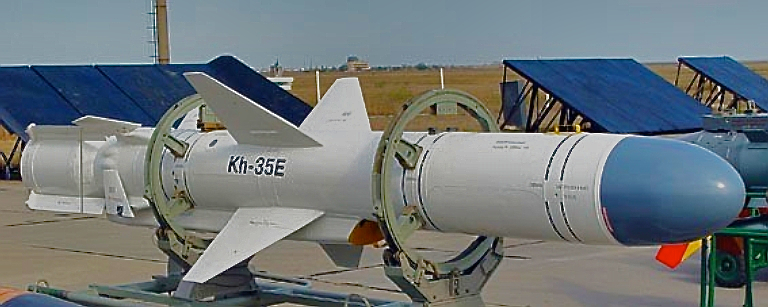
“We are planning to build facilities in Vietnam for the production of a version of the Russian Uran [SS-N-25 Switchblade] (named X-35) missile in a project that is similar to joint Russian-Indian production of the BrahMos missile,” Dmitriyev said.
The Uran subsonic anti-ship missile can be launched from helicopters, surface ships and coastal defense batteries. It has a range of up to 250 kilometers (135 nautical miles) and carries a 145-kilogram high explosive warhead.
Russian-Indian joint venture BrahMos Aerospace Ltd, set up in 1998, manufactures supersonic cruise missiles based on the Russian-designed NPO Mashinostroyenie 3M55 Yakhont (SS-N-26). (3)
News aggregated from various sources.
1 http://www.tienphong.vn/xa-hoi/593375/Bao-ve-bien-dao-bang-vu-khi-hien-dai-nhat-the-gioi-tpov.html
2. http://www.thehindu.com/news/national/article2610605.ece
3 http://en.ria.ru/world/20120215/171330093.html
By deploying SS-N-26 Yakhont anti-ship missiles and Gepard class frigates (2 in service and 2 more order) at its bases in central and southern Vietnam, the country's navy is able to respond promptly to any Chinese action in the Spratly islands. By 2010, Russia had already provided enough Yakhont anti-ship missiles to the Vietnamese navy to equip a battalion. Vietnam and Russia began to discuss a new contract to equip another Yakhont anti-ship missile battalion this year. While most disputed islands in the South China Sea lie less than 300 kilometers from Vietnam, the range of the Yakhont anti-ship missiles enable the Vietnamese navy enough capability to attack targets farther than 300 kilometers from home. They are considered a considerable threat to Chinese vessels operating in the disputed waters.
Speaking at the meeting with Vietnamese oversea people on Septemper 27-28, 2012, Major General Nguyen Thanh Tuan, director of the Propaganda and Training Department, General Political Department of the Vietnam People's Army hit strengths: "We have guardian ships equipped with missiles to protect the coast of 200km squared, we also have the missiles reaching a range of 600km, and the missiles are the most modern weapons in the world today. We also purchase enough aircrafts to protect the Spratly and Paracel islands." (1)
Vietnam People's Navy is building Coastal defense missile force (the 679th Coastal missile Regiment) become the core force in maritime security strategy by equipping Russian and Indian missile systems. Vietnamese Navy has already produced itself P-5 Pyatyorka/Shaddock anti-ships missile, range upgraded to 550 km, in fact, Vietnam was the only customer that USSR export this missile system.
The Joint venture company Russia-India BrahMos Aerospace Private Limited will sold Vietnam 15 BrahMos stealth supersonic cruise missile, and become the first military in the world imports Brahmos defense missile, if compared with other types of missiles being used in the world, BrahMos missile has the advantages of speed faster 3 times, range longer 2.5 times, respond shorter time 3-4 times. (2)
In a surprise development, Vietnam is also finalizing a contract to purchase four Sigma-class corvettes from the Netherlands. Currently operated by the Indonesian and Moroccan navies, the Sigmas, two of which might be built in Vietnam, would be the most modern warships in Vietnam's inventory.
There are currently 24 Su-30MKV/MK2 and 12 Su-27SK/UBK fighters in the service of Vietnam's air force. Like the navy, the Vietnamese air force deploys most of its advanced fighter units to central and southern Vietnam. The 935th Regiment of the Vietnamese air force equipped with the Su-30MKV/MK2 is currently based at Bien Hoa near Ho Chi Minh City. Taking off from Bien Hoa, the combat radius of a Su-30MKV/MK2 covers the entire South China Sea. Since the southern Chinese island province of Hainan is only 500 kilometers from the Phu Cat Air Force Base of the 940th Air Force Regiment, the Vietnamese Su-27SK/UBK is able to strike the base of the PLA's South Sea Fleet on the island.
| Vietnam's Su-30MK2V |
A representative of Rosoboronexport, Russia's state-run military exporter, told Kanwa Asian Defense that the Vietnamese government is planning to purchase 12 more Su-30MKV/MK2 fighters to augment another of its air force regiments. In addition, the Vietnamese government is also in talks with Rosoboronexport about acquiring Yak-130 trainers. "We are not in a hurry," the agent said. "The Vietnamese will need our trainers sooner or later if they are using our fighters."
Moscow will proceed with plans this year to help Vietnam launch a new submarine fleet and train the crews, Russian Defense Ministry Sergei Shoigu said on Wednesday, March 6, 2013.
| The Vietnam's first two in a series of six Kilo class submarines Projekt 06361 HQ-182 "Hanoi" and HQ-183 "Ho Chi Minh City" during state sea trials in Russia. |
Shoigu said the two ministers discussed “crew training and preparation of the submarines,” for which Russian military schools will provide assistance, he said.
In 2012, Russia and Vietnam planned to start joint production of a modified anti-ship missile, head of the Federal Service for Military-Technical Cooperation Mikhail Dmitriyev said on Wednesday.
“We are planning to build facilities in Vietnam for the production of a version of the Russian Uran [SS-N-25 Switchblade] (named X-35) missile in a project that is similar to joint Russian-Indian production of the BrahMos missile,” Dmitriyev said.
The Uran subsonic anti-ship missile can be launched from helicopters, surface ships and coastal defense batteries. It has a range of up to 250 kilometers (135 nautical miles) and carries a 145-kilogram high explosive warhead.
Russian-Indian joint venture BrahMos Aerospace Ltd, set up in 1998, manufactures supersonic cruise missiles based on the Russian-designed NPO Mashinostroyenie 3M55 Yakhont (SS-N-26). (3)
News aggregated from various sources.
1 http://www.tienphong.vn/xa-hoi/593375/Bao-ve-bien-dao-bang-vu-khi-hien-dai-nhat-the-gioi-tpov.html
2. http://www.thehindu.com/news/national/article2610605.ece
3 http://en.ria.ru/world/20120215/171330093.html
Chủ Nhật, 17 tháng 3, 2013
The 4K51 Rubezh anti-ship missile system of Vietnam
The 4K51 Rubezh anti-ship missile systems (NATO reporting name SSC-3), have been use in the Vietnam People's Navy, supported in the 1980s from the Soviet Union to equip the Missile- Artillery Coastal Defense Regiment, a new unit of arms established after the Vietnam War, the 4K51 has served in the Vietnam People's Army for nearly 30 years and has become one of the "missile shield" under managing of the 679th Coastal missile Regiment to protect its territorial sovereignty over the East Vietnam Sea (the South China Sea).
The combinations of 4K51 Rubezh, 4K44B REDUT-M and K-300P Bastion-P is the three most modern coastal defense shield of the Vietnam People's Navy.
Rebezh and Redut anti-ship missile systems
Related: Vietnam S-300 Air Defense System loading warheads for combat readiness
The combinations of 4K51 Rubezh, 4K44B REDUT-M and K-300P Bastion-P is the three most modern coastal defense shield of the Vietnam People's Navy.
Related: Vietnam S-300 Air Defense System loading warheads for combat readiness
Thứ Sáu, 1 tháng 3, 2013
Vietnam's mobile coastal defence missile system K-300P Bastion-P
The K-300P Bastion-P (NATO reporting name SSC-5) is a Russian mobile coastal defence missile system. The system is developed together with the Belarus company Tekhnosoyuzproekt.
The system is designed for destruction of various surface ships from enemy's landing squadrons, convoys, carrier strike groups, as well as single vessels and land-based radiocontrast targets in conditions of intensive fire and electronic countermeasures. The system uses the P-800 Yakhont (SS-N-26) anti-ship cruise missiles and has a maximum range of 300 km. The missile system is mounted on a mobile vehicle that can deploy its missiles in under five minutes and remain on active standby over a period of 3–5 days.
On 2 March 2011 it was reported that Russia will deploy the system on the Kuril Islands in the far east.
Vietnam bought two systems in early 2011. Syria purchased two systems on 2007. The systems have been delivered to Syria in early December 2011.
In Vietnam, they are equipped for 681 Naval Unit of Vietnam People's Navy.
Related: Vietnamese Prime Minister Visits Bastion Coastal Missile Complex in 681 Naval Unit
The system is designed for destruction of various surface ships from enemy's landing squadrons, convoys, carrier strike groups, as well as single vessels and land-based radiocontrast targets in conditions of intensive fire and electronic countermeasures. The system uses the P-800 Yakhont (SS-N-26) anti-ship cruise missiles and has a maximum range of 300 km. The missile system is mounted on a mobile vehicle that can deploy its missiles in under five minutes and remain on active standby over a period of 3–5 days.
On 2 March 2011 it was reported that Russia will deploy the system on the Kuril Islands in the far east.
Vietnam bought two systems in early 2011. Syria purchased two systems on 2007. The systems have been delivered to Syria in early December 2011.
In Vietnam, they are equipped for 681 Naval Unit of Vietnam People's Navy.
Related: Vietnamese Prime Minister Visits Bastion Coastal Missile Complex in 681 Naval Unit
Thứ Năm, 28 tháng 2, 2013
Vietnam's S-300 Air Defense System loading warheads for combat readiness
This air defense missile system has been to put on the regular staff of 361 Air Division, Vietnam People's Air Defense - Air Force.
Vietnam People's Air Force (VPAF) has equiped 2 systems of S-300PMU1 with 12 launchers including 72 missiles and VPAF had intended to buy two more system from Russia.
Thứ Ba, 26 tháng 2, 2013
Thứ Sáu, 22 tháng 2, 2013
Vietnamese Su-30MK2 in flying exercise
In recent years, the Vietnam People's Air Force has been invested, equipped with various kinds of modern aircraft, including the SU-30MK2 fighter.
Thứ Tư, 30 tháng 1, 2013
Vietnam's missile-armed Su-30MK2
Jan 30, 2013- Vietnamese Prime Minister Nguyen Tan Dung and Defence Minister Phung Quang Thanh on January 26 examined training and combat readiness at Air Force Regiment 923 of Division 371 under the Air Defence-Air Force in Thanh Hoa province.
The Government leader praised the Regiment for its training efforts, and asked it to promptly master modern ammunitions to strengthen its self-defence capacity so as to firmly defend national independence, sovereignty and territorial integrity.
“Your primary tasks are to improve training quality, heighten vigilance, and hold regular drills to be capable of coping with any possible worst circumstances,” said the PM.
He reminded the Regiment to pay special attention to staff training, considering this a decisive factor in mastering modern ammunitions and military techniques.
He asked the Ministry of Defence to better care for the material and spiritual lives of military officers and soldiers to ensure they devote themselves to tasks entrusted to them.
The same day, PM Dung and Defence Minister Thanh visited Tho Xuan air terminal in the province. The first air route between Thanh Hoa and Ho Chi Minh City is scheduled to be inaugurated on February 5, 2013.
Phunutoday.vn
At the end of year 2012, 24 Su-30MK2 fighter aircrafts equipped missiles including R-27, R-73, Kh-29, Kh-31A/P, X-35 (made in Vietnam),... were delevered to Vietnam People's Air Force (VPAF).
The Government leader praised the Regiment for its training efforts, and asked it to promptly master modern ammunitions to strengthen its self-defence capacity so as to firmly defend national independence, sovereignty and territorial integrity.
“Your primary tasks are to improve training quality, heighten vigilance, and hold regular drills to be capable of coping with any possible worst circumstances,” said the PM.
He reminded the Regiment to pay special attention to staff training, considering this a decisive factor in mastering modern ammunitions and military techniques.
He asked the Ministry of Defence to better care for the material and spiritual lives of military officers and soldiers to ensure they devote themselves to tasks entrusted to them.
The same day, PM Dung and Defence Minister Thanh visited Tho Xuan air terminal in the province. The first air route between Thanh Hoa and Ho Chi Minh City is scheduled to be inaugurated on February 5, 2013.
Phunutoday.vn
Thứ Hai, 21 tháng 1, 2013
Vietnam military arms drill to combat
Jan 21, 2013- The coordination of military arms in combat operation is one of the important contents in combat plans of the Vietnamese people's armed forces, contributing to improve the military's combat capability in any situation.
Hereafter, the photos of Tien Phong News Onlines shows Vietnam People's Ground Force (VPGF), Air Force (VPAF) and Navy (VPN) in combat operation.
Tienphong.vn
Hereafter, the photos of Tien Phong News Onlines shows Vietnam People's Ground Force (VPGF), Air Force (VPAF) and Navy (VPN) in combat operation.
Tienphong.vn
Thứ Ba, 8 tháng 11, 2011
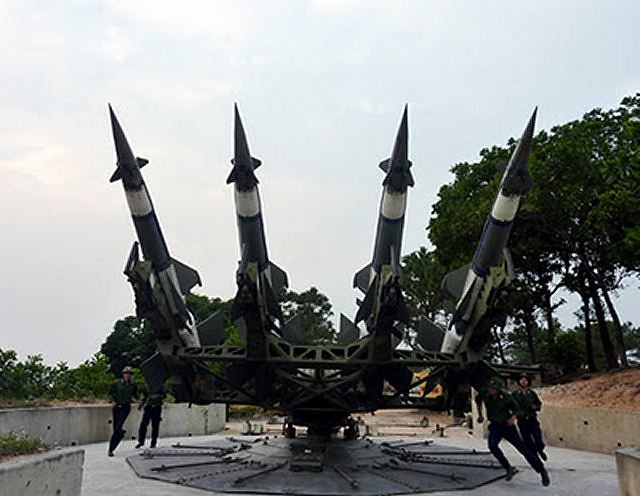
Succesfull training exercice for the Vietnamese air defence troops with S-125 Pechora missile.
Old S-125 Pechora (NATO code SA-3 GOA) missile launcher are always in service in the Vietnamese Armed Forces. Vietnamese Missile Regiment 213, Division 363 are always in combat readiness posture to firmly defend the airspace of Vietnam.
As one of the main unit of the Air Defense - Air Force, in recent years Regiment 213, Division 363 are successfully completing the training missions, combat readiness, firmly defend the airspace and sovereignty of the sea and the sacred island of the country.
The SA-3 Goa (Russian name S-125 Neva) system began development in 1956 as a low- to medium-altitude complement to the larger S-25/R-113 (SA-1), S-75 (SA-2) and S-200 (SA-5) medium- to high-altitude surface-to-air missile systems.
Since Russia replaced most of its S-125 sites with SA-10 and SA-12 systems, they decided to upgrade the S-125 systems being removed from service to make them more attractive to export customers. Released in 2000, the Pechora-2 version features better range, multiple target engagement ability and a higher probability of kill (PK). The launcher is moved onto a truck allowing much shorter relocation times. It is also possible to fire the Pechora-2M system against cruise missiles.
Army Recognition
As one of the main unit of the Air Defense - Air Force, in recent years Regiment 213, Division 363 are successfully completing the training missions, combat readiness, firmly defend the airspace and sovereignty of the sea and the sacred island of the country.
The SA-3 Goa (Russian name S-125 Neva) system began development in 1956 as a low- to medium-altitude complement to the larger S-25/R-113 (SA-1), S-75 (SA-2) and S-200 (SA-5) medium- to high-altitude surface-to-air missile systems.
Since Russia replaced most of its S-125 sites with SA-10 and SA-12 systems, they decided to upgrade the S-125 systems being removed from service to make them more attractive to export customers. Released in 2000, the Pechora-2 version features better range, multiple target engagement ability and a higher probability of kill (PK). The launcher is moved onto a truck allowing much shorter relocation times. It is also possible to fire the Pechora-2M system against cruise missiles.
Army Recognition
Đăng ký:
Bài đăng (Atom)