Hiển thị các bài đăng có nhãn The US. Hiển thị tất cả bài đăng

Thứ Sáu, 22 tháng 3, 2013

F-35B makes first vertical landing at Yuma

The first operational squadron of F-35 Joint Strike Fighter jets passed a milestone Thursday in Yuma when the Marine Corps version of the aircraft made its first vertical landing outside of testing.

The first F-35 squadron meant to eventually fly the jet in combat was established in November at Marine Corps Air Station Yuma -- Marine Fighter Attack Squadron (VMFA) 121. Until now the squadron was not allowed to perform the F-35B’s signature feature, its ability to land like a helicopter.

Maj. Richard Rusnok, an F-35B test pilot flying BF-19, conducted the first hover and vertical landing for the squadron, the Marine Corps announced. The commanding officer, Lt. Col. Jeffrey Scott, accompanied him in a second F-35B as a chase aircraft.


Meanwhile, the military has been prepping pilots on the new aircraft at the F-35 Integrated Training Center at Eglin and testing it at Edwards Air Force Base, Naval Air Station Patuxent River, Md., and at sea.

Although the Yuma squadron is considered the first operational unit of F-35, the jet is far from ready for combat. The squadron cannot deploy with its F-35Bs until they are upgraded with software revisions not expected until mid-2015.

The Yuma squadron is building up to about 300 Marines and 16 aircraft expected by late 2013. The first F-35 squadron is not expected in San Diego at Marine Corps Air Station Miramar until fiscal 2021.

The $396 billion F-35 program, the Pentagon’s most expensive and by some measures most ambitious ever, has been under development by Lockheed Martin since 2001.

Because of its cost, technical glitches and slipped development timeline, the F-35 program has been continually sniped at for potential curtailment or cancellation. Most recently, a controversial report released this month by the Center for a New American Security, a Washington, D.C.-based think tank, suggested scrapping the whole program, as well as phasing out aircraft carriers.

The move to “cancel the always-troubled JSF now while simultaneously extending production of the lower-cost Hornets,” would free $70 million per aircraft for investment in unmanned aerial combat vehicles, or drones, flying off smaller ships, wrote Capt. Henry Hendrix, a career naval flight officer.

The aircraft, also called the Lightning II, was conceived as a relatively affordable “fifth generation” stealth jet to be used across the services, saving money through a common production line, design and parts. Three versions were developed: one for the Marine Corps that would protect the service’s ability to operate from short runways in austere locations and small amphibious ships, an Air Force model using conventional runways, and a Navy version for aircraft carriers.

The F-35B is slated to replace three types of aircraft in the Marine fleet: F/A-18 Hornets, AV-8B Harriers and EA/6B Prowlers.

As the Air Force tests and trains on its version and the Navy awaits delivery of its first production tailhook model, the Marine variant has faced the most performance pressure and danger of cancellation. Critics point to ongoing engineering challenges in the most complicated F-35 variant and say the Corps can do without a vertically landing jet.

The first production model of the Navy’s F-35C carrier variant flew its inaugural sortie in February. It is expected to be delivered to Eglin Air Force Base later this year for Strike Fighter Squadron 101, a training unit.

http://www.utsandiego.com/news/2013/mar/21/joint-strike-fighter-vertical-landing/

Thứ Ba, 19 tháng 3, 2013

Strategic U.S. bombers fly practice nuclear strikes in Korea

United States B-52 bombers carried out simulated nuclear bombing raids on North Korea as part of ongoing U.S.-South Korean military exercises, Pentagon officials said on Monday.

Pentagon press secretary George Little told reporters that B-52 bombers from Andersen Air Force Base, Guam, conducted a training mission over South Korea March 8 during war games known as Exercise Foal Eagle.

“It’s not any secret that we are in the midst of sending a very strong signal that we have a firm commitment to the alliance with our South Korean allies,” Little said.

North Korean video shows imagined attack on Washington


--> Watch Video
Deputy defense secretary Ashton Carter said during a visit to South Korea on Monday that the bomber flights are part of the U.S. “extended deterrence”—the use of U.S. nuclear forces to deter North Korea, which conducted its third underground nuclear test Feb. 12.

“I should note the presence of strategic bombers taking place in flight training in the Korea peninsula area in particular, for example, but this is routine. There will be a B-52 flight tomorrow,” Carter said in Seoul.

The bomber flights are part of increased training efforts that seek to show U.S. resolve in protecting South Korea, Little said.

The B-52 flights are part of the U.S. Pacific Command program called Continuous Bomber Presence.

Little said the Guam base has been used since 2004 for strategic bomber rotational deployments. “The B-52 Stratofortress can perform a variety of missions including carrying precision-guided conventional or nuclear ordnance,” Little said. “We will continue to fly these training missions as part of our ongoing actions to enhance our strategic posture in the Asia-Pacific region.”

It is unusual for the Pentagon to make such overt statements about the use of strategic nuclear forces in Asia Pacific.

The Foal Eagle maneuvers will highlight both nuclear and conventional capabilities of the B-52s, Little said, adding that the flights were routine.

“Despite challenges with fiscal constraints, training opportunities remain important to ensure U.S. and [South Korean] forces are battle-ready and trained to employ airpower to deter aggression, defend South Korea, and defeat any attack against the alliance,” he said.

The U.S. military until the early 1990s stored nuclear bombs and missiles in Guam but moved the bombs and missiles to the continental United States.

Two Russian strategic nuclear bombers identified as Tu-95 Bear Hs, were recently intercepted as they circled Guam in what analysts say was saber-rattling on the part of the Russians, who several years ago set up an anti-U.S. alliance with China called the Shanghai Cooperation Organization that includes several Asian and Southwest Asia states.

South Korean news reports last week also stated that U.S. nuclear missile submarines would remain near South Korean waters to provide another sign of U.S. nuclear deterrence.

The combined nuclear and conventional forces exercises began in early March as part of maneuvers called Key Resolve that involved around 13,000 U.S. and South Korean troops. A second round of exercises known as Foal Eagle will extend through the end of April.

South Korean forces remain on heightened alert over concerns that North Korean military forces will attempt a new military provocation, as occurred several years ago when a North Korean submarine sank a South Korean coastal patrol ship and then fired artillery on a South Korean island near the Northern Limit Line delineating North and South Korea waters even with the 38th parallel.

South Korean President Park Geun-hye has said any further military provocation would trigger a South Korean military response, which analysts fear could trigger a new Korea war.

North Korea, angered over a new United Nations resolution condemning its latest underground nuclear test, announced it was pulling out of the 1953 armistice agreement ending hostilities during the Korean War.

Intelligence sources said they do not expect North Korea to conduct a provocation during the military exercises in South Korea when troops and forces are ready to conduct large-scale operations.

However, a future military provocation by Pyongyang could take place in May, after the war games end.

North Korea’s communist government also has stepped up harsh rhetoric with threats to use nuclear missile attacks against both South Korea and the United States.

Propaganda organs recently issued videos on YouTube showing nuclear missile attacks on New York City and U.S. troops in flames from a nuclear strike.

A North Korean general also said recently that the military has missiles equipped with nuclear warheads ready for launch.

The Pentagon on Friday announced it would increase the number of ground-based missile defense interceptors in Alaska and California based on new intelligence indicating North Korea has deployed a road-mobile intercontinental ballistic missile called the KN-08.

The missile has not been flight-tested, but U.S. intelligence agencies believe it is in the process of being fielded and has enough range to reach the United States with a compact nuclear warhead.

Carter, the deputy defense secretary, said he met with senior South Korean officials and is confident the alliance remains strong.

“The key topic of our discussions today was North Korea and its continued pattern of provocative actions that pose a serious threat to the United States and Republic of Korea as well as to regional and global stability,” Carter said.

“The United States is working with friends and allies around the world and is employing an integrated response to these unacceptable provocations: The United Nations Security Council resolutions with unprecedentedly strong sanctions, additional unilateral sanctions of great effect, and all together the progressive isolation of North Korea.”

The additional missile defense deployments, Carter said, are aimed at bolstering missile defenses as part of “our determination to keep ahead of the progression of the North Korean intercontinental ballistic missile development.”

Carter also said he would observe the military exercises.

“In the United States, our commitment to the alliance is part of our Asia-Pacific rebalance, and we will ensure that all the pieces of our defense relationship continue to move forward, and I should say this will occur despite the budgetary pressures in the United States,” Carter said.

“The Asia-Pacific rebalance is a priority. It’s a historic priority. We have the resources to accomplish it and no matter what happens in the budget debates that go on in the United States, our commitment to the Asia-Pacific rebalance and our commitment to the United States-ROK Alliance will remain firm.”

The Washington Free Beacon

Thứ Sáu, 15 tháng 3, 2013

New U.S. drone to see everything, everywhere

U.S. agency DARPA has launched a new program called Node. The purpose of the program is to develop small-sized aircraft capable of carrying up to 600 pounds of payload. The projected range of the aircraft is from 600 to 900 nautical miles from the point of takeoff. The size of the new UAV will fit the size of smallest vessels.

Our civilization is becoming more and more perfect, but it does not bring peace and calmness to mankind. In the 21st century, people continue to wage wars, trying to catch the enemy off guard and attack the enemy in a most unexpected way. One must admit, though, that many military developments are used for peaceful purposes.

Unfortunately, even most advanced technologies can not help people all the time and when it is needed. Helicopters are limited in their range and flight time because they require a lot of power to fly. Aircraft, both manned and unmanned, can fly farther and longer, but they need either aircraft carriers or airfields with hard runways that would be long enough for them to land. The creation or deployment of both requires significant financial costs, not to mention an array of diplomatic issues.

To overcome these difficulties and expand opportunities for observing land from air, U.S. agency DARPA launched the program called Node. The goal of the program is to develop small-sized aerial vehicle (UAV) for long-term flights.

Interestingly, the program provides for the use of light commercial vessels as a base for the new aircraft. Such vessels are plentiful, which will, of course, significantly lower operation costs.

The project of the future aircraft was named after the sea bird known for its endurance in the sky. Many of its species are able to migrate for thousands of miles every year. It will be possible to place the new UAV on board most small-sized vessels, including fishing seiners and even private yachts. Its operating range will then be completely comparable to that of carrier-based aircraft.

It will be possible not only to launch the aircraft, but also to take it back to the mother ship to be used again. "It's like having a falcon return to the arm of any person equipped to receive it, instead of to the same static perch every time," said Daniel Patt, DARPA program manager said.

This detail is very important, because about 98 percent of the globe lies within 900 nautical miles from the shoreline of the ocean. Enabling small vessels capable of launching such aircraft on demand will greatly enhance our knowledge of the situation wherever that may be. It will certainly increase the ability to quickly and efficiently learn about everything that happens in hotspots.

To inform potential customers of the project, DARPA plans to hold a news conference on Tuesday, March 20, 2013 at the Conference Centre of the agency. For the time being, we can only say that the new unmanned aircraft will carry 600 pounds of payload. The range will make up from 600 to 900 nautical miles from the ship.

As for technical requirements, they include the following conditions:

- The development of a reliable launch and recovery of the system to allow a very large number of small ships to have this UAV on board. Moreover, it will be possible to launch the aircraft even during a storm;

- The vehicle should have the range, reliability and payload comparable to those of new ground-based drones. At the same time, it should meet the requirements for use in the marine environment (high corrosion resistance is required);

- Requirements for operation and maintenance should be as simple as possible. The works to redesign the construction of vessels should be minimal;

- The transport (and the launch) container for the aircraft should be compact, so that it can easily fit into the limited space on board the ship;

DARPA plans to complete the development of the new UAV in three stages during about 40 months. Some may think that DARPA experts unnecessarily complicate everything. There is space reconnaissance, there are AWACS aircraft that can easily detect even small groups of armed men from a distance of hundreds of kilometers.

However, a flight of an AWACS plane costs a lot of money, and it is impossible to see everything through a satellite. As for the new program, a small seiner or a container carrier will be able to launch its drone when needed to study the required object and obtain all necessary information about it in real time. Most importantly, it will be possible to deliver the information immediately to someone who needs it.

Vyacheslav Shpakovsky

Pravda.Ru

Thứ Năm, 7 tháng 3, 2013

US holds large military drill in S.Korea

US forces in South Korea have held a large military drill. This follows North Korea's threat on Tuesday to scrap the 1953 armistice agreement that ended the Korean War.

The drill took place at a US base in Dongducheon in northern South Korea on Thursday. About 250 US and South Korean soldiers participated in maneuvers.
They practiced landing on the ground from 3 transport helicopters hovering 20 meters high.

The US forces say this is their first major landing drill in South Korea involving a special airborne unit from the US mainland.

One soldier who took part says the drill will deepen bilateral ties and help maintain peace and stability in the region.

General James Thurman is the top US military commander in South Korea. He says the armistice agreement has ensured peace and stability on the Korean Peninsula for 60 years.

Thurman says the United States is ready to defend South Korea.

NHK

Thứ Bảy, 2 tháng 3, 2013

U.S. general's Australian outburst could undermine F-35 program

(Reuters) - An outburst in Australia this week by the Pentagon's chief buyer for the costly F-35 Joint Strike Fighter risks undermining the program at home and abroad, U.S. defense officials and industry experts say.

At an Australian air show, Lieutenant General Christopher Bogdan accused the plane's manufacturer, Lockheed Martin Corp and engine maker Pratt & Whitney, a unit of United Technologies Corp , of trying to "squeeze every nickel" out of the U.S. government for the planes.

Bogdan, who took over the $396 billion program in December, told reporters it's not his job to be a "cheerleader for the F-35." But for some in the industry, the words stung.

"Airing dirty laundry in front of a key customer who's on the fence about buying more competing aircraft, is a very dangerous game," said aerospace analyst Richard Aboulafia of the Teal Group. He said Australia is already considering plans to buy more Boeing F/A-18 Super Hornets, which could wind up reducing its planned purchase of 100 F-35 fighter jets.

"By implying that the contractors are greedy ... he could inspire politicians to cut funding as a form of punishment, which would raise unit costs and inspire them to cut funding again. It's the classic death spiral," Aboulafia said.

A similar dynamic undercut an Air Force's plan in the 1990s to buy 750 F-22 fighter jets from Lockheed, raising the unit cost and leaving the Air Force with just 183 planes in the end.

The cost of each F-35 jet has already risen in recent years as Washington delayed orders until later in the decade. Unit costs are calculated assuming 2,443 orders for the U.S. military and over 600 orders for eight partner countries.

Bogdan's remarks in Australia raised eyebrows among some senior Pentagon leaders, who prefer a more measured, less public approach to dealing with industry. The comments came up when the service chiefs of the Air Force, Navy and Marines Corps met to review the F-35 program on Thursday, said one official who could not speak publicly about the private meeting.

"The U.S. government does not negotiate with industry through the press," said the official.

Lockheed and Pratt responded to Bogdan's salvo by saying that they had already reduced costs sharply, and were taking on high levels of risk.

"His word choice was ironic, since that's what the companies think he's doing to them," said one executive familiar with the contract talks, who was not authorized to speak publicly.

"Bogdan's commitment to running the program is sincere, but he's acting like a bull in a china shop," agreed one U.S. government official who was not authorized to speak publicly. "Orders from some of the partner nations are already tenuous, so those kind of comments are just not helpful."

The general's blunt language, coupled with escalating U.S. budget woes and a steady trickle of vexing technical challenges, could make it even harder for military officials in Australia and Canada to stick with the huge fighter development program that they helped finance, said the government official.

Both countries are rethinking their plans to buy dozens of F-35s; Italy has already slashed its purchase by 30 percent and may see further cuts, and Turkey and the Netherlands may soon reduce their orders as well.

Australia's conservative opposition, which is likely to win elections in September, supports the F-35, but delays in the program mean Australia will likely buy more F/A-18 fighters in coming years at the expense of F-35 orders.

Aboulafia said the negative comments could also affect a 60-plane South Korean competition that pits Lockheed's F-35 against a modified Boeing Co F-15 fighter and Europe's Eurofighter Typhoon.

"South Korea should have been a slam dunk; now it's a horse race," he said, noting that the F-35's rising cost made the F-15 look like a "pretty good deal" for Seoul, which had long been expected to follow Japan's lead in ordering F-35 planes.

South Korea's defense acquisition agency plans to announce a winner in the 8.3 trillion Korean won ($7.65 billion) competition in the first half of the year, but a spokesman said it was too early to predict the outcome.

(Additional reporting by Ju-min Park in Seoul, Jane Wardell in Avalon and Rob Taylor in Canberra, Australia; Editing by Ros Krasny and Eric Walsh)

Sequester Could Delay U.S. Arms Exports

WASHINGTON — The shock waves of broad-ranging U.S. defense spending cuts will be felt well beyond its borders, touching everything from funding for foreign militaries to longer approval for U.S. defense exports to Europe, Asia and the Middle East.

Sequestration will
Sequestration will "be felt at home, resulting in a loss of [weapons] sales to U.S. industry and a potential loss of U.S. jobs,” Secretary of State John Kerry said in a Feb. 11 letter to Senate Appropriations Committee Chairwoman Sen. Barbara Mikulski, D-Md. (AFP)

Training and partnership engagements with allies will likely decline, as well, as the Defense Department is hit with a $46 billion cut to its fiscal 2013 budget, which runs through Sept. 30.

International outreach efforts will likely suffer because DoD plans to raid nonwar budget accounts — such as procurement and research and development — to pay for operations in Afghanistan, which are also subject to sequestration spending cuts. Those cuts officially went into effect last week.

This has raised concerns among allies about how these cuts will affect international deliveries of weapons and equipment built by U.S. manufacturers.

Sequestration could delay in approval of U.S. defense exports, according to experts. Since the 800,000 civilian employees at DoD are facing unpaid leave through furloughs, many of the offices that process foreign military sales and requests will have fewer workers on a daily basis. Even if a sale is underway, the civilian furloughs could slow the sales.

“This raises more than ever the issue of exactly how does the U.S. prioritize which sales of what and to whom get put at the front of the line,” said David Berteau, senior vice president and director of the International Security Program at the Center for Strategic and International Studies (CSIS) think tank in Washington.

A CSIS force posture study found there is no process for prioritization of U.S. foreign military sales.

“Without that priority, there tends to be a whole lot of other factors that determine what gets sold and when,” Berteau said. Within NATO, there is a “pretty good mechanism” for ranking purchases based on available money, he added.

“We have much less ability to do that in other parts of the world, and in particular we found at CSIS the absence of any framework in the Asia-Pacific region,” he said. “When you have a constraint on resources and fewer people to process [the sales], the need for priority becomes greater at the very time in which we don’t have it.”

Many allies have raised questions about how the budget cuts will affect F-35 Joint Strike Fighter purchases. Eight countries contribute to the development of the Lockheed Martin-built jet and other nations, such as Israel and Japan, are in the process of buying the aircraft.

Sequestration will cut about $500 million in security assistance, according to a Feb. 11 U.S. State Department memo. The effects would be felt in some way by more than 150 countries.

Of that $500 million, $300 million would be cut from foreign military financing, grants or loans that the U.S. gives to countries so they can buy U.S.-made weapons. These cuts could reduce assistance to Israel, Jordan and Egypt, the memo states.

“This cut will be felt at home, resulting in a loss of sales to U.S. industry and a potential loss of U.S. jobs,” Secretary of State John Kerry said in a Feb. 11 letter to Senate Appropriations Committee Chairwoman Sen. Barbara Mikulski, D-Md.

Another $20 million would be cut from international peacekeeping missions and $35 million from efforts to “counter terror, prevent loose and dangerous weapons from falling into the wrong hands and supervise the safe destruction of conventional weapons.”

Foreign governments have expressed concerns about how sequestration would affect their military interaction with DoD and their security writ large.

DoD frequently participates in training and partnering missions in the U.S. and overseas. These engagements range from humanitarian response drills to special operations training.

Through NATO, the U.S. Air Force occasionally conducts air policing in the Baltic region. The U.S. military often participates in training exercises across Europe, Asia and Africa.

“[Sequester] could impact not only our readiness, but, frankly, the role that we would play with regards to the readiness of NATO, as well,” said former Defense Secretary Leon Panetta during a Feb. 22 press briefing at NATO headquarters in Brussels.

U.S. officials have said the effects of sequestration would be disastrous to the U.S. military as a whole. While the fiscal 2013 sequestration budget cut for DoD is about $46 billion, the cuts total about $500 billion from planned spending figures over 10 years. The Pentagon has already slowed contract awards in the U.S. and pay-ments to contractors. It has also deferred maintenance at bases.

If the spending cuts are in place long-term, DoD has said it would need to relook at its broad-ranging military strategy, which calls for a greater emphasis on the Asia-Pacific region. In 2012, the Pentagon conducted more than 170 exercises in the Pacific.

“The Joint Chiefs are responsible for balancing global responsibilities, for looking at ways to do things sometimes directly ourselves, sometimes through partners in a region,” Gen. Martin Dempsey, chairman of the Joint Chiefs of Staff, said at a Feb. 12 Senate Armed Services Committee hearing. “And I think what you’re hearing today is that our ability to do that is going to be called into doubt, given the effects of sequestration.”

Last year, the Pentagon trimmed $487 billion in planned spending from its 10-year budget projections. To make up for some of those cuts, DoD has looked to increase the foreign sales of U.S. systems. DoD and the State Department have also worked to ease export restrictions to make foreign sales easier.

Defense News

Thứ Tư, 27 tháng 2, 2013

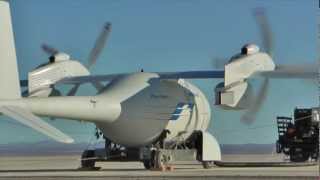
Boeing Phantom Eye Completes 2nd Flight+ Video

ST. LOUIS, Feb. 26, 2013 -- Boeing's [NYSE: BA] liquid hydrogen-powered Phantom Eye unmanned airborne system completed its second flight Feb. 25, demonstrating capabilities that will allow it to perform intelligence, surveillance and reconnaissance (ISR) missions for up to four days without refueling.


During the flight, at NASA's Dryden Flight Research Center at Edwards Air Force Base, Calif., Phantom Eye climbed above an altitude of 8,000 feet and remained aloft for 66 minutes at a cruising speed of 62 knots before landing. The aircraft exceeded what it achieved last year during its first flight when it flew at an altitude of 4,080 feet and remained aloft for 28 minutes.

"Today’s combination of geopolitical and economic issues makes Phantom Eye's capabilities, affordability and flexibility very attractive to our global customers," said Darryl Davis, Boeing Phantom Works president. "No other system holds the promise of offering on-demand, persistent ISR and communications to any region in the world, rapidly responding to natural disasters and national security issues."

Boeing is self-funding development of the environmentally responsible Phantom Eye, which generates only water as a byproduct of its propulsion system.

"This flight, in a more demanding high-altitude flight envelope, successfully demonstrated Phantom Eye's maneuverability, endurance and landing capabilities," said Drew Mallow, Phantom Eye program manager.

Following the first flight, Boeing upgraded the aircraft's software and hardware, including the landing gear. The upgrades paid off in the form of a picture-perfect landing.

The Phantom Eye demonstrator is capable of carrying a 450-pound payload while operating for up to four days at altitudes of up to 65,000 feet.

A unit of The Boeing Company, Boeing Defense, Space & Security is one of the world's largest defense, space and security businesses specializing in innovative and capabilities-driven customer solutions, and the world's largest and most versatile manufacturer of military aircraft. Headquartered in St. Louis, Boeing Defense, Space & Security is a $33 billion business with 59,433 employees worldwide. Follow us on Twitter: @BoeingDefense.

Thứ Năm, 31 tháng 1, 2013

China continues cyberwar campaign, hacks the The New York Times

Feb 1, 2013- China has yet again been caught with its hand in the Western cookie jar. This time, it seems the Chinese military have hacked The New York Times, as an act of retaliation following a damning story published by The Times’ about China’s premier, Wen Jiabao. This follows on from Chinese hacks of Silicon Valley in 2010, and “hundreds” of other organizations and military contractors over the last few years.


The hack, which led to the complete infiltration of The Times’ network and numerous email accounts, started back in September when David Barboza was finishing a story about Wen Jiabao’s relatives accumulating billions of dollars through corrupt business dealings. The hackers set up three backdoors within The Times’ network, most likely using spear phishing (malware-laden email that is specifically targeted at certain users to maximize the chance that they open it). From here the hackers identified the domain controller, grabbed every user’s account name and password hash, cracked the hashes, and then had full access to just about everything on The Times’ network.

As an interesting aside, The Times uses Symantec’s suite of antimalware software — and yet over the course of three months, Symantec only successfully identified one piece of malware, out of 45 installed by the hackers. Mandiant, the security firm hired by The Times to root out the hackers, says that the malware was custom-made for the job, which is probably why Symantec couldn’t identify it.

Fortunately it seems like the hackers were only interested in information pertaining to the Wen Jiabao story – specifically, the names of people who provided information to Barboza. ”They could have wreaked havoc on our systems,” says Marc Frons, The Times’s chief information officer. “But that was not what they were after.” The Times says that, somehow, there’s “no evidence that sensitive e-mails or files from the reporting of our articles about the Wen family were accessed, downloaded or copied.” No customer data was stolen, either. It seems like The Times got away fairly unscathed, if a little humbled.

China, for what it’s worth, is denying any involvement, stating that “Chinese laws clearly forbid hacking attacks,” and “Cyberattacks have a transnational and anonymous nature; under such circumstances accusing the Chinese military of launching attacks through the web without irrefutable proof is unprofessional and baseless.” Mandiant insists that the attack is consistent with “A.P.T. Number 12,” a group of hackers that have previously been traced back to Chinese universities by Mandiant, AT&T, and the FBI. Without some kind of paper trail, it’s of course impossible to confirm that the Chinese government actually ordered the hackers to attack the NYT.

At this point, though, “transnational and anonymous” or not, it does seem fairly certain that China — as a nation — is engaging in cyberwarfare with the West, or those who seek to impugn the infallibility of its leadership. There has been a steady stream of reports from security firms of Chinese cyberattacks dating back into the mid-2000s, and they nearly always follow on from newspaper exposés, or target dissidents or activists. Remember, this is a nation where freedom of speech and the press doesn’t really exist, and where the flow of information is strictly controlled via the Great Firewall and other government-mandated means.

China’s industrial espionage on Silicon Valley and other Western companies rich in intellectual property is obviously in a different vein, but still with the same goal ultimately in mind: Chinese supremacy.

Extremetech

Thứ Tư, 30 tháng 1, 2013

Hagel says military view shaped by Vietnam

Jan 31, 2013- WASHINGTON (AP) — Chuck Hagel says his experience fighting in Vietnam alongside his younger brother will shape any decision he makes to unleash military force if the Senate confirms him to be President Barack Obama's defense secretary.


On the eve of his confirmation hearing, Hagel offered his opinions on a long list of issues, from cuts in defense spending and women in combat to penalties against Iran, in a 112-page response to a questionnaire from the Senate Armed Services Committee.

It was the first time that Hagel's voice had been heard in such detail since Obama announced nominees for his second-term national security team on Jan. 7.

"I understand what it is like to be a soldier in war," wrote Hagel. "I also understand what happens when there is poor morale and discipline among the troops and a lack of clear objectives, intelligence, and command and control from Washington. I believe that experience will help me as secretary of defense to ensure we maintain the best fighting force in the world, protect our men and women in uniform and ensure that we are cautious and certain when contemplating the use of force."

If confirmed, the former two-term Republican senator from Nebraska would be the first enlisted man to serve as defense secretary.

Hagel described volunteering for Vietnam, serving a 12-month tour that included the Tet Offensive in 1968 — a series of surprise North Vietnamese attacks on South Vietnam and its U.S. ally during a holiday cease-fire — and rising to the rank of infantry sergeant.

In his responses, Hagel adopted a hard line on Iran and its possible pursuit of a nuclear weapon. He echoed Obama's view that all options are feasible to stop Tehran, praised the rounds of penalties and warned of "severe and growing consequences" if Iran balks at international demands.

Hagel has faced a barrage of criticism that he is not sufficiently pro-Israel or tough enough on Iran. In the past, Hagel has questioned the efficacy of unilateral sanctions on Iran, arguing that penalties in conjunction with international partners made more sense.

"If Iran continues to flout its international obligations, it should continue to face severe and growing consequences," Hagel said. "While there is time and space for diplomacy, backed by pressure, the window is closing. Iran needs to demonstrate it is prepared to negotiate seriously."

The United States and other Western nations have demanded that Iran stopped its uranium-enrichment program, which they perceive as a precursor to production of nuclear warhead-grade material. Iran insists that its program is for peaceful purposes.

The most recent round of negotiations ended in a stalemate last June.

Questioned about all options, Hagel said, "If confirmed, I will focus intently on ensuring that U.S. military is in fact prepared for any contingency."

He said that he would continue to put in place the "smart, unprecedented and effective sanctions against the Iranian regime" that Congress and the Obama administration have adopted in recent years.

Hagel was in line for hard questions from the 26-member Senate committee at a confirmation hearing Thursday that was expected to be a determining factor in the vote of several senators.

Democrats have rallied to support Obama's nominee. More than a dozen are announced backers, and at least one Republican senator has said he will vote for his former GOP colleague — Sen. Thad Cochran of Mississippi, the top Republican on the Senate Appropriations Committee and its defense subcommittee.

But GOP-leaning outside groups have waged an unprecedented campaign of critical ads and statements against a president's Cabinet choice. Six Republican senators have said they will vote against Hagel, including some who opposed him even before Obama's announcement, in a fresh sign of the fierce partisan politics.

Hagel's opponents have focused on his past statements about Israel, Iran, gay rights and the influence of a "Jewish lobby," a comment for which he's apologized. They also worry about his support for cuts in nuclear weapons.

"Sen. Hagel has no credibility on perhaps the biggest foreign policy challenge facing the Obama administration's second term and on American national security interests in the Middle East and around the world," Sen. John Cornyn, R-Texas, an opponent of the nominee, said Wednesday on the Senate floor.

The criticism has surprised some of Hagel's strongest backers.

"This idea that's being propagated that he might be soft on adversaries. Chuck Hagel's not soft on anybody, particularly himself," said Sen. Jack Reed, D-R.I., a member of the Armed Services Committee, in a conference call with Hagel allies. "He drives hard. He's someone who searches for the right approach and the right policy."

Reed complained that Hagel had been pilloried by false attacks and revisionist theories about his career.

In the questionnaire, Hagel said that as long as nuclear weapons exist, the United States must have a "safe, secure and effective nuclear arsenal."

He insisted that he will implement the military's policy allowing gays to serve openly and move ahead on opening combat roles to women.

He expressed his opposition to the automatic, across-the-board budget cuts that will hit the Pentagon on March 1 if Congress fails to come up with an alternative. At the same time, he indicated that some reductions are inevitable.

"We will continue to need the best Army in the world. But the best Army does not mean the largest. We must have the Army be appropriately sized for the contingencies we deem likely, and it also must be trained and modernized," he said.

Copyright 2013 The Associated Press. All rights reserved. This material may not be published, broadcast, rewritten or redistributed.

AP