Taipei is using the death of a Taiwanese fisherman off Batanes Island last week as a basis for making tough demands that will force the Philippines to violate its One-China policy, a former chairman of the congressional committee on foreign affairs said on Thursday.
“Taiwan saw an opportunity to push for recognition as a country instead of just an economic state. Taiwan is pushing us to violate the One-China policy,” former Negros Occidental representative Apolinario Lozada said.
But the House foreign affairs committee chairman said the government must review its One-China policy and convene the National Security Council to discuss security measures resulting from the shooting, which could develop into a diplomatic crisis.
Albay Rep. Al Francis Bichara said Malacañang appeared “clueless” on how to handle the incident, and the hands of the Department of Foreign Affairs are tied because of the One-China policy, which considers Taiwan as just an economic state.
“We have to look at the ramifications of that kind of a foreign policy. It is time to reassess the government’s foreign policy,” Bichara said.
The fisherman was killed last May 9 when his boat strayed into Philippine waters. Taiwan rejected an apology from President Aquino and snubbed the Filipino envoy he sent to Taipei.
Premiere Jiang Yi-huah announced sanctions against Manila, including removal of the Philippines from its visa-waiver program. More than 80,000 Filipinos work in Taiwan.
Bichara said the One-China policy had resulted in foreign policy blunders, and the first one was sending to China the Taiwanese nationals caught poaching in Philippine seas a few years ago, which angered both the Chinese and Taiwanese governments.
“How many more blunders do we need before we finally decide to reassess the One-China policy?” he said.
“In the meantime, what is the Palace doing? Why is the NSC not being reconvened? It is incumbent upon President Aquino to gather the NSC member for brainstorming,” he said.
The NSC is composed of the President, Vice President, executive secretary, and Cabinet members. Former presidents are also members.
“Our constituents are asking us. We cannot simply say it is all up to the President. We have to have some explanations that we can give to our people. What are our options? What are the possible scenarios? The people demand to know,” Bichara said.
He said the Palace must allow Congress to get involved and the people must be assured of their safety in case another country attacked the Philippines.
“The reason we need to reassess the foreign policy is to avoid military confrontations with our neighbors. Let’s face it. They are more equipped military-wise than us. Our fishermen, as well as theirs, don’t know where the border is onshore,” Bichara said.
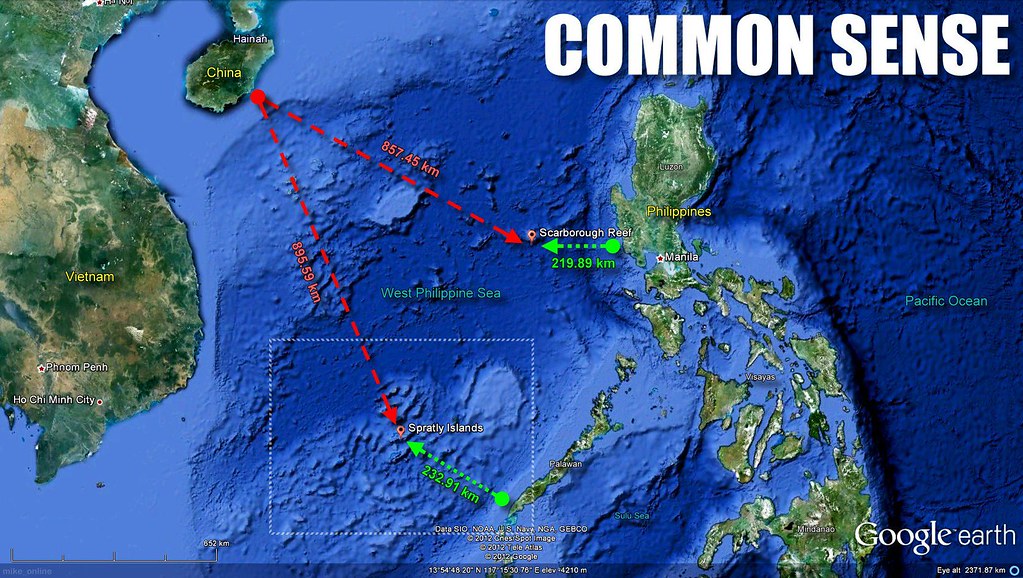
He said Congress must be involved because there were other issues as well, such as the Spratly’s dispute with China, the Sabah claim with Malaysia, and now the One-China policy.
Lozada said Aquino should consider sending former President Fidel Ramos to Taiwan as his special envoy.
“It will be a win-win solution. The former president, because of his stature, cannot be rejected by Taiwan. And since he is already a private citizen, we will not be violating the One-China policy,” Lozada said.
http://manilastandardtoday.com/2013/05/17/taipei-sets-ph-against-one-china-diplomacy/
Hiển thị các bài đăng có nhãn Taiwan. Hiển thị tất cả bài đăng
Thứ Sáu, 17 tháng 5, 2013
Thứ Sáu, 10 tháng 5, 2013
Fisherman’s shooting sparks South China Sea tensions
TAIPEI, Taiwan – The fatal shooting of a Taiwanese fisherman by the Philippine Coast Guard has become the latest incident to roil tensions over territorial disputes in and around the South China Sea, with Taipei on Friday calling for Manila to apologise for the shooting.
Taiwan said that the Philippine Coast Guard opened fire on Thursday on a 65-year-old fisherman in waters claimed by both governments. The Philippines acknowledged the Taiwanese claim, but said its personnel were acting in self-defence.
Meanwhile, China sought to make common cause with Taiwan against Manila, deploring the shooting in harsh rhetoric that threatened to spark another diplomatic tussle between Beijing and the Philippines, a key US ally in one of Asia’s most contentious areas.
Speaking to reporters in Taipei, foreign minister David Lin blamed the Philippine coast guard for opening fire on the fisherman’s boat, the Kuang Ta Hsing No. 28, on Thursday, from a vessel belonging to the fisheries department of the Philippines Department of Agriculture in the Bashi Strait, about midway between southern Taiwan and the northern Philippines.
“We strongly condemn the fatal shooting of a Taiwanese fisherman by the Philippine fishery department,” Lin said. “We urge the Philippine government to open a full investigation on this case and send their apology to Taiwan’s government.”
Even before Lin spoke, the Chinese foreign ministry in Beijing had condemned the incident, a clear attempt to side with Taiwan on a matter of nationalistic pride involving disputed maritime territory.
Spokeswoman Hua Chunying called it a “brutal act” and echoed Taiwan’s demand that Manila investigate.
“We are expressing our deep grief on the death of the Taiwan compatriot and condolences to the victim’s family,” Hua said.
Taiwan and China split amid civil war in 1949 and Beijing continues to claim the democratic island as part of its territory. In recent months it has made repeated attempts to bring Taiwan on to its side in its maritime disputes with Japan and other countries in the region. Taiwan has so far resisted, reflecting its own claims of national sovereignty.
Underscoring China’s interest in playing the incident up, government channel CCTV led its noontime news on Friday with an emotional report on the death of the Taiwanese fisherman, and the Communist Party-controlled Global Times newspaper called on the Chinese navy to increase its presence in the South China Sea, amid angry condemnations of the Philippines as a “savage” country.
Taiwan’s freewheeling media also gave prominent attention to the incident, with newspapers reporting it in banner headlines and cable television news stations giving it round-the-clock coverage.
In Manila, the Philippine coastguard acknowledged that its personnel had opened fire on the Taiwanese boat, but claimed they acted in self-defence.
“They were forced to fire the shots because the fishing vessel attempted to ram them,” said coastguard chief Rear Adm. Rodolfo Isorena.
Isorena said an investigation into the incident was being launched.
Relations between the Philippines and China, already hampered by simmering tensions over the Spratly Islands, deteriorated sharply last year when Chinese maritime vessels took control of a disputed shoal in the South China Sea.
The Philippines has turned to its American ally to beef up its dilapidated military assets and train its forces, and angered Beijing by seeking UN arbitration on South China Sea disputes.
Copyright The Financial Times Limited 2013. You may share using our article tools.
Please don't cut articles from FT.com and redistribute by email or post to the web.
Taiwan said that the Philippine Coast Guard opened fire on Thursday on a 65-year-old fisherman in waters claimed by both governments. The Philippines acknowledged the Taiwanese claim, but said its personnel were acting in self-defence.
Meanwhile, China sought to make common cause with Taiwan against Manila, deploring the shooting in harsh rhetoric that threatened to spark another diplomatic tussle between Beijing and the Philippines, a key US ally in one of Asia’s most contentious areas.
Speaking to reporters in Taipei, foreign minister David Lin blamed the Philippine coast guard for opening fire on the fisherman’s boat, the Kuang Ta Hsing No. 28, on Thursday, from a vessel belonging to the fisheries department of the Philippines Department of Agriculture in the Bashi Strait, about midway between southern Taiwan and the northern Philippines.
“We strongly condemn the fatal shooting of a Taiwanese fisherman by the Philippine fishery department,” Lin said. “We urge the Philippine government to open a full investigation on this case and send their apology to Taiwan’s government.”
Even before Lin spoke, the Chinese foreign ministry in Beijing had condemned the incident, a clear attempt to side with Taiwan on a matter of nationalistic pride involving disputed maritime territory.
Spokeswoman Hua Chunying called it a “brutal act” and echoed Taiwan’s demand that Manila investigate.
“We are expressing our deep grief on the death of the Taiwan compatriot and condolences to the victim’s family,” Hua said.
Taiwan and China split amid civil war in 1949 and Beijing continues to claim the democratic island as part of its territory. In recent months it has made repeated attempts to bring Taiwan on to its side in its maritime disputes with Japan and other countries in the region. Taiwan has so far resisted, reflecting its own claims of national sovereignty.
Underscoring China’s interest in playing the incident up, government channel CCTV led its noontime news on Friday with an emotional report on the death of the Taiwanese fisherman, and the Communist Party-controlled Global Times newspaper called on the Chinese navy to increase its presence in the South China Sea, amid angry condemnations of the Philippines as a “savage” country.
Taiwan’s freewheeling media also gave prominent attention to the incident, with newspapers reporting it in banner headlines and cable television news stations giving it round-the-clock coverage.
In Manila, the Philippine coastguard acknowledged that its personnel had opened fire on the Taiwanese boat, but claimed they acted in self-defence.
“They were forced to fire the shots because the fishing vessel attempted to ram them,” said coastguard chief Rear Adm. Rodolfo Isorena.
Isorena said an investigation into the incident was being launched.
Relations between the Philippines and China, already hampered by simmering tensions over the Spratly Islands, deteriorated sharply last year when Chinese maritime vessels took control of a disputed shoal in the South China Sea.
The Philippines has turned to its American ally to beef up its dilapidated military assets and train its forces, and angered Beijing by seeking UN arbitration on South China Sea disputes.
Copyright The Financial Times Limited 2013. You may share using our article tools.
Please don't cut articles from FT.com and redistribute by email or post to the web.
Thứ Tư, 17 tháng 4, 2013
Video: Taiwan War Drills Prepares for Chinese Attack
Earlier today (April 17), thousands from Taiwan’s navy, air force, and army conducted live fire drills simulating an attack from China along the shores of the Penghu Island
Taiwan carries out military drills every year, but this was the first time in five years that live ammunition is being used.
Taiwanese President Ma Ying-jeou, often viewed as sympathetic towards Beijing, had these harsh words for its neighbor across the Taiwan Strait.
[Taiwanese President Ma Ying-jeou]:
"In recent years, due to China's economic boom, it has built its military and arms. Thus, facing such a threat, we must strengthen and build our army's moral and be prepared for war in order to maintain the peace across the strait. In fact, what really matters is not the size of this outside threat, nor if we cannot receive military aid from other countries, but that it is within our power to effectively defend ourselves."
Most countries have limited if any official diplomatic contact with Taiwan. That’s usually a prerequisite the Chinese regime imposes on any country they interact with. It became another point of contention between Japan and China last month. Japan invited a Taiwanese delegate to sit with diplomatic representatives at the two-year anniversary of the March 11 Tsunami.
The United States however has provided Taiwan with military hardware for years. China considers Taiwan a breakaway province and has vowed to retake the island, using force if necessary.
As Taiwan’s carries out its live fire drill, China’s People’s Liberation Army conducted what have become routine patrols off the Diaoyu Islands. China, Japan, and Taiwan all claim the islands as part of their territory, but they are closest to Taiwan.
NTDTV
Taiwan carries out military drills every year, but this was the first time in five years that live ammunition is being used.
Taiwanese President Ma Ying-jeou, often viewed as sympathetic towards Beijing, had these harsh words for its neighbor across the Taiwan Strait.
[Taiwanese President Ma Ying-jeou]:
"In recent years, due to China's economic boom, it has built its military and arms. Thus, facing such a threat, we must strengthen and build our army's moral and be prepared for war in order to maintain the peace across the strait. In fact, what really matters is not the size of this outside threat, nor if we cannot receive military aid from other countries, but that it is within our power to effectively defend ourselves."
Most countries have limited if any official diplomatic contact with Taiwan. That’s usually a prerequisite the Chinese regime imposes on any country they interact with. It became another point of contention between Japan and China last month. Japan invited a Taiwanese delegate to sit with diplomatic representatives at the two-year anniversary of the March 11 Tsunami.
The United States however has provided Taiwan with military hardware for years. China considers Taiwan a breakaway province and has vowed to retake the island, using force if necessary.
As Taiwan’s carries out its live fire drill, China’s People’s Liberation Army conducted what have become routine patrols off the Diaoyu Islands. China, Japan, and Taiwan all claim the islands as part of their territory, but they are closest to Taiwan.
NTDTV
Taiwan starts five days of large-scale military exercises to demonstrate its military power.
Taiwan has begun five days of large-scale military exercises meant to demonstrate its ability to defend itself against any attack from mainland China. The annual drill in the Taiwan Strait includes a test of the Thunderbolt-2000 multiple rocket launch system designed to take out enemy ships before they reach shore. Tanks, artillery, and attack helicopters also pounded mock targets at sea during the war games.

Taiwan-made MK-30 rockets are launched from Thunderbolt-2000 multiple rocket launchers during the annual Han Kuang military exercise in Penghu, west of Taiwan, April 17, 2013.
President Ma Ying-jeou, who has overseen a warming of relations with Beijing, is personally overseeing the live-fire drills. Speaking to troops beforehand, he said the drills are a reminder of the threat of a rising China.
"China's economy has grown rapidly in recent years and they have
been busy upgrading their military. Therefore, we have to strengthen
our defense forces to prevent China's threats and maintain peace and
stability between Taiwan and China," he said.
The drills, involving Taiwan's air force, army and navy, are the largest
since 2008. They are taking place on the Penghu Islands, roughly midway
between mailand China and the island of Taiwan.
They come just a day after China released its annual defense white paper,
which called Taiwan's independence the "biggest threat to the peaceful
development of cross-strait relations."
Taiwan and China have been separated since 1949, when Mao Zedong's communist
forces drove Chiang Kai-shek's nationalists off the mainland. Bejing
continues to claim Taiwan as part of its territory, and has vowed to
bring the self-ruled island back under its rule, by force if necessary.
But Taiwan President Ma Ying-jeou has worked to improve diplomatic and
trade ties between the cross-Strait rivals since taking office in 2008.
He was re-elected to a second and final four-year term in January 2012.
Army Recognition
Taiwan-made MK-30 rockets are launched from Thunderbolt-2000 multiple rocket launchers during the annual Han Kuang military exercise in Penghu, west of Taiwan, April 17, 2013.
President Ma Ying-jeou, who has overseen a warming of relations with Beijing, is personally overseeing the live-fire drills. Speaking to troops beforehand, he said the drills are a reminder of the threat of a rising China.
"China's economy has grown rapidly in recent years and they have
been busy upgrading their military. Therefore, we have to strengthen
our defense forces to prevent China's threats and maintain peace and
stability between Taiwan and China," he said.
The drills, involving Taiwan's air force, army and navy, are the largest
since 2008. They are taking place on the Penghu Islands, roughly midway
between mailand China and the island of Taiwan.
They come just a day after China released its annual defense white paper,
which called Taiwan's independence the "biggest threat to the peaceful
development of cross-strait relations."
Taiwan and China have been separated since 1949, when Mao Zedong's communist
forces drove Chiang Kai-shek's nationalists off the mainland. Bejing
continues to claim Taiwan as part of its territory, and has vowed to
bring the self-ruled island back under its rule, by force if necessary.
But Taiwan President Ma Ying-jeou has worked to improve diplomatic and
trade ties between the cross-Strait rivals since taking office in 2008.
He was re-elected to a second and final four-year term in January 2012.
Army Recognition
Thứ Bảy, 30 tháng 3, 2013
Taiwan deploys large patrol vessel
Taiwan has commissioned a large patrol ship to monitor waters near the disputed Senkaku Islands in the East China Sea. The islands are controlled by Japan but also claimed by Taiwan and China.
The newly-deployed 2,000 ton vessel is equipped with 40-millimeter machine guns and long-range water cannons.
A ceremony to mark the deployment was held on Saturday at the southern city of Kaohsiung. President Ma Ying-jeou said tension is escalating in waters around Taiwan.
He revealed plans to cope with the situation by deploying 35 more patrol ships over the next 6 years, which will include a 3,000 ton vessel.
Ma pledged that he will stand firm on Taiwan's territorial claims. However, he also stressed that all parties involved should set aside their claims and jointly develop resources in the area.
Taiwanese Coast Guard officials carried out a drill on the ship in waters near Kaohsiung. They used water cannons to protect fishermen from obstructions by foreign patrol boats. Part of the exercise was open to the media.
The drill was carried out in waters far from the disputed islands, in an apparent effort to avoid raising tensions with Japan.
Taiwan and Japan are currently in talks aimed at resuming negotiations for a fisheries agreement around the Islands.
NHK
The newly-deployed 2,000 ton vessel is equipped with 40-millimeter machine guns and long-range water cannons.
A ceremony to mark the deployment was held on Saturday at the southern city of Kaohsiung. President Ma Ying-jeou said tension is escalating in waters around Taiwan.
He revealed plans to cope with the situation by deploying 35 more patrol ships over the next 6 years, which will include a 3,000 ton vessel.
Ma pledged that he will stand firm on Taiwan's territorial claims. However, he also stressed that all parties involved should set aside their claims and jointly develop resources in the area.
Taiwanese Coast Guard officials carried out a drill on the ship in waters near Kaohsiung. They used water cannons to protect fishermen from obstructions by foreign patrol boats. Part of the exercise was open to the media.
The drill was carried out in waters far from the disputed islands, in an apparent effort to avoid raising tensions with Japan.
Taiwan and Japan are currently in talks aimed at resuming negotiations for a fisheries agreement around the Islands.
NHK
Chủ Nhật, 17 tháng 3, 2013
Taiwan develops 'medium-range missile'
| Taiwan launches a Hsiungfeng guided missile from a patrol boat during a military exercise on April 20, 2003 (AFP/File, Sam Yeh) |
Michael Tsai, a politician turned defence minister in the former government of the China-sceptic Democratic Progressive Party (DPP), revealed in his book due to be published on Sunday that the military successfully developed the missile back in 2008, the Liberty Times said.
In response to the report the country's defence ministry rounded on Tsai, telling AFP that disclosure of the information "may endanger national security".
The Times said Tsai knowingly used the term "medium-range guided missile" in his book -- entitled "God bless Taiwan" -- in contrast to the cruise missiles already in the island's arsenal.
Taiwan in 2010 confirmed it was mass-producing Hsiungfeng 2E cruise missiles, the island's answer to the US-made Tomahawk, despite fast warming ties with China.
The cruise missiles could be launched from land or sea, and would be capable of hitting airports and missile bases in southeast China, as well as cities such as Shanghai and Hong Kong. Tsai did not give specifications for the medium range weapon described in his book.
Tensions across the Taiwan Strait have eased since Ma Ying-jeou of the China-friendly Kuomintang came to power in 2008 on a platform of beefing up trade links and allowing in more Chinese tourists. He was re-elected in January 2012.
| Hsiung-Feng II Missile System |
"We have to develop weapons on our own if we are to deter any attacks by China, who has targeted Taiwan with more than 1,000 missiles," Tsai said in the book.
Taiwanese experts estimate China's People's Liberation Army currently has more than 1,600 missiles aimed at the island.
The defence ministry, which often refuses to comment on reports regarding sensitive weaponry development and acquisition, condemned Tsai's revelations.
"As Mr Tsai has served as the defence minister, he should know that safeguarding national secrets is his due obligation and he should not have revealed sensitive information, a move which may endanger national security. We regret what he has done," ministry spokesman David Lo told AFP.
Copyright © 2013 AFP. All rights reserved.
Thứ Năm, 14 tháng 3, 2013
Taiwan to develop own 3rd-generation warplane
Taiwan's military is determined to develop third-generation warplanes under its own steam, as the United States remains reluctant to approve its request to procure 66 F-16 C/D jet fighters, according to local media reports.
The decision is also prompted by China's incessant military buildup, including the introduction of new high-performance jet fighters and missiles, the reports said.
Citing a newly released quadrennial defense review, the reports said the Air Force will develop a new generation of warplanes with advanced features such as stealth, long-range flight and aerial refueling abilities, and the capability of launching missiles against land targets or ships.
The Ministry of National Defense (MND) said in the defense review that China's People's Liberation Army (PLA) has stepped up the replacement of weapons systems and military equipment in its Nanjing and Guangzhou military regions, both of which are adjacent to Taiwan, in recent years.
Moreover, the report said, most PLA training programs and live-fire exercises have focused on seeking a speedy end to island conflicts in an apparent effort to prevent foreign intervention in the event of such a standoff.
The following are excerpts from local media coverage of highlights of the MND's newly released quadrennial defense review:
Liberty Times:
Ruling Kuomintang Legislator Lin Yu-fang said recently that Taiwan's determination to build indigenous submarines and new- generation of warplanes is partly driven by Washington's increasing reluctance to assist Taiwan in defending its national security.
Although the two sides of the Taiwan Strait are seeking reconciliation, China's intention to annex Taiwan has remained unchanged as reflected in repeated exposure of China-related espionage cases, Lin said.
"For our national survival, we need to build up our defense capability under our own steam," Lin said, adding that building indigenous submarines and warplanes is part of the efforts.
According to the MND's quadrennial defense review, the military is also planning to develop unmanned aerial vehicle (UAV) capable of carrying out combat and reconnaissance missions to beef up the country's air defense muscle.
Nevertheless, MND spokesman Luo Shou-he said Tuesday that the decision to build indigenous warplanes does not mean that the military has ruled out the option of procuring F-16 C/Ds or even more advanced types of jet fighters.
"We have struck a deal with the United States on upgrading our F-16 A/B fighters and will continue evaluate our need for advanced warplanes," Luo added.
According to the MND's budget plan, there are still nearly NT$500 billion (US$16.89 billion) worth U.S. weapon procurement projects to be executed over the next five to 10 years.
Meanwhile, military sources said that indigenous submarine and warplane development projects will cost an estimated NT$500 billion. (March 13, 2013).
United Daily News:
The MND released the 2013 Quadrennial Defense Review (QDR) Monday.
It marked the second time that the ministry has issued such a reportsince President Ma Ying-jeou took office in May 2008.
The latest version contains fewer pages than the first edition unveiled in March 2009.
The most significant difference between the two editions lies in the government's stance toward the establishment of cross-strait military confidence building mechanism.
The 2009 QDR quoted Ma as having repeatedly urged China to dismantle its missile deployment against Taiwan and as having proposed a three-stage plan to establish a military confidence building mechanism.
In contrast, the 2013 edition said the conditions are not yet ripe for the establishment of such a mechanism.
The latest version instead reaffirmed the government's "economy first" principle in dealing with cross-strait relations.
Meanwhile, the 2013 review only briefly mentioned China's military buildup efforts in three pages, while the 2009 edition clearly listed China's military threats to Taiwan in eight pages.
The new version also stressed Taiwan's commitment to the international regulations of non-proliferation of nuclear weapons, saying Taiwan would never produce or use nuclear weapons.
The 2013 QDR also stressed that Taiwan has included provisions of the Missile Technology Control Regime into Taiwan's trade law to prevent the proliferation of missile and unmanned aerial vehicle technology. (March 12, 2013).
(By Sofia Wu)
The decision is also prompted by China's incessant military buildup, including the introduction of new high-performance jet fighters and missiles, the reports said.
Citing a newly released quadrennial defense review, the reports said the Air Force will develop a new generation of warplanes with advanced features such as stealth, long-range flight and aerial refueling abilities, and the capability of launching missiles against land targets or ships.
The Ministry of National Defense (MND) said in the defense review that China's People's Liberation Army (PLA) has stepped up the replacement of weapons systems and military equipment in its Nanjing and Guangzhou military regions, both of which are adjacent to Taiwan, in recent years.
Moreover, the report said, most PLA training programs and live-fire exercises have focused on seeking a speedy end to island conflicts in an apparent effort to prevent foreign intervention in the event of such a standoff.
The following are excerpts from local media coverage of highlights of the MND's newly released quadrennial defense review:
Liberty Times:
Ruling Kuomintang Legislator Lin Yu-fang said recently that Taiwan's determination to build indigenous submarines and new- generation of warplanes is partly driven by Washington's increasing reluctance to assist Taiwan in defending its national security.
Although the two sides of the Taiwan Strait are seeking reconciliation, China's intention to annex Taiwan has remained unchanged as reflected in repeated exposure of China-related espionage cases, Lin said.
"For our national survival, we need to build up our defense capability under our own steam," Lin said, adding that building indigenous submarines and warplanes is part of the efforts.
According to the MND's quadrennial defense review, the military is also planning to develop unmanned aerial vehicle (UAV) capable of carrying out combat and reconnaissance missions to beef up the country's air defense muscle.
Nevertheless, MND spokesman Luo Shou-he said Tuesday that the decision to build indigenous warplanes does not mean that the military has ruled out the option of procuring F-16 C/Ds or even more advanced types of jet fighters.
"We have struck a deal with the United States on upgrading our F-16 A/B fighters and will continue evaluate our need for advanced warplanes," Luo added.
According to the MND's budget plan, there are still nearly NT$500 billion (US$16.89 billion) worth U.S. weapon procurement projects to be executed over the next five to 10 years.
Meanwhile, military sources said that indigenous submarine and warplane development projects will cost an estimated NT$500 billion. (March 13, 2013).
United Daily News:
The MND released the 2013 Quadrennial Defense Review (QDR) Monday.
It marked the second time that the ministry has issued such a reportsince President Ma Ying-jeou took office in May 2008.
The latest version contains fewer pages than the first edition unveiled in March 2009.
The most significant difference between the two editions lies in the government's stance toward the establishment of cross-strait military confidence building mechanism.
The 2009 QDR quoted Ma as having repeatedly urged China to dismantle its missile deployment against Taiwan and as having proposed a three-stage plan to establish a military confidence building mechanism.
In contrast, the 2013 edition said the conditions are not yet ripe for the establishment of such a mechanism.
The latest version instead reaffirmed the government's "economy first" principle in dealing with cross-strait relations.
Meanwhile, the 2013 review only briefly mentioned China's military buildup efforts in three pages, while the 2009 edition clearly listed China's military threats to Taiwan in eight pages.
The new version also stressed Taiwan's commitment to the international regulations of non-proliferation of nuclear weapons, saying Taiwan would never produce or use nuclear weapons.
The 2013 QDR also stressed that Taiwan has included provisions of the Missile Technology Control Regime into Taiwan's trade law to prevent the proliferation of missile and unmanned aerial vehicle technology. (March 12, 2013).
(By Sofia Wu)
Thứ Tư, 13 tháng 3, 2013
Taiwan discovers gas hydrate in South China Sea
Taipei, March 13 (CNA) A Taiwanese oceanic research team has discovered gas hydrate deposits in waters south of the Pratas Islands during a recent mission to the South China Sea, a marine geophysicist overseeing the project said Wednesday.
The discovery was made during a 19-day exploration voyage aboard the 2,700-ton deep-sea research vessel Ocean Researcher 5 that ended March 8. Natural gas hydrates are considered a potential energy resource, but an economical extraction method has so far proven elusive.
According to Hsu Shu-kun of National Central University's College of Earth Science, the existence of the gas hydrate deposits was proven through analysis of seismic reflection and sub-bottom profiling data.
Further investigation, however, will be required to determine the extent of the deposits, as some of the natural gas might have leaked due to undersea landslides, Hsu said.
The mission also discovered an undersea volcanic group about 30 kilometers southeast of the Pratas, he said.
The group, which comprises more than 60 volcanoes covering an area of 3,000 square kilometers, probably dates back to the Miocene period, he added.
Another discovery made during the voyage of exploration involves the South China Sea's strong ability to absorb carbon.
Under normal weather conditions, the sea's surface water can absorb 260,000 tons of carbon dioxide per day, which is 35 percent of Taiwan's daily carbon emissions, according to Hsu.
The carbon-absorbing ability will increase under the influence of strong weather fronts, he said.
The South China Sea, which is believed to sit atop vast deposits of natural gas and oil, is claimed in whole or in part by Taiwan, China, the Philippines, Vietnam, Malaysia and Brunei.
Taiwan currently controls the Pratas Islands and Taiping Island -- the largest islet in the Spratlys archipelago.
Focus Taiwan
The discovery was made during a 19-day exploration voyage aboard the 2,700-ton deep-sea research vessel Ocean Researcher 5 that ended March 8. Natural gas hydrates are considered a potential energy resource, but an economical extraction method has so far proven elusive.
According to Hsu Shu-kun of National Central University's College of Earth Science, the existence of the gas hydrate deposits was proven through analysis of seismic reflection and sub-bottom profiling data.
Further investigation, however, will be required to determine the extent of the deposits, as some of the natural gas might have leaked due to undersea landslides, Hsu said.
The mission also discovered an undersea volcanic group about 30 kilometers southeast of the Pratas, he said.
The group, which comprises more than 60 volcanoes covering an area of 3,000 square kilometers, probably dates back to the Miocene period, he added.
Another discovery made during the voyage of exploration involves the South China Sea's strong ability to absorb carbon.
Under normal weather conditions, the sea's surface water can absorb 260,000 tons of carbon dioxide per day, which is 35 percent of Taiwan's daily carbon emissions, according to Hsu.
The carbon-absorbing ability will increase under the influence of strong weather fronts, he said.
The South China Sea, which is believed to sit atop vast deposits of natural gas and oil, is claimed in whole or in part by Taiwan, China, the Philippines, Vietnam, Malaysia and Brunei.
Taiwan currently controls the Pratas Islands and Taiping Island -- the largest islet in the Spratlys archipelago.
Focus Taiwan
Thứ Sáu, 1 tháng 3, 2013
Taiwan to stage live-fire drill on disputed South China sea islands
Taiwan's coastguard said on Friday it would stage a live-fire exercise next month in disputed South China Sea islands, a move that could raise regional tensions.
The drill will take place on Taiping Island between April 9 and 11 in the Spratlys, a sprawling group of islands claimed in whole or part by Taiwan, China, Vietnam, Malaysia, the Philippines, and Brunei.
Among other weaponry, the drill will involve 40mm artillery and 120mm mortars, both shipped to the island last year to boost Taiwan's defence capability in the Spratlys,according to the coastguard.
Taiping is the biggest island in the Spratlys and has long been governed by Taiwan, which maintains a small coastguard garrison there. Vietnam voiced anger after Taiwan moved the new,longer-range artillery and mortars to Taiping Island last year.
All claimants except Brunei have troops based on the archipelago of more than 100 islets, reefs and atolls, which cover a vast area but have a total land mass of less than five square kilometres.
The potentially resource-rich sea, home to important trade routes, is a potential military flashpoint and there has been a string of diplomatic rows between countries with overlappingterritorial claims in recent years.
The Philippines and Vietnam have complained that China is becoming increasingly aggressive in its actions in the area -- such as harassing fishermen -- and also through bullying diplomatic tactics.
Samaylive.com
------------
Taiwan Challenges Its Neighbors (The National Interest)
The territorial disputes between China and its Southeast Asian neighbors over islands in the South China Sea have received considerable attention from an anxious international community. There has been even more global angst about the flare up of tensions between China and Japan over the Diaoyu/Senkaku Islands in the East China Sea. Concern about those feuds—especially the Sino-Japanese confrontation—is understandable, given the potential for miscalculation and escalation.
But it’s important to note that there is another, increasingly assertive party to both disputes: Taiwan. And the Taiwanese have not been shy about pressing their claims. That adds a volatile element to the controversies.
Taipei has not only asserted ownership of portions of the South China Sea; it has managed to establish a significant physical presence there. Taiwan controls the Pratas—the largest island group, known locally as the Donghsa Islands—and Taiping, the largest of the hotly contested Spratly Islands. In September 2012, a group of thirty prominent Taiwanese, including national legislators, landed on Taiping to inspect the security situation. The coast guard conducted a live-fire exercise for the delegation during that visit, much to the annoyance of countries with competing claims.
The Taiwanese government summarily rejected all complaints. “Taiping Island is part of the Republic of China’s territory,” stated Wang kuo-jan, an official with the Ministry of Foreign Affairs, in response to Vietnam’s diplomatic protest. He added that “no one has the right to protest over Taiwan’s exercise of its sovereignty rights there.”
But incidents between Taipei and other claimants in the South China Sea have been mild compared to the tensions with Japan over the Diaoyu/Senkaku Islands. Matters came to a head in late September 2012 when a comic-opera naval battle involving water cannons erupted between Japanese patrol ships and a flotilla of dozens of Taiwanese fishing boats and coast guard vessels.
It might be tempting to smirk at such an episode, but anti-Japanese ethnic animosity has flared on Taiwan. Indeed, there have been angry demonstrations in Taiwanese cities, punctuated by burning the Japanese flag, just as on the mainland. Thus far, there has been markedly more hostility directed against Tokyo’s claims than against Beijing’s. Indeed, PRC officials have sought to spin Taiwan’s conduct as proof that “all Chinese,” irrespective of political differences on other issues, consider the islands Chinese territory.
Some of the underlying reasons for Taiwan’s territorial claims in the South China and East China seas are not hard to discern. There are vast, valuable fishing waters in both arenas, and commercial fishing is a crucial industry in Taiwan. It also is increasingly likely that there are large reservoirs of oil and natural gas under those waters. In other words, substantial economic stakes are involved in the territorial disputes, and neither Taiwan nor any other claimant is about to abandon such potential riches.
But in Taiwan’s case, another factor also may be at play, especially with regard to the Diaoyu/Senkaku issue. Taipei has called for trilateral talks to resolve that controversy, thus challenging the global perception that it is a purely bilateral controversy between Tokyo and Beijing. Taiwanese officials are also pressing for multilateral negotiations regarding the various claims in the South China Sea. Taking a more proactive stance on the territorial disputes—which has clearly been the case over the past year—might be a clever ploy to gain de facto recognition as a sovereign actor from Beijing, Tokyo, and other governments. Even though none of those countries is willing to establish formal relations with Taipei, they may have to deal with Taiwan as a key party to what are becoming ever more dangerous disputes.
Being accorded such respect, however grudgingly, would have implications for Taiwan’s international position. The island’s diplomatic status hangs by a thread, with only about two dozen nations maintaining official ties to Taipei. And all of them are small nations that Taiwan has effectively bribed with financial inducements to refrain from switching diplomatic recognition to Beijing. That fading strategy cannot endure much longer—especially as China’s economic resources and influence continue to mount.
Injecting itself as a major player in volatile territorial disputes may be a last-ditch, substitute strategy for gaining international recognition and respect. In any case, Taiwan is now a wild card in what are already some tense, worrisome confrontations. Washington and other governments need to carefully monitor this latest troubling development.
Ted Galen Carpenter, a senior fellow at the Cato Institute and a contributing editor to The National Interest, is the author of nine books and more than 500 articles and studies on international issues.-- National Interest.org
The drill will take place on Taiping Island between April 9 and 11 in the Spratlys, a sprawling group of islands claimed in whole or part by Taiwan, China, Vietnam, Malaysia, the Philippines, and Brunei.
Among other weaponry, the drill will involve 40mm artillery and 120mm mortars, both shipped to the island last year to boost Taiwan's defence capability in the Spratlys,according to the coastguard.
Taiping is the biggest island in the Spratlys and has long been governed by Taiwan, which maintains a small coastguard garrison there. Vietnam voiced anger after Taiwan moved the new,longer-range artillery and mortars to Taiping Island last year.
All claimants except Brunei have troops based on the archipelago of more than 100 islets, reefs and atolls, which cover a vast area but have a total land mass of less than five square kilometres.
The potentially resource-rich sea, home to important trade routes, is a potential military flashpoint and there has been a string of diplomatic rows between countries with overlappingterritorial claims in recent years.
The Philippines and Vietnam have complained that China is becoming increasingly aggressive in its actions in the area -- such as harassing fishermen -- and also through bullying diplomatic tactics.
Samaylive.com
The territorial disputes between China and its Southeast Asian neighbors over islands in the South China Sea have received considerable attention from an anxious international community. There has been even more global angst about the flare up of tensions between China and Japan over the Diaoyu/Senkaku Islands in the East China Sea. Concern about those feuds—especially the Sino-Japanese confrontation—is understandable, given the potential for miscalculation and escalation.
But it’s important to note that there is another, increasingly assertive party to both disputes: Taiwan. And the Taiwanese have not been shy about pressing their claims. That adds a volatile element to the controversies.
Taipei has not only asserted ownership of portions of the South China Sea; it has managed to establish a significant physical presence there. Taiwan controls the Pratas—the largest island group, known locally as the Donghsa Islands—and Taiping, the largest of the hotly contested Spratly Islands. In September 2012, a group of thirty prominent Taiwanese, including national legislators, landed on Taiping to inspect the security situation. The coast guard conducted a live-fire exercise for the delegation during that visit, much to the annoyance of countries with competing claims.
The Taiwanese government summarily rejected all complaints. “Taiping Island is part of the Republic of China’s territory,” stated Wang kuo-jan, an official with the Ministry of Foreign Affairs, in response to Vietnam’s diplomatic protest. He added that “no one has the right to protest over Taiwan’s exercise of its sovereignty rights there.”
But incidents between Taipei and other claimants in the South China Sea have been mild compared to the tensions with Japan over the Diaoyu/Senkaku Islands. Matters came to a head in late September 2012 when a comic-opera naval battle involving water cannons erupted between Japanese patrol ships and a flotilla of dozens of Taiwanese fishing boats and coast guard vessels.
It might be tempting to smirk at such an episode, but anti-Japanese ethnic animosity has flared on Taiwan. Indeed, there have been angry demonstrations in Taiwanese cities, punctuated by burning the Japanese flag, just as on the mainland. Thus far, there has been markedly more hostility directed against Tokyo’s claims than against Beijing’s. Indeed, PRC officials have sought to spin Taiwan’s conduct as proof that “all Chinese,” irrespective of political differences on other issues, consider the islands Chinese territory.
Some of the underlying reasons for Taiwan’s territorial claims in the South China and East China seas are not hard to discern. There are vast, valuable fishing waters in both arenas, and commercial fishing is a crucial industry in Taiwan. It also is increasingly likely that there are large reservoirs of oil and natural gas under those waters. In other words, substantial economic stakes are involved in the territorial disputes, and neither Taiwan nor any other claimant is about to abandon such potential riches.
But in Taiwan’s case, another factor also may be at play, especially with regard to the Diaoyu/Senkaku issue. Taipei has called for trilateral talks to resolve that controversy, thus challenging the global perception that it is a purely bilateral controversy between Tokyo and Beijing. Taiwanese officials are also pressing for multilateral negotiations regarding the various claims in the South China Sea. Taking a more proactive stance on the territorial disputes—which has clearly been the case over the past year—might be a clever ploy to gain de facto recognition as a sovereign actor from Beijing, Tokyo, and other governments. Even though none of those countries is willing to establish formal relations with Taipei, they may have to deal with Taiwan as a key party to what are becoming ever more dangerous disputes.
Being accorded such respect, however grudgingly, would have implications for Taiwan’s international position. The island’s diplomatic status hangs by a thread, with only about two dozen nations maintaining official ties to Taipei. And all of them are small nations that Taiwan has effectively bribed with financial inducements to refrain from switching diplomatic recognition to Beijing. That fading strategy cannot endure much longer—especially as China’s economic resources and influence continue to mount.
Injecting itself as a major player in volatile territorial disputes may be a last-ditch, substitute strategy for gaining international recognition and respect. In any case, Taiwan is now a wild card in what are already some tense, worrisome confrontations. Washington and other governments need to carefully monitor this latest troubling development.
Ted Galen Carpenter, a senior fellow at the Cato Institute and a contributing editor to The National Interest, is the author of nine books and more than 500 articles and studies on international issues.-- National Interest.org
Thứ Sáu, 22 tháng 2, 2013
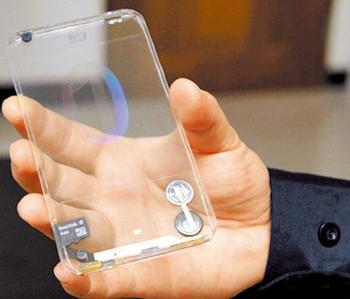
Taiwan unveils transparent mobile phone
In this modern age, labelled as the Phone Era, one may wonder what trend will follow after smart phones. We may just have the answer. On Monday, the Taiwan division of a US company released a fully-transparent cell phone.
The Taiwan division of U.S. Polytron Technologies has spent six years researching and developing this transparent mobile phone.
According to the development team, it functions just as well as a smart phone.
The screen is almost completely transparent. Inner workings like the battery and the sim card are miniaturized and placed around the bottom of the phone. The company is still working on reducing the size of the batteries.

The Taiwan division of U.S. Polytron Technologies has spent six years researching
and developing this transparent mobile phone.
Ms. Chen, working for the Taiwan Branch’s Public Relations, explains how the magic works.
"The screen is made of conductive glass. We use this feature to enable the LED to glow without any visible wires."
Despite being only 0.5 centimeters thick, the phone is not as fragile as it seems. In fact, it’s been toughened to resist shocks.

The Taiwan division of U.S. Polytron Technologies has spent six years researching
and developing this transparent mobile phone.
Compared with the iPhone 5, the prototype is 25 percent lighter, with a 4.3-inch screen -- 0.3 inches larger than the iPhone 5’s.
It can be touch-activated only on one side, but can display images on both front and back. Some phones have had transparent components before, but never to this extent.
The phone is expected to be on sale by the end of the year. Its price will be revealed close to its release date. But the company has promised one thing: it will definitely be cheaper than the iPhone 5.
cntv.com
The Taiwan division of U.S. Polytron Technologies has spent six years researching and developing this transparent mobile phone.
According to the development team, it functions just as well as a smart phone.
The screen is almost completely transparent. Inner workings like the battery and the sim card are miniaturized and placed around the bottom of the phone. The company is still working on reducing the size of the batteries.
The Taiwan division of U.S. Polytron Technologies has spent six years researching
and developing this transparent mobile phone.
Ms. Chen, working for the Taiwan Branch’s Public Relations, explains how the magic works.
"The screen is made of conductive glass. We use this feature to enable the LED to glow without any visible wires."
Despite being only 0.5 centimeters thick, the phone is not as fragile as it seems. In fact, it’s been toughened to resist shocks.
The Taiwan division of U.S. Polytron Technologies has spent six years researching
and developing this transparent mobile phone.
Compared with the iPhone 5, the prototype is 25 percent lighter, with a 4.3-inch screen -- 0.3 inches larger than the iPhone 5’s.
It can be touch-activated only on one side, but can display images on both front and back. Some phones have had transparent components before, but never to this extent.
The phone is expected to be on sale by the end of the year. Its price will be revealed close to its release date. But the company has promised one thing: it will definitely be cheaper than the iPhone 5.
cntv.com
Taiwan Goes All Supersonic
February 21, 2013: Taiwan is equipping 16 of its frigates with its supersonic Hsiung Feng 3 anti-ship missile. Taiwan has already armed four destroyers, 12 corvettes and 31 patrol boats with this missile. The Hsiung Feng 3 will now replace subsonic missiles on eight Perry class and six Lafayette class frigates as well as two more Perrys coming from the United States.

The 6.1 meter (19 foot) long Hsiung-feng 3 weighs 1.5 tons, has a 181 kg (400 pound) warhead and a top speed of 2,300 kilometers an hour. Max range is 300 kilometers. It uses inertial and GPS guidance to get to the general vicinity of the target, then several other sensors to lock on to a specific ship and hit it. The smaller Hsiung-feng 2 has a range of 160 kilometers and less extensive electronics.
Taiwan tends to develop its new weapons quietly and then suddenly reveal them. The Hsiung Feng 3, for example, suddenly began showing up in military parades, with little official comment, several years ago. One reason for keeping quiet about new weapons is that it keeps the press away from embarrassing development problems. There were some additional difficulties with the Hsiung-feng 3, after it went into production. The worst of these had to do with the very high speeds and damage that this caused to some components. It’s also believed that the max range was reduced to only 150 kilometers for a period of time because of teething problems.
The Hsiung-feng 3 is also being installed on a new 500 ton class of stealth corvettes. For these ships the designers are being asked to get as many of the large (for a 500 ton ship) Hsiung-feng 3s on it as possible (up to eight). In addition there will be eight of the smaller Hsiung-feng 2. These new corvettes are the continuation of a trend in the Taiwanese Navy, which sees small ships carrying a lot of anti-ship missiles as the key to success against the Chinese navy.
Taiwan already has a number of sub-sonic cruise missiles. The Hsiung Feng 2E is a 6.1 meter (19 foot long) cruise missile that weighs a ton, has a204 kg (450 pound) warhead and a top speed of 800 kilometers an hour. Max range is 600 kilometers. It uses inertial and GPS guidance. The Hsiung Feng 2E was developed from the Hsiung Feng 2 anti-ship missile. This was a smaller weapon (.685 ton), with a range of 160 kilometers. It entered service in the early 1990s, and by the late 1990s, developers were working on turning it into a cruise missile. The Hsiung Feng 2E can be launched from ships or from land and can threaten Chinese targets several hundred kilometers inland.
Two years ago Taiwan admitted that some of their warships were already equipped with the Hsiung Feng 3. This weapon was in development for over a decade, and it was rumored that production began four years ago. Some 300 of these missiles are believed to be in service (aboard ships or in land based launchers).

The 6.1 meter (19 foot) long Hsiung-feng 3 weighs 1.5 tons, has a 181 kg (400 pound) warhead and a top speed of 2,300 kilometers an hour. Max range is 300 kilometers. It uses inertial and GPS guidance to get to the general vicinity of the target, then several other sensors to lock on to a specific ship and hit it. The smaller Hsiung-feng 2 has a range of 160 kilometers and less extensive electronics.
Taiwan tends to develop its new weapons quietly and then suddenly reveal them. The Hsiung Feng 3, for example, suddenly began showing up in military parades, with little official comment, several years ago. One reason for keeping quiet about new weapons is that it keeps the press away from embarrassing development problems. There were some additional difficulties with the Hsiung-feng 3, after it went into production. The worst of these had to do with the very high speeds and damage that this caused to some components. It’s also believed that the max range was reduced to only 150 kilometers for a period of time because of teething problems.
The Hsiung-feng 3 is also being installed on a new 500 ton class of stealth corvettes. For these ships the designers are being asked to get as many of the large (for a 500 ton ship) Hsiung-feng 3s on it as possible (up to eight). In addition there will be eight of the smaller Hsiung-feng 2. These new corvettes are the continuation of a trend in the Taiwanese Navy, which sees small ships carrying a lot of anti-ship missiles as the key to success against the Chinese navy.
Taiwan already has a number of sub-sonic cruise missiles. The Hsiung Feng 2E is a 6.1 meter (19 foot long) cruise missile that weighs a ton, has a204 kg (450 pound) warhead and a top speed of 800 kilometers an hour. Max range is 600 kilometers. It uses inertial and GPS guidance. The Hsiung Feng 2E was developed from the Hsiung Feng 2 anti-ship missile. This was a smaller weapon (.685 ton), with a range of 160 kilometers. It entered service in the early 1990s, and by the late 1990s, developers were working on turning it into a cruise missile. The Hsiung Feng 2E can be launched from ships or from land and can threaten Chinese targets several hundred kilometers inland.
Two years ago Taiwan admitted that some of their warships were already equipped with the Hsiung Feng 3. This weapon was in development for over a decade, and it was rumored that production began four years ago. Some 300 of these missiles are believed to be in service (aboard ships or in land based launchers).
Thứ Bảy, 26 tháng 1, 2013
Taiwan to receive first P-3C anti-submarine aircraft by year end
Jan 26, 2013- (CNA) Taiwan will take delivery of the first batch of 12 submarine-hunting aircraft purchased from the United States by the end of this year, which will beef up the country's anti-submarine capabilities, the Navy said Saturday.
The P-3Cs will be delivered to Taiwan starting this year, with the last aircraft in the arms deal scheduled to arrive here by the end of 2015, the Navy said.
The P-3C, the most capable Orion version, has advanced submarine detection capability.
In 2007, the U.S. government approved the sale of the P-3Cs with T-56 turboprop engines, and other associated equipment and services at an estimated cost of US$1.96 billion.
Meanwhile, Taiwan has taken delivery of the UGM-84L sub-launched Harpoon missiles purchased from the U.S. and is equipping them on two of Taiwan's submarines, the Navy confirmed.
The new weapons will bolster Taiwan's defense capabilities, the Navy said.
Focus Taiwan
The P-3Cs will be delivered to Taiwan starting this year, with the last aircraft in the arms deal scheduled to arrive here by the end of 2015, the Navy said.
The P-3C, the most capable Orion version, has advanced submarine detection capability.
In 2007, the U.S. government approved the sale of the P-3Cs with T-56 turboprop engines, and other associated equipment and services at an estimated cost of US$1.96 billion.
Meanwhile, Taiwan has taken delivery of the UGM-84L sub-launched Harpoon missiles purchased from the U.S. and is equipping them on two of Taiwan's submarines, the Navy confirmed.
The new weapons will bolster Taiwan's defense capabilities, the Navy said.
Focus Taiwan
Thứ Năm, 24 tháng 1, 2013
Japan forces Taiwanese activists to retreat from islands
Jan 24, 2013- Japanese forces used water cannons to repel a ship carrying Taiwanese activists who were headed to a disputed island in the East China Sea on Thursday.
The Japanese Coast Guard says the boat, escorted by four Taiwanese government ships, was turned away about 30 kilometers from the islands, which are controlled by Japan, but also claimed by China and Taiwan.
Taiwan's official Central News Agency says the activists had wanted to reach the islands to install a statue of Matsu, the "goddess of the sea," which they believe will help protect Taiwanese fishermen in the area.
The islands, called Senkaku in Japanese and Diaoyu in Chinese, have become a flash-point for small-scale conflicts in recent months, mostly between Japanese and Chinese vessels.
More recently, both countries have also sent fighter jets to patrol the islands, raising fears of war between Asia's two largest economies.
The uninhabited islands are located in a strategic area of the East China Sea and are surrounded by rich fishing grounds and potentially vast energy deposits.
Taiwan, which refers to the islands as Diaoyutai, has shied away from major confrontations in the dispute,although Japanese government vessels also drove off about 50 Taiwanese boats from the islands in September.
See more details : TAIWAN BOAT LEAVES ISLANDS AFTER JAPAN WATER CANNON DUEL (Yahoo News, Jan 24, 2013)
The Japanese Coast Guard says the boat, escorted by four Taiwanese government ships, was turned away about 30 kilometers from the islands, which are controlled by Japan, but also claimed by China and Taiwan.
Taiwan's official Central News Agency says the activists had wanted to reach the islands to install a statue of Matsu, the "goddess of the sea," which they believe will help protect Taiwanese fishermen in the area.
The islands, called Senkaku in Japanese and Diaoyu in Chinese, have become a flash-point for small-scale conflicts in recent months, mostly between Japanese and Chinese vessels.
More recently, both countries have also sent fighter jets to patrol the islands, raising fears of war between Asia's two largest economies.
The uninhabited islands are located in a strategic area of the East China Sea and are surrounded by rich fishing grounds and potentially vast energy deposits.
Taiwan, which refers to the islands as Diaoyutai, has shied away from major confrontations in the dispute,although Japanese government vessels also drove off about 50 Taiwanese boats from the islands in September.
See more details : TAIWAN BOAT LEAVES ISLANDS AFTER JAPAN WATER CANNON DUEL (Yahoo News, Jan 24, 2013)
Đăng ký:
Bài đăng (Atom)