(By David Pilling) It is a shame others have not been bold enough to test their maritime claims
Nine dashes, five judges, two contestants. It sounds like a reality television show. In fact, it is the rather obscure – but very important – beginning of a process to delineate fiercely disputed Asian maritime borders according to the rule of law, rather than the law of the jungle.
The nine dashes belong to China. They mark what Beijing says is its historical claim to most of the South China Sea, a vast waterway that borders several other Asian countries. The five judges have been chosen to sit on a tribunal that will determine the validity of that claim under the UN Convention on the Law of the Sea.
The two contestants are the Philippines, which brought the case, and China, whose nine-dash line is being challenged. Strictly speaking, there is only one contestant, since Beijing, though a signatory of Unclos, has not deigned to recognise the process.
Asian countries, particularly the not inconsiderable number that have maritime disputes of their own with China, are watching the case with intense interest. Few, though, have dared say much in public for fear of offending Beijing. Whether you judge it plucky or rash, the Philippines has gone out on a limb.
Manila’s hope is to put its bilateral dispute with Beijing over the ownership of waters and islands close to the Philippine coast to international arbitration. There is an air of desperation about its gambit, which suggests it sees no possible progress through dialogue. Professor Jerome Cohen, an authority on Chinese and international law at New York University School of Law, says the Philippine “bombshell” has shocked Beijing with its audacity.
The case, launched in January, will take perhaps four years to chug through the Unclos system. It has potentially huge implications for a region riddled with explosive territorial disputes, including that between Japan and China over uninhabited islands in the East China Sea.
The Philippines has asked Unclos to adjudicate on the validity of the nine-dash line, produced by China in 1947 to illustrate what it said was its longstanding jurisdiction over almost all the South China Sea. That claim overlaps with the Philippines’ 200 mile economic exclusion zone extending from its coastline.
The case will proceed with or without China. Beijing waived its right to nominate arbitrators, but they have been nominated anyway. The first thing they will have to establish is whether Unclos has jurisdiction in the case. It may not.
Concluded in 1982, the convention is actually quite narrow in scope. Mostly, it confines its activities to matters such as whether a rock counts as an island – and thus whether it generates a 12-mile territorial sea and a 200-mile EEZ. The question of whether the island belongs to country Y or country X does not fall under its remit.
Even if Unclos declares itself competent to judge the case, there are at least three things to bear in mind before we become too excited. First, contrary to what is often assumed, international law is not some Newtonian absolute. Rather, it is a set of common rules agreed by nations that emerged from a post-second world war order, and whose realities it reflects. International law is not the word of God.
Second, there is very little “morality” when it comes to territorial disputes, no matter how loud countries shout about their inalienable rights. In most cases, it is the job of international law to decide who grabbed which territory first. Nation states with their fixed borders are a relatively new phenomenon. Today’s boundaries have more to do with armies and warships than righteousness.
Third, the case for international law is undermined by the fact that the US, in whose image the postwar order has been created, often stands on the sidelines. Washington, for example, has never ratified Unclos. That makes it hard to insist that Beijing should abide by its decisions.
To cite just one example of how Washington has thumbed its nose at international law when it is inconvenient: in 1986 the International Court of Justice ruled that the US had violated Nicaragua’s rights by mining its ports and funding the Contra rebels. Ronald Reagan, then American president, simply ignored the decision. Might is generally right. Yukichi Fukuzawa, the great 19th-century Japanese student of western thinking, learnt the lesson well. “One hundred volumes of international law are not the equal of a few cannons,” he concluded.
That does not mean the Philippines is wrong to bring the case. It has done the right thing. It is just a shame that other countries have not been plucky enough to test their claim through international arbitration. Step up, Vietnam, Japan and Indonesia.
One day, China may even participate in such a procedure itself. Prof Cohen tells the story of when, in 1972, he suggested to Zhou Enlai, China’s premier, that Beijing should name someone to sit on the International Court of Justice. The room fell silent before Zhou roared with laughter at the very idea of communist China joining “a racist, bourgeois institution that would never give [it] a fair shake”.
Yet, just over a decade later, China did exactly as Prof Cohen had suggested and nominated a candidate to the ICJ. If the Philippines waits long enough, it may yet get its day in court.
Copyright @ The Financial Times Limited 2013. You may share using our article tools.
Please don't cut articles from FT.com and redistribute by email or post to the web.
Hiển thị các bài đăng có nhãn Military Stand-off. Hiển thị tất cả bài đăng
Thứ Năm, 30 tháng 5, 2013
Thứ Sáu, 26 tháng 4, 2013
Chinese troops have erected tents 19km inside Indian territory: Govt
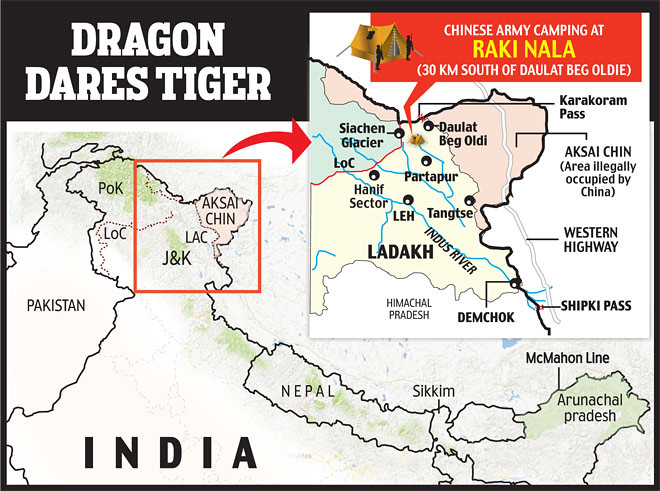
NEW DELHI: The government on Friday told a parliamentary committee that Chinese troops have pitched tents 19km deep inside the Indian territory in Ladakh region of Jammu and Kashmir and that efforts are underway to ensure that the status quo is maintained.

Indian Army patrols reported on April 16 the presence of Chinese People's Liberation Army in Depsang, pitching tents 19km inside the LAC
Defence secretary Shashi Kant Sharma and some other senior officials informed the parliamentary standing committee on defence that India has deployed forces to "keep a close watch on the border", sources told .
Sharma and other officials appeared before the committee after BJP members Mukhtar Abbas Naqvi and Prakash Javadekar wanted to know the actual ground situation in Depsang sector of Ladakh where the Chinese incursion took place in Daulat Beg Oldie area a week ago.
The meeting of the committee was cut short as members were dissatisfied with the insufficient information provided by the officials and they were asked to report back at the next meeting on May 30 with appropriate and exact details of the situation.
The officials told the committee that Indian Army patrols reported on April 16 the presence of Chinese People's Liberation Army in Depsang, pitching tents 19km inside the LAC, the sources said.
They told the panel that as per the established mechanisms, the issue has been taken up at the level of flag meetings and through diplomatic channels to maintain status quo and resolve the issue through existing mechanisms.
The defence ministry officials told the committee that China disputes the international boundary with India and there is no commonly delineated LAC between the two countries.
They said there are a few areas along the border where India and China have differing perceptions of the LAC, the sources said.
Incidents of transgression due to differences in the perception of LAC are taken up with the Chinese side through established mechanisms such as border personnel meetings, flag meetings, hotlines and diplomatic channels, the officials told the panel.
The agenda for today's was welfare of armed forces personnel but the issue related to incursion in Ladakh was added after Naqvi and Javadekar demanded to get the clear picture of the situation and on how the government is handling it.
Naqvi and Javadekar wrote to standing committee chairman Raj Babbar on THursday, saying the situation in Ladakh is "very serious" but the government is not taking it seriously.
Times of India
Indian Army patrols reported on April 16 the presence of Chinese People's Liberation Army in Depsang, pitching tents 19km inside the LAC
Defence secretary Shashi Kant Sharma and some other senior officials informed the parliamentary standing committee on defence that India has deployed forces to "keep a close watch on the border", sources told .
Sharma and other officials appeared before the committee after BJP members Mukhtar Abbas Naqvi and Prakash Javadekar wanted to know the actual ground situation in Depsang sector of Ladakh where the Chinese incursion took place in Daulat Beg Oldie area a week ago.
The meeting of the committee was cut short as members were dissatisfied with the insufficient information provided by the officials and they were asked to report back at the next meeting on May 30 with appropriate and exact details of the situation.
The officials told the committee that Indian Army patrols reported on April 16 the presence of Chinese People's Liberation Army in Depsang, pitching tents 19km inside the LAC, the sources said.
They told the panel that as per the established mechanisms, the issue has been taken up at the level of flag meetings and through diplomatic channels to maintain status quo and resolve the issue through existing mechanisms.
The defence ministry officials told the committee that China disputes the international boundary with India and there is no commonly delineated LAC between the two countries.
They said there are a few areas along the border where India and China have differing perceptions of the LAC, the sources said.
Incidents of transgression due to differences in the perception of LAC are taken up with the Chinese side through established mechanisms such as border personnel meetings, flag meetings, hotlines and diplomatic channels, the officials told the panel.
The agenda for today's was welfare of armed forces personnel but the issue related to incursion in Ladakh was added after Naqvi and Javadekar demanded to get the clear picture of the situation and on how the government is handling it.
Naqvi and Javadekar wrote to standing committee chairman Raj Babbar on THursday, saying the situation in Ladakh is "very serious" but the government is not taking it seriously.
Times of India
Thứ Tư, 24 tháng 4, 2013
Flag meet between India, China military commanders fails to end stand-off in Ladakh
The face-off between the Indian Army and the People's Liberation Army (PLA) of China continued on the Line of Actual Control (LAC) as a flag meeting between the local commanders held on Tuesday failed to resolve the differences.
China rejected India's contention that its troops had breached the sanctity of the LAC by setting up a tented post at Raki Nala, 30 km south of Daulat Beg Oldi in north Ladakh. The PLA, in fact, claimed that the Indian armymen were on an "aggressive patrol".
As of now, the two sides will hold on to their positions. The only consolation for India is that China has decided not to escalate the tension. The army is now looking at government-togovernment-level interaction to resolve the issue.
The foreign ministry has conveyed its objection to China. "We have asked the Chinese side to maintain the status quo in this sector (of the western border)," said Syed Akbaruddin, official spokesperson in the ministry of external affairs.
"We see this as a âface-to-face' situation between border personnel of two sides due to differences on their alignment of the LAC," the official said. Face-to-face situation is referred to the 2005 protocol for implementing confidence building measures (CBMs) in military field along the LAC.
Army chief's visit Army chief general Bikram Singh was on a scheduled visit to Nagrota, the headquarters of 16 corps, which guards the Line of Control in Jammu and Kashmir.
The army chief met northern army commander Lt-General K.T. Parnaik, who heads the army in Jammu and Kashmir region.
Senior officers of the two armies have met twice since April 15, when a platoon of PLA set up a tented camp 10 km inside the Indian territory. The first flag meet on April 18 at Chishul in eastern Ladakh, too, failed to resolve the deadlock between the two countries.
Before the flag meeting, banner drills were also carried out, asking the Chinese troops to vacate the position. "This is our area, you are violating the LAC, go back," read the Indian banner. The banner drill is being practiced since 2005 to resolve misunderstandings about unmarked boundary.
Sources said the unusual aspect of the present stand-off is the refusal by the PLA to budge. In the past, the Chinese patrol used to leave the area after seeing the Indian banner.
The PLA's stand is also confusing as a number of high-level exchanges are lined up in the coming months to strengthen military ties. Defence minister A.K. Antony is scheduled to visit China sometime in June and an army delegation is preparing to leave for Beijing to discuss revival of military exercise "hand-inhand" after a gap of five years.
The Indian Army has described the situation as a "face-off" and moved troops from Ladakh Scouts into the area. The Indian soldiers have also pitched tents around 150 meters from the PLA platoon's post, comprising around 50 men. Foreign secretary Ranjan Mathai had summoned the Chinese ambassador to South Block.
Gautam Bambawale, joint secretary in MEA, who is heading the India-China joint working mechanism to deal with issues on the boundary from the Indian side, spoke to his counterpart in Beijing last week, stressing the need to resolve the row.
However, the Chinese have been adamant on their stand. Chinese foreign ministry spokesperson Hua Chunying said on Monday that China's troops have been abiding by the agreement between the two countries. "Our troops are patrolling on the Chinese side of the LAC and have never trespassed the LAC," Lua said.
-With inputs from Saurabh Shukla
India Today
China rejected India's contention that its troops had breached the sanctity of the LAC by setting up a tented post at Raki Nala, 30 km south of Daulat Beg Oldi in north Ladakh. The PLA, in fact, claimed that the Indian armymen were on an "aggressive patrol".
As of now, the two sides will hold on to their positions. The only consolation for India is that China has decided not to escalate the tension. The army is now looking at government-togovernment-level interaction to resolve the issue.
The foreign ministry has conveyed its objection to China. "We have asked the Chinese side to maintain the status quo in this sector (of the western border)," said Syed Akbaruddin, official spokesperson in the ministry of external affairs.
"We see this as a âface-to-face' situation between border personnel of two sides due to differences on their alignment of the LAC," the official said. Face-to-face situation is referred to the 2005 protocol for implementing confidence building measures (CBMs) in military field along the LAC.
Army chief's visit Army chief general Bikram Singh was on a scheduled visit to Nagrota, the headquarters of 16 corps, which guards the Line of Control in Jammu and Kashmir.
The army chief met northern army commander Lt-General K.T. Parnaik, who heads the army in Jammu and Kashmir region.
Senior officers of the two armies have met twice since April 15, when a platoon of PLA set up a tented camp 10 km inside the Indian territory. The first flag meet on April 18 at Chishul in eastern Ladakh, too, failed to resolve the deadlock between the two countries.
Before the flag meeting, banner drills were also carried out, asking the Chinese troops to vacate the position. "This is our area, you are violating the LAC, go back," read the Indian banner. The banner drill is being practiced since 2005 to resolve misunderstandings about unmarked boundary.
Sources said the unusual aspect of the present stand-off is the refusal by the PLA to budge. In the past, the Chinese patrol used to leave the area after seeing the Indian banner.
The PLA's stand is also confusing as a number of high-level exchanges are lined up in the coming months to strengthen military ties. Defence minister A.K. Antony is scheduled to visit China sometime in June and an army delegation is preparing to leave for Beijing to discuss revival of military exercise "hand-inhand" after a gap of five years.
The Indian Army has described the situation as a "face-off" and moved troops from Ladakh Scouts into the area. The Indian soldiers have also pitched tents around 150 meters from the PLA platoon's post, comprising around 50 men. Foreign secretary Ranjan Mathai had summoned the Chinese ambassador to South Block.
Gautam Bambawale, joint secretary in MEA, who is heading the India-China joint working mechanism to deal with issues on the boundary from the Indian side, spoke to his counterpart in Beijing last week, stressing the need to resolve the row.
However, the Chinese have been adamant on their stand. Chinese foreign ministry spokesperson Hua Chunying said on Monday that China's troops have been abiding by the agreement between the two countries. "Our troops are patrolling on the Chinese side of the LAC and have never trespassed the LAC," Lua said.
-With inputs from Saurabh Shukla
India Today
Đăng ký:
Bài đăng (Atom)