Hiển thị các bài đăng có nhãn Vietnam-Japan. Hiển thị tất cả bài đăng
Thứ Sáu, 10 tháng 5, 2013
Japan seeks to help boost Vietnam navy
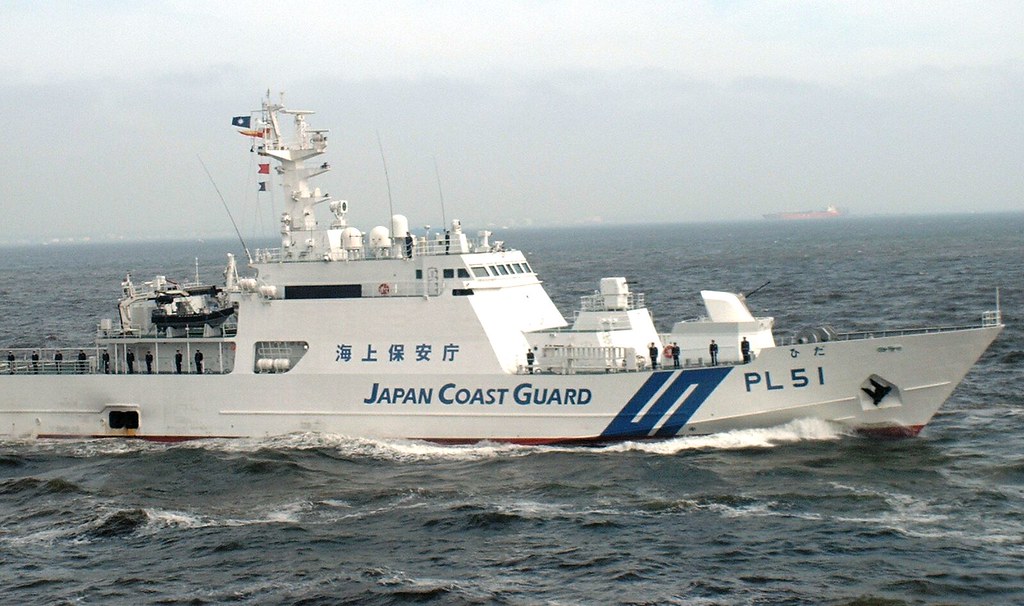
Japan will propose that Vietnam set up a civil maritime security force to facilitate the export of patrol vessels to Vietnam at upcoming maritime security talks between the two countries, Japanese media reported.
The proposal, which came ahead of the two countries' first-ever maritime security talks this month, has been interpreted as an attempt to counter China's invasive activities in the South China Sea.
Japan's Kyodo News quoted sources as saying that the two sides are expected to discuss Japan's possible provision of patrol vessels to Vietnam.
Media reports stated Japan is planning to export high-performance maritime patrol ships above 1,000 tons in an effort to help Vietnam strengthen its capacity to protect its rights.
However, given that Japan's assistance can only be channeled to non-military programs, Tokyo will reportedly suggest the Vietnamese government should separate its maritime police force from its army, so as to facilitate the export.
Japan hopes to strengthen cooperation with Vietnam on maritime security, and wants to help Vietnam establish a mechanism equivalent to the Japan Coast Guard. One report from Ribenxinwen said the Japan's self-defense force is helping Vietnam train submarine crews, citing an unnamed Japanese official.
Thứ Bảy, 4 tháng 5, 2013
Military Dimensions of Japan-Vietnam Cooperation on the Rise
In mid-April, Japan and Vietnam vowed to expand their defense cooperation during an official visit by Vietnam’s army chief to Tokyo. In an email interview, Corey Wallace, a teaching fellow at the University of Auckland who studies international security and Japan’s regional relations, explained the development of the Japan-Vietnam defense relationship and what it means for each country’s tensions with China.
WPR: What has been the recent history of Japan-Vietnam defense cooperation?
Corey Wallace: While official defense connections began developing when Vietnam joined the Association of Southeast Asian Nations, a key turning point for the defense relationship came in 2010. After visits to Vietnam by Japan’s vice minister of defense and the Maritime Self Defense Force (MSDF) chief early that year, in July the two countries agreed to hold regular sub-ministerial level “two plus two” discussions. For Japan this is important because it only has “two plus two” arrangements with the United States, Australia (at the ministerial level) and India (at the sub-ministerial level). After the first Senkaku/Diaoyu Islands fracas between Japan and China in September 2010, Japan and Vietnam appeared to push forward on relations “in all areas” and declared a “Strategic Partnership for Peace and Prosperity in Asia.” In October 2011, the two sides signed a memorandum of understanding on the enhancement of defense cooperation. These agreements collectively have resulted in the consistent exchange of top political, bureaucratic and military officials between Japan and Vietnam.
WPR: What is the potential for Japanese arms exports to Vietnam?
Wallace: Japan looks likely to export patrol boats to Vietnam, as it has to the Philippines and Indonesia. Officially, such exports come under Japan’s official development assistance (ODA) policy and are labeled “security assistance”; they are not meant to be used for military purposes but to build the capacity of partner countries to address piracy and maritime crime. Nevertheless such exports still indirectly contribute to the military security of these nations, and in any case more explicit “military assistance” is likely in the Japan-Vietnam relationship as time goes on and tensions persist. In 2012 Japan started providing “noncombat” military equipment to Vietnam outside of the ODA framework. Former Japanese Defense Minister Kitazawa recently told the New York Times that Japan was considering submarine exports to Vietnam, which would be a dramatic development.
WPR: How does the growing relationship fit into the regional landscape, especially the two countries' tensions with China?
Wallace: The defense relationship is potentially significant in terms of the balance of military power in the South China Sea. As but one example, if Japan were to export some of its older but still advanced submarines to Vietnam, this would likely come along with training in anti-submarine warfare. This is an area in which the Japanese MSDF has a world-class capability but the Vietnamese navy struggles. In any case, Vietnam has requested cooperation with Japan in the sub-surface domain, which would complement Vietnam’s Russian and Indian links facilitated by the Vietnamese navy’s purchase of six improved Russian-made Kilo-class submarines.
It is important to note, however, that the two sides are also intensively cooperating in economic planning and infrastructure, environmental fields and even in the area of legal and administrative reform. Vietnam’s prosperity is seen by Japan in particular as essential for the integration of the Mekong and the strengthening of ASEAN vis-a-vis China. These nonmilitary dimensions of cooperation will thus remain the priority for both countries, unless the security environment deteriorates further in the region.
World Politics Review
WPR: What has been the recent history of Japan-Vietnam defense cooperation?
Corey Wallace: While official defense connections began developing when Vietnam joined the Association of Southeast Asian Nations, a key turning point for the defense relationship came in 2010. After visits to Vietnam by Japan’s vice minister of defense and the Maritime Self Defense Force (MSDF) chief early that year, in July the two countries agreed to hold regular sub-ministerial level “two plus two” discussions. For Japan this is important because it only has “two plus two” arrangements with the United States, Australia (at the ministerial level) and India (at the sub-ministerial level). After the first Senkaku/Diaoyu Islands fracas between Japan and China in September 2010, Japan and Vietnam appeared to push forward on relations “in all areas” and declared a “Strategic Partnership for Peace and Prosperity in Asia.” In October 2011, the two sides signed a memorandum of understanding on the enhancement of defense cooperation. These agreements collectively have resulted in the consistent exchange of top political, bureaucratic and military officials between Japan and Vietnam.
WPR: What is the potential for Japanese arms exports to Vietnam?
Wallace: Japan looks likely to export patrol boats to Vietnam, as it has to the Philippines and Indonesia. Officially, such exports come under Japan’s official development assistance (ODA) policy and are labeled “security assistance”; they are not meant to be used for military purposes but to build the capacity of partner countries to address piracy and maritime crime. Nevertheless such exports still indirectly contribute to the military security of these nations, and in any case more explicit “military assistance” is likely in the Japan-Vietnam relationship as time goes on and tensions persist. In 2012 Japan started providing “noncombat” military equipment to Vietnam outside of the ODA framework. Former Japanese Defense Minister Kitazawa recently told the New York Times that Japan was considering submarine exports to Vietnam, which would be a dramatic development.
WPR: How does the growing relationship fit into the regional landscape, especially the two countries' tensions with China?
Wallace: The defense relationship is potentially significant in terms of the balance of military power in the South China Sea. As but one example, if Japan were to export some of its older but still advanced submarines to Vietnam, this would likely come along with training in anti-submarine warfare. This is an area in which the Japanese MSDF has a world-class capability but the Vietnamese navy struggles. In any case, Vietnam has requested cooperation with Japan in the sub-surface domain, which would complement Vietnam’s Russian and Indian links facilitated by the Vietnamese navy’s purchase of six improved Russian-made Kilo-class submarines.
It is important to note, however, that the two sides are also intensively cooperating in economic planning and infrastructure, environmental fields and even in the area of legal and administrative reform. Vietnam’s prosperity is seen by Japan in particular as essential for the integration of the Mekong and the strengthening of ASEAN vis-a-vis China. These nonmilitary dimensions of cooperation will thus remain the priority for both countries, unless the security environment deteriorates further in the region.
World Politics Review
Thứ Tư, 16 tháng 1, 2013
Japan Woos Vietnam Amid Shared China Concerns
Jan. 16, 2013- Japan's prime minister promised closer security and economic ties with Vietnam on Wednesday, bolstering an alliance that shares concerns over rising Chinese territorial assertiveness in regional waters.

Vietnamese Prime Minister Nguyen Tan Dung to receive Japanese counterpart Shinzo Abe in Hanoi on Jan. 16, 2013.
On his first overseas tour since he was elected, Prime Minister Shinzo Abe is visiting Vietnam, Thailand and Indonesia, three Southeast Asian nations that are major manufacturing bases and growing markets for Japanese companies as the government seeks to grow its moribund economy.
The region is gaining in importance as manufacturers seek to balance risks from their investments in China, where anti-Japanese riots sparked by tensions over a disputed island in the East China Sea have hammered exports and prompted boycotts of some Japanese products.
While less explosive, tensions between Vietnam and China have also been rising over Beijing's claims over the resource-rich South China Sea, much of which Hanoi says belongs to it.
Hanoi was Abe's first stop on the trip, which ends in Jakarta early Saturday.
In brief statements to the media, neither he nor Vietnam's Prime Minister Nguyen Tan Dung mentioned China, but stressed the importance of their partnership.
"For Japan, Vietnam is an important partner," said Abe, in comments translated from Japanese, to Vietnamese and then to English. "Our countries share the same challenge, with economies that can complement in each other." He vowed to strengthen security and economic cooperation.
Japan is Vietnam's largest foreign investor with the total investment of $29 billion in 1,800 projects. The East Asian economic powerhouse is also Vietnam's largest bilateral donor, providing nearly $20 billion in low-interests loans in the past 20 years for infrastructure projects.
Abe, having a second stint as prime minister after health problems cut short an earlier term in 2006-2007, intends to establish an "Abe doctrine" on the diplomatic front, to match his "Abenomics"-style economic program of stimulus spending meant to help pull Japan out of recession.
His most pressing problem is troubles with China. Tensions between the countries have sharpened since September, when the Japanese central government purchased a group of East China Sea islands controlled by Japan but also claimed by China. Beijing responded furiously to the purchase.
The tiny, uninhabited islands surrounded by rich fishing grounds and suspected undersea mineral resources are known as Diaoyu in China and Senkaku in Japan. China has since dispatched maritime survey boats and warships to the waters almost daily, sometimes entering Japanese waters. Chinese warplanes have recently started flying near Japanese airspace.
——
Associated Press reporter Elaine Kurtenbach contributed to this report from Tokyo.
Vietnamese Prime Minister Nguyen Tan Dung to receive Japanese counterpart Shinzo Abe in Hanoi on Jan. 16, 2013.
On his first overseas tour since he was elected, Prime Minister Shinzo Abe is visiting Vietnam, Thailand and Indonesia, three Southeast Asian nations that are major manufacturing bases and growing markets for Japanese companies as the government seeks to grow its moribund economy.
The region is gaining in importance as manufacturers seek to balance risks from their investments in China, where anti-Japanese riots sparked by tensions over a disputed island in the East China Sea have hammered exports and prompted boycotts of some Japanese products.
While less explosive, tensions between Vietnam and China have also been rising over Beijing's claims over the resource-rich South China Sea, much of which Hanoi says belongs to it.
Hanoi was Abe's first stop on the trip, which ends in Jakarta early Saturday.
In brief statements to the media, neither he nor Vietnam's Prime Minister Nguyen Tan Dung mentioned China, but stressed the importance of their partnership.
"For Japan, Vietnam is an important partner," said Abe, in comments translated from Japanese, to Vietnamese and then to English. "Our countries share the same challenge, with economies that can complement in each other." He vowed to strengthen security and economic cooperation.
Japan is Vietnam's largest foreign investor with the total investment of $29 billion in 1,800 projects. The East Asian economic powerhouse is also Vietnam's largest bilateral donor, providing nearly $20 billion in low-interests loans in the past 20 years for infrastructure projects.
Abe, having a second stint as prime minister after health problems cut short an earlier term in 2006-2007, intends to establish an "Abe doctrine" on the diplomatic front, to match his "Abenomics"-style economic program of stimulus spending meant to help pull Japan out of recession.
His most pressing problem is troubles with China. Tensions between the countries have sharpened since September, when the Japanese central government purchased a group of East China Sea islands controlled by Japan but also claimed by China. Beijing responded furiously to the purchase.
The tiny, uninhabited islands surrounded by rich fishing grounds and suspected undersea mineral resources are known as Diaoyu in China and Senkaku in Japan. China has since dispatched maritime survey boats and warships to the waters almost daily, sometimes entering Japanese waters. Chinese warplanes have recently started flying near Japanese airspace.
——
Associated Press reporter Elaine Kurtenbach contributed to this report from Tokyo.
Đăng ký:
Bài đăng (Atom)
