Hiển thị các bài đăng có nhãn Southeast Asia News. Hiển thị tất cả bài đăng

Thứ Bảy, 10 tháng 3, 2018

Japan mulls over requests for defence equipment from Southeast Asia

Japan is studying several requests from Southeast Asian governments for donations of defence equipment.

However, Japanese operational requirements will take precedence over assistance to foreign governments, a top military official has told Jane’s.


Japan is studying requests by Southeast Asian countries to donate military equipment but refuted reports that it has offered Malaysia the P-3C aircraft, two of which are pictured here. Source: JMSDF

The Japanese Maritime Self Defense Force (JMSDF) has said it is aware of several requests from countries in the Southeast Asian region for donations of excess defence equipment.

Besides military hardware, the Japanese government has also been approached by these Association of Southeast Asian Nations (ASEAN) countries to share technical knowledge and expand on bilateral military collaborations.

Japan has donated five King Air TC-90 aircraft, which were previously in service with the JMSDF’s training squadron, to the Philippine government as part of wider efforts to improve maritime capabilities of its partners in Southeast Asia.

Two of the airframes have been delivered to the Philippine Navy, while three other aircraft are currently scheduled for handover in 2018. The JMSDF is also providing training support on the TC-90 platform for Philippine Navy pilots and maintenance crew.

To strengthen its defence relationships with countries in Southeast Asia, the Japanese government has embarked on several initiatives to improve maritime of government agencies in the region in recent years, especially with those from the Philippines.

Besides the transfer of TC-90 aircraft, Tokyo has also aided the Philippine Coast Guard (PCG) to procure 10 new multirole response vessels from Japanese shipbuilder Japan Maritime United Corporation (JMUC). The PCG has so far received seven vessels in the programme, and is scheduled to receive the remaining hulls by the end of 2018.

Jane's

Interview: 'Who Wants Cambodia To Be a Province of China?'

(RFA - March 7, 2018) Sophal Ear is an associate professor of diplomacy & world affairs at Occidental College in California who has written "Aid Dependence in Cambodia: How Foreign Assistance Undermines Democracy" and co-authored “The Hungry Dragon: How China's Resource Quest Is Reshaping the World." The policy analyst gave an interview by e-mail with Sovannarith Keo of RFA's Khmer Service about Cambodia's deepening economic relationship with China and concerns about the Southeast Asian country's growing debt to its giant northern neighbor as Beijing ramps up its signature Belt-Road Initiative infrastructure plan.


Occidental University professor and author Sophal Ear, in undated photo.

RFA: What are your general observations and assessment of Cambodia's debts to China, especially since China introduced its Belt Road Initiative (BRI) projects for Cambodia? Has such an initiative induced Cambodia to take on more debt to China than ever before? If so, is the trend a good or bad sign for Cambodia's future?

Sophal Ear: $4.3 billion in debt to China is about 20 percent of Cambodia’s GDP. This is a lot to owe one single creditor: China. Belt Road Initiative projects are just a way of categorizing a bunch of lending--much of which would have taken place anyway. It's putting a nice label on something--like the same old wine in a new bottle. Of course, it sounds so impressive, globally the spending could approach $1 trillion, but if it’s loans, it’s great for China. The money lent becomes income for Chinese companies which use Chinese workers (who receive paychecks). A win-win-win for China. As for Cambodia, if it builds infrastructure that can transform Cambodia and add value to its economy, that’s good. But if it’s just white elephant projects, ghost cities, and Potemkin villages, then (it's) terrible for Cambodia. Chinese President Xi Jinping said this for China and it applies to Cambodia: 'Houses are built to be inhabited, not for speculation.' Yet that is what is happening on Diamond Island and in other parts of Phnom Penh and Cambodia.

RFA: A new report published by the Center for Global Development (CGDEV) identified Cambodia among 23 countries at 'risk of debt distress' today as a result of Chinese BRI. But the report did not classify Cambodia among eight countries 'vulnerable to debt distress' due to future BRI-related financing. Do you agree with this finding? Which such trends, can you predict when Cambodia may face debt default as a result of such Chinese BRI financing?

Sophal Ear: It’s a reasonable finding. Cambodia’s overall debt sustainability is not bad. Look, this analysis is based on debt as a percentage of GDP, export revenue, etc. Exports bring in foreign exchange, which is used to service debt. You cannot pay foreign debt in Riels. Cambodia is in the 32 percent of debt-to-GDP range, but could be inching up to 40 percent of GDP before you know it, especially if Cambodia's economy hits a bump and a recession happens or if debt grows more rapidly than GDP growth. Right now, based on existing numbers, it’s not yet unsustainable. The acceleration of indebtedness is probably what puts it “at risk”. It’s going up, but if it goes up too quickly, that’s worrisome. The U.S. has about 106 percent debt-to-GDP. Japan’s is 245%, but most of Japan’s debt is held by Japanese citizens. China and Japan own about 5% each of U.S. debt. No-one believes the U.S. or Japan could default. The risk is very small. Cambodia, on the other hand, has a painful history of banning money. This is why the dollar is used in Cambodia and the country is still only talking about issuing bonds.

RFA: What are your general recommendations so that Cambodia can escape from a Chinese debt trap?

Sophal Ear: Diversify who you borrow from. Borrow too much from one source, especially if that source is not your own people, and you become a wholly owned subsidiary of that source: China. Who wants Cambodia to be a province of China? I don't think Cambodians want that.


RFA: Prime Minister Hun Sen recently defended his government's foreign debt status, saying that it is still healthy since the entire debt-to-GDP ratio remains lower than 40 percent or so. What is your reaction to that?

Sophal Ear: Mathematically, it is correct. However, if Cambodia’s Chinese debt-to-GDP ratio is 20 percent, and we’re still below 40 percent debt-to-GDP ratio overall (as I mentioned earlier 32%), then about 62.5% of Cambodia’s current debt is owed to China. That is an incredible level of dependency on one country. If one wishes to avoid being a wholly owned subsidiary or a province of China, one had better diversify with no foreign country lending Cambodia in excess of 50 percent of its debt, and preferably a lot less than 50 percent. The African proverb applies: "If your hand is in another man’s pocket, you must walk where he walks."

Thứ Sáu, 28 tháng 6, 2013

Vietnam, Indonesia Form “Strategic Partnership”

Indonesian President Susilo Bambang Yudhoyono receives Vietnamese President Truong Tan Sang in Indonesia. — VNA/VNS Photo Nguyen Khang

JAKARTA (VNS)— Vietnamese President Truong Tan Sang and Indonesian President Susilo Bambang Yudhoyono officially announced the upgrade of Viet Nam-Indonesia relations to a strategic partnership during their talks in Jakarta yesterday.

The talks took place following a state welcome ceremony held the same day for the Sang on his official State visit to Indonesia at the invitation of Yudhoyono.

The upgrade of the Viet Nam-Indonesia relations to a strategic partnership was grounded on the traditional friendship and all-faceted co-operation that had unceasingly grown in the past 60 years, the two leaders said.

It aimed to bring the two countries’ ties to a new height, for the sake of each country’s people as well as for peace, stability, co-operation and prosperity in the region and the world, the presidents said.

Regarding politics, both leaders agreed to further their nations’ traditional friendship and trust through regular exchanges of delegations at all levels, continuing the effective implementation of existing co-operation mechanisms and speeding up the implementation of the Action Plan for the 2012-2015 period.

The Indonesian side agreed to set up a Viet Nam-Indonesia Friendship Association to further beef up people-to-people exchanges in the new context, particularly raising the understanding of the two countries’ youth on the traditional ties nurtured by both nations.

Touching upon their economic, trade and investment bond, the two leaders shared the view that two-way trade had been recording fine growth with greater balance in trade, agreeing to strive for bilateral trade surpassing US$5 billion by 2015 and $10 billion by 2018.

To match the untapped potential of each nation as well as the level of their newly established strategic partnership, both leaders suggested the two sides’ relevant ministries and agencies foster promotion measures and offer favourable conditions for businesses to invest in either country.

Reviewing other areas of co-operation such as energy, agro-fishery, aquaculture and education-training, which had been successfully developing, the two leaders reached a consensus on elevating bilateral co-operation in food security, jointly carrying out projects in oil and gas, coal and mining.

They agreed to intensify the implementation of the Memorandum of Understanding on Fishing and Sea-related Issues to, on one hand, tap the potential of bilateral co-operation in this field, and on the other hand, to closely co-ordinate in dealing with issues relating to fishermen and fishing boats that encroached each side’s territorial waters on the basis of humanity and friendship.

Both sides showed their support for a temporary solution, if needed, when the two sides discuss the final agreement on demarcation of economic exclusive zones.

Moving to defence/security co-operation, the two leaders reached unanimity on starting negotiations to soon sign rules on joint patrols between the two countries’ naval forces in contiguous waters and immediately make the patrols a reality, helping maintain peace and security at sea.

They saw eye to eye on the possible establishment of appropriate dialogue mechanisms on policies on security and defence, underscoring the importance of strengthening co-operation in the defence industry, fighting terrorism and other non-traditional security threats.

Relating to other issues, the two leaders said they would continue boosting the consultation mechanism and tighten their same viewpoints at regional and international forums, especially in ASEAN and the UN.

They agreed to join efforts with other ASEAN countries to build an ASEAN Community by 2015. Viet Nam sealed its support for Indonesia’s chairmanship of APEC 2013, expressing its wish that Indonesia would back Viet Nam to host APEC 2017.

On the East Sea issue, the two leaders reconfirmed the importance of peace, stability, safety, maritime security and freedom at sea, solving disputes by peaceful means, refraining from using or threatening the use of military force, respecting international law including the 1982 United Nations Convention on the Law of the Sea (UNCLOS), fully implementing the Declaration on the Conduct of Parties in the East Sea (DOC) and soon finalising a Code of Conduct in the East Sea (COC).

Both illustrated their mutual support for ASEAN’s Six-Point Principles on the East Sea and welcomed the Joint Statement of the 15 th ASEAN-China Summit on the 10th anniversary of the Declaration on the Conduct of Parties in the East Sea (DOC) as well as the concrete steps following the issued statement.

After the talks, the two leaders witnessed the signing of a series of agreements in various realms, including extradition, legal assistance, energy, finance and agriculture.

Speaking highly of the first state visit by the Vietnamese President to Indonesia since 2001, Yudhoyono said that the fruitful outcomes of the visit would further consolidate the traditional friendship and all-around co-operation between the two countries.

Economic co-operation between the two countries has also yielded positive results with two-way trade exceeding US$4.6 billion in both 2011 and 2012, despite the gloomy global economic situation.

In the first six months of this year, the two countries enjoyed two-way trade of about $2.1 billion. — VNS

.
China has claimed a huge part of the South China Sea as Chinese. This has sparked disputes with the Philippines, Vietnam and others over sovereignty in the South China Sea

Thứ Bảy, 19 tháng 1, 2013

Chinese surveillance ships patrolling South China Sea

Jan. 20, 2013- Two fleets of Chinese marine surveillance ships are carrying out separate regular patrol missions simultaneously on the South China Sea, the State Oceanic Administration (SOA) said Saturday.

Haijian 84 and Haijian 74 left Guangzhou port on Monday and arrived at the waters south to the Xisha Islands, an administration statement said, adding that they would continue patrolling to the south.


The second mission also started on Monday, as Haijian 262 and 263 left Sanya to patrol on the waters near the Beibu Gulf.

Both fleets found no foreign intruders or unusual situations, the statement said.

Chinese marine surveillance ships carried out 58 patrol missions on the South China Sea in 2012, according to the SOA.

On Thursday, SOA director Liu Cigui said that the country will continue to carry out regular patrols over its territorial waters off China's Diaoyu Islands and the South China Sea to secure the nation's maritime rights and interests.

Global Times

Thứ Sáu, 18 tháng 1, 2013

PLA Navy in live-fire attack drills in East China and South China seas

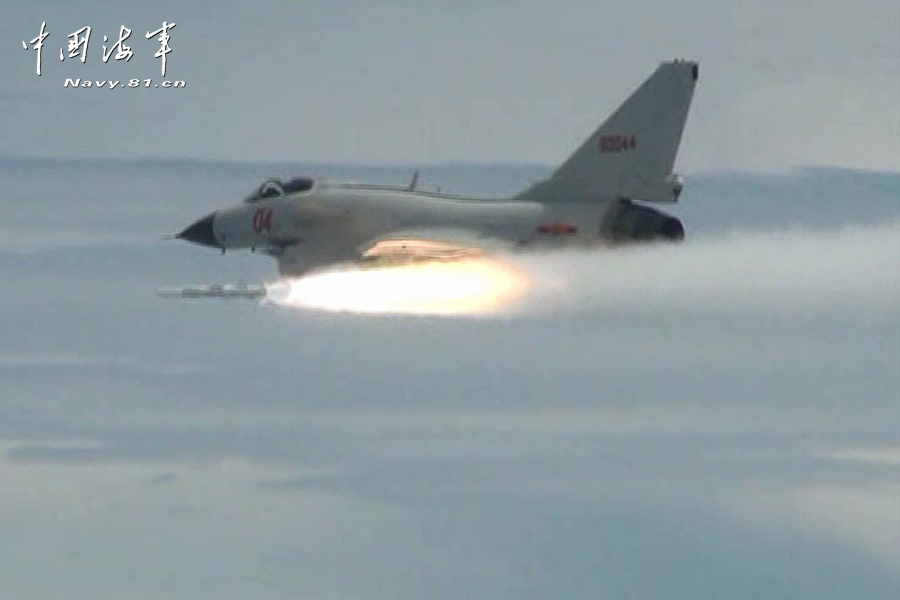
Jan 18, 2013- Live fire by missile-carrying aircraft in East China and South China seas bare the sabre to neighbours and mark a shift in strategy


The People's Liberation Army's naval air force has carried out attack drills in both the East and South China seas in a show of force directed at countries involved in territorial disputes with China, according to naval experts.

Photos posted on the website of the PLA Navy on Wednesday showed several J-10 fighter jets that had been sent by the East China Sea Fleet to the waters of the East China Sea close to the disputed Diaoyu Islands, known as the Senkaku Islands in Japan, which are claimed by both Beijing and Tokyo.

The website said the drill took place "recently", without saying when. The photo captions said that air-to-air missiles were carried thousands of kilometres by the military aircraft and then launched in a live-fire drill, to more accurately simulate a real combat scenario. The drill marked the first time that the naval air force fired air-to-air missiles far out at sea.

Another drill was conducted by the South China Sea Fleet on January 8 and featured day and night air raids by Hong-6 bombers, which had to evade enemy radar and electromagnetic interference en route to an attack on a harbour more than 1,000 kilometres away from the naval base in Zhanjiang , Guangdong, according to the navy's website. Pilots who took part in that drill had to fly more than eight hours from Zhanjiang for the staged attack, which took place in an open sea area.

The naval drills came amid escalating tensions between China and Japan over the territorial row that has seen ties between the nations deteriorate since the Japanese government purchased the disputed chain from a private owner in September.


Last week, Beijing confirmed that it had scrambled two J-10 fighter jets to monitor Japanese aircraft near the Diaoyus, while Tokyo said it was considering stationing F-15 fighter jets on Shimoji-jima Island in Okinawa prefecture to deal with Chinese aircraft.

Ni Lexiong , director of the sea power and defence policy research institute at the Shanghai University of Political Science and Law, said the drills indicated that the PLA Navy had changed its strategy from inshore defence to open-sea counterattacks far offshore.

"The drills in the East and South China seas were obviously also intended to warn Japan and [other Southeast Asian] countries that the army is well prepared for any possible battles if our sovereignty is threatened," Ni said.

The Beijing-based naval expert Li Jie said the PLA naval fleet's improved combat abilities should also aid in China's increasing role in international anti-piracy and escort missions

"We have never hidden our desire to sail into deep waters, and this also enhances our navy's combat abilities in dealing with a crisis or attack," Li said.

Li said that more naval drills on the high seas, as well as other military exercises held in tough situations, would be carried out by the PLA in the future.

SCMP

Thứ Năm, 17 tháng 1, 2013

Asean Chief Says Asia Tensions Could Hit Growth

Jan 17, 2013- JAKARTA—Mounting tensions over competing territorial claims in the South China Sea could hurt economic growth and integration in Southeast Asia, the new head of the Association of Southeast Asian Nations said.

Le Luong Minh , secretary-general of the 10-country association, said the region would suffer if frictions continue over control of the resource-rich waterway. China has claims in the area that overlap with those of Asean members Vietnam, the Philippines, Malaysia and Brunei, as well as Taiwan.

Many fear any escalation of the political and military posturing over the South China Sea could hurt development in Southeast Asia, which has posted some of the strongest growth in the world in recent years.

"Confidence for investment, confidence for trade and confidence for economic cooperation always depends on stability," Mr. Minh, a former deputy foreign minister of Vietnam, told The Wall Street Journal on Wednesday in one of his first interviews since taking office this year.


With more than 600 million people and a combined gross domestic product of nearly $2 trillion, the 10 Asean countries have become an important new growth area as slowdowns hit many developed economies in the West, and as regional powerhouses India and China show signs of deceleration.

But the group remains a patchwork of politically diverse nations with vastly different economies. Singapore's annual GDP per capita was more than $40,000 last year, while in Indonesia it was around $3,500 and in Myanmar less than $1,000. The other members of Asean are Cambodia, Malaysia, Laos, the Philippines, Thailand, Vietnam and Brunei.

Mr. Minh said he hopes that during his five-year term "such complicated developments in the South China Sea stop, so countries could be free from any danger and focus on economic development."

To keep growth on track and raise the standard of living in its poorer countries, Asean needs to avoid being overly distracted by the South China Sea dispute and promote further economic integration, Mr. Minh said.

Depicted for decades by critics as little more than a talk shop for the region's leaders, Asean in recent years has gained diplomatic and political credibility with its impressive economic growth, even as much of the world has struggled. But some analysts see Southeast Asia as a potential battleground for the world's superpowers, with both the U.S. and China making declarations about the area's growing strategic importance.

The bloc also faces unprecedented squabbling among its member countries over what to do about China's increasingly assertive claims over most of the South China Sea.

Some Asean members have welcomed Washington's growing diplomatic and military engagement in the region to counterbalance China's. Other members with close ties to Beijing—notably Cambodia—have kept the group from taking a unified stance on the issue of overlapping territorial claims.

Despite the tensions, Mr. Minh said Asean's cumulative economic growth should exceed 5% this year. Last year members recorded combined GDP growth of around 5.2%.

"Despite some risks and other challenges—such as rising food and energy prices and growing global imbalances—the outlook in 2013 for Asean remains broadly positive," he said. "Asean is the center of growth in the Asia-Pacific region."

The association has set itself a target of creating the Asean Economic Community by the end of 2015. By radically reducing barriers to trade, capital and labor movement among member nations, it hopes to spur more growth and prosperity in what will become the world's newest economic bloc.

Difficulties in implementing the required changes within each country have forced Asean to delay the launch of the economic community from the beginning of 2015 to the end of that year. But Mr. Minh said member states must push through the reforms needed to make the community work.

"The remaining issues for us to undertake are the more difficult ones," such as getting rid of non-tariff barriers to trade as well as restrictions on labor movements, he said. "There is very much work to be done from now until 2015."

Write to Eric Bellman at eric.bellman@wsj.com

WSJ

China sends maritime patrol 21 to Southeast Asia Sea

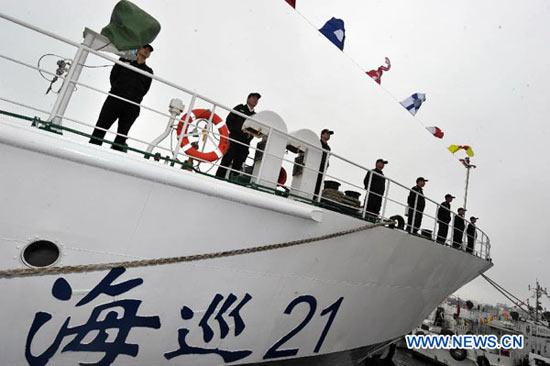
Jan 17, 2013- China’s Maritime Patrol 21 ship has set off on its first trip and is headed to the waters around Sansha ( including the Paracel and Spratly islands in Southeast Asia Sea/ South China Sea). The patrol boat set sail from Haikou, the capital of Hainan province. On Wednesday morning, it arrived in the Xisha Islands, and conducted an initial inspection of ship operations and the marine environment.

Maritime Patrol 21 is on its maiden voyage. It will pass by Yongxing Island, East Island, the Langhua reef and Chenhang Island in the South China Sea, before eventually returning to port in Sanya. It will cover a total of about 600 nautical miles.

16 joint law enforcement personnel from three maritime departments are aboard the ship. Despite bad sea conditions, the crew is pushing ahead with its travel plans.

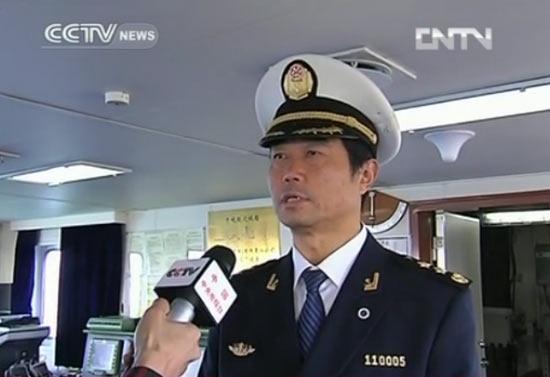
Zhang Jie, Spokesman of Hainan Maritime Bureau, said, "The main task of this trip is to test the boat’s navigation and beacon systems, as well as check on other Chinese fishing boats operating in these waters. All these factors will affect our boat’s safety."


During the trip, the Hainan Maritime Bureau also tested the ship’s marine radio communication system.

Maritime Patrol 21 is China’s first kiloton class ship. It can be equipped with a carrier-based helicopter, giving it the ability to conduct sea and air surveillance as well as search and rescue missions under various weather conditions.


CNTV

Thứ Năm, 3 tháng 1, 2013

PH welcomes new leader of Asean

Jan 3, 2013- The Philippines’ top diplomat on Wednesday welcomed the assumption to office of the new secretary general of the Association of Southeast Asian Nations (Asean)—a change in leadership that comes as the bloc treads a challenging path toward unity on several key regional issues.


Ambassador Le Luong Minh.

Foreign Secretary Albert del Rosario expressed confidence in the leadership of the new Asean leader, Le Loung Minh, the first secretary general from Vietnam who is a veteran in international affairs.

“With his extensive professional experience and qualifications, we are confident he will ably meet the challenges of Asean as the 10 member countries work toward establishing a community that is politically cohesive, economically integrated and socially responsible,” said Del Rosario in a statement.

He assured Le of the Philippines’ support.

Le took the helm of Asean from Thailand’s Surin Pitsuwan.

Tarra Quismundo