Hiển thị các bài đăng có nhãn China- Philippines. Hiển thị tất cả bài đăng
Thứ Năm, 20 tháng 6, 2013
The Plan To Stop China
Filipino defense officials are meeting with their Japanese and American counterparts to plan coordinated action against growing Chinese aggression in the South China Sea and adjacent waters. The Chinese claim just about every uninhabited islet and reef in the region, despite older and more substantial claims by nations that are closer to the disputed areas. Chinese pressure comes mainly in the form of intimidation by their growing fleet of warships and patrol boats. Actual force (usually bumping into “trespassing” fishing boats or other commercial ships) is usually done by Chinese non-military ships, under orders from nearby Chinese warships or warplanes. New tactics and procedures have to be worked out to counter these Chinese methods.
Peace negotiations with MILF grind on. The delays are largely the result of MILF demanding territory and power (especially over non-Christians) that the majority of Filipinos (only eight percent are Moslem) will not go along with. The MILF knows this but expectations are high in the south and MILF wants to get credit for at least trying hard to get what the majority of Filipinos will never give up.
June 17, 2013: In the south (Davao del Norte province) five unarmed soldiers were kidnapped by NPA rebels. The soldiers were on their way to a local market to buy food when they encountered a phony checkpoint manned by NPA gunmen wearing army uniforms.
June 14, 2013: A general, who had retired in 1994, was ordered to pay $300,000 in restitution to the government, after being convicted of corruption while he was in service. The general had refused to pay so a judge ordered properties seized and sold until the full amount was paid. This general has been investigated and prosecuted for over a decade. Corrupt officers are often able to litigate their way out of trouble, but that is becoming more difficult because the anti-corruption prosecutors and courts are more determined and less corrupt these days.
June 8, 2013: MILF is protesting the arrest of four of its members in the south (provinces of Sultan Kudarat, South Cotabato, and Lanao del Norte). This is part of the preliminary peace deals already signed, which prohibits arrests unless there is good cause. The four were picked up on warrants for past crimes and MILF is seeking to increase its popularity by using the deals signed so far act as a “get out jail” card for MILF members. The government is fighting this, even though people in the south are growing impatient about how long the peace negotiations are taking.
June 6, 2013: A former police colonel was sentenced (after a trial lasting a year) to 15-20 years in prison for providing years of protection for a methamphetamine lab.
In picture: BRP Ramon Alcaraz Could Gain An Anti-submarine & Surface-to-surface Missiles Warfare Capability
Strategy Page
Thứ Ba, 4 tháng 6, 2013
Philippines takes China’s dashes to UN
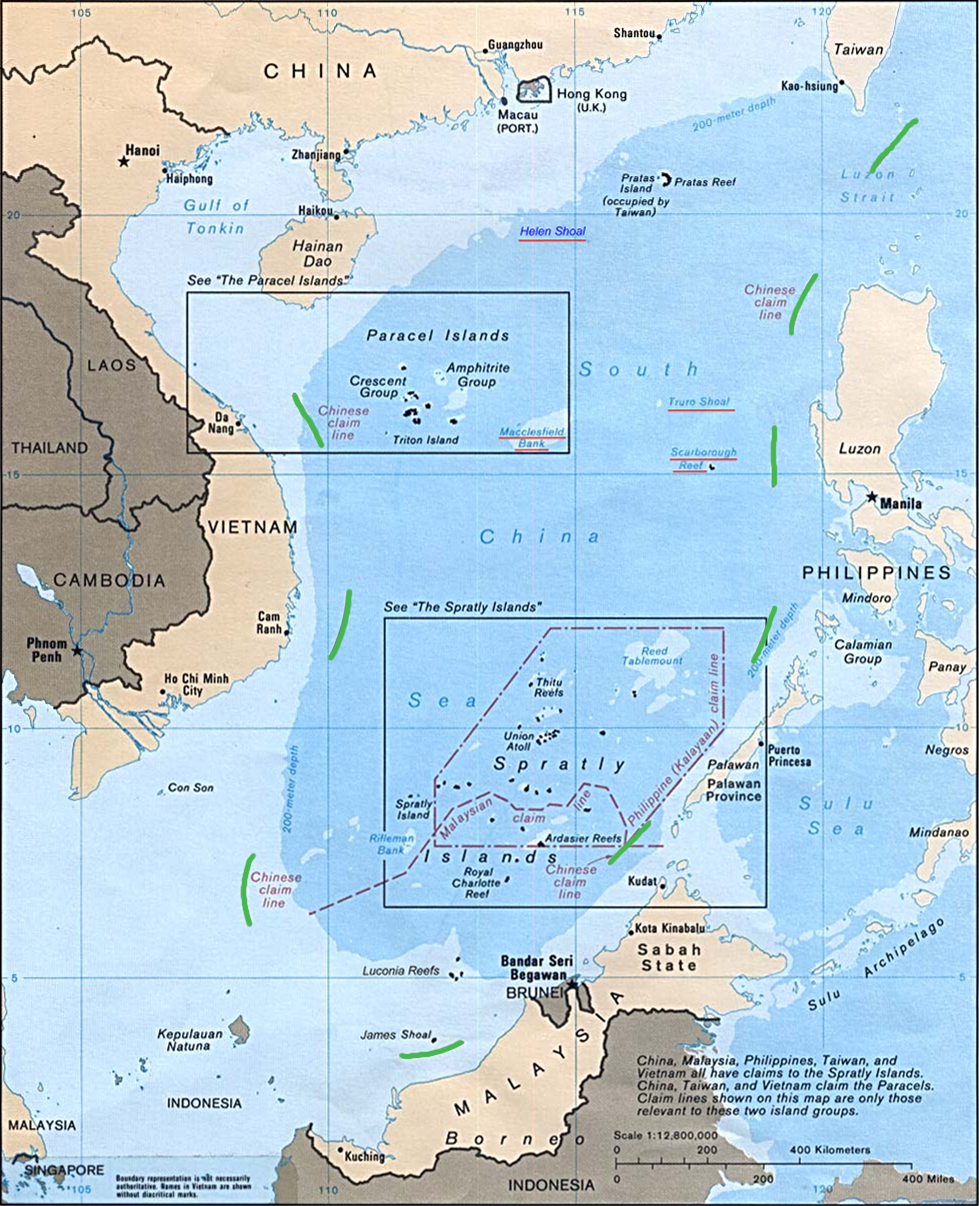
“What belongs to us belongs to us,” Benigno S. Aquino III, President of the Philippines, said in a speech marking the 115th anniversary of the country’s navy. In January of this year the Philippines, rather boldly, and all alone, took China to an international tribunal over its nine-dash line on a map marking vast areas of the South China Sea over which China claims sovereignty. The broken line blithely includes islands that lie within 270 kilometres of the Philippines coast and which the Philippines claims is theirs under the United Nations Convention on the Law of the Sea (UNCLOS).
All five judges to the International Tribunal for the Law of the Sea (ITLOS) have now been appointed. The case doesn’t need China’s agreement to proceed. China was offered the right to appoint an arbitrator but waived it.
The Chinese nine-dash map includes areas that have been claimed by the Philippines, Taiwan, Malaysia, Brunei, and Vietnam. Taiwan’s claims echo those of China. No other country has joined the Philippines and Japan, which has a different territorial dispute with China, has also stayed to one side.
As a territorial claim, the nine-dash map is a bit of an oddity. The dashes haven’t been joined, the area is vast and no coordinates are specified. The map came into existence in 1947 and China claims historical sovereignty over the whole region. To say that it doesn’t meet standard map drafting requirements is an understatement. Nevertheless, China filed it with the United Nations some time before the case the Philippines laid before the tribunal.
China acknowledges that there are disputes with the other claimants but wants to see them settled by bilateral talks with the country concerned. It opposes internationalisation of the issues. By taking the case to international jurisdiction, the Philippines is almost certainly saying that it has given up any hope of progress through direct talks with China.
China regularly sends military patrol ships to waters claimed by the Philippines, which in turn makes formal protests. The Philippines coast guard recently shot and killed a Taiwanese fisherman, bringing forth stern reprimands from both Taiwan and China.
President Aquino’s comment was accompanied by a promise of more support for the navy. China has protested about the Philippines putting more structures on Ayungin Shoal. The Philippines responded that China couldn’t tell the Philippines what it should do with its own territory.
China and ASEAN have agreed to establish a Code of Conduct in the East Sea. Some hope—though not much—rests in that. The islands have been subject to competing claims for many years. The difference now is that China has become more assertive about its claims.
Australian and NZ interests are palpable. Any major conflict in the South China Sea would undoubtedly affect both countries badly. Moreover, UNCLOS has served Australia and NZ well and any deliberate questioning, flouting or undermining of its principles would create considerable uncertainty. Among other things, UNCLOS allows both countries to manage and police their fishing resources.
The Philippines’ move is a sensible one, and its outcome will be watched keenly by other Southeast Asian countries, by ASEAN itself, by Japan and by the United States. But it’s also something of a long shot. First, if ITLOS happens to rule that China can’t make such a huge claim, the chances are that China will simply ignore it. There’s a precedent over the mining of the Nicaragua Harbour by the United States in 1986 when the International Court of Justice (ICJ) ruled that the US had violated Nicaragua’s rights. President Reagan simply ignored the ruling.
The US participated in the UNCLOS negotiations but hasn’t ratified the treaty. The US Navy traditionally favours ratification but there are strong opponents to ratification elsewhere within the American polity. Because of its ambivalence, the US is unlikely to press China to accept to accept any UN ruling.
Although China and the Philippines have both ratified UNCLOS, which gives it a little more weight, the second reason for doubt is that at the time of ratification, China put in its own reservations, quoting from a 1992 domestic law:
Most of these islands cited, especially the Spratlys and the Paracels (Xisha) have are the subject of claims by various countries. Diaoyu is what the Japanese call Senkaku.
That Chinese law seems unequivocal and the willingness of China to undo domestic law to accommodate an international tribunal’s ruling, to say the least, is not a sure thing.
Thirdly, there’s a question over whether the issue really falls within the jurisdiction of ITLOS. After all the tribunal might interpret the question before it as one of disputed territorial claims on which it wouldn’t rule. If there is no ruling by ITLOS then the dilemmas over the value and integrity of UNCLOS might disappear. But the issues of what rocks and islands belong to which country will remain.
Stuart McMillan is an adjunct senior fellow in the school of social and political sciences at the University of Canterbury. Image courtesy of Wikimedia Commons.
The Stategist
All five judges to the International Tribunal for the Law of the Sea (ITLOS) have now been appointed. The case doesn’t need China’s agreement to proceed. China was offered the right to appoint an arbitrator but waived it.
The Chinese nine-dash map includes areas that have been claimed by the Philippines, Taiwan, Malaysia, Brunei, and Vietnam. Taiwan’s claims echo those of China. No other country has joined the Philippines and Japan, which has a different territorial dispute with China, has also stayed to one side.
As a territorial claim, the nine-dash map is a bit of an oddity. The dashes haven’t been joined, the area is vast and no coordinates are specified. The map came into existence in 1947 and China claims historical sovereignty over the whole region. To say that it doesn’t meet standard map drafting requirements is an understatement. Nevertheless, China filed it with the United Nations some time before the case the Philippines laid before the tribunal.
China acknowledges that there are disputes with the other claimants but wants to see them settled by bilateral talks with the country concerned. It opposes internationalisation of the issues. By taking the case to international jurisdiction, the Philippines is almost certainly saying that it has given up any hope of progress through direct talks with China.
China regularly sends military patrol ships to waters claimed by the Philippines, which in turn makes formal protests. The Philippines coast guard recently shot and killed a Taiwanese fisherman, bringing forth stern reprimands from both Taiwan and China.
President Aquino’s comment was accompanied by a promise of more support for the navy. China has protested about the Philippines putting more structures on Ayungin Shoal. The Philippines responded that China couldn’t tell the Philippines what it should do with its own territory.
China and ASEAN have agreed to establish a Code of Conduct in the East Sea. Some hope—though not much—rests in that. The islands have been subject to competing claims for many years. The difference now is that China has become more assertive about its claims.
Australian and NZ interests are palpable. Any major conflict in the South China Sea would undoubtedly affect both countries badly. Moreover, UNCLOS has served Australia and NZ well and any deliberate questioning, flouting or undermining of its principles would create considerable uncertainty. Among other things, UNCLOS allows both countries to manage and police their fishing resources.
The Philippines’ move is a sensible one, and its outcome will be watched keenly by other Southeast Asian countries, by ASEAN itself, by Japan and by the United States. But it’s also something of a long shot. First, if ITLOS happens to rule that China can’t make such a huge claim, the chances are that China will simply ignore it. There’s a precedent over the mining of the Nicaragua Harbour by the United States in 1986 when the International Court of Justice (ICJ) ruled that the US had violated Nicaragua’s rights. President Reagan simply ignored the ruling.
The US participated in the UNCLOS negotiations but hasn’t ratified the treaty. The US Navy traditionally favours ratification but there are strong opponents to ratification elsewhere within the American polity. Because of its ambivalence, the US is unlikely to press China to accept to accept any UN ruling.
Although China and the Philippines have both ratified UNCLOS, which gives it a little more weight, the second reason for doubt is that at the time of ratification, China put in its own reservations, quoting from a 1992 domestic law:
The PRC’s territorial Sea refers to the waters adjacent to its territorial land. The PRC’s territorial land includes the mainland and its offshore islands, Taiwan and the various affiliated islands including Diaoyu Island, Penghu Islands, Dongsha Islands, Xisha Islands, Nansha (Spratly) Islands and other islands that belong to the People’s Republic of China.
Most of these islands cited, especially the Spratlys and the Paracels (Xisha) have are the subject of claims by various countries. Diaoyu is what the Japanese call Senkaku.
That Chinese law seems unequivocal and the willingness of China to undo domestic law to accommodate an international tribunal’s ruling, to say the least, is not a sure thing.
Thirdly, there’s a question over whether the issue really falls within the jurisdiction of ITLOS. After all the tribunal might interpret the question before it as one of disputed territorial claims on which it wouldn’t rule. If there is no ruling by ITLOS then the dilemmas over the value and integrity of UNCLOS might disappear. But the issues of what rocks and islands belong to which country will remain.
Stuart McMillan is an adjunct senior fellow in the school of social and political sciences at the University of Canterbury. Image courtesy of Wikimedia Commons.
The Stategist
Đăng ký:
Bài đăng (Atom)