Hiển thị các bài đăng có nhãn Syria. Hiển thị tất cả bài đăng

Thứ Hai, 16 tháng 4, 2018

Syria: chemical weapons inspectors denied access to Douma site

Organisation for the Prohibition of Chemical Weapons unable to access sites controlled by Russia and Syria.

Syrian forces walk in Douma on the outskirts of Damascus. Photograph: Louai Beshara/AFP/Getty Images

Inspectors from the global chemical weapons watchdog have been unable to access sites controlled by Russia and the Syrian regime in the town of Douma to investigate an attack on 7 April that killed dozens and prompted US-led missile strikes over the weekend.

The director-general of the Organisation for the Prohibition of Chemical Weapons told a meeting of the OPCW executive council that inspectors had not been allowed to visit the town outside Damascus, the UK delegation tweeted. “Unfettered access essential. Russia & Syria must cooperate,” the delegation tweeted.

According to Petter Lycke, Sweden’s representative at the OPCW executive council, Syria and Russia told the inspectors that their safety could not be guaranteed.

In remarks that could indicate an attempt to bog down the OPCW team, Russia’s deputy foreign minister, Sergei Ryabkov, said the inspectors will not be allowed to access the site until they produce an appropriate UN permit.

Russian military officials were at the site of the Douma attack days before the OPCW reached Damascus, leading to fears that the site might have been tampered with.

Kenneth Ward, the US ambassador to the OPCW, raised these fears on Monday, drawing a denial from the Russian foreign minster, Sergei Lavrov, who told the BBC: “I can guarantee that Russia has not tampered with the site.” Lavrov also reiterated the Russian line that any attack on Douma was “staged”.

The US launched military strikes, alongside UK and French forces, in the early hours of Saturday morning local time aimed at reducing the Syrian regime’s chemical weapons facilities.

What you need to know about the Syria strikes – video report:

Over the weekend the OPCW sent inspectors on a fact-finding visit to Douma to search for evidence and interview witnesses. Their arrival coincided with a Syrian military announcement that it had “purified” the region of eastern Ghouta, of which Douma is a part, after a two-month campaign that has killed nearly 2,000 civilians, following years of siege.

Western countries are making a push both at the OPCW in The Hague and the UN in the New York to secure wider diplomatic support for a clampdown on the use of chemical weapons in the Syria. The suspicion is that the Syrian government previously misled inspectors when it declared its entire chemical weapons stockpile had been disclosed and destroyed.

The UN security council’s 15 members will meet on Monday to discuss a call for a wider push to eliminate the covert Syrian government stockpiles.

The British envoy to the OPCW, Peter Wilson, put the Douma attack in a wider context of chemical weapons use in Syria during the war. The OPCW had recorded 390 allegations of the use of banned chemicals in Syria since 2014 he said, and a failure by the OPCW to act risked allowing “further barbaric use of chemical weapons”.

Syria joined the OPCW, the organisation tasked with monitoring adherence to a 1997 convention on chemical weapons, in 2013 after a sarin gas attack that killed hundreds of people in Ghouta. The move was part of a joint Russian-US deal that averted military action threatened by the then US president, Barack Obama.

The OPCW needs a two-thirds majority to take decisions, and faces the threat of being fatally weakened as Russia and the west fight over the OPCW’s mandate to ascribe responsibility for attacks.

A Russian veto at the UN last November means the OPCW is empowered only to state if chemical weapons have been used, and not to attribute responsibility.

Russia is also challenging an OPCW finding that a nerve agent was found in an attack in Salisbury on the Russian double agent Sergei Skripal.

A joint United Nations-OPCW mission concluded the Syrian airforce was responsible for a sarin attack that killed nearly 100 people a year ago in the town of Khan Sheikhoun. The finding led Russia to object to the way in which the joint mission reached its conclusions, and to demand future changes in its methodology before its mandate could renewed.

Wilson told the OPCW executive meeting: “The time has come for all members of this executive council to take a stand. Too many duck the responsibility that comes with being a member of this council. Failure to act to hold perpetrators to account will only risk further barbaric use of chemical weapons, in Syria and beyond.” - The Guardian

Thứ Bảy, 14 tháng 4, 2018

U.S.-led allied strike on Syria on April 14th, 2018: Videos

US warships, B-1 Bombers, 4 UK fighter jets Tornado and French fighter jets used in strikes against Assad regime in Syria. The strikes were started at 9 p.m (Washington) on April 13th, 2018 or 8 a.m (Hanoi) on April 14th, 2018.

*‪Syrian air defence systems fired at US missiles. Russian air defence systems also fired. Russia media Sputnik reported that 20 missiles were successfully intercepted.

*Scientific research facility and a number of Syrian army bases in Damascus struck in attack - Syrian Observatory.

*Wave after wave of cruise missiles hitting Syria.

* The first wave of strikes were over at 11 p.m (Washington).


- Video: UK fighter jets Tornado carrying Storm Shadow missiles in operation to strike Syria on April 14th, 2018: https://www.facebook.com/keinews/videos/1451186621657294/

- Video: First operational firing of the French Naval cruise Missile (MdCN) towards Syria on April 14th, 2018: https://twitter.com/i/web/status/985030891411070977

- Video: Reported that US, UK and France to strike Syria on April 14th, 2018: https://www.facebook.com/story.php?story_fbid=1450829555026334&id=1342234429219181

- Video: U.S.-led allied missiles hit targets in Syria and Syrian Air Defense fired on April 14th, 2018: https://www.facebook.com/Vibaynews/videos/353926478450911/

Chủ Nhật, 16 tháng 6, 2013

Iran will send troops to aid Bashar al-Assad’s forces in Syria

World Exclusive: US urges Britain and France to join in supplying arms to Syrian rebels as MPs fear that UK will be drawn into growing Sunni-Shia conflict

Washington’s decision to arm Syria’s Sunni Muslim rebels has plunged America into the great Sunni-Shia conflict of the Islamic Middle East, entering a struggle that now dwarfs the Arab revolutions which overthrew dictatorships across the region.

For the first time, all of America’s ‘friends’ in the region are Sunni Muslims and all of its enemies are Shiites. Breaking all President Barack Obama’s rules of disengagement, the US is now fully engaged on the side of armed groups which include the most extreme Sunni Islamist movements in the Middle East.

The Independent on Sunday has learned that a military decision has been taken in Iran – even before last week’s presidential election – to send a first contingent of 4,000 Iranian Revolutionary Guards to Syria to support President Bashar al-Assad’s forces against the largely Sunni rebellion that has cost almost 100,000 lives in just over two years. Iran is now fully committed to preserving Assad’s regime, according to pro-Iranian sources which have been deeply involved in the Islamic Republic’s security, even to the extent of proposing to open up a new ‘Syrian’ front on the Golan Heights against Israel.

In years to come, historians will ask how America – after its defeat in Iraq and its humiliating withdrawal from Afghanistan scheduled for 2014 – could have so blithely aligned itself with one side in a titanic Islamic struggle stretching back to the seventh century death of the Prophet Mohamed. The profound effects of this great schism, between Sunnis who believe that the father of Mohamed’s wife was the new caliph of the Muslim world and Shias who regard his son in law Ali as his rightful successor – a seventh century battle swamped in blood around the present-day Iraqi cities of Najaf and Kerbala – continue across the region to this day. A 17th century Archbishop of Canterbury, George Abbott, compared this Muslim conflict to that between “Papists and Protestants”.

America’s alliance now includes the wealthiest states of the Arab Gulf, the vast Sunni territories between Egypt and Morocco, as well as Turkey and the fragile British-created monarchy in Jordan. King Abdullah of Jordan – flooded, like so many neighbouring nations, by hundreds of thousands of Syrian refugees – may also now find himself at the fulcrum of the Syrian battle. Up to 3,000 American ‘advisers’ are now believed to be in Jordan, and the creation of a southern Syria ‘no-fly zone’ – opposed by Syrian-controlled anti-aircraft batteries – will turn a crisis into a ‘hot’ war. So much for America’s ‘friends’.

Its enemies include the Lebanese Hizballah, the Alawite Shiite regime in Damascus and, of course, Iran. And Iraq, a largely Shiite nation which America ‘liberated’ from Saddam Hussein’s Sunni minority in the hope of balancing the Shiite power of Iran, has – against all US predictions – itself now largely fallen under Tehran’s influence and power. Iraqi Shiites as well as Hizballah members, have both fought alongside Assad’s forces.

Washington’s excuse for its new Middle East adventure – that it must arm Assad’s enemies because the Damascus regime has used sarin gas against them – convinces no-one in the Middle East. Final proof of the use of gas by either side in Syria remains almost as nebulous as President George W. Bush’s claim that Saddam’s Iraq possessed weapons of mass destruction.

For the real reason why America has thrown its military power behind Syria’s Sunni rebels is because those same rebels are now losing their war against Assad. The Damascus regime’s victory this month in the central Syrian town of Qusayr, at the cost of Hizballah lives as well as those of government forces, has thrown the Syrian revolution into turmoil, threatening to humiliate American and EU demands for Assad to abandon power. Arab dictators are supposed to be deposed – unless they are the friendly kings or emirs of the Gulf – not to be sustained. Yet Russia has given its total support to Assad, three times vetoing UN Security Council resolutions that might have allowed the West to intervene directly in the civil war.

In the Middle East, there is cynical disbelief at the American contention that it can distribute arms – almost certainly including anti-aircraft missiles – only to secular Sunni rebel forces in Syria represented by the so-called Free Syria Army. The more powerful al-Nusrah Front, allied to al-Qaeda, dominates the battlefield on the rebel side and has been blamed for atrocities including the execution of Syrian government prisoners of war and the murder of a 14-year old boy for blasphemy. They will be able to take new American weapons from their Free Syria Army comrades with little effort.

From now on, therefore, every suicide bombing in Damascus - every war crime committed by the rebels - will be regarded in the region as Washington’s responsibility. The very Sunni-Wahabi Islamists who killed thousands of Americans on 11th September, 2011 – who are America’s greatest enemies as well as Russia’s – are going to be proxy allies of the Obama administration. This terrible irony can only be exacerbated by Russian President Vladimir Putin’s adament refusal to tolerate any form of Sunni extremism. His experience in Chechenya, his anti-Muslim rhetoric – he has made obscene remarks about Muslim extremists in a press conference in Russian – and his belief that Russia’s old ally in Syria is facing the same threat as Moscow fought in Chechenya, plays a far greater part in his policy towards Bashar al-Assad than the continued existence of Russia’s naval port at the Syrian Mediterranean city of Tartous.

For the Russians, of course, the ‘Middle East’ is not in the ‘east’ at all, but to the south of Moscow; and statistics are all-important. The Chechen capital of Grozny is scarcely 500 miles from the Syrian frontier. Fifteen per cent of Russians are Muslim. Six of the Soviet Union’s communist republics had a Muslim majority, 90 per cent of whom were Sunni. And Sunnis around the world make up perhaps 85 per cent of all Muslims. For a Russia intent on repositioning itself across a land mass that includes most of the former Soviet Union, Sunni Islamists of the kind now fighting the Assad regime are its principal antagonists.

Iranian sources say they liaise constantly with Moscow, and that while Hizballah’s overall withdrawal from Syria is likely to be completed soon – with the maintenance of the militia’s ‘intelligence’ teams inside Syria – Iran’s support for Damascus will grow rather than wither. They point out that the Taliban recently sent a formal delegation for talks in Tehran and that America will need Iran’s help in withdrawing from Afghanistan. The US, the Iranians say, will not be able to take its armour and equipment out of the country during its continuing war against the Taliban without Iran’s active assistance. One of the sources claimed – not without some mirth -- that the French were forced to leave 50 tanks behind when they left because they did not have Tehran’s help.

It is a sign of the changing historical template in the Middle East that within the framework of old Cold War rivalries between Washington and Moscow, Israel’s security has taken second place to the conflict in Syria. Indeed, Israel’s policies in the region have been knocked askew by the Arab revolutions, leaving its prime minister, Benjamin Netanyahu, hopelessly adrift amid the historic changes.

Only once over the past two years has Israel fully condemned atrocities committed by the Assad regime, and while it has given medical help to wounded rebels on the Israeli-Syrian border, it fears an Islamist caliphate in Damascus far more than a continuation of Assad’s rule. One former Israel intelligence commander recently described Assad as “Israel’s man in Damascus”. Only days before President Mubarak was overthrown, both Netanyahu and King Abdullah of Saudi Arabia called Washington to ask Obama to save the Egyptian dictator. In vain.

If the Arab world has itself been overwhelmed by the two years of revolutions, none will have suffered from the Syrian war in the long term more than the Palestinians. The land they wish to call their future state has been so populated with Jewish Israeli colonists that it can no longer be either secure or ‘viable’. ‘Peace’ envoy Tony Blair’s attempts to create such a state have been laughable. A future ‘Palestine’ would be a Sunni nation. But today, Washington scarcely mentions the Palestinians.

Another of the region’s supreme ironies is that Hamas, supposedly the ‘super-terrorists’ of Gaza, have abandoned Damascus and now support the Gulf Arabs’ desire to crush Assad. Syrian government forces claim that Hamas has even trained Syrian rebels in the manufacture and use of home-made rockets.

In Arab eyes, Israel’s 2006 war against the Shia Hizballah was an attempt to strike at the heart of Iran. The West’s support for Syrian rebels is a strategic attempt to crush Iran. But Iran is going to take the offensive. Even for the Middle East, these are high stakes. Against this fearful background, the Palestinian tragedy continues.

Independent

-->Egyptian president cuts ties with Syria and calls for no-fly zone over country

Thứ Sáu, 14 tháng 6, 2013

‘US studying Syria no-fly zone near Jordan border’

‘US studying Syria no-fly zone near Jordan border’ | JPost | Israel News.

By REUTERS, JPOST.COM STAFF
06/14/2013 11:54
Free Syrian Army to ask US for anti-tank, anti-aircraft missiles.

Syrian military plane

Syrian fighter jet after launching missiles at El Edaa district in Aleppo.

The United States is studying setting up a limited no-fly zone in Syria close to the southern border with Jordan, two senior Western diplomats in Turkey said on Friday.

Their comments, confirmed by a third regional diplomat, came after Washington said it would step up military assistance to rebels battling President Bashar Assad in response to what it said was proof of chemical weapons use by Assad’s forces.

“Washington is considering a no-fly zone to help Assad’s opponents,” one diplomat said. He said it would be limited “time-wise and area-wise, possibly near the Jordanian border,” without giving details.

Syrian rebel commanders were due to meet Western and Turkish officials in Turkey on Friday to discuss military assistance to the rebels. Until now Washington has been deeply reluctant to send weapons, citing a risk that they would end up in the hands of radical Sunni Muslim brigades.

One of the diplomats said that setting up a no-fly zone might help Western efforts to monitor the recipients of any arms supplies, as well as helping train the anti-Assad fighters.

While in Istanbul for talks with Western countries, the Free Syria Army intends to ask the US to arm it with anti-tank and anti-aircraft missiles, FSA general Salim Idris told Al Arabiya.

Idris said that the Syrian opposition hopes to translate the change in American position into reality, and be given tangible access to weapons and ammunition.

Idris also warned that if the US backtracks on its decision to arm the rebels, Iran and Hezbollah would cement their control over the region.

Thứ Bảy, 1 tháng 6, 2013

Russia Trying To Convince Iran To Withdraw S-300-PMU1 Lawsuit

Russia is trying to convince Iran to withdraw a lawsuit against the cancellation of a contract to supply Iran with S-300-PMU1 (NATO: SA-10) Surface-to-Air Missile (SAM) Air Defense Systems. So far, the efforts have not been successful.

In 2007, Iran and Russia signed a $800 million contract for the delivery of five S-300-PMU1 battalions. In 2010, this contract was cancelled by Russia due to UN Security Council Resolution 1929.

This resolution bans the supply to Iran of conventional weapons, including missiles, tanks, attack helicopters, warplanes and ships. However, Iran is convinced that the S-300 SAM is exempt because they are considered defensive weapons.

Iran then proceeded in 2011 to file a $4 billion lawsuit against Russia in an international arbitration court in Switzerland. Iran has states that it will only withdraw the lawsuit if Russia fulfills the terms of the contract.

Meanwhile, Russia is sending mix signals about the delivery of S-300 SAM systems to Syria. Delivery of the S-300 systems is scheduled to begin in the very near future.

However, Russia has stated that it is willing to delay deliveries under the condition that the West complies with some of Russia's demands regarding Syria.

Russia has also warned that it could accelerate deliveries of the S-300 if its demands are not met. From its standpoint, Syria could use the S-300 to defend itself against foreign aggression.

With Russia using deliveries of the S-300 as a negotiating tactic, Israel for its part has stated that it reserves the right to prevent Syria from receiving any new weapons, including the S-300, by force if necessary.

http://en.ria.ru/military_news/20130531/181432861/Russia-Seeks-Amicable-Settlement-in-Iran-S-300-Lawsuit.html

Russia to sell 10 MiG fighter jets to Syria

Russia is to sell at least 10 fighter jets to the Syrian government amid heated international debate over arms supplies to the violence-stricken country.

Russia to sell 10 MiG fighter jets to Syria

Sergei Korotkov, director general of the government-controlled MiG aircraft manufacturer, said it planned to sign a contract to send the MiG-29 M/M2 planes to Damascus.

"A Syrian delegation is presently in Moscow," he said, according to Russian news agencies. "The details and timescale of a possible contract for delivery are being discussed." Other reports suggested a contract had already been signed some time ago.

The Kremlin supports Syria's Bashar al-Assad and has resisted western attempts to censure his regime for alleged atrocities during the country's two-year civil war. More than 70,000 people have died in the fighting.

This week, Britain and France forced the European Union to lift an arms embargo on Syria, opening the way for western-backed rebels fighting Mr Assad's forces to receive weapons supplies.

Foreign Secretary William Hague said the UK had no immediate plans to send arms to the rebels but could now do so whenever it liked.

Moscow reacted sharply to the end of the embargo, promising to deliver S-300 air defence batteries to Damascus as a means of restraining "hot-heads" who it claimed were pushing for outside intervention in the conflict.

Reports in the Russian media on Friday rejected claims the weapons had already arrived, with the Vedomosti daily citing a Russian defence industry source as saying it was unclear if the weapons would be delivered this year.

Mr Assad confirmed in a television interview on Thursday that Russia was fulfilling contracts to supply him with arms, although he did not make clear if S-300s had been delivered.

In a March weapons order uncovered by US media, the Syrian army requested its Russian supplier to provide a quote for 20,000 Kalashnikovs and 20 million rounds of ammunition, among other hardware.

By Tom Parfitt, Moscow

Telegraph

Thứ Năm, 30 tháng 5, 2013

Assad Warns Israel, Claiming a Stockpile of Russian Weapons

Russian S-300 air defense missile
ANNE BARNARD from BEIRUT, Lebanon — President Bashar al-Assad of Syria displayed a new level of defiance on Thursday, warning Israel that he could permit attacks on the Golan Heights and suggesting that he had secured plenty of weapons from Russia — possibly including an advanced missile system — as his opponents falter politically and Hezbollah fighters infuse force into his military campaign to crush the Syrian insurgency.

Mr. Assad spoke in an interview broadcast on Al-Manar television, which is owned by his ally Hezbollah, the powerful Lebanese Shiite militant group, further punctuating his message of growing confidence that he could prevail over an insurgency that is now more than two years old and has claimed more than 80,000 lives.

Asked about Russian weapons deliveries, Mr. Assad said: “Russia is committed with Syria in implementing these contracts. What we agreed upon with Russia will be implemented, and part of it has been implemented over the recent period, and we are continuing to implement it.”

He was vague on whether Russia’s deliveries had included a sophisticated S-300 air missile system — of particular concern to Israel because it could compromise Israel’s ability to strike Syria from the air and because those missiles can hit deep inside Israeli territory. The Israelis have said they would not abide a Syrian deployment of S-300s, suggesting they would use force to destroy them.

Before the broadcast, Al-Manar had sent out text messages that paraphrased Mr. Assad as saying Syria had already received a first shipment of the S-300 missiles.

It was unclear why those paraphrased comments were not included in the broadcast, and Al-Manar later said it mischaracterized what Mr. Assad had said. But American and Israeli officials have been pressing Russia to defer the S-300 system delivery to Syria, and there were other indications that the paraphrased comments may have been a premature boast or bluff.

Israeli officials and Western diplomats in the region said they did not believe such a system had yet arrived in Syria, with some saying any delivery could be at least a few weeks away. Even so, the possibility presented a new risk that the Syrian war could expand into a broader conflict.

“We’re in stormy waters indeed,” said Jonathan Spyer, a senior research fellow at the Interdisciplinary Center in Herzliya, Israel. “Somebody or other has to not do what they have openly claimed they would do. Somebody has to lose serious face, and governments don’t like to lose face at the moment of serious confrontation.”

Mr. Assad spent considerable time in the interview to warn Israel, which attacked what it suspected were weapons caches in Syria this month that the Israelis suspected were bound for Hezbollah fighters in Lebanon.

“We will retaliate for any Israeli aggression next time,” Mr. Assad said. He also suggested the possibility of renewed fighting in the Golan Heights, the disputed border area occupied by Israel, which has been largely quiet for more than 40 years.

“In fact, there is clear popular pressure to open the Golan front to resistance,” Mr. Assad said. The Syrian government, he said, had received “many Arab delegations wanting to know how young people might be enrolled to come and fight Israel.”

Ehud Yaari, an Israel-based fellow of the Washington Institute for Near East Policy, said Mr. Assad’s comments on the Golan were worrisome in the context of other recent statements from Syria, particularly its assertion that Israel had violated the 1974 agreement that has allowed for the calm along the cease-fire line.

“It’s a very sensitive, explosive situation being created by the new level of rhetoric,” Mr. Yaari said. “You ask yourself whether the rhetoric is not going to lead to actions at some point.”

Mr. Assad reiterated the Syrian government’s intention to attend a United Nations peace conference on Syria, which Russia and the United States have been seeking to convene in Geneva in coming weeks despite their own differences over the conflict. But he said any agreements that might result from such a conference would have to be approved by Syrians in a referendum.

Even as Mr. Assad’s broadcast was aired, fissures within the Syrian opposition widened, with rebel military commanders demanding a significant new role in the main exile organization.

The disparity underscored the fact that Mr. Assad appeared to be consolidating his position, buttressed on both military and political fronts by Russia, Iran and Hezbollah, while the Western-backed opposition stumbles toward ever more serious disarray.

All week, the 63-member Syrian Coalition, the main rebel group, has been entangled anew in petty disputes over how many seats to add. Its leadership announced Thursday that it would boycott the peace conference. It attributed the boycott on Iranian and Hezbollah interference in Syria, but analysts saw it as a position born of weakness and the inability to forge a strong, united bargaining front.

“This is a low point,” said Amr al-Azm, a Syrian-born history professor at Shawnee State University in Ohio who tracks the opposition. “Unlike earlier screaming matches, you have a bad military situation on the ground and Geneva is looming and the opposition has nothing to play. This is as bad as it gets.”

Both the United States and Russia face difficult prospects in getting the Geneva talks to even begin. Representatives of the organizers are expected to meet in Geneva on June 5 to discuss details, including a concrete date.

Moscow faces the challenge of getting Mr. Assad to send a strong enough delegation to make real decisions about a cease-fire and a political transition — essentially a delegation that will agree to limit his power. The ministers he has named to the delegation so far are political appointees with no real power and no role in the inner circle.

It will be tough to convince Mr. Assad because he feels that he is negotiating from a position of strength, analysts said. The thud of artillery has diminished around Damascus and there are few checkpoints in the past couple weeks, according to recent visitors. With a fresh infusion of Hezbollah fighters, government forces might soon expel the opposition from the important crossroads town of Qusayr, which they have held for months.

That would mean Mr. Assad controls all the territory he cares about most, analysts said, namely the area around the capital and the key route to the coastal stronghold of his Alawite minority, which dominates the government.

For the United States and its allies, the first challenge is creating a united delegation from an opposition that has always been anything but united.

The Syrian Coalition has been plagued by internal turmoil since its inception in late 2011.

The group has failed to deliver on most of its promises, ranging from distributing humanitarian aid to areas outside government control, to creating a unified military command, to becoming a serious government-in-exile.

Instead the uneasy, distrustful members — dominated by long-exiled members of the Muslim Brotherhood, academics living abroad for decades and political activists fleeing Syria — have spent most of their time in luxury hotels arguing over which faction should claim what responsibility.

The coalition’s problems have not been lost on Mr. Assad, who spoke contemptuously of his political adversaries in the Al-Manar television interview, describing them as exiles and paid stooges of hostile foreign governments — another indication that prospects for the Geneva conference are dim.

“We will attend this conference as the official delegation and legitimate representatives of the Syrian people,” he said. “But, whom do they represent? When this conference is over, we return to Syria, we return home to our people. But when the conference is over, whom do they return to — five-star hotels?”

Anne Barnard reported from Beirut, and Neil MacFarquhar from the United Nations. Reporting was contributed by Hala Droubi from Beirut, Jodi Rudoren and Isabel Kershner from Jerusalem, Steven Lee Myers and Michael R. Gordon from Washington, and Rick Gladstone from New York.

NY Times

Chủ Nhật, 19 tháng 5, 2013

Syria prepared to fire missiles at Tel Aviv

Syria has put its most advanced missiles on standby with orders to hit Tel Aviv if Israel launches another strike on its territory, The Sunday Times reported overnight Sunday.

According to the British newspaper, reconnaissance satellites have been monitoring preparations by the Syrian army to deploy surface-to-surface Tishreen missiles.

An Israeli official told The New York Times that Israel, which has launched three recent attacks on Syria, was considering further strikes and warned President Bashar Assad that his government would face "crippling consequences" if he hit back at Israel.

The Sunday Times said the deployment of the Syrian-made Tishreen missiles, each of which can carry a half-ton payload, marks a significant escalation of tension "in a region in which the United States and Russia appear to be preparing for a Cold War-style stand-off."

Uzi Rubin, Israel's leading missile expert, told the newspaper that the Tishreen missiles are "extremely accurate and can cause serious harm.

"Even if they don't hit Ben-Gurion (Airport) directly, they would halt all commercial flights out of the country," he said.

An Israeli official told The New York Times last week that Israel, which has reportedly launched three attacks on Syria recently and destroyed advanced anti-aircraft and surface-to-surface missiles that were designated for Hezbollah, was considering additional strikes and warned President Assad that his regime would face "crippling consequences" if he hit back at Israel.

In a rare interview on Saturday, Assad told Argentine newspaper Clarin that Israel was supporting the Syrian opposition, which he dubbed terrorists.

"Israel is directly supporting the terrorist groups in two ways, firstly it gives them logistical support and it also tells them what sites to attack and how to attack them. For example, they attacked a radar station that is part of our anti-aircraft defenses, which can detect any plane coming from overseas, especially from Israel," the Syrian president said.

The Wall Street Journal reported on Friday that Russia is continuing to arm Assad's regime and has sent a dozen or more warships to patrol waters near its naval base in Syria, a move that American and European officials have called aggressive, saying it was designed to warn the West and Israel not to intervene in the country's civil war.

Also on Friday, the New York Times reported that Russia has transferred to Syria advanced anti-ship cruise missiles, which threaten Israeli Navy vessels and the Jewish states gas fields located up to 300 kilometers (186 miles) from the coast.

According to the report, Russia has previously provided a version of the missiles, called Yakhonts, to Syria. But those delivered recently are outfitted with an advanced radar that makes them more effective.

Russian Foreign Minister Sergei Lavrov said Moscow's weapons sales would "not in any way alter the balance of forces in this region or give any advantage in the fight against the opposition."

Ynetnews

Thứ Bảy, 18 tháng 5, 2013

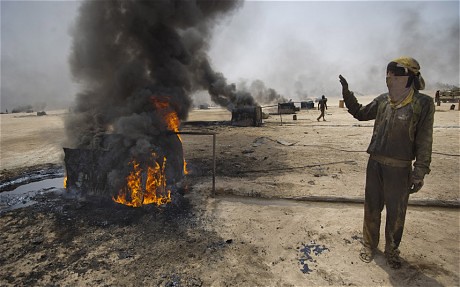
Al Qaeda Now Controls Syira's Major Oil Fields


Al-Qaeda's Syrian wing is helping to finance its activities by selling the product of oilfields that once helped to prop up the regime of Bashar al-Assad.

Up to 380,000 barrels of crude oil were previously produced by wells around the city of Raqqa and in the desert region to its east that are now in rebel hands - in particular Jabhat al-Nusra, the al-Qaeda off-shoot which is the strongest faction in this part of the country.

Now the violently anti-Western jihadist group, which has been steadily extending its control in the region, is selling the crude oil to local entrepreneurs, who use home-made refineries to produce low-grade petrol and other fuels for Syrians facing acute shortages.

The ability of Jabhat al-Nusra to profit from the oil locally, despite international sanctions which have hindered its sale abroad, will be particularly worrying to the European Union, which has voted to ease the embargo but at the same time wants to marginalise the extremist group within the opposition.

In the battle for the future of the rebel cause, the oil-fields may begin to play an increasingly strategic role. All are in the three provinces closest to Iraq - Hasakeh, Deir al-Zour, and Raqqa, while the Iraqi border regions are the homeland of the Islamic State of Iraq, as al-Qaeda's branch in the country calls itself.

It was fighters from Islamic State of Iraq, both Iraqi and Syrian, who are thought to have founded Jabhat al-Nusra as the protests against the rule of President Assad turned into civil war.

Read more

Thứ Tư, 24 tháng 4, 2013

Video Evidence Of Syrian Chemical Attacks


A woman is treated for what appears to be breathing difficulties at a clinic in the north of Aleppo

A video posted on the Facebook page of a British-trained doctor appears to show victims of a Syrian regime assault on Aleppo foaming at the mouth and showing symptoms consistent with a chemical weapons attack.

Experts believe that chemical weapons may have been dropped on Kurdish residents of Aleppo's Sheikh Massoud region during an attack which saw two babies and a woman killed earlier this month.

It is thought that the April 13 assault may have been in revenge for residents' decision to defect to support the rebels.


Read more

Chủ Nhật, 31 tháng 3, 2013

Israel's Syria spy cameras tracked Russian navy


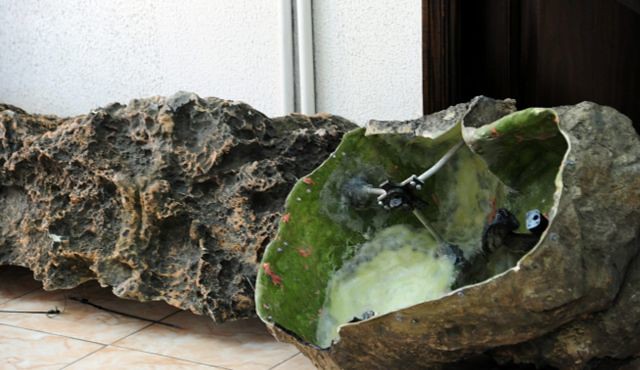
A photo released by the Syrian official news agency SANA shows devices resembling rocks found northwest of Damascus, March 7, 2013.

Spying equipment uncovered by Syria earlier this month was used by Israel to monitor the movements of Russian warships, The Sunday Times reports.

Israel used spying equipment it planted off the Syrian coast to monitor Russian naval movements in the Mediterranean, The Sunday Times reported.

Earlier this month Syria’s state television reported that Israeli spy equipment was uncovered monitoring a “sensitive site” on its Mediterranean coast. The footage showed a camera, six large batteries, cables and transmitters, along with fake rocks used to camouflage the equipment.

The equipment was planted, the report says, on an uninhabited island in the Mediterranean, opposite to the Syrian port city of Tartus, near a Russian naval base. Citing a report on Lebanon’s pro-Syrian Al-Manar television station, the Sunday Times said that the gear could be used to track the movements of Russian warships and relay the pictures in real time.

The Tartus base was leased by the former Soviet Union in 1971.

The equipment, the Times report suggested, was planted on the island by Israel’s elite naval commando unit, Flotilla 13. Transported by a submarine, the concern wasn't that the force would be spotted by Syria, rather that Western forces patrolling and monitoring the coastline would discover the activity.

The report speculates that the commandos had visited the island at least twice, once to obtain terrain samples for the manufacture of the fake rocks and a second time to plant the equipment. Installing the gear, concealing it and making sure it was operational could take several hours, the report said.

It is unknown how long the equipment was operated before it was uncovered.

The spying gear was “highly intricate,” a senior Syrian security official told the Times, who also added that it could have been used to track the Syrian military.

The cameras and the artificial rocks used to disguise it resembled eqipment seized in Lebanon in recent years, which Lebanese authorities said were used by Israel to monitor activity in Lebanon.

The report earlier this month on Syrian television quoted an official accusing Israel of playing a role in the uprising against President Bashar Assad, claiming that the spying equipment was also used in the service of rebels fighting to topple to government.

At the time, Foreign Ministry spokesman Yigal Palmor refused to comment on the report, saying: "We will not be dragged into the Syrian civil war. Not on the verbal or propaganda battlefield, nor on the real one."

Syria is engulfed in a civil war that erupted nearly two years ago, initially with peaceful protests against Assad. The United Nations says more than 70,000 people have been killed in the fighting since then.

Haaretz.com